

IS A Recession Upon Us?
Two consecutive quarters of negative market value readings have sparked a heated debate about whether the US economy is headed for a recession. Only time will tell if we’re in any real trouble.
But given that our last recession only ended about two years ago, investors don’t really seem to be in the mood for another downturn. A business cycle has both periods of economic expansion and periods of economic recession.
To state it clearly, it’s undefined whether our country has entered into a recession or not because that needs two consecutive quarters of negative financial growth estimated using GDP. One-quarter of negative economic growth HAS happened.
Nevertheless, a one-quarter dip might just remain a one-quarter dip. In any case, it isn’t hard to see why so many are so concerned about a recession arriving. After all, bad economic times mean a lot of hardships for many people.
But for many, all this talk means just one thing…A lot of mumbo-jumbo we can’t seem to understand! So we’ve compiled a list of 10 things most people don’t know to help you better understand what we’re facing.
Continue reading to learn more!
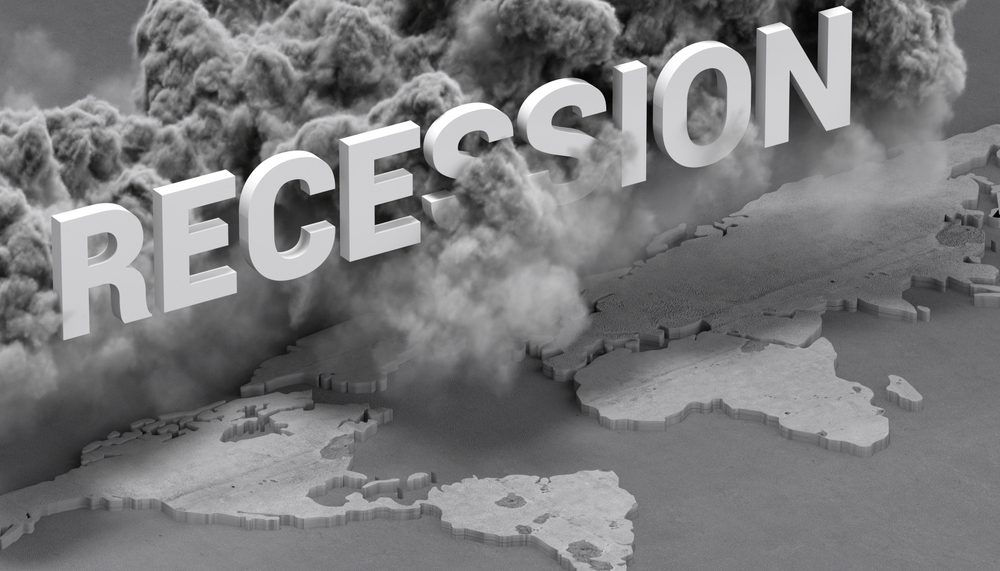
Recessions Actually Go Back To Ancient Times
Even though it may sound like a scary word, a recession is really just a general decline in our economy’s activity. Consequently, it shouldn’t be a shock to learn that recessions also happened in ancient times.
It may be true that ancient economies could be rather primitive when compared with our modern times. Even so, it was very much conceivable for them to experience bad economic times for some reason or another.

The 1920s Wasn’t The First Time Germany Experienced Hyperinflation
Germany had a very infamous episode of hyperinflation sometime in the early 1920s. After all, the notion of people rolling in entire wheelbarrows of money with them is very memorable. Regardless, that wasn’t the first time this country had experienced hyperinflation.
Granted, Kipper und Wipper occurred towards the beginning of the Thirty Years’ War in the first part of the 17th century. So it might be a bit more accurate to say that “the Germans” experienced it rather than the country itself.

Political Instability Donated To The Crisis Of The Third Century
Political instability can do horrible things to the economy and a few other significant aspects of society. The early Roman Empire had no rules for imperial succession. Instead, it was based on a mix of elite, military, and widespread approval.
As a result, when the system finally failed, it was effortless for people to either set themselves up as a claimant, or be set up as a claimant.
One particularly awful year towards the start of the era is called the Year of the Six Emperors because five emperors were killed within a matter of months of each other. Later, the Roman Empire broke into three portions, worsening the situation.

The Presence Of Recessions Obtained A Boost In 1825
Nowadays, recessions are simply accepted as something that just happens from time to time. Yet, that wasn’t always the case, though.
As a matter of fact, a belief in the existence of recessions took on a more significant meaning in 1825, which was when the Panic of 1825 took place.
This decade is notable because it was a clear and “in your face” example of an economic crisis that wasn’t brought on by either war or any other external factors. Speculative investments in South America played a massive role in causing the Panic of 1825.
The single most absurd example would be Poyais. The short version is that a man named Gregor MacGregor persuaded the King of the Mosquito Coast to sign a document giving him 8 million acres of land, which was worthless for several reasons.
First, the land was beautiful but not very fertile. And second, said monarch was a monarch in name but not much in anything else, meaning he didn’t have much control of the country he seemingly ruled.
Nevertheless, that was enough for MacGregor to return to Great Britain, declaring to be the Cazique of Poyais, which was supposed to be an extraordinary land of opportunity that had already undergone a fair amount of development.
Suffice to say that more than 100 people died because of his scheme.
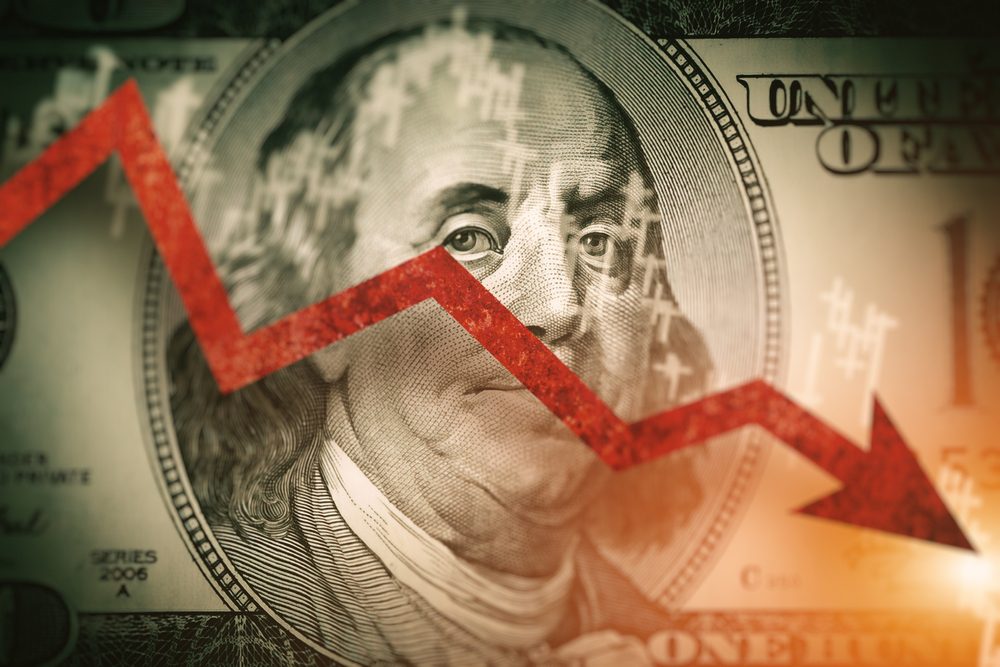
Recessions Can Take Different Shapes, Some Nastier Than Others
It’s interesting to mention that recessions can have various shapes. Basically, this refers to what a recession looks like when it’s drawn upon a Cartesian coordinate system. A V-shape suggests a short recession, while a U-shape indicates a prolonged recession.
Yet, other shapes can take hold as well. For instance, a W-shape suggests a recession, a short-lived revival, and then a second recession. Likewise, a K-shape indicates that a part of society experiences a short recession while a part of it experiences a prolonged one.
The nastiest recession shape might be the L-shaped ones. After all, this is the recession shape that represents a long-term financial slump, which can be very hard on folks, to say the least. Some might think that L-shapes don’t happen anymore.
But unfortunately, that’s not the case. In fact, L-shapes aren’t even limited to a more developing world. Need proof? Look no further than Japan, which isn’t in a Lost Decade as much as Lost DECADES. This has been the case since the asset price bubble collapsed in 1991.

Most Economists Believe Governments Should Intervene During Recessions
Each economist has his or her very different views from the other. But regardless, there are still some positions that remain mainstream. For example, most of them now believe that governments need to intervene when it comes to a recession.
This is something that wasn’t always the case. This switch can be seen in how governmental response to the Great Depression was a hotly-debated issue in several different countries. Though in the end, those championing intervention won out for the most part.
Now obviously, there remains plenty of debate over what that intervention should look like.

Conventional Economic Policies Lose Power When There Are Zero Interest Rates
People will frequently hear some sort of talk about fiscal and monetary policy in response to recessions. Fiscal policy is about government spending and taxation.
Meanwhile, monetary policy refers to changes in the supply of capital, which is presumed to be handled by a central bank. Each one has its particular set of quirks.
To give you an example, conventional monetary policies lose power when insignificant interest rates are either at zero or close to it. This is something that inhibits a central bank’s ability to boost the economy unless it resorts to some other unorthodox measures.

When Was The Most Severe Recession?
You might not have known about this tidbit, but the recession of 1873 was actually known as the Great Depression until the 1929 slump rolled in. It all started with a financial panic in 1873 with the downfall of Jay Cooke & Company, a major bank at the time.
This circumstance caused a chain reaction of multiple bank failures across the US and the collapse of a bubble in many railroad stocks. As a response, the New York Stock Exchange shut down for ten days afterward. This event lasted until 1877.
While all this information may sound daunting, it’s always better to be informed, as we all know that knowledge is power! Here’s a useful read that may help you get through these hard times.
And for some more useful info on financial matters, we recommend reading: 5 Tax-Efficient Ways to Share Wealth with Kids


