Paying taxes during your earning years is painful, but discovering you owe the IRS a fortune in retirement is devastating. The most powerful retirement planning move you can make today is aggressively building tax-free income buckets through Roth accounts and Health Savings Accounts to protect your future income. While traditional 401(k)s provide immediate tax relief, they create a massive tax liability when you withdraw those funds. By executing strategic Roth conversions and maximizing your HSA now, you create a fortress of tax-free wealth that shields your long-term savings from unpredictable future tax brackets. This specific retirement strategy guarantees that when you finally stop working, every dollar you pull from these accounts belongs entirely to you, not the government.

The Hidden Danger of Tax-Deferred Accounts
Most workers blindly follow the standard advice to funnel every spare dollar into a traditional 401(k) or IRA. This strategy lowers your current taxable income and feels like a win during tax season. However, you are merely kicking the tax can down the road. Every dollar inside a traditional retirement account represents a joint venture between you and the IRS. When you eventually withdraw those funds, ordinary income tax rates apply to both your original contributions and decades of growth.
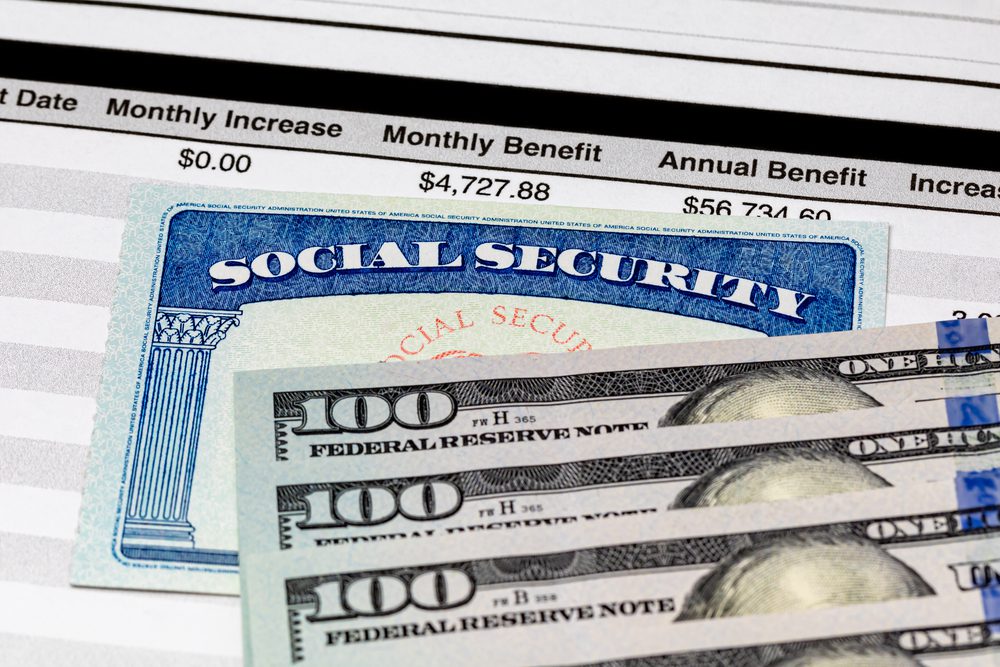
Retirees often face an unexpected tax bomb when Required Minimum Distributions begin at age 73. The government forces you to withdraw a specific percentage of your tax-deferred accounts every year, regardless of whether you actually need the money. These forced distributions stack on top of your Social Security benefits and any pension income; pushing you into higher marginal tax brackets and triggering hidden penalties like Medicare premium surcharges.
Recent data underscores the severity of this issue. For the 2026 tax year, the IRS increased the standard deduction to $32,200 for married couples filing jointly and $16,100 for single filers. While this provides a comfortable buffer, forced distributions from a multi-million-dollar 401(k) easily blast through these standard deduction limits. Furthermore, the Social Security Administration’s projected 2.8% cost-of-living adjustment for 2026 increases your baseline income, leaving even less room in the lower tax brackets for your retirement withdrawals. You must take control of your future tax rate before the government does it for you.

The Move: Creating Tax-Free Income Buckets
The solution to the retirement tax bomb is proactive tax diversification. Just as you diversify your investment portfolio with a mix of stocks and bonds, you must diversify your tax exposure. Building a substantial pool of completely tax-free capital allows you to control your taxable income in retirement. This strategy relies on two primary vehicles: Roth accounts and Health Savings Accounts.
Maximizing Roth Contributions
Unlike traditional accounts, Roth contributions consist of after-tax dollars. You pay the tax today, but the money grows tax-free forever, and all qualified withdrawals in retirement are completely tax-free. More importantly, Roth IRAs do not have Required Minimum Distributions during the original owner’s lifetime. You dictate when and how much you withdraw.
The IRS consistently adjusts contribution limits to account for inflation, providing you with expanding opportunities to build this tax-free bucket. For 2026, the base 401(k) contribution limit increased to $24,500. If your employer offers a Roth 401(k) option, directing your deferrals there secures permanent tax-free growth. For workers age 50 and older, the standard catch-up contribution adds another $8,000. Most notably, the SECURE 2.0 Act introduced a massive super catch-up tier for employees aged 60 to 63, allowing an additional $11,250 in contributions for 2026.
Outside of workplace plans, funding a Roth IRA remains a critical step. The 2026 IRA contribution limit sits at $7,500, with a $1,100 catch-up for those 50 and older. If your income exceeds the IRS thresholds for direct Roth IRA contributions, you can utilize the backdoor Roth strategy—making a non-deductible contribution to a traditional IRA and immediately converting it to a Roth IRA.
Unleashing the Power of the HSA
While often viewed merely as a tool for current medical expenses, the Health Savings Account is arguably the most powerful retirement account in the United States. It offers a unique triple-tax advantage that neither a 401(k) nor an IRA can match: contributions are tax-deductible, growth is tax-free, and withdrawals for qualified medical expenses are tax-free.
For 2026, the IRS raised the individual HSA contribution limit to $4,400, while the family limit climbs to $8,300, plus an additional $1,000 catch-up for those 55 and older. To use the HSA as a retirement vehicle, you must change how you interact with the account. Instead of draining it to pay for routine doctor visits, pay your current medical expenses out of your standard cash flow. Invest the HSA funds in low-cost index funds and let them compound for decades. Because the IRS does not impose a time limit on reimbursing yourself for medical expenses, you can save your receipts now and withdraw the funds tax-free twenty years down the road to supplement your retirement income.
“The miracle of compounding returns is overwhelmed by the tyranny of compounding costs.” — John Bogle, Founder of Vanguard Group

Strategic Roth Conversions Explained
If you have already accumulated substantial wealth in a traditional 401(k) or IRA, you can still execute this money move through strategic Roth conversions. A Roth conversion involves moving funds from a pre-tax traditional account into an after-tax Roth account. You pay ordinary income tax on the converted amount in the year you make the transfer, but the money then grows tax-free forever.
The mathematical advantage of a Roth conversion reveals itself when you believe your current tax rate is lower than your future tax rate. Historically, federal income tax rates are currently at the lower end of the spectrum. By converting funds now, you lock in today’s known tax rates and insulate your wealth from future tax hikes.
The most effective way to execute this strategy is through a multi-year conversion ladder. Rather than converting your entire IRA in a single year—which would spike your taxable income and push you into the highest marginal bracket—you convert smaller, calculated amounts over several years. You deliberately fill up the remaining space in your current tax bracket. For example, if you are a married couple in 2026 and your income leaves $40,000 of space before you cross into the 24% tax bracket, you convert exactly $40,000. You pay a manageable 22% tax on those funds today, effectively eliminating the risk of paying 32% or more on those same funds in the future.
This strategy is particularly lucrative for early retirees. If you retire at 60 but delay Social Security until 70, you experience a ten-year window where your earned income drops to zero. This creates a massive void in the lowest tax brackets. Filling that void with Roth conversions allows you to shift money from taxable to tax-free at remarkably low rates.

Traditional vs. Tax-Free Retirement Savings
Understanding the exact differences between account types helps you visualize why the shift to tax-free savings pays off so heavily later in life. Review the functional differences below to align your strategy with current IRS regulations.
| Feature | Traditional 401(k) / IRA | Roth 401(k) / IRA | Health Savings Account (HSA) |
|---|---|---|---|
| Tax Treatment on Contributions | Pre-tax (Reduces current taxable income) | After-tax (No immediate tax benefit) | Pre-tax (Reduces current taxable income) |
| Tax Treatment on Growth | Tax-deferred | Tax-free | Tax-free |
| Tax Treatment on Withdrawals | Taxed as ordinary income | Completely tax-free (if rules met) | Tax-free for qualified medical expenses |
| Required Minimum Distributions (RMDs) | Yes, beginning at age 73 | No (for original owner) | No |
| Impact on Social Security Taxes | Withdrawals increase provisional income | Withdrawals do not affect provisional income | Withdrawals do not affect provisional income |

Protecting Your Social Security Benefits
One of the most overlooked benefits of building a tax-free income bucket involves the taxation of your Social Security benefits. Up to 85% of your Social Security benefits can become subject to federal income tax if your “provisional income” exceeds certain thresholds. The IRS calculates your provisional income by combining half of your Social Security benefit with all your other taxable income, including traditional IRA withdrawals and municipal bond interest.
Here is where the tax-free strategy truly shines: qualified distributions from a Roth IRA or HSA do not count toward your provisional income. By drawing your retirement income from Roth accounts instead of traditional accounts, you keep your provisional income artificially low. This strategy can literally save you thousands of dollars a year by preventing the taxation of your Social Security benefits, allowing you to keep significantly more of your total income.

Professional vs. Self-Guided
Transitioning your retirement strategy from tax-deferred to tax-free requires precision. While some elements are easy to handle on your own, others demand expert oversight to avoid irreversible tax consequences.
- When to stay self-guided: If you are simply changing your future 401(k) payroll contributions from traditional to Roth, or opening a standard Roth IRA to make your annual $7,500 contribution, you do not need professional help. The major brokerage platforms make this process entirely frictionless. Similarly, opening an HSA through your employer’s high-deductible health plan requires only a few clicks during open enrollment.
- When to hire a professional: If you plan to execute a multi-year Roth conversion ladder, hire a Certified Public Accountant (CPA) or a Certified Financial Planner (CFP). A professional will project your exact tax liability, help you avoid crossing Medicare IRMAA (Income-Related Monthly Adjustment Amount) thresholds, and ensure you withhold taxes correctly. You should also consult a professional if you are executing a backdoor Roth IRA, as the IRS pro-rata rule can trigger unexpected taxes if you hold other pre-tax IRA balances.

Common Mistakes to Avoid
The transition to tax-free retirement income presents several traps. Failing to navigate these rules can result in steep penalties that erode your wealth.
- Paying conversion taxes from the retirement account: When executing a Roth conversion, always pay the resulting tax bill using cash from a separate, non-retirement savings account. If you withhold taxes directly from the converted IRA funds, you lose the future tax-free compounding on that money. Furthermore, if you are under 59.5, the amount withheld for taxes is treated as an early withdrawal and penalized with an additional 10% fee.
- Ignoring the pro-rata rule: The backdoor Roth strategy works flawlessly only if you have zero balances in all pre-tax IRAs (including SEP and SIMPLE IRAs) on December 31st of the conversion year. If you mix after-tax contributions with existing pre-tax balances, the IRS forces you to calculate the conversion proportionally, triggering a surprise tax bill.
- Misunderstanding the 5-year rules: Roth accounts carry strict aging requirements. Even if you are over 59.5, your first Roth IRA must have been open for at least five tax years before earnings can be withdrawn tax-free. Additionally, each specific Roth conversion carries its own five-year holding period before the principal can be withdrawn penalty-free if you are under 59.5.
- Treating the HSA as a checking account: Using your HSA debit card to buy aspirin or pay standard copays destroys the long-term value of the account. Treat the HSA strictly as a long-term investment vehicle. Invest the cash, leave it alone, and let the tax-free growth compound over decades.
Frequently Asked Questions
Does a Roth conversion count as earned income?
No. While a Roth conversion increases your Adjusted Gross Income (AGI) and your overall tax liability for the year, the IRS does not classify it as earned income. This means you cannot use the amount of a Roth conversion to qualify for new IRA contributions, which require legitimate earned income from wages or self-employment.
Can I contribute to both a 401(k) and a Roth IRA in the same year?
Yes, as long as you meet the income requirements. Your participation in an employer-sponsored 401(k) does not prevent you from fully funding a Roth IRA. In fact, maxing out a traditional or Roth 401(k) at work while simultaneously maxing out a personal Roth IRA is a premier wealth-building strategy. Just monitor the IRS income limits; if you earn too much, you will need to utilize the backdoor Roth method.
What happens to my HSA if I leave my employer?
Your Health Savings Account is completely portable and belongs entirely to you. Unlike a Flexible Spending Account (FSA), which is a “use it or lose it” benefit tied to your employer, your HSA goes with you when you change jobs or retire. You can roll the funds into an independent HSA provider to access better investment options and lower fees.
Is it too late to start Roth conversions if I am already retired?
It is rarely too late, provided you have a well-thought-out plan. Many retirees successfully execute Roth conversions during their 60s and early 70s before RMDs begin. Even if you are already taking RMDs, you can still convert remaining funds to a Roth account to protect a surviving spouse from future tax burdens or to leave a tax-free inheritance to your children. However, you must satisfy your RMD for the year before you can convert any additional funds.
You can verify current tax regulations, brackets, and rules through authoritative resources. Excellent starting points include the Internal Revenue Service (IRS) for official tax codes, Investor.gov for fundamental investment education, and the Social Security Administration (SSA) for benefit calculations. You can also explore deep-dive strategies on reputable financial education sites like Investopedia and NerdWallet.
Executing this retirement planning move requires discipline today, but the payoff is absolute financial freedom tomorrow. By systematically building your Roth and HSA balances, you seize control from the IRS and dictate exactly how your hard-earned wealth will be distributed. Evaluate your current tax bracket, calculate your available conversion space, and start transferring your wealth into tax-free fortresses. The information in this guide is meant for educational purposes. Your specific circumstances—including income, debt, tax situation, and goals—may require different approaches. When in doubt, consult a licensed professional.
Last updated: June 2026. Financial regulations and rates change frequently—verify current details with official sources.