
Leaving your retirement cash in a traditional bank account quietly costs you thousands of dollars each year. Today, leading high-yield savings accounts pay over ten times the national savings average, transforming dormant cash reserves into reliable passive income.
Whether you need an emergency reserve or a protective cash buffer for your investments, these accounts offer strong security and flexible growth. You earn meaningful returns while keeping your money completely liquid.
Savvy retirees are leveraging these accounts to boost monthly cash flow without taking stock market risks. Understanding why peers are moving their funds can help you optimize your own retirement savings strategy.

1. Earning 10 to 12 Times More on Idle Cash
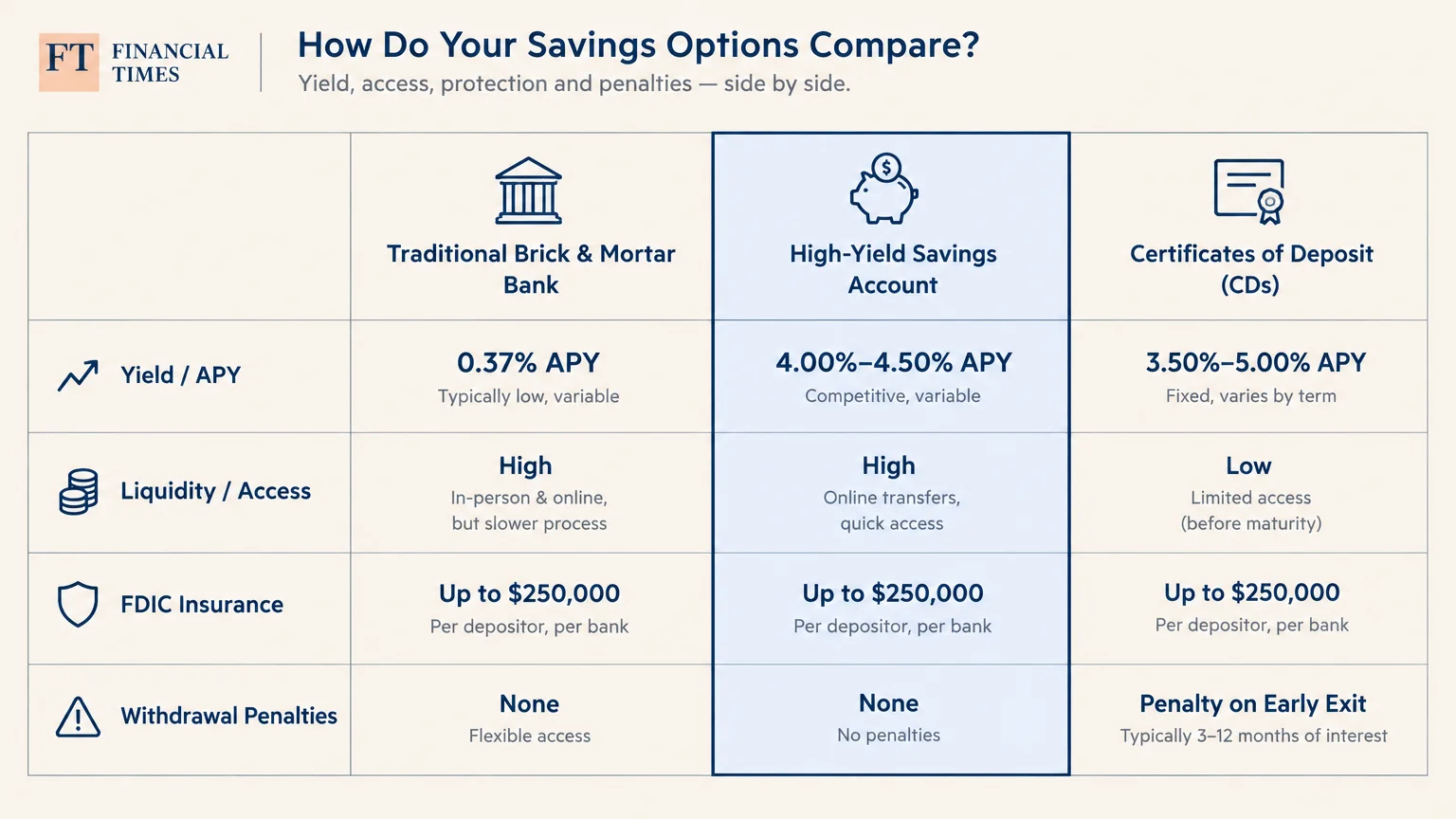
Traditional brick-and-mortar banks continue to pay negligible interest on everyday deposits. According to the Federal Deposit Insurance Corporation (FDIC), the national average savings account annual percentage yield sits at just 0.37%.
In contrast, top online institutions offer yields between 4.00% and 4.50% APY. That substantial gap delivers roughly ten to twelve times the income of a standard savings account.
Consider a retiree maintaining a $50,000 cash balance for living expenses and emergencies. At 0.37%, that cash earns only $185 over an entire year.
Moving that exact balance to a 4.25% account generates roughly $2,125 annually. That provides nearly $2,000 in extra income without increasing your investment risk.
2. Defending Against Sequence-of-Returns Risk
Market downturns early in retirement can permanently damage your portfolio longevity. When you sell depreciated stocks to cover living expenses, you lock in losses and surrender future upside.
Financial planners call this danger sequence-of-returns risk. Maintaining an adequate cash reserve protects you from liquidating equities during market pullbacks.
A prudent retirees savings strategy often keeps one to two years of living expenses in cash. Storing that buffer in a high-yield account keeps your money productive while shielding your core nest egg.
3. Ironclad Capital Safety via Federal Insurance
Market volatility can make fixed-income investors nervous about capital preservation. Fortunately, high-yield savings accounts provide the same ironclad safety as traditional neighborhood bank branches.
Legitimate online banks carry standard government backing through the FDIC or the National Credit Union Administration (NCUA). Both programs insure your deposits up to $250,000 per depositor, per institution, for each account category.
Married couples can protect up to $500,000 in a single joint account. By structuring accounts across institutions, you can safeguard significant cash sums without losing insurance coverage.
Unlike bond funds, cash held in an FDIC insured savings account never loses principal value when market interest rates fluctuate. You enjoy steady yields alongside guaranteed security.
4. Total Liquidity Without Early Withdrawal Penalties
Certificates of deposit (CDs) often require you to lock up funds for several months or years. If an emergency occurs, early redemption triggers penalties that erode your interest earnings.
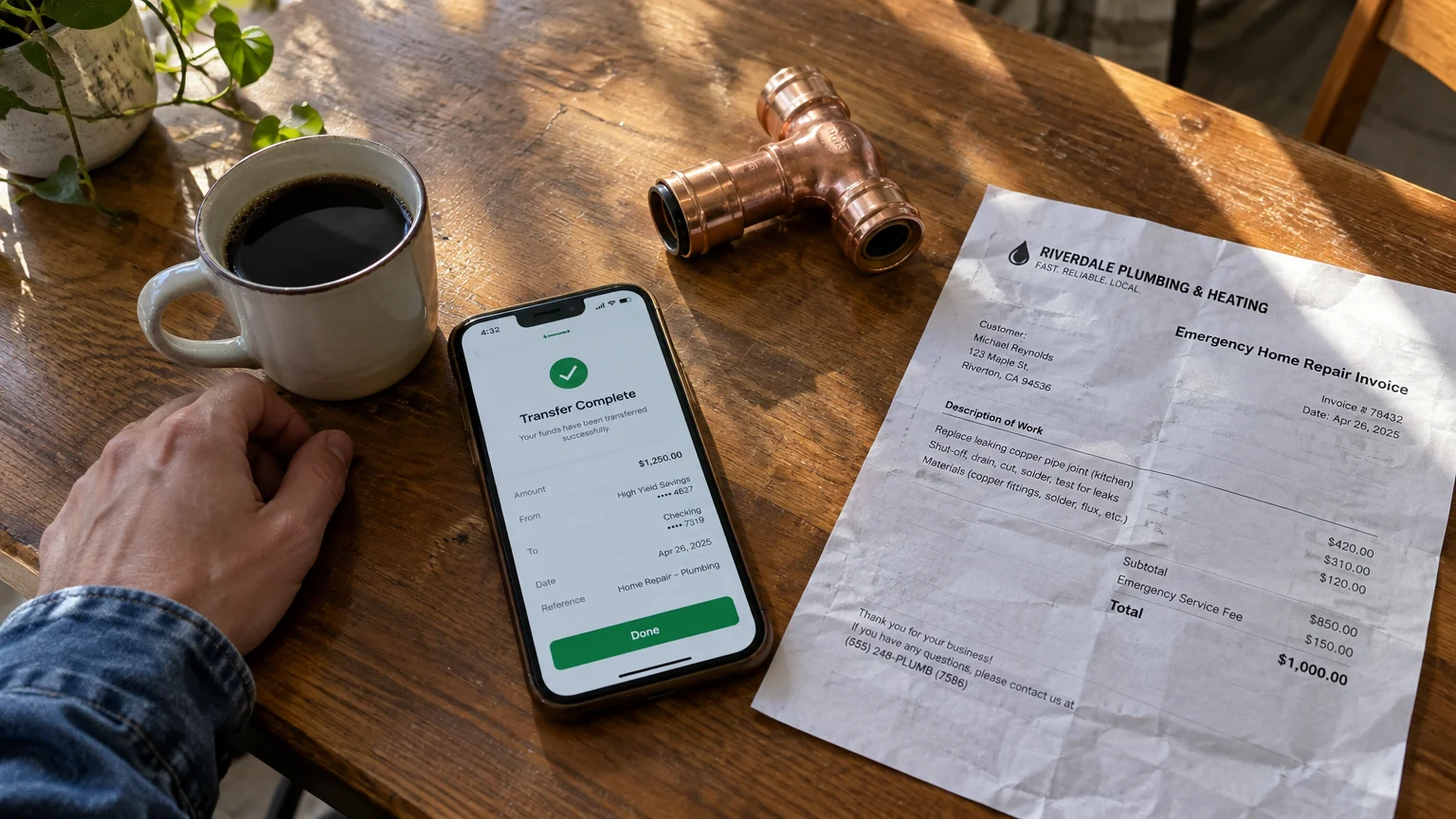
High-yield savings accounts provide instant, penalty-free access to your cash. You can transfer money back to your checking account whenever an urgent medical bill or home repair arises.
Furthermore, the Federal Reserve permanently lifted mandatory monthly withdrawal restrictions under Regulation D in 2020. This regulatory change allows financial institutions greater flexibility to serve your liquidity needs.
While some banks maintain internal transfer limits, most allow hassle-free withdrawals whenever you require capital. You capture competitive rates without forfeiting direct access to your funds.
5. Simple Staging for RMDs and Major Expenses
Retirees often juggle irregular lump-sum bills throughout the year. Staging money for property taxes, insurance premiums, and quarterly estimated taxes inside your checking account invites accidental spending.
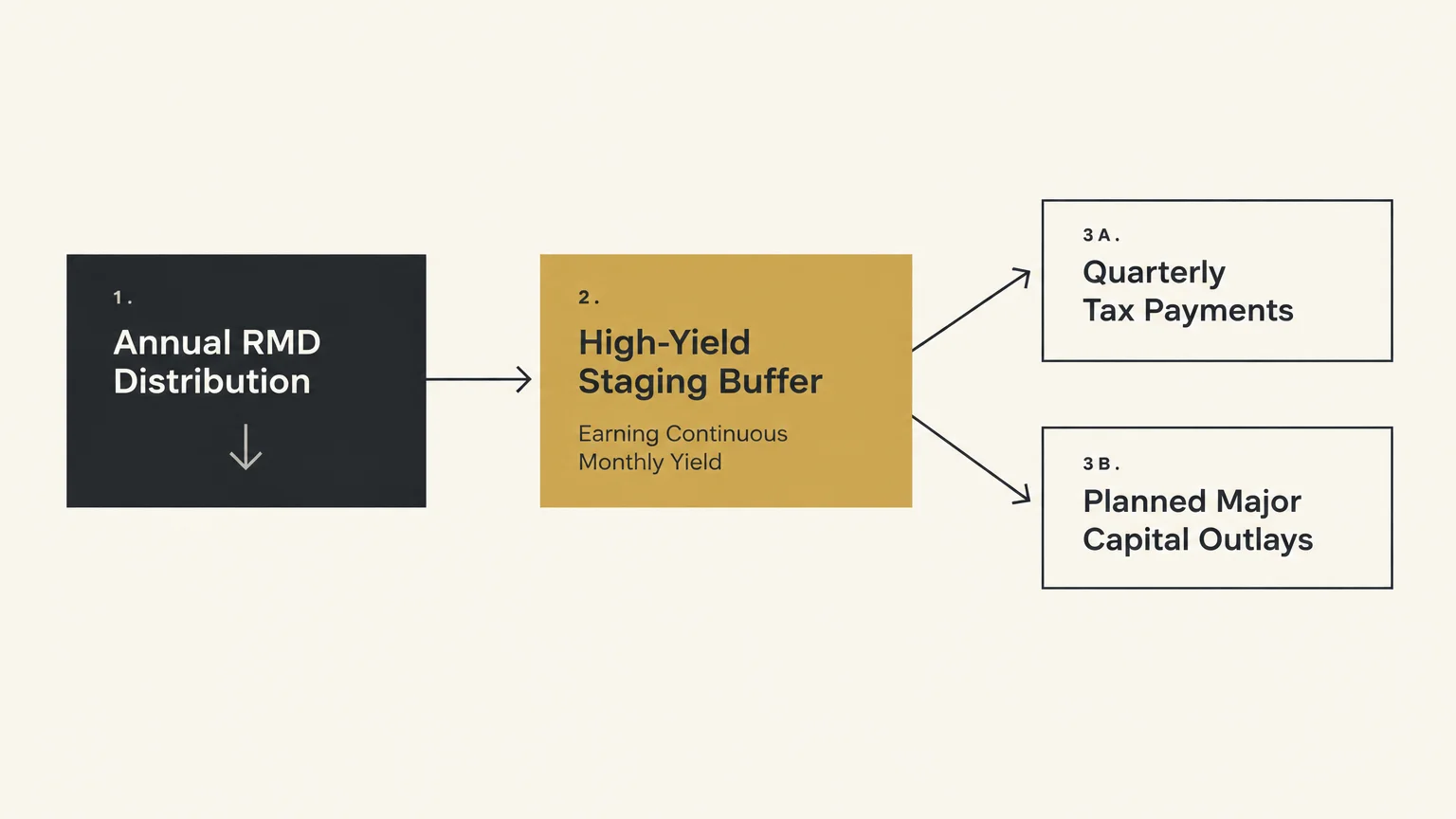
High-yield savings accounts let you establish dedicated sub-accounts or digital sinking funds for specific expenses. Your future tax payment compounds at a competitive rate until the bill comes due.
These accounts also serve as an ideal landing zone for Required Minimum Distributions (RMDs). You can withdraw your mandatory distribution from a traditional IRA and park the after-tax proceeds in high-yield cash.
This tactic satisfies IRS distribution rules while generating safe yield to fund your everyday lifestyle. It keeps your finances organized and systematically productive.

6. Emotional Comfort and Market Volatility Protection
Severe stock market swings can test the discipline of seasoned investors. Holding a robust cash reserve softens market downturns and prevents panic-driven investment decisions.
Knowing your immediate living expenses sit safely in cash allows you to weather bear markets calmly. You give your equities the necessary time to rebound and recover.
“Cash combined with courage in a time of crisis is priceless.” — Warren Buffett, Chairman and CEO of Berkshire Hathaway
A reliable cash buffer provides psychological freedom during turbulent economic cycles. You can enjoy retirement without checking daily stock tickers or stressing over financial headlines.
7. Streamlined Digital Banking and Cash Flow Automation
Modern online banking platforms provide clean interfaces and intuitive mobile apps. You can view account balances, track interest earnings, and initiate electronic transfers in seconds.
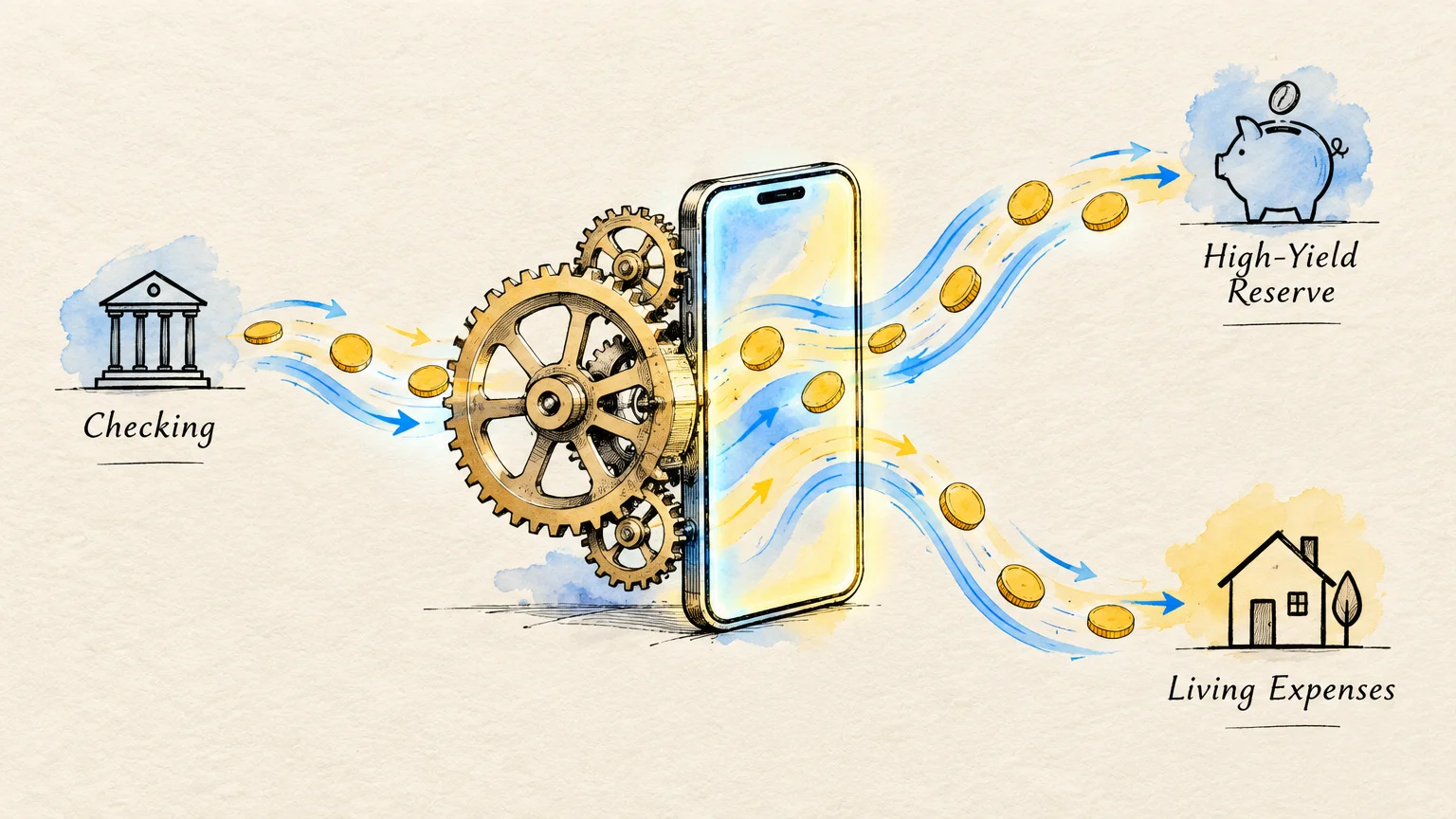
Many retirees establish automated monthly transfers from their high-yield account into their primary checking account. This automation creates a predictable, self-funded retirement paycheck each month.
You can easily deposit checks using your smartphone camera rather than driving to a physical branch. Modern technology makes managing top-rate cash simple, safe, and highly efficient.
You can research reputable depository institutions through the Consumer Financial Protection Bureau (CFPB) to confirm regulatory compliance. This oversight ensures your digital banking experience remains safe.
8. Maintaining Purchasing Power Against Sticky Inflation
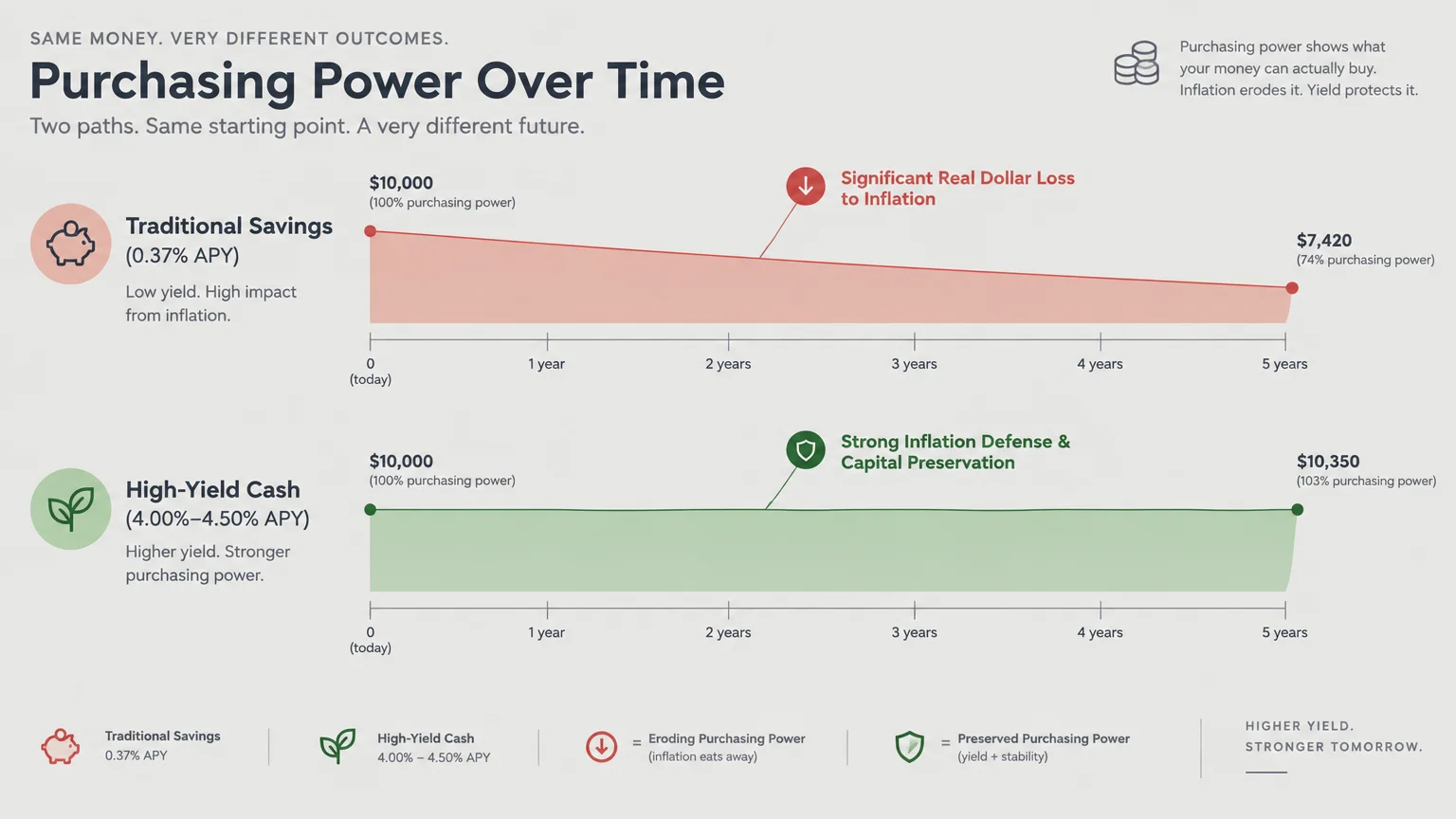
Inflation slowly erodes the buying power of idle cash. While growth equities counteract inflation over decades, short-term spending cash needs immediate protection from rising prices.
Leaving cash in checking accounts yielding 0.01% guarantees that inflation will erode your wealth. Earning over 4.00% APY helps your day-to-day dollars keep pace with retail price increases.
Securing the best savings rates narrows the inflation gap significantly without adding portfolio volatility. It remains one of the simplest defensive adjustments you can make to your retirement plan.
Comparing Cash Storage Options for Retirees
Evaluating cash alternatives helps you pick the right tool for each financial goal. The table below outlines how premier savings accounts compare against common retirement cash vehicles.
| Cash Vehicle | Typical APY Range | Liquidity Level | FDIC/NCUA Insured | Key Benefit |
|---|---|---|---|---|
| High-Yield Savings | 4.00% – 4.50% | High (Immediate Transfers) | Yes (Up to $250k) | Maximum yield with zero lockup penalties |
| Traditional Savings | 0.01% – 0.37% | High (Same-Bank Access) | Yes (Up to $250k) | Physical branch accessibility |
| 1-Year Certificate of Deposit | 4.00% – 4.40% | Low (Locked Term) | Yes (Up to $250k) | Fixed interest rate guarantee |
| Money Market Mutual Fund | 4.20% – 4.60% | High (Settlement Delays) | No (SIPC Covered Only) | Direct brokerage integration |
Each vehicle serves a distinct purpose within a comprehensive financial plan. Premier savings accounts provide an optimal mix of liquidity, federal protection, and competitive yields.

Critical Tax Rules Every Retiree Must Know
While high-yield accounts generate welcome income, you must prepare for the tax consequences. Interest earned in non-retirement bank accounts is treated as ordinary income rather than capital gains.
The Internal Revenue Service (IRS) requires banks to issue Form 1099-INT whenever your account earns $10 or more in annual interest. You must report this interest on your federal tax return.
Increased interest income also raises your modified adjusted gross income. This bump can push more of your Social Security benefits into taxable territory under federal provisional income thresholds.
Factoring anticipated interest into your quarterly estimated tax payments prevents surprise liabilities in April. Thoughtful tax preparation keeps more earned interest in your pocket.
Avoiding Common Errors
Retirees moving money into high-yield accounts should avoid a few frequent missteps. Watching out for these operational pitfalls protects your earnings and your liquidity.
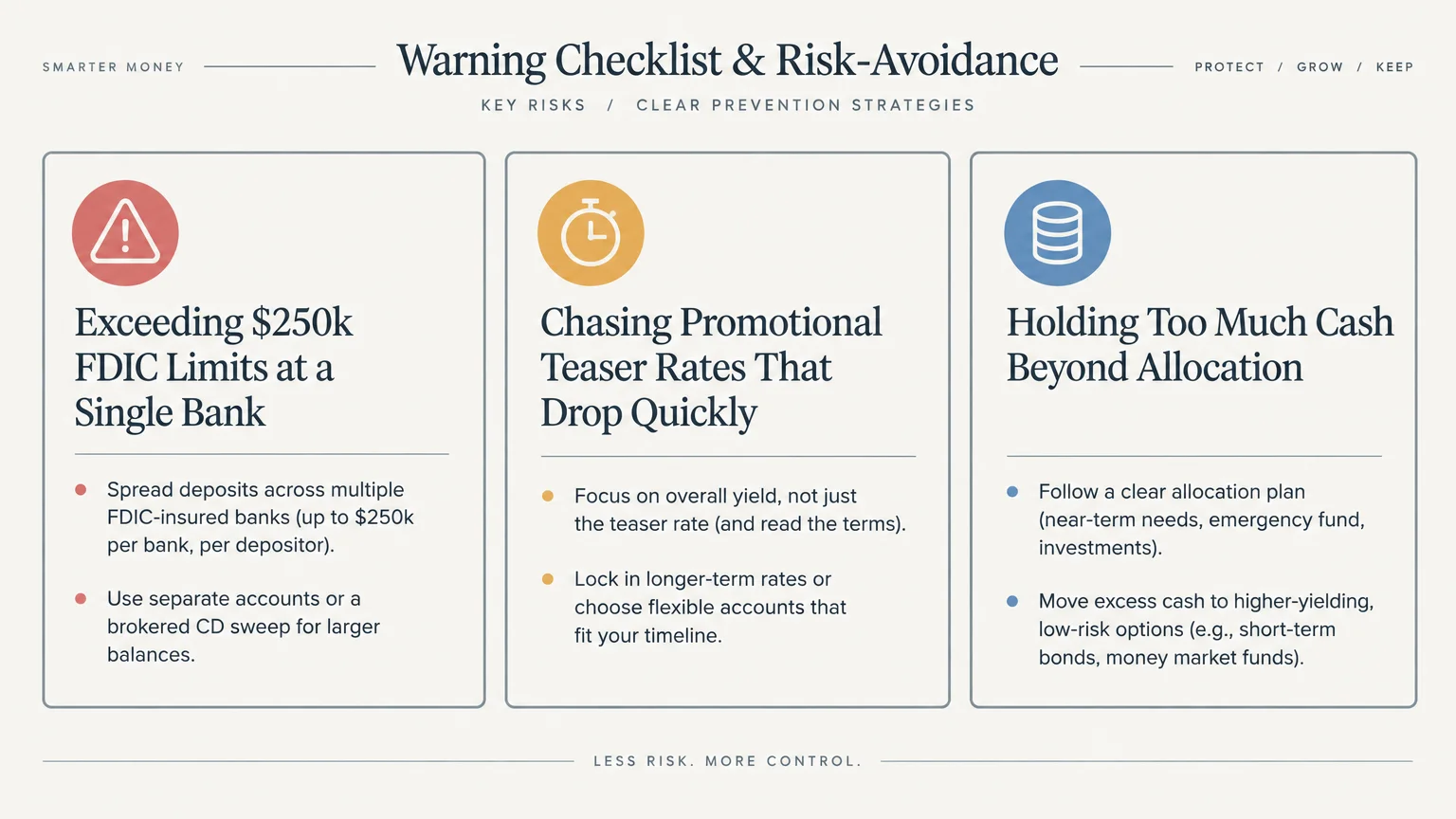
- Exceeding insurance ceilings: Depositing more than $250,000 under a single ownership category at one bank leaves excess balances vulnerable. Split larger holdings across multiple insured institutions.
- Holding excessive cash: Storing five or more years of living expenses in cash triggers opportunity risk. Keep excess wealth invested in assets that outpace long-term inflation.
- Overlooking transfer delays: Moving money between external banks via ACH usually requires one to three business days. Schedule major withdrawals well before payment deadlines.
- Neglecting tax liabilities: Forgetting to account for ordinary income taxes on thousands of dollars in interest can lead to unexpected IRS penalties.
Staying mindful of these practical details ensures your cash strategy functions smoothly. A few proactive checks keep your capital safe and readily accessible.

When DIY Isn’t Enough
Managing everyday savings accounts is typically straightforward for most households. However, certain complex financial scenarios justify consulting a qualified financial advisor.
If your cash holdings exceed federal insurance thresholds across several institutions, professional structuring can safeguard your estate. Advisors coordinate titled accounts and trusts to maintain complete coverage.
You should also seek guidance if added interest income risks triggering higher Medicare Part B premiums. An advisor can model your income to keep premiums within lower tiers.
Finally, consulting a professional helps integrate cash reserves into a long-term retirement distribution blueprint. An expert ensures your cash buffer coordinates smoothly with Social Security and pension timing.
Frequently Asked Questions
Are high-yield savings accounts safe for retirees?
Yes, leading high-yield accounts are backed by the FDIC or NCUA up to $250,000 per depositor. Your principal remains completely safe from stock and bond market fluctuations.
How does HYSA interest affect my Social Security taxes?
Interest income counts toward your provisional income calculation. If your combined income surpasses statutory thresholds, up to 85% of your Social Security benefits may become taxable.
Can I withdraw money from an HYSA anytime without penalty?
Yes, high-yield savings accounts permit penalty-free withdrawals at any time. While individual institutions may limit monthly transfers, you never forfeit earned interest when withdrawing principal.
How does an HYSA differ from a Certificate of Deposit?
High-yield savings accounts feature variable interest rates and immediate liquidity. In contrast, CDs offer fixed rates for a specified term but charge substantial penalties for early withdrawal.
Next Steps for Your Retirement Cash
Upgrading your cash strategy requires minimal effort and delivers immediate financial benefits. Review your current bank balances and calculate how much interest you leave on the table each month.
Opening an online account takes only minutes, giving your emergency reserves an instant raise. Take control of your cash today to enjoy safe, predictable yield throughout your retirement years.
This educational content reflects general financial principles, and individual results vary based on your unique situation. Always verify current tax laws, investment rules, and benefit eligibility with official sources.
Last updated: February 2026. Financial regulations and rates change frequently—verify current details with official sources.


