Most households underestimate their recurring charges by hundreds of dollars every month. Identifying eight overlooked bills to cancel right now puts serious cash back into your checking account so you can save money for 2027.
According to West Monroe (2026), 89% of consumers underestimate their monthly subscription spending, and 66% are off by more than $200. Companies rely on busy schedules and quiet price hikes to keep those automatic payments running.
You can break that cycle today by auditing the eight specific services below and switching to smarter, low-cost alternatives.
Why Unused Subscriptions Slip Past Your Budget
Automatic billing removes the friction of handing over cash, which makes small monthly debits fade into the background. Over a single year, those silent withdrawals add up to a major budget leak.
According to CNET’s 2026 State of Subscriptions survey (July 2026), U.S. adults spend an average of $111 per month—or $1,332 per year—on subscriptions. That figure jumped roughly $20 per month from the $91 monthly average recorded in 2024.
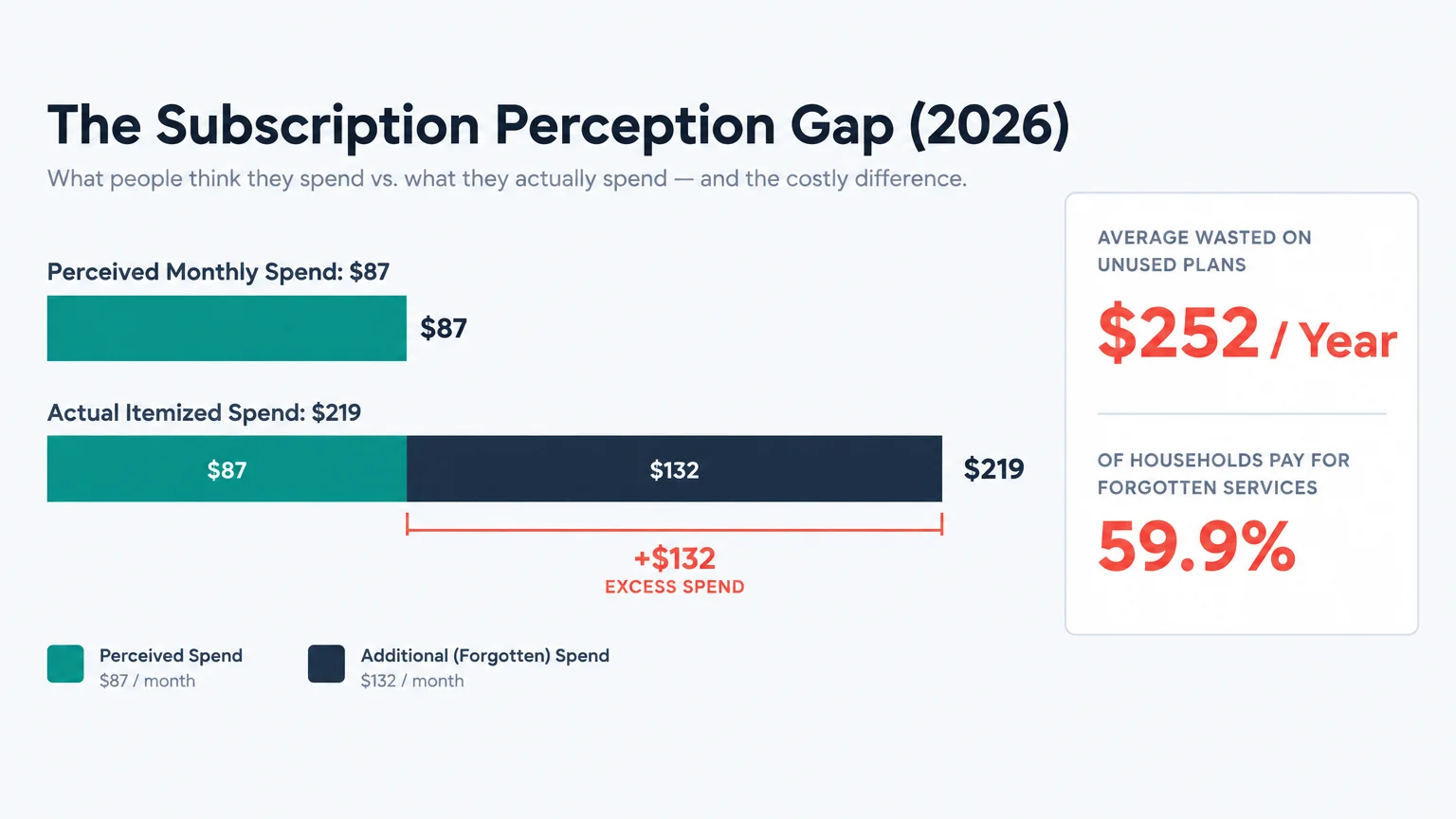
That same CNET survey shows consumers waste an average of $21 per month, or $252 annually, on unused subscriptions. Self Financial’s 2026 Cost of Unused Paid Subscriptions report puts the number even higher among people with active waste.
Self Financial found that 59.9% of respondents pay for at least one unused plan each month, averaging 2.6 neglected services worth $26.79 monthly ($321.48 per year). When you include utilities, memberships, and digital tools, total household subscription spending reaches $273 per month per West Monroe (verified May 2026).
Many people genuinely lose track of what they signed up for during a busy week. A Chargeback survey noted that consumers guessed they spent around $87 per month when their itemized statements actually totaled $219.
Promotional trial offers accelerate that leak. Industry data compiled by RecurStop (February 2026) shows that 64.8% of consumers have been billed by a forgotten free trial at least once.
Cancellation rules have also kept shifting between federal courts and state legislatures. On July 8, 2025, the U.S. Court of Appeals for the Eighth Circuit vacated the Federal Trade Commission’s Negative Option (“Click-to-Cancel”) Rule before it took effect.
The FTC formally removed that rule from federal regulations on February 12, 2026, before issuing a new rulemaking notice on March 13, 2026. As a result, only the 1973 prenotification rule and the Restore Online Shoppers’ Confidence Act (ROSCA) apply nationwide right now.
Fortunately, roughly 30 states enforce their own automatic renewal and online cancellation protections. Major updates rolled out across 2025 and 2026 in California, New York State, New York City, Massachusetts, Colorado, and Minnesota, with Louisiana following in January 2027.
If a company ignores your cancellation request or keeps billing your card, you can submit a complaint through the Consumer Financial Protection Bureau. Even better, you can eliminate the biggest offenders right now before another renewal hits.
The 8 Bills Companies Count on You Forgetting
Not every recurring payment deserves the chopping block, since some services save you real time or money. The eight bills below, however, routinely deliver poor value or offer free alternatives that work just as well.
1. Stacked and Price-Hiked Streaming Subscriptions
Streaming started as an affordable escape from bloated cable packages, yet overlapping apps have quietly recreated the exact bill you tried to leave behind. Worse, several major platforms raised prices again during 2026.
As of September 8, 2026, Fortune calculated that subscribing to eight top platforms—Netflix, Apple TV, Disney+, Hulu, Paramount+, Peacock, HBO Max, and Prime Video—without ads or bundle discounts costs $139.41 per month ($1,672.92 per year). That total sits just $4 below the inflation-adjusted equivalent of a 2016 cable bill.
Price hikes hit household budgets throughout the year:
- Apple TV: Increased by $2 in August 2026 to $14.99 per month or $119.99 per year.
- Peacock: Raised rates in August 2026 to $13 per month with ads and $20 per month ad-free.
- Paramount+: Increased prices on January 15, 2026, to $8.99 per month (Essential with ads) or $13.99 per month (Premium ad-free).
- Netflix and HBO Max: Ad-free Netflix tiers range up to $19.99–$26.99 per month ($8.99 with ads), while ad-free HBO Max runs $18.49–$22.99 per month ($10.99 with ads).
- Disney+ and Hulu: Standalone ad-free plans list up to $21.49 per month each, though a Disney+/Hulu bundle drops to $12.99 with ads or $19.99 ad-free.
Self Financial (2026) found that Starz (49.6%), Disney+ (44.4%), and Netflix (38.1%) rank among the most frequently unused streaming services. If you only watch one or two shows per month, paying for five platforms makes little financial sense.
Keep one or two services active at a time and cancel the rest immediately. You can rotate to a different app next month—or step down to ad-supported tiers across all eight platforms for $89.92 per month—without losing your watchlist.
2. Paid Credit Monitoring and Identity Protection
Data breaches feel alarming, and credit protection companies market expensive peace of mind to capitalize on that fear. In practice, paid monitoring rarely stops fraud faster than free tools already backed by federal law.
Experian IdentityWorks charges $24.99 per month ($249 per year) for an individual Premium plan or $34.99 per month for a Family plan once the seven-day trial ends. Norton LifeLock individual plans list between $124.99 and $349.99 per year, with Ultimate Plus promo rates renewing at $364.99 annually.
Even lower-cost services like Aura still cost roughly $9 to $12 per month when billed annually. You can replace almost all of that core protection without paying a cent.
Under federal law enforced by the FTC, placing, temporarily lifting, or removing a credit freeze at Equifax, Experian, and TransUnion is 100% free. Online or phone freeze requests must take effect within one business day, blocking thieves from opening new accounts in your name.
Additionally, all three bureaus permanently offer free weekly online credit reports through AnnualCreditReport.com. Set a monthly reminder to skim your reports, lock all three credit files, and cancel paid monitoring plans before your next renewal date.
3. ISP Modem and Router Rental Fees
Most internet service providers hand you a gateway box during installation and tack a monthly rental fee onto your statement. Because that charge blends into your utility bill, households often pay it for years without noticing.
BroadbandNow (September 2026) reports that the average U.S. home internet bill sits at $75 per month, while equipment rentals and hidden fees can add up to $30 monthly. According to Allconnect and CNET (November 2026), seven of the top 12 U.S. internet providers charge $10.00 to $19.99 per month—$120 to $240 per year—for leased equipment.
CNET notes that nearly 70% of households still rent routers from their provider. Buying your own compatible modem and router can shave up to $15 per month ($180 per year) off your broadband statement.
Check your provider’s website for a list of approved modems that match your internet speed tier. Once your new hardware arrives and activates, return the ISP’s rented equipment in person and keep the drop-off receipt so the monthly fee stops immediately.
4. Underused Gym and Fitness Memberships
Health club contracts rely on inertia, steep cancellation hoops, and annual maintenance charges that appear once a year. While a widely repeated internet claim insists 67% of gym members never visit, actual industry data paints a clearer picture.
The Health and Fitness Association’s 2026 consumer report—surveying roughly 18,000 U.S. residents—found that 81 million Americans hold fitness memberships, and just 4.6% (around 3.7 million people) did not use theirs at all. Still, visiting only once every few weeks makes even a modest contract an expensive habit.
Budget chains like Planet Fitness start at $15 per month (Classic) or $24.99 per month (PF Black Card), plus a $49 annual fee and frequent 12-month commitments, per NerdWallet and Truemed (2026). Luxury clubs routinely exceed $350 per month.
Some shoppers assume they can offset gym dues with pre-tax health savings accounts. However, the Internal Revenue Service generally treats standard gym memberships as ineligible for HSA or FSA reimbursement unless they are medically necessary and supported by a formal Letter of Medical Necessity.
Open your fitness app or check your front-desk scan history from the past 60 days. If your cost per visit exceeds what a drop-in class or home workout costs, cancel before your next annual fee triggers, and compare smarter wellness budgeting strategies on NerdWallet.
5. Food Delivery and Rideshare Passes
Delivery passes promise free shipping on dinner, yet the fine print tells a different story. Those memberships frequently nudge you into ordering takeout more often simply to justify the monthly fee.
In 2026, DoorDash DashPass and Uber One each charge $9.99 per month or $96 per year, with Uber One offering a $4.99 monthly ($48 annual) student tier. Lyft also introduced Lyft Go with DashPass at $9.99 per month in November 2026.
Even with an active membership, “$0 delivery fee” perks still require hitting merchant subtotal minimums—typically $12 to $15 or higher—and service or regulatory fees still apply at checkout. Menu markups inside delivery apps can quietly inflate meal prices even further.
Self Financial (2026) found that DoorDash (48.2%), Grubhub (38.5%), and Caviar (38.4%) top the entire list of unused paid food subscriptions. If you forgot you enrolled during a promotion, you are paying nearly $100 a year for zero benefit.
Review your last three months of delivery receipts to count how much you actually saved on delivery fees. Unless you clear that $9.99 threshold every single month—without ordering extra meals just to use the perk—cancel the pass and order directly from local restaurants for pickup.
6. Carrier Phone Insurance and Extended Warranties
Wireless carriers love pitching device protection at the checkout counter, folding the monthly fee right into your phone bill. Over two or three years, those premiums plus replacement deductibles can rival the cost of buying a replacement phone outright.
Techlicious and Insurify (2026) tracked monthly protection costs for flagship smartphones priced around $999:
- AT&T Protect Advantage: $19 per month ($228 per year), plus up to a $275 deductible for a replacement device.
- T-Mobile Protection<360>: $18 per month ($216 per year) on high-tier smartphones.
- Google Pixel Care+ with Loss & Theft: $15 per month ($180 per year).
- AppleCare+ with Loss & Theft: $14 per month ($168 per year), plus $29 to $149 in repair or replacement fees.
- Samsung Care+: $10 per month ($120 per year).
Look closely at the math on carrier plans before keeping them active. Paying $228 a year plus a $275 deductible means spending more than $500 in a single year just to replace one lost phone.
Check the benefits guide on the credit card you use to pay your monthly wireless bill, since many cards include built-in cell phone protection at no extra charge. Pair a durable case and screen protector with an emergency savings cushion, and drop the carrier insurance.
7. Oversized Cloud Storage Plans
Cloud storage pricing exploits a classic gap between tiny free tiers and massive paid plans. Once your phone warns that your photo library is full, providers steer you straight toward expensive 2-terabyte upgrades.
Apple iCloud+ gives you 5 GB free, offers $0.99 per month (50 GB) and $2.99 per month (200 GB), then jumps straight to $9.99 per month (2 TB) with no mid-sized plan or annual discount. Dropbox Plus skips smaller personal tiers altogether, starting at $11.99 per month for 2 TB.
Google One starts with 15 GB free shared across Drive, Gmail, and Photos, followed by $1.99 per month ($19.99 per year) for 100 GB. Above that, Google One leaps to $9.99 per month or $99.99 per year for 2 TB bundled with Gemini AI features—and first-year $49.99 promo rates double upon renewal.
Microsoft 365 Personal similarly runs $99.99 per year for 1 TB of OneDrive storage alongside Office apps. Most households pay for terabytes of space simply because they never clean out old files.
Spend 30 minutes deleting duplicate videos, blurry bursts, oversized email attachments, and old device backups. Back up long-term archives onto a one-time external hard drive, then downgrade to a $1 or $3 monthly tier—or back into a free plan.
8. Overlapping AI Tool Subscriptions
Artificial intelligence apps have quickly become one of the fastest-growing subscription leaks in personal budgets. When every app charges $20 a month for premium chat, coding, or image tools, costs stack up rapidly.
A November 2025 Bango study cited in 2026 industry reports found that Americans who subscribe to AI tools pay for an average of four separate services, totaling around $66 per month. Encouraged by new launches, users often add a new tool without cancelling the old one.
That same Bango research shows 53% of subscribers cancel and restart AI tools as needed. Free tiers now handle everyday summarizing, brainstorming, and basic drafts remarkably well.
Audit your AI lineup and pick just one primary platform that you use almost daily. Cancel the remaining tools today, and only reactivate a secondary app for a single billing cycle when a specific work or personal project truly requires it.
| Recurring Bill | Typical 2026 Cost | Smarter Alternative |
|---|---|---|
| Stacked Ad-Free Streaming (8 Apps) | $139.41/month ($1,672.92/year) | Rotate 1–2 apps monthly or use ad tiers |
| Paid Credit Monitoring | $108–$364.99/year | Free credit freezes + weekly reports |
| ISP Modem/Router Rental | $120–$240/year | Buy compatible hardware ($180/year savings) |
| Underused Gym Membership | $180–$4,200+/year (+ $49 annual fee) | Cancel unused plans; walk or train at home |
| Food Delivery / Rideshare Pass | $96–$119.88/year | Order pickup; pay per delivery only when needed |
| Carrier Phone Insurance | $120–$228/year (+ deductibles) | Credit card phone protection + emergency fund |
| Oversized Cloud Storage | $99.99–$143.88/year | Clean old files; drop to 50–200 GB or local drive |
| Multiple AI Subscriptions | ~$66/month ($792/year avg) | Use free tiers or keep one primary tool |
How to Audit and Cancel Subscriptions Without Friction
Finding every hidden charge requires looking beyond your main checking account. Companies split billing across debit cards, credit cards, digital wallets, and mobile app stores so recurring fees stay out of sight.
Treat every recurring charge as an active purchase decision each month rather than a permanent utility bill.
Follow these six steps over a single weekend to wipe out unwanted recurring charges:
- Download 90 days of statements: Export three full months of checking and credit card activity so you catch quarterly bills alongside monthly charges.
- Check third-party billing hubs: Open your Apple Subscriptions menu, Google Play payments tab, PayPal automatic payments list, and Amazon memberships page to catch app-based charges.
- Use your state cancellation rights: If you live in one of the roughly 30 states with automatic renewal laws—such as California, New York, Massachusetts, or Colorado—look for the direct online cancel link required by state law.
- Cancel free trials immediately after signup: Most trial services let you keep access through the end of the free window even if you cancel on day one.
- Set calendar alerts for promo cliffs: Whenever an annual subscription starts at a discounted first-year price, add a reminder 10 days before renewal so you can cancel before the full rate hits.
- Redirect your savings automatically: Add up every monthly bill you just cut and set an automatic transfer for that exact dollar amount into your savings account each payday.
If you want help comparing reliability before buying your own router or replacing an extended warranty, check independent buying guides from Consumer Reports. Pairing reliable hardware with fewer monthly bills locks in savings that compound month after month.

Common Mistakes to Avoid When Cutting Recurring Charges
Even motivated savers lose money when cancellation workflows trip them up. Watch out for these frequent mistakes when cleaning up your monthly expenses:
- Deleting an app without cancelling billing: Removing an icon from your phone screen does nothing to stop Apple, Google, or a streaming provider from charging your card.
- Accepting a temporary pause instead of cancelling: Retention screens often offer a 30-day or 60-day pause button that quietly restarts full-price billing when you are not looking.
- Missing promotional renewal spikes: Annual plans like Norton LifeLock Ultimate Plus or Google One 2 TB promo tiers jump sharply in year two, turning a bargain into a $99.99 to $364.99 surprise.
- Skipping written cancellation proof: Gyms and internet providers occasionally fail to process verbal requests, so always save confirmation numbers, emails, and equipment return receipts.
- Dropping phone coverage before checking card terms: Before cancelling carrier protection, verify that you pay your wireless bill with a credit card that actively includes cell phone coverage.
Frequently Asked Questions
Can companies still make it hard to cancel subscriptions in 2026?
Yes, in states without strict renewal rules, some companies still require phone calls or multi-step retention screens. Because the Eighth Circuit vacated the federal Click-to-Cancel rule in July 2025, national online protections rely mainly on ROSCA and roughly 30 state automatic renewal laws.
How much does the average person waste on unused subscriptions?
CNET (July 2026) found U.S. adults waste an average of $21 per month, or $252 per year, on unused subscriptions. Among consumers who carry at least one unused plan, Self Financial (2026) measured average waste at $26.79 per month, or $321.48 annually.
Should I cancel streaming services completely or switch to ad-supported tiers?
Rotating one or two services at a time usually saves the most money while keeping your favorite shows ad-free. If your household watches many platforms simultaneously, dropping from ad-free tiers ($139.41 per month across eight apps) to ad-supported plans ($89.92) still saves nearly $50 monthly.
Is paid identity protection worth it compared to a free credit freeze?
For most households, free federal credit freezes at Equifax, Experian, and TransUnion provide stronger core protection than paid monitoring alerts. Paid plans notify you after data appears, whereas free freezes block unauthorized credit applications upfront and take effect within one business day.
Take Back Your Cash Flow Before 2027
You do not need to overhaul your entire lifestyle to free up hundreds of dollars this year. Pick two recurring charges from this list tonight, cancel them before your next billing cycle closes, and move that money straight toward your 2027 financial goals.
This is educational content based on general financial principles. Individual results vary based on your situation. Always verify current tax laws, investment rules, and benefit eligibility with official sources.
Last updated: November 2026. Financial regulations and rates change frequently—verify current details with official sources.