Home heating prices are jumping across the country as colder weather sets in. You will likely pay more to keep your living space warm this winter season.
According to recent projections, average household heating costs will rise by 7% over the coming months. Taking strategic action today will protect your family budget from steep utility rate shocks.
You can outsmart these price hikes by implementing targeted conservation habits and utilizing available assistance programs. Here is what you need to know about navigating the winter energy surge.
The Cold Hard Numbers: National Heating Cost Projections
Heating your home will consume a larger share of your household budget this winter. Energy analysts track fuel costs closely, and their latest seasonal projections indicate broad price increases.
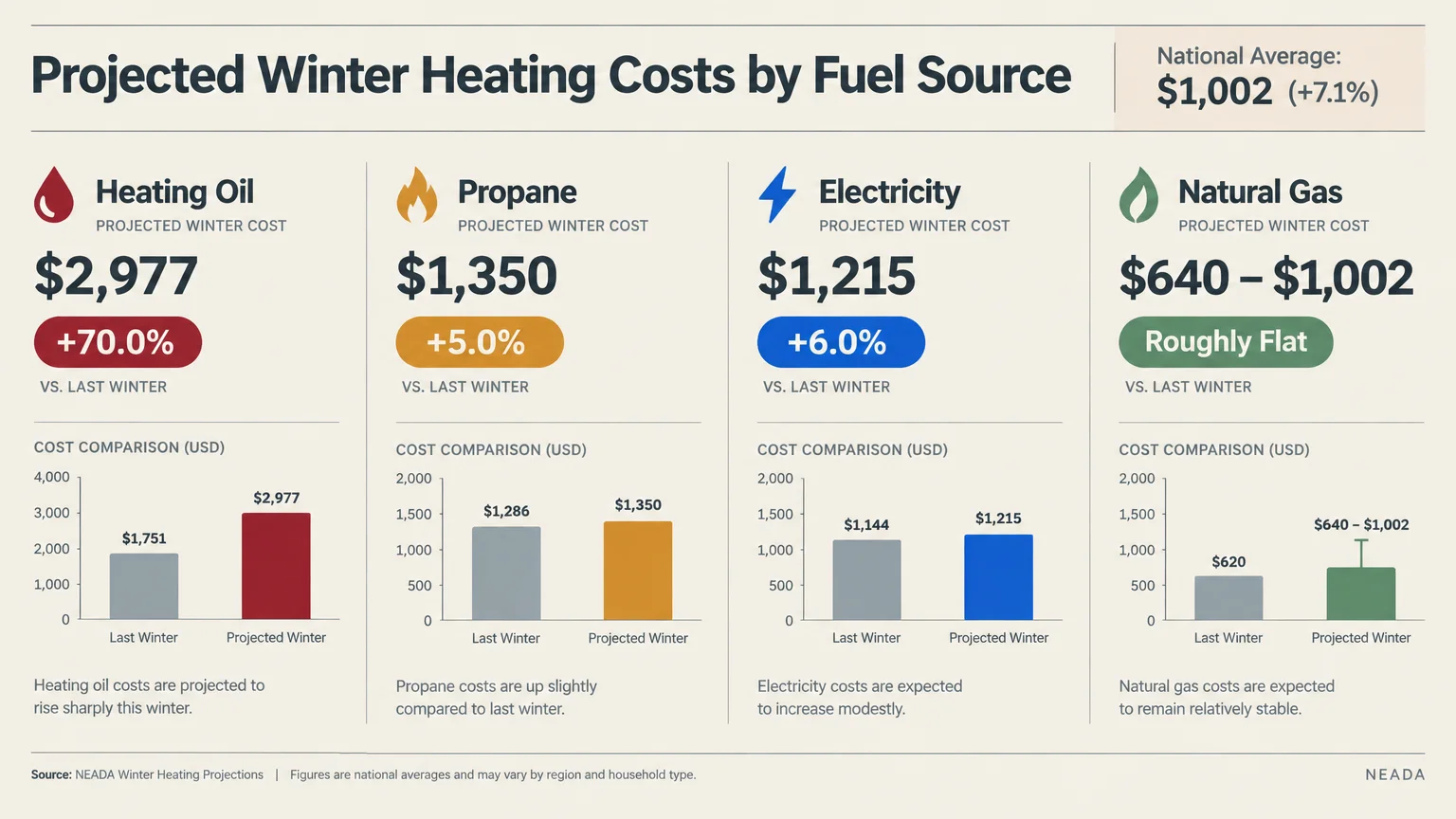
The National Energy Assistance Directors Association (NEADA) released its winter heating report on November 11, 2026. The association projects that average U.S. home heating costs will rise by 7.1% this winter.
That percentage increase translates to an extra $66 per household on average. Overall, typical winter heating expenditures will reach $1,002, up from $936 during the previous heating season.
Federal forecasters offer a slightly different outlook depending on fuel type. The U.S. Energy Information Administration (EIA) released its Winter Fuels Outlook on October 6, 2026, highlighting significant differences between energy sources.
The table below summarizes expected household heating expenditures across the primary heating fuels based on NEADA projections.
| Heating Fuel | Projected Winter Cost | Expected Change | Primary Risk Factors |
|---|---|---|---|
| Heating Oil | $2,977 | Up 70.0% | Global crude prices, refinery supply bottlenecks |
| Electricity | $1,215 | Up 6.0% | Grid upgrades, peak demand pricing |
| Propane | $1,350 | Up 5.0% | Distribution costs, cold weather spikes |
| Natural Gas | $640 – $1,002 | Roughly Flat | Regional pipeline capacity, cold snaps |
Your actual expenses will depend on your heating equipment, your local utility rates, and the severity of local winter temperatures. Understanding which fuel powers your system helps you anticipate specific budget adjustments.
Fuel by Fuel Breakdown: What to Expect for Your Home
Energy markets are experiencing stark divergence this season. While some homeowners will see stable bills, others face extraordinary spikes that could upend their monthly cash flow.
Heating Oil: The Hardest Hit Fuel
If your home relies on oil heat, prepare for severe financial strain. NEADA projects heating oil bills will surge by 70%, averaging $2,977 for the winter season.
Roughly 5 million American households rely on heating oil, concentrated heavily in the Northeast and Alaska. These households face the most punitive price increases in the entire energy market.
Even the EIA baseline projects an oil increase of 21%, bringing seasonal costs to $2,115. Refined distillate inventories remain tight while global crude benchmarks stay elevated.
Electricity: Steady Upward Creep
Millions of homes heat with electric heat pumps or baseboard units. NEADA projects electric heating costs will climb roughly 6% to reach an average of $1,215.
The EIA outlook projects a similar 4% increase, estimating electric expenditures around $1,196. Grid modernization charges, power plant transitions, and summer grid stresses all contribute to these rising residential rates.
Electric heat pump owners generally fare better than those with electric resistance baseboards. Heat pumps move heat rather than generating it, keeping overall kilowatt-hour consumption lower.
Propane: Modest Seasonal Increases
Rural households rely heavily on propane tanks for winter warmth. NEADA expects propane heating costs to rise roughly 5%, reaching an average of $1,350 this season.
The EIA projects a slightly softer market, estimating a 3% decrease nationally to $1,246. However, transportation logistics and local distributor charges can cause rapid price swings during extreme cold snaps.
Natural Gas: Stability with Regional Exceptions
Natural gas users enter the winter in the most insulated position nationally. NEADA projects overall natural gas expenditures will remain roughly flat compared to last winter.
The EIA projects that homes heated by natural gas could see a 9% national decline, averaging $640. Henry Hub natural gas spot prices are forecast to average $2.87/MMBtu, down 36% from last winter due to robust production.
Western states represent a notable exception. While the national trend leans flat or downward, households in the West face projected natural gas cost increases of 7% due to regional pipeline constraints.
The Northeast Burden: Regional Heating Realities
Where you live determines your financial exposure to winter energy markets. The Northeast faces the most severe burden of any region in the United States.
NEADA data reveals that average heating bills across the Northeast will jump 16.9% this winter. That increase adds $221 to typical household expenses, pushing total winter bills from $1,311 to $1,532.
A heavy concentration of heating oil users drives this regional crisis. When combined with elevated New England electric rates, Northeastern residents face an exceptionally difficult winter budgeting environment.
In contrast, Midwestern and Southern households using natural gas will experience far milder cost pressures. Checking your local utility rate filings gives you the clearest view of your specific regional trajectory.
“A budget is telling your money where to go instead of wondering where it went.” — Dave Ramsey, Personal Finance Author
Why Energy Prices Are Diverging This Winter
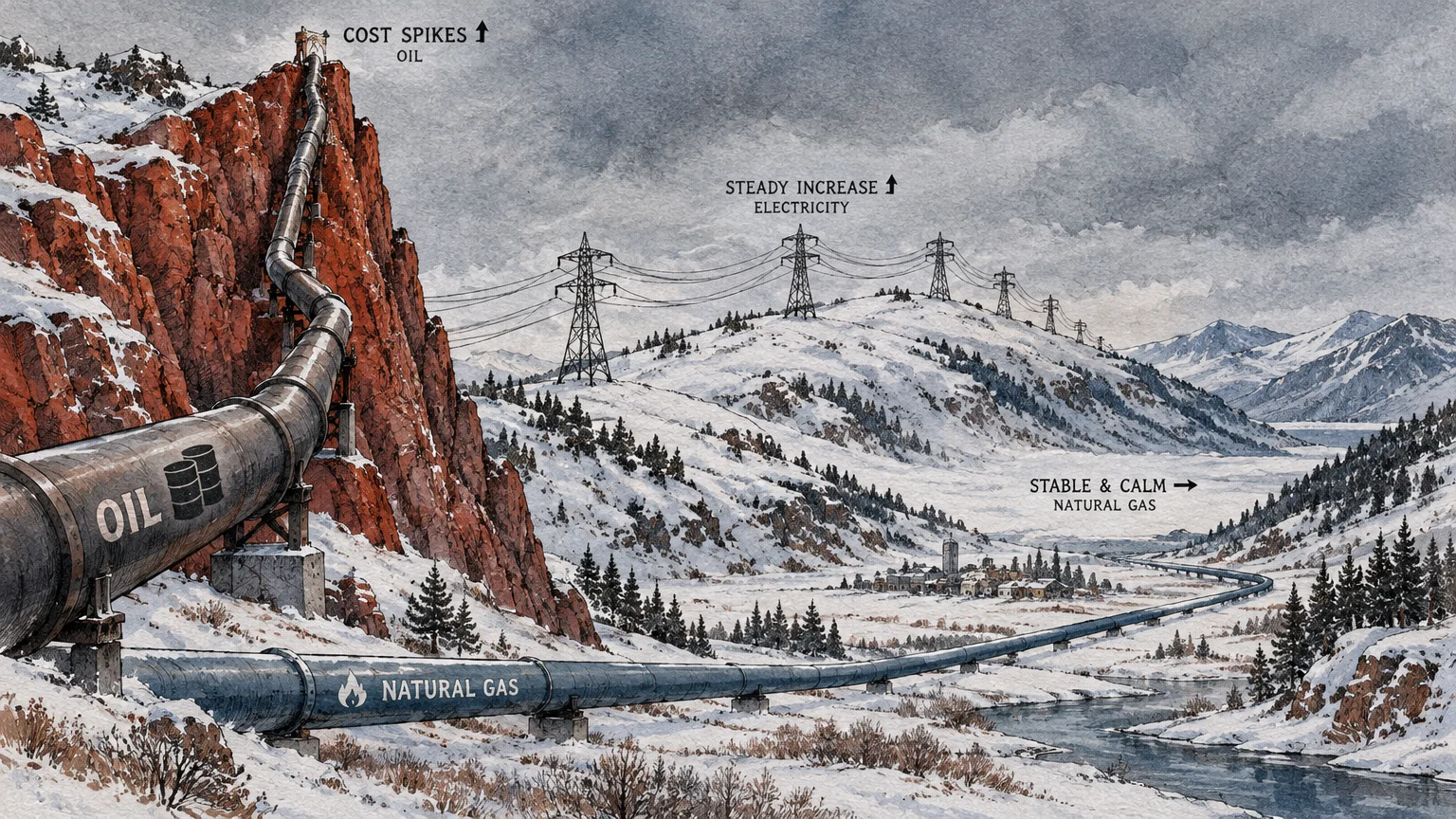
Energy markets rarely move in unison. Several distinct geopolitical and environmental factors explain why oil is soaring while natural gas remains plentiful.
Global crude oil prices remain elevated. The EIA Short-Term Energy Outlook published on November 10, 2026, notes Brent crude spot prices are hovering near $100 per barrel.
Shipping disruptions and attacks on oil tankers in the Persian Gulf tied to the war with Iran have tightened crude availability. Continued geopolitical turmoil from the war in Ukraine further restricts European and global distillate supplies.
Refineries are prioritizing transport fuels over heating distillates. This product imbalance causes heating oil prices to spike far faster than raw crude oil benchmarks.
Conversely, domestic natural gas producers maintained high extraction rates throughout 2026. Underground storage facilities entered the heating season with above-average inventories, insulating domestic consumers from global liquefied natural gas spikes.
Summer weather also cast a long shadow on winter finances. July 2026 ranked as the hottest month in recorded U.S. history, driving massive air conditioning consumption.
Those record summer cooling bills depleted household emergency savings. Many consumers enter the heating season already behind on energy payments, leaving little margin for winter utility increases.
The Mounting Household Utility Debt Crisis
Rising heating costs land on already fragile household budgets. Unpaid utility balances have reached alarming levels across the United States.
Approximately 1 in 6 U.S. households are currently behind on their utility bills. Nationally, families owe an aggregate $23 billion in past-due utility balances heading into the winter months.
Summer power bills accelerated this debt spiral. In July 2026 alone, regulated utilities disconnected 173,598 households across 10 reporting states due to nonpayment.
If you carry a past-due balance, you must understand your consumer rights before sub-freezing temperatures arrive. Many states maintain strict winter utility shutoff moratoriums.
These cold-weather rules prevent utilities from disconnecting power or natural gas during specified winter dates. You can review your consumer protections and dispute unlawful disconnection threats through the Consumer Financial Protection Bureau (CFPB).
Do not wait for a final shutoff notice to contact your service provider. Utilities offer structured deferred payment agreements that stop collection actions while you repay past-due balances over time.
“You must look at your utility bills as a non-negotiable expense that requires active management, not passive acceptance.” — Suze Orman, Personal Finance Author
Tax Alert: The Expiration of Federal Clean Energy Credits
Many homeowners assume federal tax credits will offset the cost of new heat pumps or insulation. However, major federal tax rules shifted fundamentally this year.
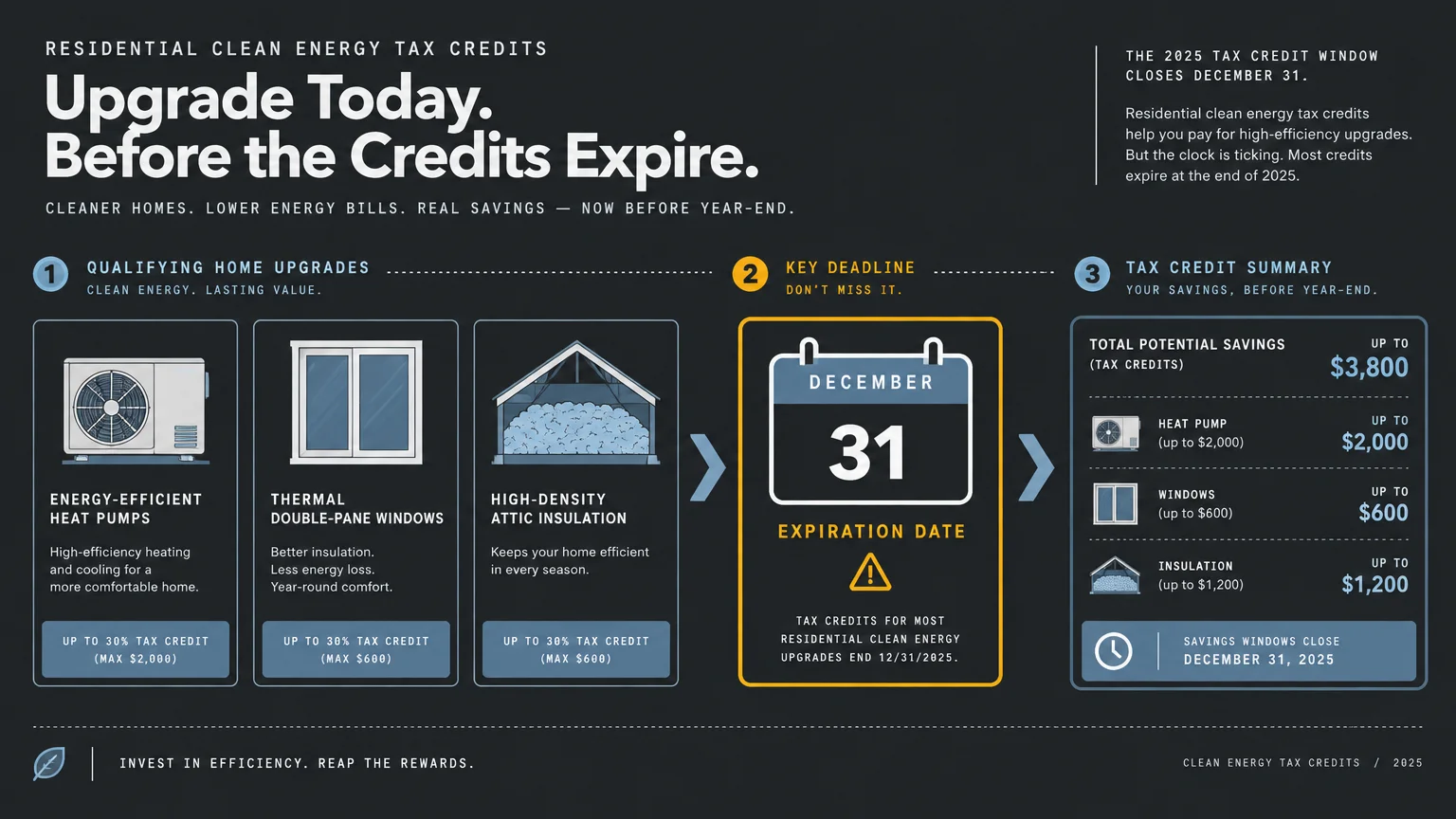
Under the One Big Beautiful Bill Act (OBBB) passed by Congress, several landmark clean energy incentives ended ahead of schedule. The early termination took effect on December 31, 2025.
The expired incentives include the Section 25C Energy Efficient Home Improvement Credit. That credit previously provided homeowners up to $1,200 for insulation, windows, and doors, plus up to $2,000 for qualifying heat pumps.
The Section 25D Residential Clean Energy Credit for solar and geothermal installations also expired under the same legislation. You cannot claim these federal tax credits on your 2026 tax return for equipment installed this calendar year.
Homeowners must now look toward state and utility rebate programs to offset efficiency improvements. The U.S. Department of Energy funds state-level Home Energy Rebates through the HOMES and HEEHR initiatives.
These state programs offer point-of-sale discounts for heat pump installations and weatherization retrofits. Inquire directly with your state energy office or local utility provider to identify active rebates in your area.
Government Relief: How to Apply for LIHEAP Assistance
Income-qualified households do not have to shoulder rising heating bills alone. The federal government provides dedicated funding to protect vulnerable families from cold weather emergencies.
In October 2026, the Administration for Children and Families released $3.6 billion in initial Low Income Home Energy Assistance Program (LIHEAP) block grants. This funding was authorized under the Continuing Appropriations Act signed on September 2, 2026.
State application portals opened between October and November 2026. Because LIHEAP funding operates on a first-come, first-served basis, submitting your application early maximizes your chance of receiving aid.
Eligibility is determined by federal poverty guidelines or state median income levels. For the 2026–2027 heating season, the 150% federal poverty threshold for a family of four is $49,500.
Many states utilize the 60% state median income threshold instead, which allows slightly higher household incomes to qualify. You can verify your eligibility and find application links through the federal benefits portal at USA.gov Benefits.
LIHEAP provides two primary types of support: regular heating grants and crisis grants. Regular grants pay a direct subsidy to your fuel or utility provider to lower your seasonal balance.
Crisis grants offer emergency intervention if you face an imminent shutoff or run out of delivered fuel. If your oil or propane tank falls below 20% capacity, contact your local community action agency immediately.
High-Impact Strategies to Lower Your Winter Heating Costs
You do not need an expensive furnace replacement to lower your monthly utility expenses. Strategic behavioral adjustments and low-cost weatherproofing yield rapid, measurable savings.
Take control of your heating bill today using these verified efficiency steps.
- Adjust your thermostat schedule: Lower your thermostat by 7 to 10 degrees while sleeping or away from home to reduce annual heating costs by up to 10%.
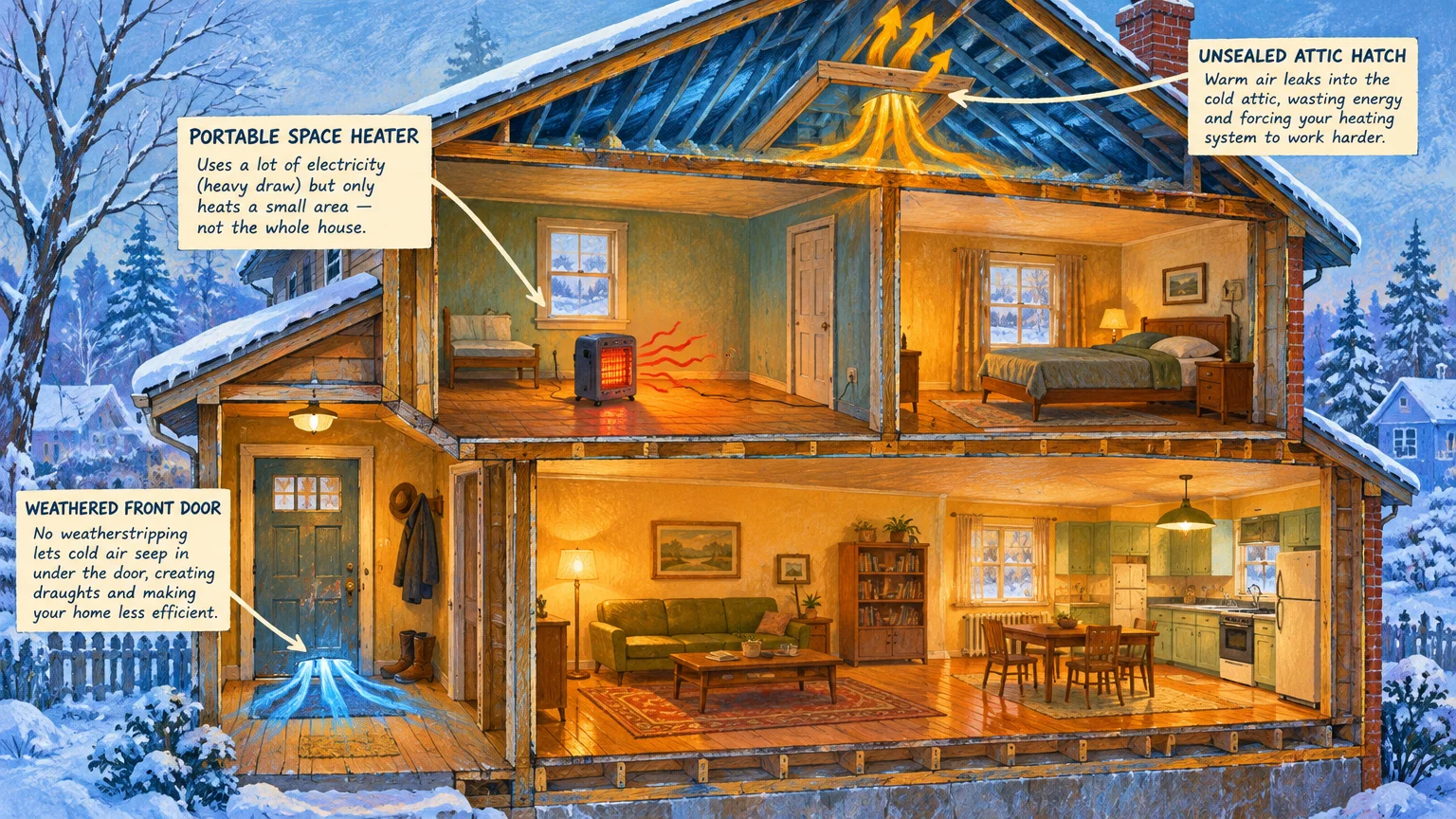
- Seal air leaks with weatherstripping: Apply adhesive foam or rubber sweeps around exterior doors and operable windows to stop cold drafts immediately.
- Install window shrink film: Apply clear plastic insulation film across drafty single-pane windows to create an insulating air buffer against freezing winds.
- Replace HVAC air filters monthly: Dirty furnace filters choke airflow, forcing blower motors to consume excess electricity and reducing heating efficiency.
- Reverse your ceiling fan rotation: Run ceiling fans clockwise at their lowest speed to push trapped warm air down from the ceiling into living areas.
- Insulate exposed heating ducts and hot water pipes: Wrap accessible ductwork and hot water lines in unconditioned basements with foil-faced insulation.
- Open south-facing window curtains during daylight: Let natural solar radiation warm your living spaces during sunny winter afternoons, then close them at dusk.
Applying plastic film and weatherstripping costs less than $50 at most hardware retailers. These small investments often pay for themselves within the first month of cold weather.
You can discover additional appliance testing data and performance reviews at Consumer Reports. Focusing on air sealing delivers the highest return per dollar spent.
Pitfalls to Watch For
Desperate attempts to reduce winter heating bills can sometimes backfire. Avoid these common financial and safety mistakes when managing your home energy costs.
The Electric Space Heater Trap
Many people run portable electric space heaters in multiple rooms, hoping to lower central furnace usage. However, electric resistance heat is one of the most expensive ways to warm a home.
A standard 1,500-watt space heater running continuously adds significant expense to your monthly electric bill. Space heaters only save money if you turn your central thermostat down drastically and heat a single occupied room.
Running several space heaters simultaneously across different bedrooms will quickly inflate your electric bill beyond what your central heating system would have consumed.
Setting Thermostats Dangerously Low
Lowering your thermostat saves money, but dropping temperatures too far creates severe risks. Never set your home thermostat below 55 degrees Fahrenheit, even when traveling.
Temperatures below 55 degrees dramatically increase the risk of frozen and burst water pipes inside exterior walls. A single burst pipe can cause thousands of dollars in water damage, erasing years of energy savings.
Ignoring Fuel Tank Minimums
Heating oil and propane customers sometimes delay fuel orders to stretch their cash flow. Running your fuel storage tank completely dry triggers expensive emergency delivery fees.
Empty oil tanks often pull sediment and sludge from the bottom into fuel lines, clogging filters and burners. Order replacement fuel when your tank gauge reaches one-quarter capacity to avoid emergency service calls.
Missing Utility Assistance Deadlines
Many households delay applying for relief programs until their utility service is disconnected. State LIHEAP agencies and local hardship funds operate with finite annual budgets.
Once allocated grant pools run dry, late applicants are placed on waiting lists. Submit assistance paperwork early in the season while state funding reserves remain fully intact.
Budgeting for Volatile Winter Utility Expenses
Unpredictable heating bills make personal budgeting difficult during the winter months. Incorporating practical financial management techniques helps keep your cash flow predictable.
One reliable tool is budget billing, often called balanced billing, offered by most electric and gas utilities. The utility averages your past twelve months of energy consumption into equal monthly payments.
Budget billing eliminates painful seasonal spikes, allowing you to pay the same predictable amount in January as you do in May. The utility reconciles any overpayment or underpayment annually.
Review comprehensive personal budgeting guides and money-management calculators at Bankrate to stabilize seasonal cash flow swings. Building a small winter buffer into your emergency fund provides added security.
Getting Expert Help
Sometimes winter heating challenges require professional guidance rather than simple do-it-yourself fixes. Consider reaching out to specialists in these specific scenarios:
- When utility debt threatens household stability: If you face overwhelming unpaid utility balances alongside credit card or loan debt, consult a certified credit counselor through the National Foundation for Credit Counseling (NFCC). A counselor can help you design a realistic debt management plan and negotiate with creditors.
- When you face an active shutoff notice: Contact your state utility regulatory commission or the local consumer advocate agency if your utility refuses to negotiate a payment arrangement. State regulators can halt disconnections if the utility failed to follow statutory winter disconnection procedures.
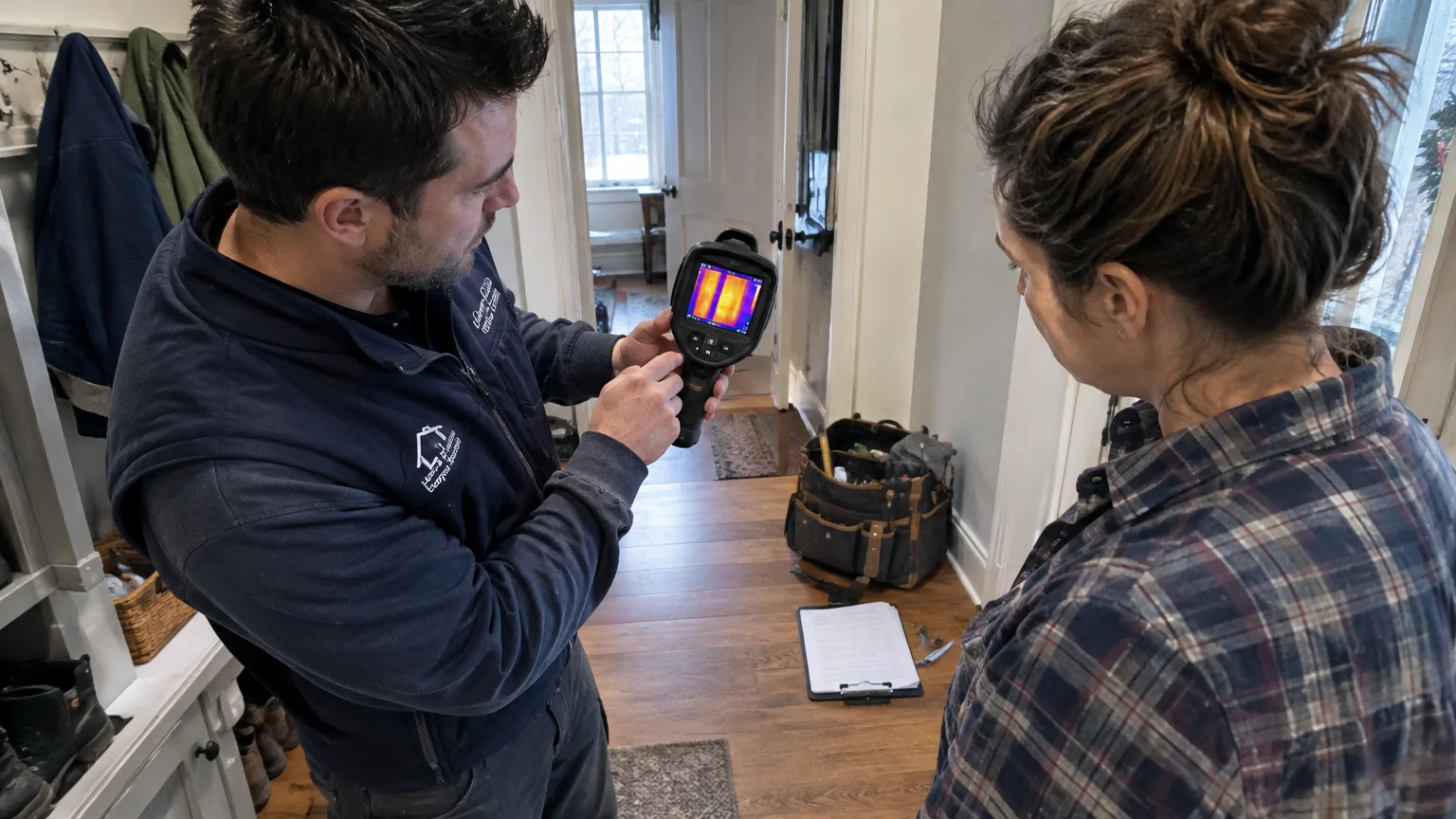
- When your home suffers severe chronic drafts: Hire a certified Building Performance Institute (BPI) home energy auditor. An auditor uses blower door tests and thermal imaging cameras to identify hidden insulation voids and duct leakage points.
- When your heating system shows signs of mechanical failure: If your furnace produces unusual rattling sounds, burns yellow flames instead of blue, or fails to satisfy thermostat settings, hire a licensed HVAC technician immediately. Prompt maintenance prevents costly mid-winter system replacements.
Frequently Asked Questions About Winter Energy Costs
Why are heating oil costs rising so much faster than natural gas?
Heating oil is a refined petroleum product directly tied to global crude oil prices and refinery capacity. Global crude markets are constrained by geopolitical tensions in the Middle East and shipping risks in the Persian Gulf. In contrast, domestic natural gas production remains abundant with high storage inventories, keeping natural gas prices relatively stable.
Can I still claim federal tax credits for installing a heat pump in 2026?
No, you cannot claim federal tax credits for heat pumps installed during the 2026 tax year. The federal Section 25C and Section 25D clean energy tax credits expired early on December 31, 2025, under the One Big Beautiful Bill Act. You must now look to state-level Department of Energy rebates or local utility efficiency incentives.
What should I do if I cannot afford my heating bill this month?
Contact your utility company immediately to request an income-qualified payment agreement or ask about emergency hardship funds. Apply right away for LIHEAP grant assistance through your local community action agency. Many states legally prohibit utilities from shutting off heat during sub-freezing winter weather.
Does turning down the thermostat when I am away really save money?
Yes, lowering your thermostat by 7 to 10 degrees for eight hours a day can save up to 10% on heating costs annually. The myth that a heating system works harder to recover the lost heat is scientifically incorrect. Lower indoor temperatures slow down the rate at which heat escapes your home into the cold outside air.
Take Control of Your Winter Energy Budget
Winter energy price hikes will test family budgets, but preparation gives you the advantage. Assess your heating fuel exposure today and take practical steps to insulate your living space.
Combine active thermostat habits with state utility relief programs to keep your home warm and your finances secure. Proactive management ensures rising winter utility rates do not derail your overall financial progress.
The information in this guide is meant for educational purposes. Your specific circumstances—including income, debt, tax situation, and goals—may require different approaches. When in doubt, consult a licensed professional.
Last updated: November 2026. Financial regulations and rates change frequently—verify current details with official sources.