Trimming your grocery bill provides an immediate way to protect your fixed income without sacrificing meal quality. Routine supermarket purchases often drain hundreds of dollars from household budgets every single month.
Retirement changes your relationship with time and convenience. You no longer need to pay steep commercial markups for pre-made foods designed solely to shave five minutes off kitchen chores.
Eliminating six specific overpriced grocery items allows you to redirect meaningful cash back into your savings. Small adjustments in the supermarket aisles deliver lower receipts and fresher dining.

Why Grocery Budgeting Shifts When You Retire
During your working years, convenience often dictated your supermarket habits. Rushing home after a long workday made pre-cut vegetables and instant meals feel like necessary investments.
Retirement reverses that daily dynamic by giving you back your time. You now have the schedule flexibility to chop produce, prepare simple ingredients, and visit stores during uncrowded mid-week hours.
At the same time, living on a fixed income requires vigilant cost control. Food inflation compounds quickly, eroding your purchasing power if your spending habits remain on autopilot.
Examining everyday pantry items reveals hidden surcharges built into modern retail packaging. Food manufacturers collect substantial premiums whenever they perform basic culinary tasks on your behalf.
According to research from NerdWallet, grocery prices remain a primary spending concern for older adults navigating retirement budgets. Eliminating high-margin convenience products is the most reliable way to curb that strain.
1. Pre-Cut Fruits, Chopped Vegetables, and Bagged Salad Kits
Supermarkets charge staggering premiums for washing and slicing whole produce. A melon cut into cubes or celery sliced into sticks can cost triple the per-pound price of the whole item.
Packaged salad kits carry similar excessive price tags. Retailers bundle inexpensive iceberg lettuce with a tiny dressing pouch and a pinch of croutons, selling it at specialty rates.
Beyond the elevated price, pre-cut produce deteriorates at a rapid pace. Once processors slice cellular plant walls, exposure to oxygen rapidly degrades vitamins, texture, and flavor.
These sliced items often spoil inside your refrigerator within forty-eight hours. Buying whole heads of lettuce, unpeeled carrots, and intact melons guarantees produce that lasts two weeks or longer.
Safety considerations also favor whole fruits and vegetables. Data tracked by Consumer Reports indicates that pre-bagged greens and pre-cut melons account for disproportionate recalls linked to bacterial contamination.
You can duplicate the convenience of pre-cut items yourself with minimal effort. Dedicate twenty minutes on shopping day to wash, slice, and store whole produce in sealed glass containers.
2. Bulk Perishables from Warehouse Clubs
Warehouse clubs persuade consumers that buying in massive quantities always delivers superior value. While bulk pricing works for non-perishable goods, it frequently backfires on fresh food in small households.
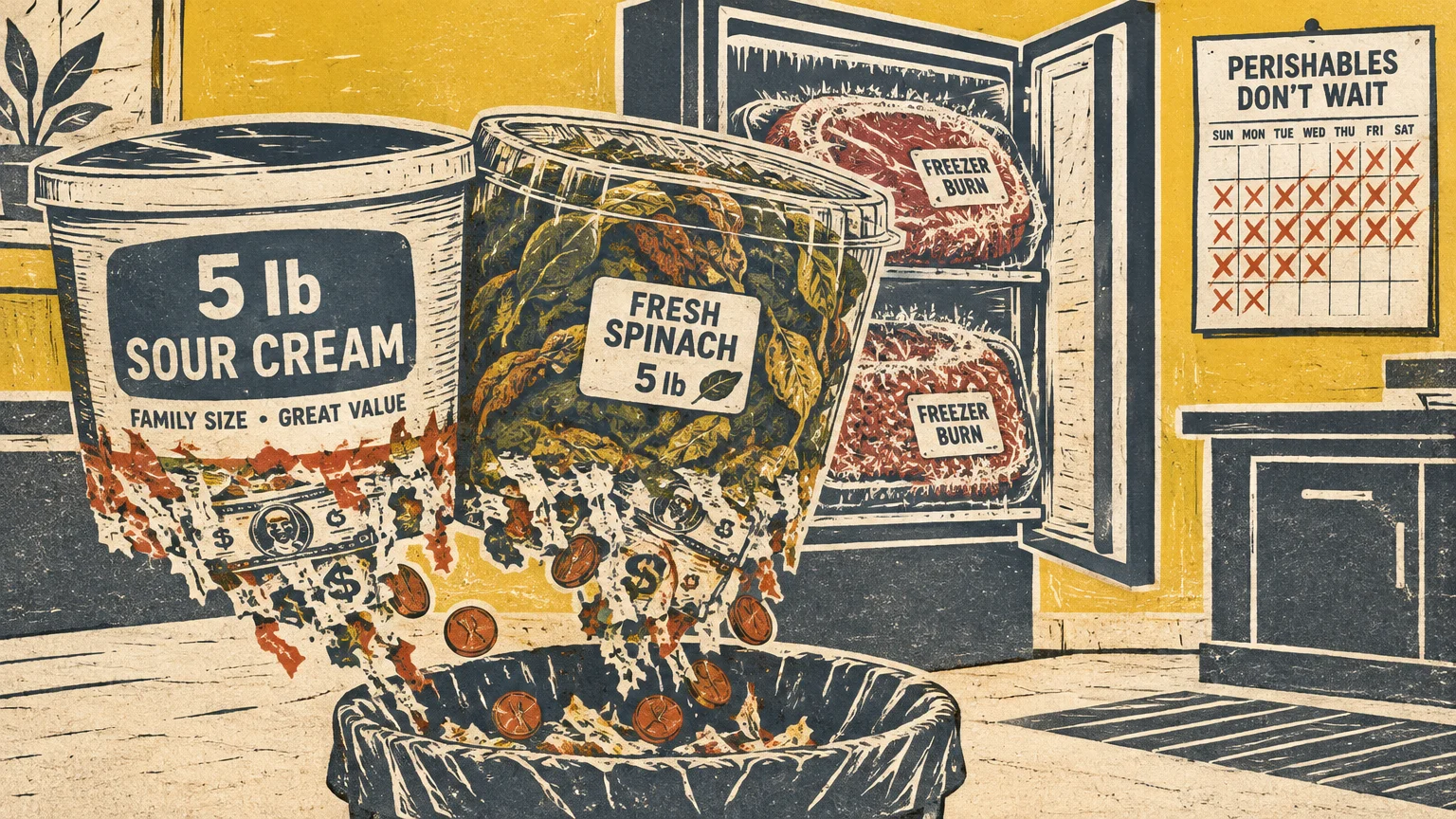
Couples and solo retirees rarely consume three-pound tubs of spinach or five-pound containers of sour cream before they spoil. Throwing away half of a bulk item doubles your effective purchase price.
Food waste converts apparent savings into guaranteed financial losses. If you discard thirty percent of an oversized perishable package, you erase the bulk volume discount entirely.
Freezer burn presents another major hurdle for bulk supermarket runs. Dividing giant family packs of poultry or ground beef requires specialty freezer bags, labels, and significant freezer space.
Proteins lingering in home freezers for months suffer noticeable textural decline and flavor degradation. You eventually discard freezer-burned meat that you paid good money to store.
Stick to purchasing dry goods, paper products, and shelf-stable cleaners in bulk quantities. Buy delicate perishables at traditional grocers where you select the exact number of apples or chicken breasts you need.
3. Single-Serve Snacks and Individual Oatmeal Packets
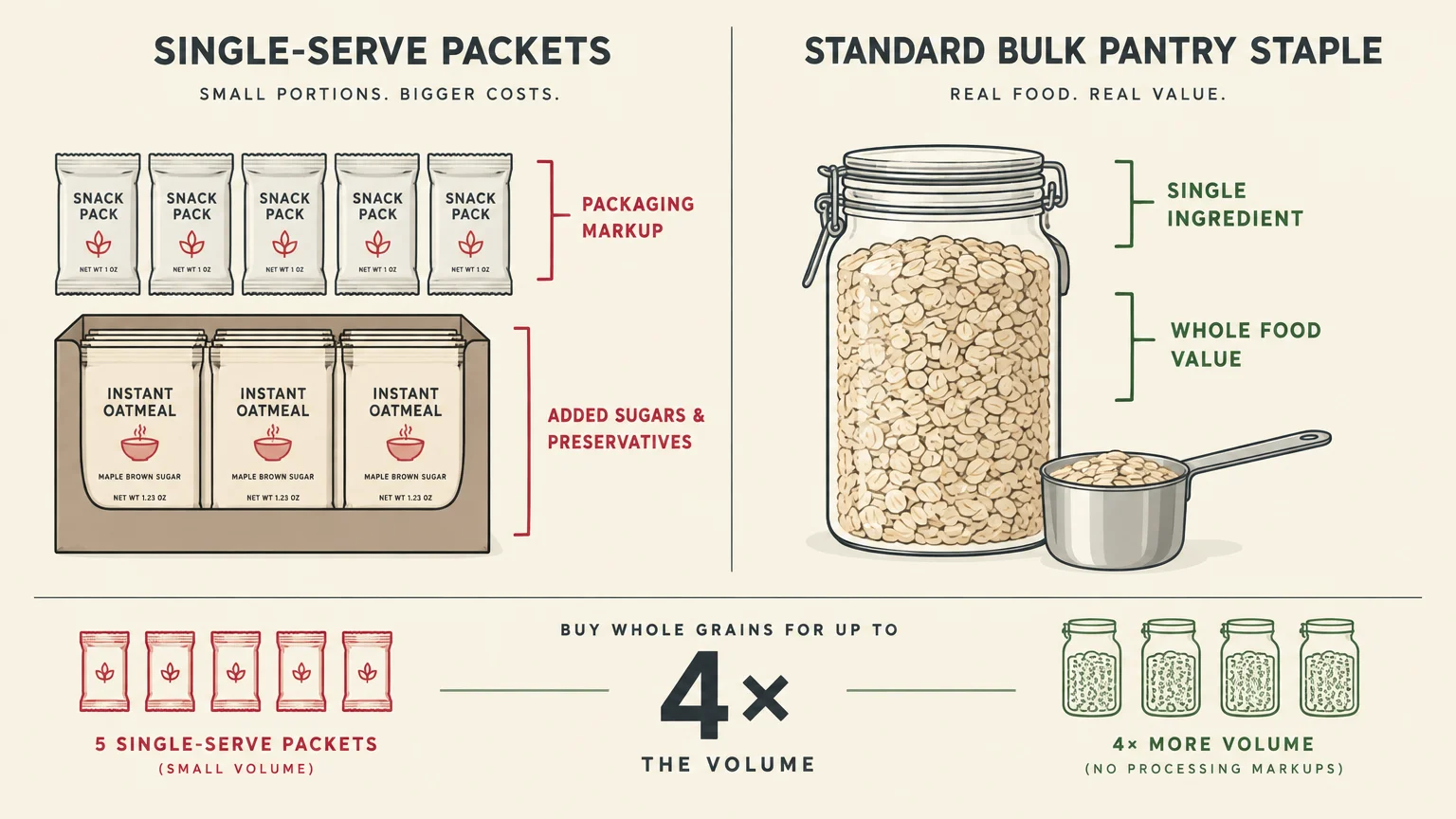
Manufacturers generate immense profit margins from single-serving packages. Individual bags of chips, snack crackers, and single-serve oatmeal cups cost up to four times more per ounce than standard sizes.
Pre-measured oatmeal packets represent one of the worst offenders in this category. You pay a heavy markup for cheap rolled oats blended with refined sugar, artificial flavorings, and unnecessary preservatives.
Purchasing a large canister of plain rolled oats costs a fraction of the price per serving. You can easily add cinnamon, fresh fruit, raw nuts, and maple syrup to suit your personal tastes.
Single-cup yogurts follow the same expensive marketing formula. A standard 32-ounce tub of plain yogurt provides identical nutrition at a dramatically lower unit cost.
The plastic waste generated by single-serve snack packs also fills residential trash bins at alarming rates. Downsizing packaging waste benefits your household routine while keeping your money in your bank account.
Invest in a set of small, reusable silicone bags or glass storage dishes. Buy standard pantry containers and spend five minutes dividing snacks into individual portions for the week.
4. Brand-Name Spices and Baking Staples
The main spice aisle in your local supermarket houses some of the most inflated markups in retail grocery. Familiar national brands charge premium prices for common seasonings like oregano, garlic powder, and paprika.
Standard baking staples like granulated sugar, all-purpose flour, baking soda, and table salt are legally standardized commodities. The generic grocery brand contains identical ingredients manufactured to the exact same purity standards.
Supermarkets place these expensive brand-name bottles directly at eye level to capture hurried shoppers. Lower shelves and international food aisles hold equivalent products at severe discounts.
Many ethnic food sections offer whole and ground spices in bags for a fraction of the bottled price. A four-ounce cellophane packet of cumin in the international aisle often costs less than a one-ounce glass jar nearby.
Buying expensive spices in bulk can lead to waste because ground seasonings lose aromatic potency after six months. Purchasing smaller generic bags keeps your spice rack fresh while reducing annual spice spending by half.
Save empty glass jars and transfer bulk spices into them at home with clear labels. This straightforward kitchen habit protects your wallet without compromising the flavor of your cooking.
5. Commercial Frozen Entrees and Prepared Deli Trays
Frozen microwave dinners and supermarket deli meal kits promise effortless single-portion dining. However, these convenience meals demand a substantial financial premium while offering questionable nutritional quality.
A single branded frozen dinner often costs as much as cooking a fresh, multi-serving meal from whole ingredients. Over a full month, relying on these individual trays adds hundreds of dollars to your grocery ledger.
Beyond monetary expense, commercial pre-cooked meals rely on heavy doses of sodium, stabilizers, and saturated fats to preserve shelf life. These additives contradict the low-sodium, heart-healthy dietary guidelines recommended for older adults.
The consumer guidance published by the Consumer Financial Protection Bureau encourages fixed-income consumers to audit daily living costs for recurring leaks. Prepared convenience foods consistently rank among the most expensive habitual retail purchases.
Adopting a “cook once, eat twice” system provides the same grab-and-go convenience without the excessive sodium or commercial markup. Preparing double portions of soups, casseroles, or roasted meats yields homemade frozen meals on demand.
Freeze your own leftovers in portion-controlled glass containers labeled with the preparation date. You preserve culinary control over ingredients while securing convenient meals whenever you prefer not to cook.

6. Bottled Water, Bottled Teas, and Canned Specialty Drinks
Purchasing bottled municipal water remains one of the least justifiable expenses in modern grocery shopping. In most jurisdictions, municipal tap water undergoes strict safety monitoring that rivals or exceeds private bottled beverage facilities.
Bottled iced teas, flavored carbonated waters, and premium sodas present an identical cash drain. You pay primarily for plastic containers, transportation weight, and branded marketing campaigns.
Hauling heavy 24-packs of water bottles from your car trunk into the house creates unnecessary physical strain. Eliminating heavy beverage cases reduces joint wear and prevents awkward lifting injuries.
A quality countertop water filter or refrigerator pitcher delivers pristine drinking water for pennies per gallon. The initial filter investment pays for itself within the first two months of skipping bottled cases.
Brewing iced tea at home costs virtually nothing compared to pre-bottled commercial brands. A single box of family-size tea bags produces gallons of fresh iced tea without artificial sweeteners or high-fructose corn syrup.
Investing in a sturdy stainless-steel travel bottle allows you to carry chilled water wherever you go. You eliminate spontaneous convenience-store beverage stops while running daytime errands.
Price and Value Comparison: Skipping vs. Swapping
Evaluating grocery options on a unit-cost basis clarifies the compounding financial impact of retail convenience items. The following table illustrates realistic savings achievable by swapping high-margin products for smarter alternatives.
| Convenience Grocery Item | Smarter Kitchen Alternative | Estimated Monthly Savings | Primary Practical Benefit |
|---|---|---|---|
| Pre-cut fruit and salad kits | Whole produce and heads of lettuce | $25 – $40 | Extended shelf life; lower food-borne illness risk |
| Bulk perishable warehouse packs | Targeted quantities from local bins | $20 – $35 | Zero spoilage waste; optimal refrigerator space |
| Single-serve snacks and oatmeal cups | Large containers divided at home | $15 – $30 | Lower sugar; drastically reduced packaging trash |
| Name-brand spices and baking staples | Store-brand essentials and international spices | $10 – $20 | Chemically identical purity at rock-bottom prices |
| Commercial frozen meals and deli kits | Batch-cooked homemade freezer portions | $40 – $75 | Reduced sodium intake; customized ingredient control |
| Cases of bottled water and bottled tea | Pitcher filtration and loose-leaf home brew | $20 – $40 | No heavy lifting; pennies per refreshing gallon |
The Hidden Expense of Food Waste in Senior Households
Household food waste is an invisible tax that siphons cash directly from fixed retirement incomes. When you discard spoiled food, you effectively drop paper currency straight into your kitchen trash can.
Empty-nest households face a unique psychological hurdle when adjusting shopping patterns. Cooking and shopping habits developed while raising children often persist decades after children establish their own homes.
Continuing to purchase large packages designed for four-person families inevitably leads to rotting greens, sour dairy, and stale bread. Downsizing your shopping cart requires intentional behavioral reprogramming at the grocery entrance.
Financial planners frequently remind clients that expense control matters just as much as portfolio yield. As legendary investor Warren Buffett observed regarding financial discipline:
“Do not save what is left after spending, but spend what is left after saving.” — Warren Buffett, Investor
Applying that mindset to supermarket trips requires deliberate planning before you cross the retail threshold. Auditing your refrigerator before leaving home prevents redundant purchases that end up rotting on your shelves.
Organize your refrigerator shelves using the “first-in, first-out” inventory method common in commercial restaurant kitchens. Place newly purchased groceries behind older packages so you consume older items before they reach expiration.
Smarter Supermarket Strategies for One- and Two-Person Homes
Successfully downsizing your grocery spending requires practical tactical shifts in how you navigate store aisles. Modern supermarket layouts are specifically engineered to drive impulse buys and high-margin selections.
Always build your weekly menu around the grocer’s weekly circular specials rather than purchasing off-sale ingredients on a whim. Pairing store sales with seasonal availability guarantees the lowest possible unit cost for whole foods.
Take full advantage of designated senior discount days offered by regional chains. Many grocers offer five to ten percent discounts on specific weekdays for customers over age sixty.
Never hesitate to ask butcher counter clerks to split pre-packaged meats into smaller portions. Most supermarket meat departments will gladly re-package a four-pack of chicken cutlets into two-packs at no extra charge.
Similarly, inspect the produce department for loose items instead of pre-bagged selections. Buying three loose carrots or two loose apples ensures you consume every ounce you purchase without paying for discarded surplus.
Personal finance author Suze Orman emphasizes the compounding power of managing recurring household outlays:
“Look at every expense not as a single transaction, but as a recurring habit that either supports or drains your future.” — Suze Orman, Personal Finance Author
Digital grocery coupons provide another powerful mechanism to slash checkout totals. Most major grocery chains now feature smartphone apps where you can clip digital manufacturer discounts with a single tap.
According to economic analyses tracked by Bankrate, consumers who consistently combine store loyalty pricing with selective brand substitution save up to twenty percent on recurring grocery costs.
Avoiding Common Supermarket Marketing Traps
Retail grocers employ sophisticated merchandising psychology to guide your cart toward their most profitable merchandise. Recognizing these retail tactics protects your budget from expensive missteps.
The perimeter of the store houses essential whole foods like produce, dairy, and unprocessed proteins. In contrast, the center aisles are deliberately stocked with processed foods, specialty snacks, and branded items carrying high profit margins.
Pay close attention to shelf placement as you navigate dry goods aisles. Retailers position high-margin national brands directly at adult eye level, hiding budget-friendly generic alternatives on the top and bottom shelves.
Endcap displays located at the ends of aisles often project the illusion of a promotional bargain. In reality, food manufacturers frequently pay promotional slotting fees to place regular-priced or minimally discounted items in those prime locations.
Check the shelf tag’s fine print to calculate the unit price per ounce or per pound before putting an item into your cart. Packaging redesigns frequently shrink product volume while maintaining standard retail prices, an industry practice known as shrinkflation.
Stick strictly to a written shopping list to neutralize spontaneous impulse buys. Entering a supermarket without an organized plan exposes your wallet to sensory marketing cues designed to inflate your checkout total.

Nutritional Perks of Skipping Packaged Foods
Abandoning convenience-packaged groceries delivers significant physical health benefits alongside financial savings. Highly processed grocery items carry elevated levels of refined sugar, chemical stabilizers, and industrial seed oils.
Slicing whole vegetables and cooking whole grains restores fiber and essential micronutrients to your daily meals. Whole produce retains delicate water-soluble vitamins that quickly degrade once skin or rinds are commercially removed.
Controlling your sodium intake is vital for maintaining healthy cardiovascular metrics and balanced blood pressure in retirement. Preparing fresh ingredients at home allows you to season dishes with herbs, garlic, and citrus rather than industrial salt.
Dietary variety also improves naturally when you break free from standardized meal kits and frozen entrees. You select fresh seasonal produce at its nutritional and culinary peak throughout the calendar year.
Eating healthier does not require expensive specialty wellness brands or organic boutique markets. Basic, unprocessed whole foods purchased from standard supermarket shelves provide optimal fuel for an active, vibrant retirement.
Frequently Asked Questions
Are warehouse club memberships worth the annual fee for a retired couple?
Memberships remain cost-effective only if you restrict your bulk purchases to non-perishable staples. Buying toilet paper, laundry detergent, over-the-counter medications, and dry pantry items generates genuine annual savings.
However, purchasing fresh produce, dairy products, or bakery items in warehouse quantities usually results in high spoilage rates. If you discard fresh bulk goods regularly, the annual membership fee quickly loses its financial value.
Do store-brand generic items match the quality of national brands?
In the vast majority of categories, store-brand items provide identical ingredients and comparable taste. Major food manufacturers often produce generic store labels inside the exact same processing plants that bottle their flagship brand lines.
Federal labeling laws require store brands to adhere to identical safety, grading, and ingredient disclosure standards as brand-name products. Testing store-brand canned goods, dairy staples, and dry pasta is an effortless way to trim ten to thirty percent off your bill.
What should I do if hand arthritis makes slicing whole produce painful?
You can avoid paying convenience markups by investing once in specialized, ergonomic kitchen tools. Modern adaptive rocker knives, mandoline slicers with safety guards, and electric mini-choppers process whole vegetables with zero wrist strain.
Alternatively, purchase plain, unseasoned frozen vegetables instead of pre-cut fresh produce. Frozen vegetables are harvested at peak ripeness, already sliced, nutrient-dense, and sold at a fraction of the cost of fresh pre-cut kits.
How can solo retirees take advantage of family-sized meat packages?
Buy family-sized value packs of poultry or ground meat only if you have a clear plan to portion them immediately upon returning home. Separate the bulk meat into individual meal servings using freezer paper or reusable storage containers.
Marinate individual portions prior to freezing to lock in moisture and tenderness. This practice provides quick, portion-controlled meals ready to thaw overnight in your refrigerator without letting any fresh meat spoil.
Taking Action for Long-Term Food Savings
Revamping your supermarket habits does not mean giving up delicious dining or spending hours tied to the kitchen stove. It simply means rejecting arbitrary convenience premiums on tasks you can easily manage yourself.
Start by identifying two items from this list to eliminate on your next grocery trip. Replace them with whole, unprocessed alternatives and track the difference on your receipt.
The extra money you retain each week will build a dependable financial buffer across your retirement years. Mindful shopping allows you to enjoy nutritious, high-quality meals while protecting your hard-earned fixed income.
The information in this guide is meant for educational purposes. Your specific circumstances—including income, debt, tax situation, and goals—may require different approaches. When in doubt, consult a licensed professional.
Last updated: November 2026. Financial regulations and rates change frequently—verify current details with official sources.