Choosing how to manage your healthcare expenses in retirement can significantly impact your monthly budget. If you rely on a standalone Medicare Part D plan, you may soon pay hundreds of dollars more for shrinking coverage.
Escalating monthly premiums and elevated deductibles have forced many retirees to reassess their drug coverage. A standalone policy is no longer the automatic, cost-effective choice it used to be.
Exploring practical alternatives today allows you to safeguard your retirement savings while maintaining reliable access to essential medications.
The Essentials: What Has Changed for Part D
The landscape of Medicare prescription coverage has undergone major structural reforms. Federal legislation restructured prescription drug financing, altering how private insurance carriers price their policies.
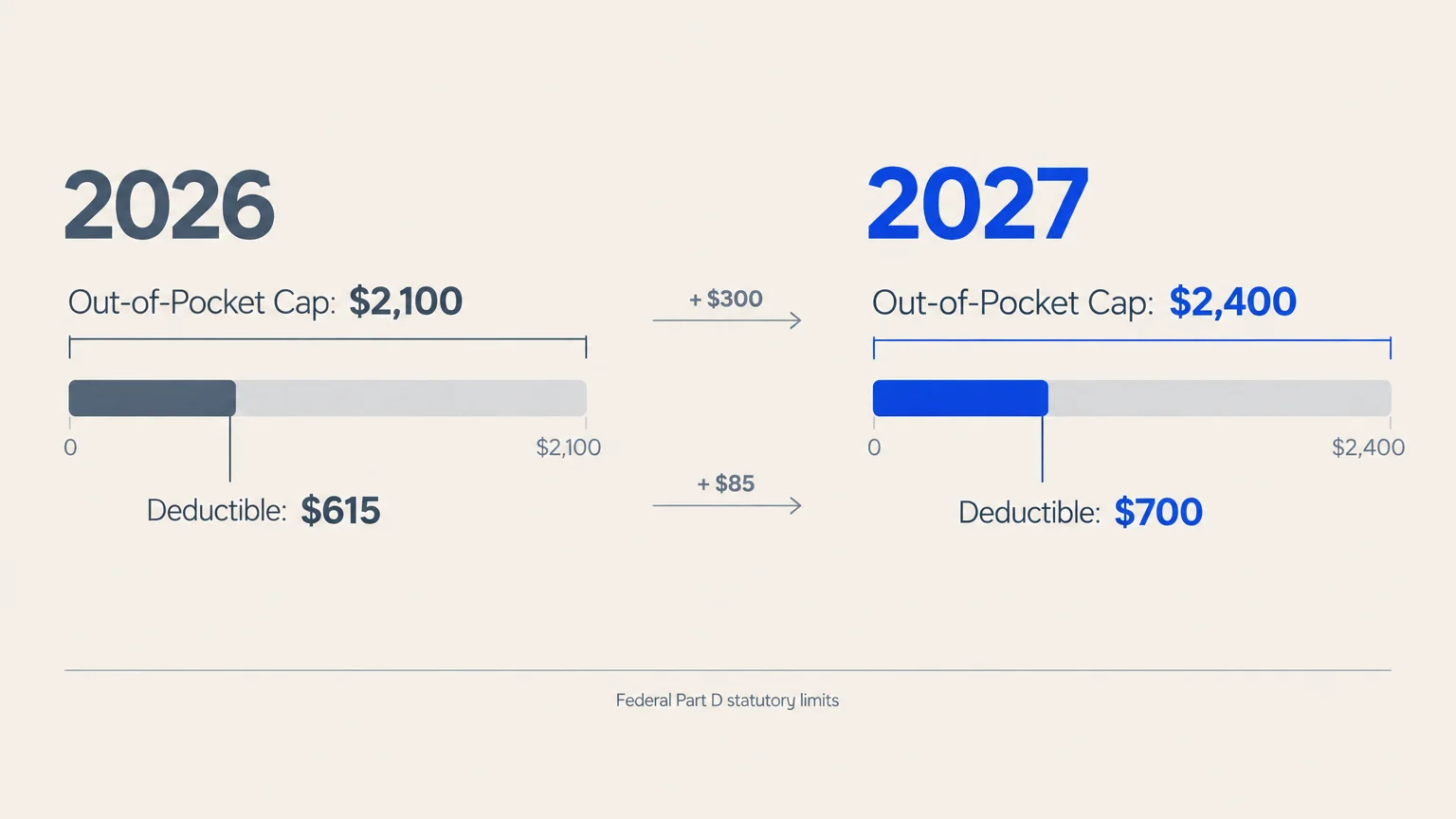
Under these reforms, the annual out-of-pocket spending cap for covered medications reaches $2,400 in 2027. This threshold rose from $2,100 in 2026 and provides crucial protection for individuals managing severe, chronic health conditions.
However, insurance carriers face greater financial liability under this revised framework. To offset higher benefit payouts, many insurers have increased monthly premiums and pushed plan deductibles to legal maximums.
For 2027, the standard maximum annual deductible that any Part D plan can charge climbs to $700. In 2026, that cap stood at $615.
Before your plan pays anything toward non-generic medications, you must spend $700 directly out of pocket. For seniors who take few or no brand-name prescriptions, paying that deductible makes little financial sense.
Understanding these shifts helps you evaluate whether maintaining a standalone prescription drug plan (PDP) still serves your financial interests.
Reason 1: Skyrocketing Standalone Part D Premiums in 2027
The most urgent financial reason to reconsider a standalone drug plan is the impending surge in premium prices. For years, federal subsidies helped mask the true underlying cost of private drug coverage.
The Centers for Medicare & Medicaid Services (CMS) is ending its temporary Part D Premium Stabilization Demonstration at the end of 2026. This federal initiative previously capped annual price increases and shielded consumers from sharp market spikes.
Because CMS is sunsetting the subsidy one year early, private insurers are repricing their standalone policies to match market conditions. As a result, millions of retirees face steep monthly increases.
According to an October 2026 analysis by KFF, the enrollment-weighted average monthly premium for a standalone Part D plan will jump 50% in 2027. Average premiums will surge from $34 in 2026 to $51 per month.
Although CMS projects the national average standalone premium will rise modestly from $35.09 in 2026 to $36.00 in 2027, that projection assumes beneficiaries actively switch to cheaper options. Those who remain in existing plans will bear the full brunt.
KFF projects that average monthly premiums across the eight national standalone drug plans will range from $6 to $204 in 2027. Premium volatility means your existing plan could easily double or triple in price overnight.
Nearly 30% of standalone enrollees without low-income subsidies—approximately 3.9 million seniors—will pay $100 or more per month if they fail to switch plans. Paying $1,200 annually merely for the right to buy medicine is an unsustainable burden.
In addition to surging costs, your choices are shrinking. The total number of standalone Part D plans available nationally drops by roughly 13%, from 360 plans in 2026 down to 312 in 2027.
In 2027, an average beneficiary will have access to only 9 standalone PDPs. That is a stark decline compared to previous years, leaving you with fewer competitive options.
“Never sign up for an insurance policy on autopilot; recurring premiums will silently drain your retirement accounts.” — Suze Orman, Personal Finance Author
Paying high premiums on autopilot can derail an otherwise disciplined retirement budget. You must examine whether the monthly price tag delivers equivalent financial value.
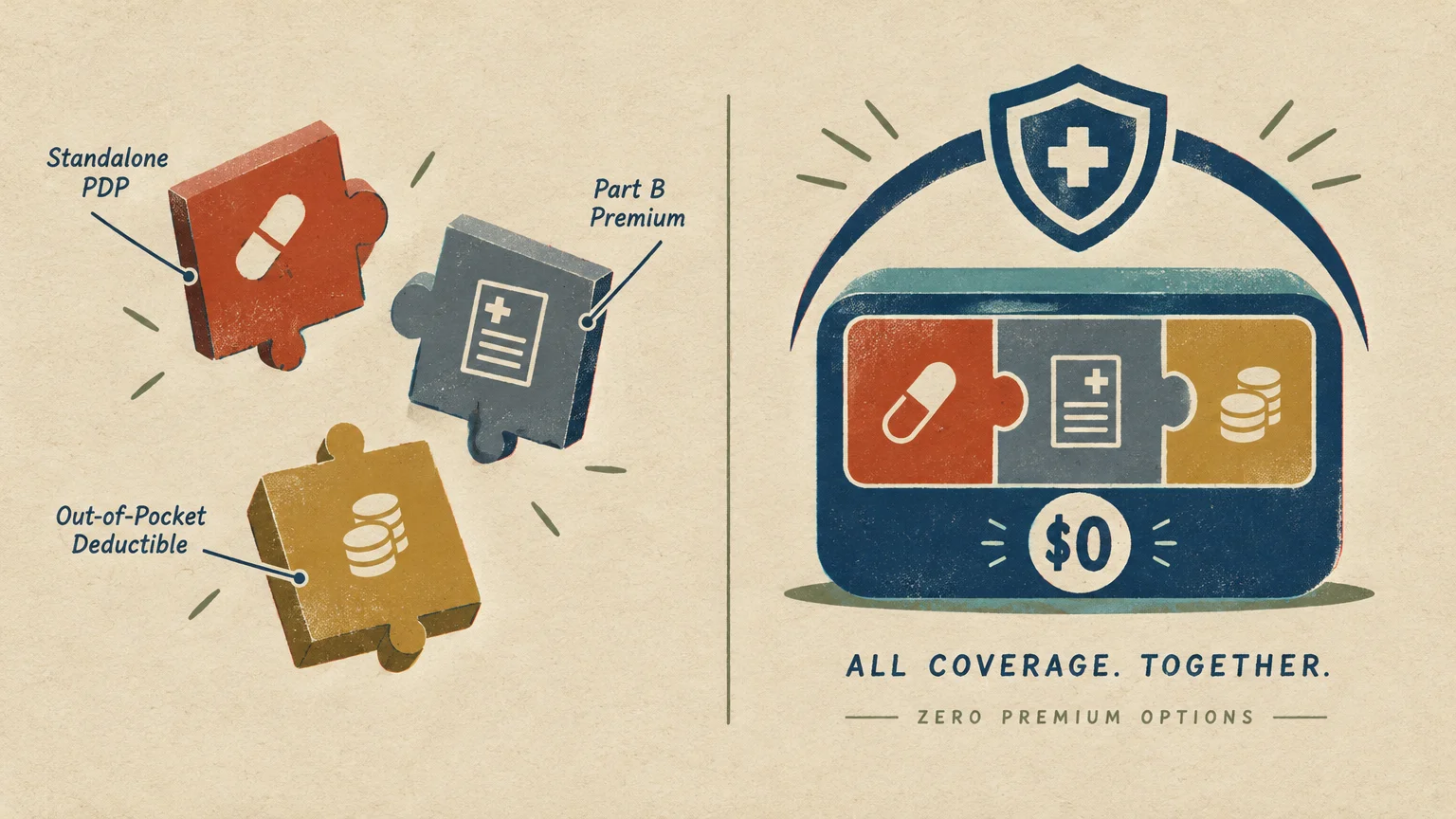
Reason 2: Medicare Advantage Bundles Offer Greater Value and Lower Out-of-Pocket Costs
The second major reason standalone drug coverage is losing its appeal is the sheer cost disparity with Medicare Advantage. When you compare standalone policies to integrated health plans, the financial contrast is striking.
Medicare Advantage Prescription Drug plans (MA-PDs) bundle medical care, hospital coverage, and prescription drug benefits into a single insurance product. These plans receive federal rebate dollars that insurers can use to offset prescription costs.
According to CMS data, the average monthly Part D premium portion for an MA-PD plan will drop 38% in 2027. The drug portion falls from $11.32 in 2026 to just $7.00 per month.
Even under KFF estimates, the enrollment-weighted average monthly premium for MA-PD drug coverage sits at just $9 in 2027. That makes standalone Part D premiums more than five times higher than integrated Advantage drug coverage.
Broader plan premiums are also moving in opposite directions. CMS projects the overall weighted average monthly premium across all Medicare Advantage plans will decrease by 16.5%, falling from $14.37 in 2026 to $12.00 in 2027.
Beyond baseline premiums, Medicare Advantage plans provide substantially more plan variety. An average beneficiary can choose from 28 Medicare Advantage drug plans in 2027, compared to only 9 standalone PDPs.
Cost-sharing structures create another major financial divide between the two models. In 2027, virtually all standalone PDP enrollees—99.8%—will face percentage-based coinsurance for preferred brand-name medications.
The median coinsurance rate on standalone plans is 25%. If a specialty medication costs $800 per month, a 25% coinsurance bill requires you to pay $200 at the pharmacy counter.
In contrast, only 83% of Medicare Advantage drug enrollees face coinsurance, with a lower median rate of 20%. Many Advantage plans continue to offer predictable, flat copayments for preferred brand-name drugs.
According to educational resources on Investopedia, flat copayments provide much greater budget certainty than variable coinsurance. For many seniors, that predictability tilts the balance toward integrated coverage.
A predictable $40 copay is far easier to manage on a fixed income than an unpredictable 25% coinsurance charge. Medicare Advantage plans clearly leverage their size to structure more consumer-friendly drug pricing.
Reason 3: Cash Pricing and Discount Programs Bypass High Deductibles
The third reason to scrutinize standalone plans involves the availability of cash purchasing alternatives. If you only take generic maintenance drugs, traditional insurance may cost more than the medications themselves.
A standalone Part D plan carries a maximum allowable deductible of $700 in 2027. In many plans, you pay full retail price until you satisfy that deductible.
Consider common generic prescriptions such as atorvastatin for cholesterol or lisinopril for blood pressure. At retail pharmacies, these generic drugs frequently cost between $4 and $15 for a three-month supply.
Paying a $51 monthly premium amounts to $612 per year in fixed overhead. Spending $612 annually just to purchase $40 worth of generic pills is an inefficient use of your retirement capital.
Guidance from the Consumer Financial Protection Bureau highlights the value of eliminating recurring fees that provide little functional return. Paying insurance premiums for low-cost generic drugs fits that exact description.
Cash discount cards and pharmacy programs offer steep discounts directly to consumers without billing insurance. Commercial platforms provide coupons that slash out-of-pocket costs at retail pharmacy counters across the country.
Federal initiatives have also introduced direct purchasing options, such as the coupon portal at TrumpRx.gov. These tools allow consumers to bypass insurance bureaucracy and secure discount pricing on essential prescriptions.
Similarly, major retail chains and online pharmacies offer generic prescription clubs with annual memberships under $50. These programs often dispense hundreds of common medications for free or nominal co-pays.
However, relying entirely on cash discount platforms carries a significant regulatory consequence. Cash discount programs do not qualify as creditable prescription drug coverage under federal Medicare guidelines.
Furthermore, money spent through coupon cards or cash platforms does not count toward your $700 deductible. It also does not count toward your $2,400 annual out-of-pocket spending cap.
You must balance the immediate cash savings on generic pills against the long-term risk of developing complex health conditions. Relying solely on cash purchases requires a clear understanding of federal penalty rules.
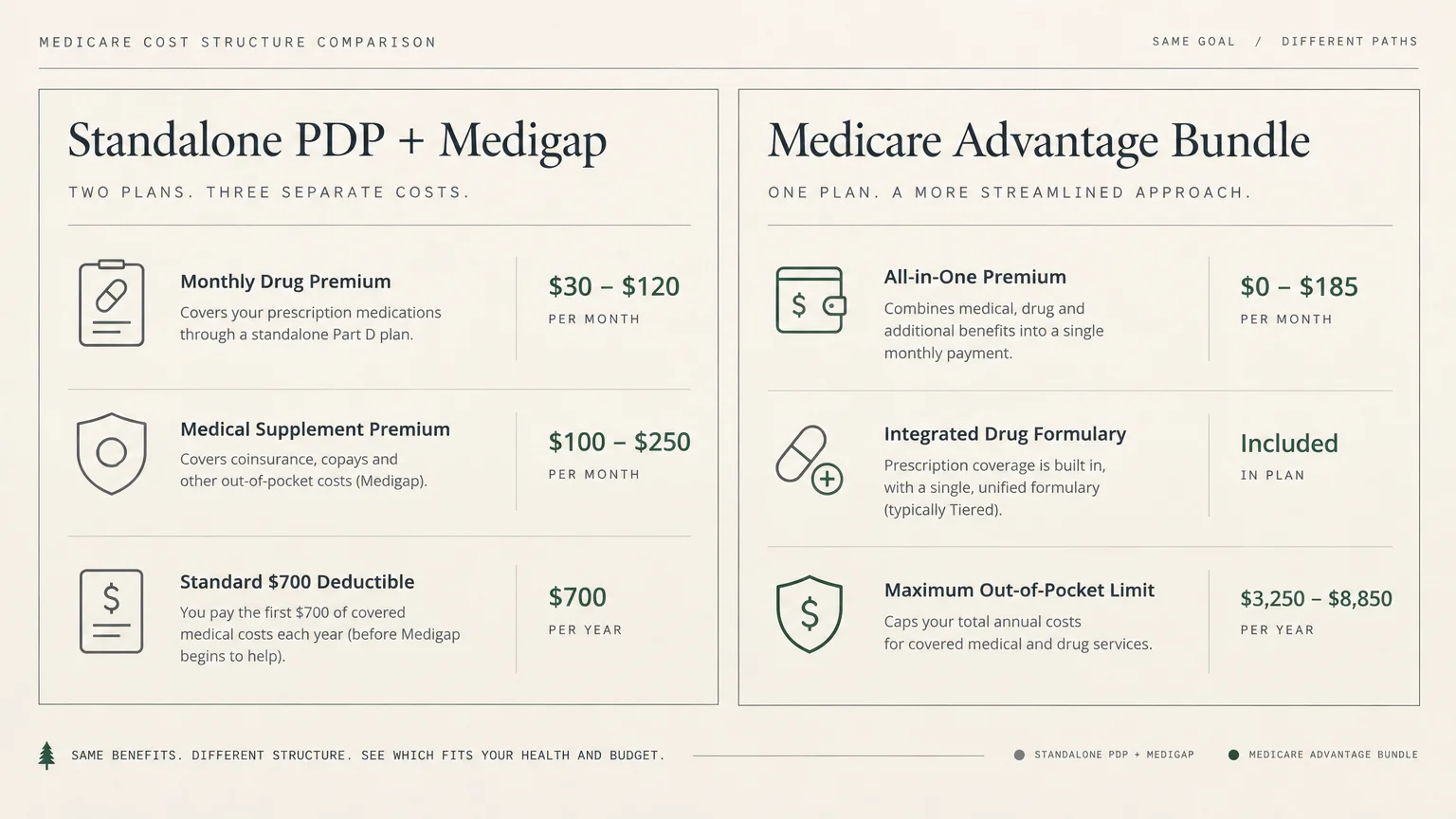
Standalone Part D vs. Medicare Advantage: Direct Cost Comparison
Evaluating your options requires a direct comparison of key costs, structural features, and plan rules. The financial differences between standalone PDPs and bundled Advantage plans have widened considerably for 2027.
Reviewing these numbers side by side highlights where your healthcare dollars actually go.
| Plan Feature | Standalone Part D (PDP) | Medicare Advantage Drug Plan (MA-PD) |
|---|---|---|
| Average Monthly Drug Premium (2027) | $51.00 (KFF weighted) / $36.00 (CMS) | $7.00 (CMS) / $9.00 (KFF weighted) |
| Overall Average Plan Premium (2027) | $51.00+ (drug coverage only) | $12.00 (includes medical and hospital care) |
| Standard Maximum Deductible (2027) | $700.00 | Varies (frequently $0 on Tier 1 and Tier 2 drugs) |
| Preferred Brand Cost-Sharing Structure | 99.8% pay coinsurance (median 25%) | 83% pay coinsurance (median 20%; copays common) |
| Average Plan Options Available | 9 plans per beneficiary | 28 plans per beneficiary |
| Annual Out-of-Pocket Drug Cap (2027) | $2,400.00 (statutory limit) | $2,400.00 (statutory limit) |
| Doctor and Hospital Network Flexibility | Unlimited (works with any Original Medicare doctor) | Restricted (requires HMO or PPO provider networks) |
As the comparison shows, Medicare Advantage plans provide a noticeable pricing advantage in monthly premiums. Insurers use federal payments to subsidize drug benefits, lowering the barrier to entry for retirees.
However, premium costs should not be your sole deciding factor. While standalone plans cost more each month, they give you the flexibility to pair drug coverage with Original Medicare and a Medigap policy.
Original Medicare paired with a Medigap supplement lets you visit any doctor or specialist in the United States who accepts Medicare. Medicare Advantage plans generally restrict your care to regional provider networks and HMO rules.
Sacrificing network freedom simply to save $40 a month on prescription premiums could backfire if you require specialized medical treatments. You must evaluate the total package of healthcare access and pharmacy costs.
Official resources on Medicare.gov allow you to compare total annual drug costs alongside network rules. Taking time to review both sides prevents expensive surprises.
The Hidden Trap: Creditable Coverage and Late Enrollment Penalties
Before you consider dropping your standalone plan, you must understand Medicare’s permanent late enrollment penalty. Medicare imposes lifelong financial penalties on individuals who fail to maintain continuous, certified drug coverage.
Federal regulations mandate that you must hold creditable prescription coverage if you do not enroll in Part D. Creditable coverage means benefits that pay at least as much as standard Medicare drug coverage.
Qualifying creditable coverage typically includes employer health plans, union benefits, the Veterans Affairs (VA) health system, or TRICARE. If you have valid VA drug benefits, you can safely skip Part D without penalty.
If you go 63 or more consecutive days without creditable coverage after your Initial Enrollment Period, a penalty accrues. Medicare calculates this penalty using the national Base Beneficiary Premium.
For 2027, CMS set the national Base Beneficiary Premium at $41.33, up approximately 6% from $38.99 in 2026. The monthly penalty equals 1% of this base amount for every full month you went uncovered.
In 2027, each uncovered month adds approximately $0.4133 to your monthly bill for the rest of your life. If you skip coverage for 36 months, you face an extra 36% surcharge every single month.
Commercial coupon programs and retail cash discounts do not satisfy creditable coverage standards. If you drop Part D to pay cash, you will face accumulated penalties when you re-enroll later.
If you take minimal medications but lack creditable employer or VA coverage, dropping Part D entirely is dangerous. Instead, your best financial move is selecting the lowest-premium standalone plan available in your state.
Enrolling in a bare-bones policy costing under $10 monthly protects you from lifetime penalties. That strategy keeps your ongoing overhead low while preserving your right to comprehensive coverage if your health changes.
High Earners Face an Extra Hurdle: Part D IRMAA Surcharges
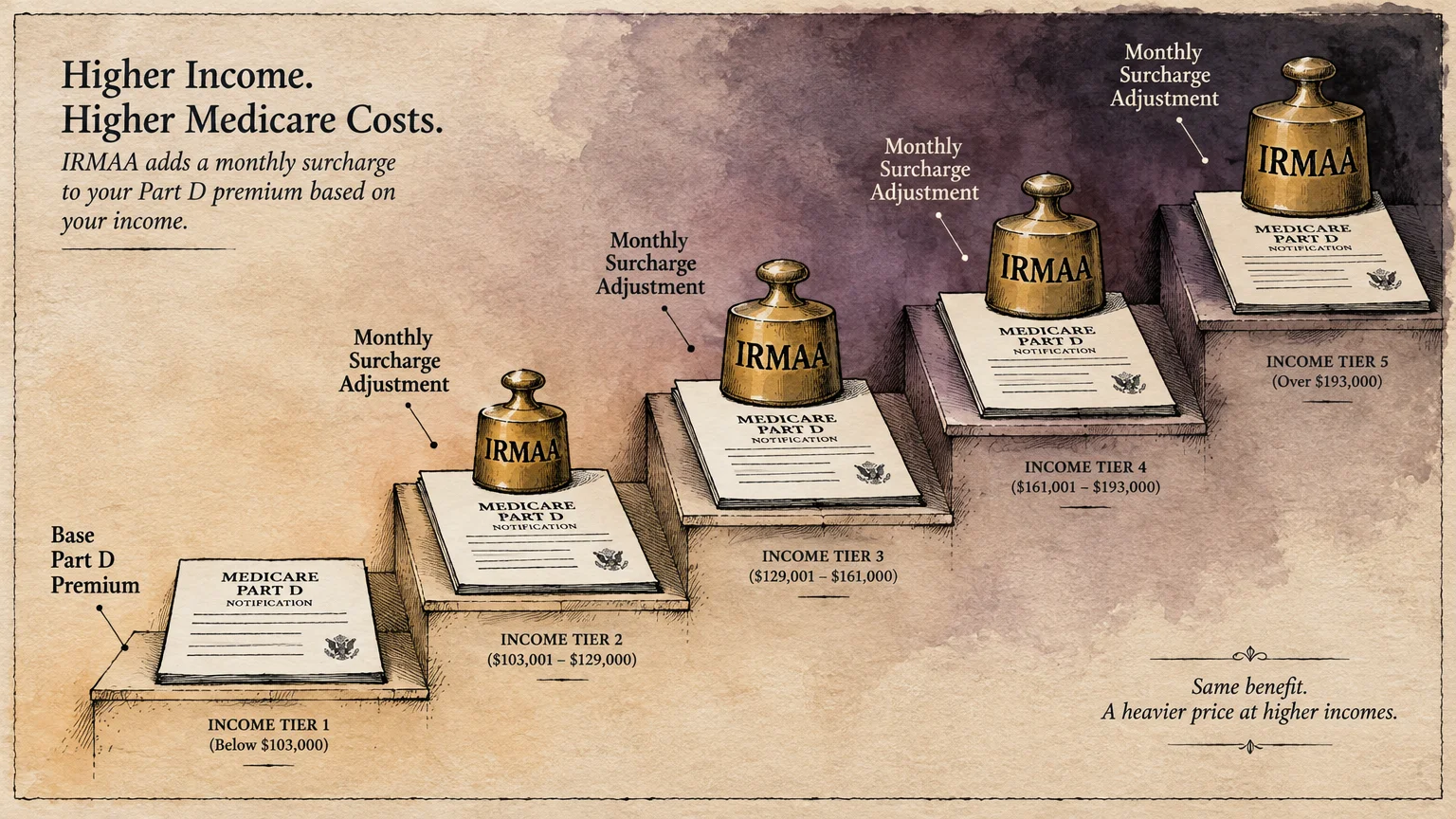
Higher-income retirees face an additional financial layer that makes standalone drug plans even more expensive. This surcharge is called the Income-Related Monthly Adjustment Amount, or IRMAA.
IRMAA is a federal fee assessed on both Part B medical insurance and Part D drug coverage. If your income exceeds statutory thresholds, the federal government automatically adds this charge to your monthly premium.
The government calculates your 2027 IRMAA status based on your Modified Adjusted Gross Income (MAGI) from your 2025 federal tax return. A two-year lookback period determines your current billing tier.
For 2027, IRMAA surcharges apply to individual tax filers with income above $112,000 and married couples filing jointly above $224,000. These income thresholds adjust upward slightly each year to account for economic conditions.
Projected Part D IRMAA surcharges for 2027 range between $15.40 and $96.40 per month on top of regular plan premiums. In 2026, these additional surcharges ranged from $14.50 to $91.00 per month.
If you pay a $51 base premium and fall into the highest tax bracket, you owe an extra $96.40 monthly. Your total Part D premium exceeds $147 per month, or nearly $1,770 annually.
Paying $1,770 per year in fixed fees while taking minimal medication represents a significant financial drain. High earners must carefully weigh whether alternative creditable coverage strategies can help minimize these mandatory surcharges.
Information published by the Social Security Administration outlines exact income brackets and payment guidelines. Understanding where your tax return falls allows you to budget accurately.
Avoiding Common Errors When Choosing Drug Coverage
Managing prescription benefits requires active oversight during every annual open enrollment period. Avoiding common planning mistakes ensures you do not overspend on premiums or face surprise pharmacy bills.
The most frequent mistake is letting your existing Part D plan renew automatically without reviewing plan notices. Insurers alter their drug formularies, premium rates, and copayment structures every single calendar year.
A plan that charged $25 per month last year might charge $65 next year. Reviewing your Annual Notice of Change (ANOC) received in September protects you from unpleasant cost spikes in January.
Another frequent error is assuming that pharmacy discount cards exempt you from federal late enrollment penalties. Many retirees cancel their drug plan to use discount cards, only to incur lifetime penalties down the road.
Beneficiaries also frequently overlook pharmacy network restrictions. Part D plans designate specific retail chains as preferred pharmacies, offering lower copayments than standard network locations.
Filling a maintenance prescription at a standard pharmacy instead of a preferred pharmacy can double your copayment. Always confirm whether your neighborhood drugstore participates in your plan’s preferred network.
Retirement spending analyses from Kiplinger frequently emphasize shopping your healthcare coverage annually. Reviewing your options each autumn remains the most reliable way to avoid overpaying.
Finally, never switch from Original Medicare to Medicare Advantage solely for cheaper drug premiums without checking doctor networks. Saving $40 monthly on drug coverage provides little comfort if your primary specialist is out of network.

When DIY Isn’t Enough: Navigating Complex Medication Needs
While online comparison tools help you review standard plans, certain personal situations require customized professional guidance. Navigating complex rules without specialized assistance can result in costly coverage gaps.
Consulting a licensed Medicare advisor or your local State Health Insurance Assistance Program (SHIP) is vital in several specific scenarios:
- You take specialty biologic medications or brand-name cancer drugs costing thousands of dollars per month.
- You maintain dual residency across two states and require access to in-network pharmacy chains nationwide.
- You experienced a life-changing income drop, such as retirement or the loss of a spouse, that justifies an IRMAA appeal.
- You are transitioning off employer-sponsored retiree benefits and need to verify the official creditable coverage status of your prior plan.
A professional advisor can run detailed formulary cross-checks across all plans available in your specific zip code. They ensure your specific dosages and delivery methods receive favorable tier placement.
If your income dropped recently, filing Form SSA-44 with the Social Security Administration can eliminate unfair IRMAA charges. Professional advocates understand how to document qualifying life events to expedite your fee reduction.
Getting objective help protects your healthcare access and ensures you do not fall into costly administrative traps.
Frequently Asked Questions About Medicare Prescription Coverage
Reviewing common questions helps clarify your coverage options and confirms the best strategy for your healthcare budget.
Can I drop my standalone Part D plan if I only take cheap generics?
You can legally drop your plan, but doing so without creditable coverage triggers lifetime penalties. If your health changes later and you need brand-name drugs, you will face higher premiums permanently.
A smarter approach is enrolling in the lowest-cost standalone plan available in your area to maintain continuous creditable status. That baseline coverage preserves your rights while keeping your monthly overhead minimal.
How does the $2,400 out-of-pocket cap work in 2027?
The $2,400 cap limits your annual spending on covered Part D medications at network pharmacies. Once your combined deductible, copayments, and coinsurance reach $2,400, your plan pays 100% of covered drug costs for the rest of the year.
However, monthly insurance premiums do not count toward this $2,400 limit. Similarly, medications excluded from your plan’s formulary or purchased through cash discount cards do not count toward the cap.
Does Medicare Advantage always include prescription drug coverage?
Most Medicare Advantage plans include prescription drug coverage, but not all of them do. Plans without drug benefits are called MA-only plans and are designed primarily for veterans with VA coverage.
When shopping for an Advantage plan, always confirm the policy is designated as an MA-PD. Enrolling in an MA-only plan without separate creditable coverage will leave you vulnerable to late penalties.
How can I appeal a Part D IRMAA surcharge?
You can appeal an IRMAA surcharge if you experienced a qualifying life-changing event that reduced your household income. Common qualifying events include retirement, marriage, divorce, or the death of a spouse.
To appeal, submit Form SSA-44 to the Social Security Administration along with documentation proving your income reduction. If approved, the government will recalculate your premiums using your current income rather than past tax returns.
Next Steps for Your Medicare Drug Strategy
Medicare Annual Open Enrollment runs from October 15 through December 7, 2026, for coverage starting January 1, 2027. Use this window to evaluate your current prescription costs and compare plan formularies.
Log into your account on the official Medicare Plan Finder to enter your exact prescriptions and preferred local pharmacies. Comparing total annual out-of-pocket costs will reveal whether sticking with a standalone plan makes financial sense.
This educational content is based on general financial principles, and individual results vary based on your situation. Always verify current tax laws, investment rules, and benefit eligibility with official sources.
Last updated: November 2026. Financial regulations and rates change frequently—verify current details with official sources.