Adopting time-tested financial discipline can dramatically reduce your debt and build lasting wealth faster than chasing modern money trends. Digital convenience accelerates transactions, but it frequently removes the healthy friction that keeps cash in your bank account.
Baby boomers built substantial safety nets by relying on deliberate, tangible habits that younger generations often skip in favor of algorithmic ease. You can combine these classic strategies with modern tools to optimize your cash flow today.
Here are ten practical, old-school money habits worth bringing back into your routine to strengthen your personal balance sheet.
1. Paying with Physical Cash for Everyday Small Purchases
Swapping your digital wallet for physical bills introduces immediate psychological friction that curtails impulse buying. When you physically hand over paper currency, your brain registers the loss far more acutely than tapping a screen.
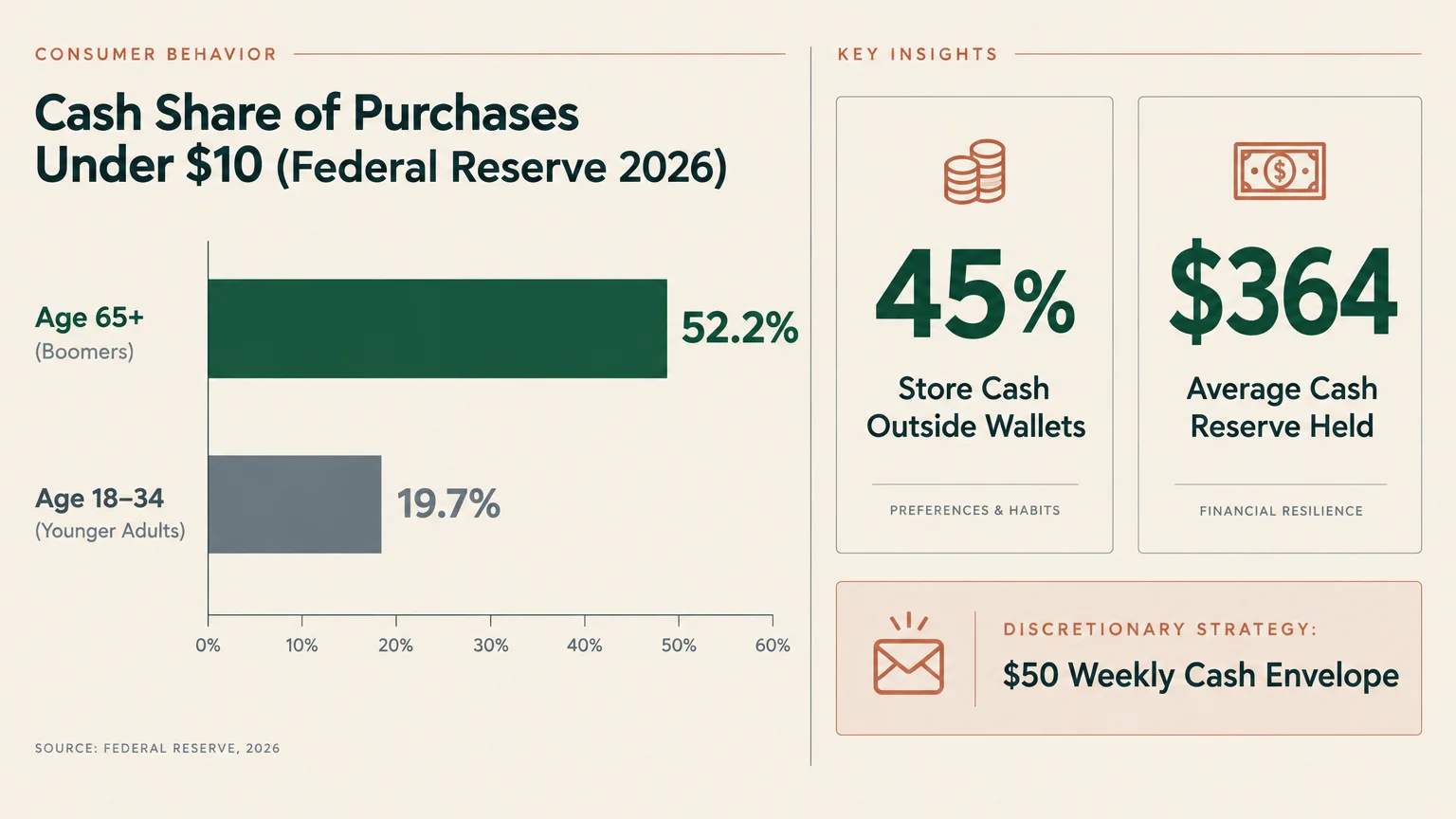
Data from the Federal Reserve’s Diary of Consumer Payment Choice (2026) highlights this generational divide. Adults aged 65 and older use cash for 52.2% of in-person purchases under $10.
In contrast, younger consumers rarely reach for physical bills. Adults aged 18 to 34 choose cash for just 19.7% of those identical small purchases.
That digital detachment makes five-dollar coffees and convenience store snacks vanish from budgets without conscious awareness. Swiping plastic or tapping a phone abstracts the spending experience, accelerating daily financial leaks.
The Federal Reserve also found that 45% of U.S. consumers store physical cash outside their wallets, holding an average reserve of $364. That stash provides an immediate buffer when digital payment terminals go down or minor emergencies arise.
You do not need to abandon cards completely to benefit from this safeguard. Instead, withdraw a set amount of physical cash every week for your discretionary daily outlays.
- Withdraw a fixed $50 cash envelope every Monday for daily snacks and casual errands.
- Leave credit cards tucked away when attending festivals, coffee shops, or farmers markets.
- Notice how parting with physical bills naturally curbs mindless mid-week spending.
2. Saving Up Front and Rejecting “Buy Now, Pay Later” Plans
Older generations operated under a straightforward rule: if you lack the funds in your checking account today, you cannot afford the item. Modern e-commerce platforms actively push installment loans that blur the boundary between true affordability and temporary cash flow.
A July 2026 PartnerCentric survey revealed that while overall Buy Now, Pay Later (BNPL) adoption reached 72%, Boomers remain the least likely to use it at 55%. Millennials lead adoption at 76%, followed by Gen X at 69% and Gen Z at 68%.
Splitting purchases into four biweekly micro-payments creates a false sense of security that quickly overwhelms monthly income. Data from LendingTree (2026) shows that 47% of BNPL users made a late payment within the past year.
The Consumer Financial Protection Bureau (CFPB) warns that stacked installment plans obscure overall debt burdens. When multiple micro-loans hit your account simultaneously, overdraft fees follow closely behind.
Boomers avoid this quicksand by establishing dedicated sinking funds. They save the full purchase price before buying discretionary goods, shielding themselves from interest charges and hidden penalties.
Waiting to purchase items also creates a valuable cooling-off period. You will often realize that an impulse purchase loses its appeal after two weeks of patient consideration.
- Establish dedicated digital sinking funds for electronics, clothing, and holiday travel.
- Delete saved payment credentials from third-party installment apps on your phone and browser.
- Enforce a mandatory 72-hour delay on any non-essential purchase exceeding $50.
3. Treating Emergency Reserves as Non-Negotiable Capital
Boomers built their financial lives on the principle that sudden disruptions are guaranteed realities rather than rare surprises. They prioritize cash reserves over lifestyle upgrades, creating shock absorbers against job loss, medical emergencies, or car repairs.
According to Bankrate’s 2026 Annual Emergency Savings Report, 52% of Baby Boomers hold more emergency savings than credit card debt. Only 44% of Gen Z, 42% of Gen X, and 38% of Millennials achieve that same milestone.
The disparity becomes even starker when examining a complete lack of liquidity. Only 16% of Boomers report having zero emergency funds, compared to 34% of Gen Z consumers.
That liquidity creates unmatched resilience during routine disruptions. Bankrate reported in January 2026 that 24% of Boomers can cover a $1,000 emergency purely from regular monthly cash flow, compared to 15% of Millennials and 11% of Gen Z.
Treating your savings account as a non-negotiable monthly expense protects you from compounding credit card interest. Build at least three to six months of essential living expenses before funding optional lifestyle expansions.
“Do not save what is left after spending, but spend what is left after saving.” — Warren Buffett, Chairman and CEO of Berkshire Hathaway
Place these reserves in a high-yield savings account that remains separate from your primary checking ledger. This structural barrier prevents you from accidentally spending your emergency cushion on non-essential purchases.

4. Making Home Cooking the Uncompromising Default
For older generations, dining out was an intentional indulgence reserved for birthdays, anniversaries, or major accomplishments. Younger consumers frequently treat restaurant dining and app-based delivery services as routine daily meal solutions.
Bureau of Labor Statistics data from the Consumer Expenditure Survey (released October 2026) reveals that the average household spent $10,633 on food in 2025. This outlay represented 13.0% of total household spending.
Households allocated $6,491 to groceries and $4,142 to food away from home. However, younger households skew much heavier toward commercial kitchens; a 2026 CashNetUSA study showed Gen Z spends 41.5% of their food budget on dining out.
App delivery fees, service surcharges, and tips can easily double the cost of a simple takeout meal. That premium siphons hundreds of dollars each month away from productive savings and investment goals.
Embracing batch cooking and meal prep restores control over your monthly budget. Preparing staple meals at home allows you to enjoy higher quality nutrition at a fraction of commercial retail prices.
Boomers master the art of transforming leftovers into secondary meals, minimizing food waste entirely. A roasted chicken becomes sandwiches the next day, and the remaining bones yield a nutrient-dense soup broth.
- Plan five weekly home-cooked dinners around items already sitting inside your pantry.
- Delete third-party food delivery apps to eliminate the frictionless temptation to order takeout.
- Designate dining out as an intentional social event rather than an emergency dinner solution.
5. Ruthlessly Auditing Recurring Subscriptions
Boomers grew up paying single upfront prices for media, making them inherently skeptical of recurring monthly charges. Younger consumers often sign up for streaming apps, fitness software, and subscription boxes that quietly accumulate on credit cards.
A Consumer Insights report from Chargebee indicates that Boomers spend an average of $90 monthly on subscriptions. Millennials average $124 per month—a 38% increase—while Gen Z spends $118 per month.
Bank of America Institute data from July 2026 revealed that subscription spending rose 7.7% year-over-year across all demographics. Gen Z drove the fastest expansion, posting an annual growth rate of nearly 14%.
These recurring charges act as silent financial leaks because they bypass conscious purchasing decisions. Over a full calendar year, paying for forgotten streaming platforms and digital subscriptions costs hundreds in uncaptured wealth.
Adopt the old-school habit of auditing recurring obligations every quarter. Cancel any service you have not used in the past thirty days, and rotate entertainment platforms one at a time.
- Review your last two bank statements line by line to highlight repeating digital charges.
- Subscribe to only one video streaming service at a time, switching platforms when you finish a series.
- Disable automated annual app renewals so you must actively approve future charges.
6. Repairing and Maintaining Possessions Before Replacing Them
The classic ethos of “use it up, wear it out, make it do, or do without” defined the material habits of the Boomer generation. Rather than replacing goods at the first glitch, they invested time and effort into routine maintenance.
Modern consumer culture encourages a disposable mindset, pushing rapid hardware upgrades every twelve to twenty-four months. However, repairing minor mechanical or cosmetic defects preserves thousands of dollars in capital over your lifetime.
Maintaining your vehicle according to factory specifications illustrates this financial power clearly. Driving a dependable vehicle past 150,000 miles without monthly auto financing frees significant cash flow every single month.
Basic maintenance skills—such as patching drywall, mending seams, or descaling appliances—yield substantial tax-free returns. You save high labor fees while maximizing the functional life of items you already own.
Before throwing away a malfunctioning item, spend fifteen minutes diagnosing the issue. Often, a five-dollar replacement part and a basic tutorial can restore full functionality.
- Follow manufacturer maintenance schedules strictly for vehicle oil, transmission fluids, and filters.
- Learn basic home and clothing repair skills to handle minor tears and loose plumbing fittings.
- Clean refrigerator condenser coils and replace HVAC filters regularly to prolong appliance lifespan.
7. Balancing Accounts and Monitoring Outflows Manually
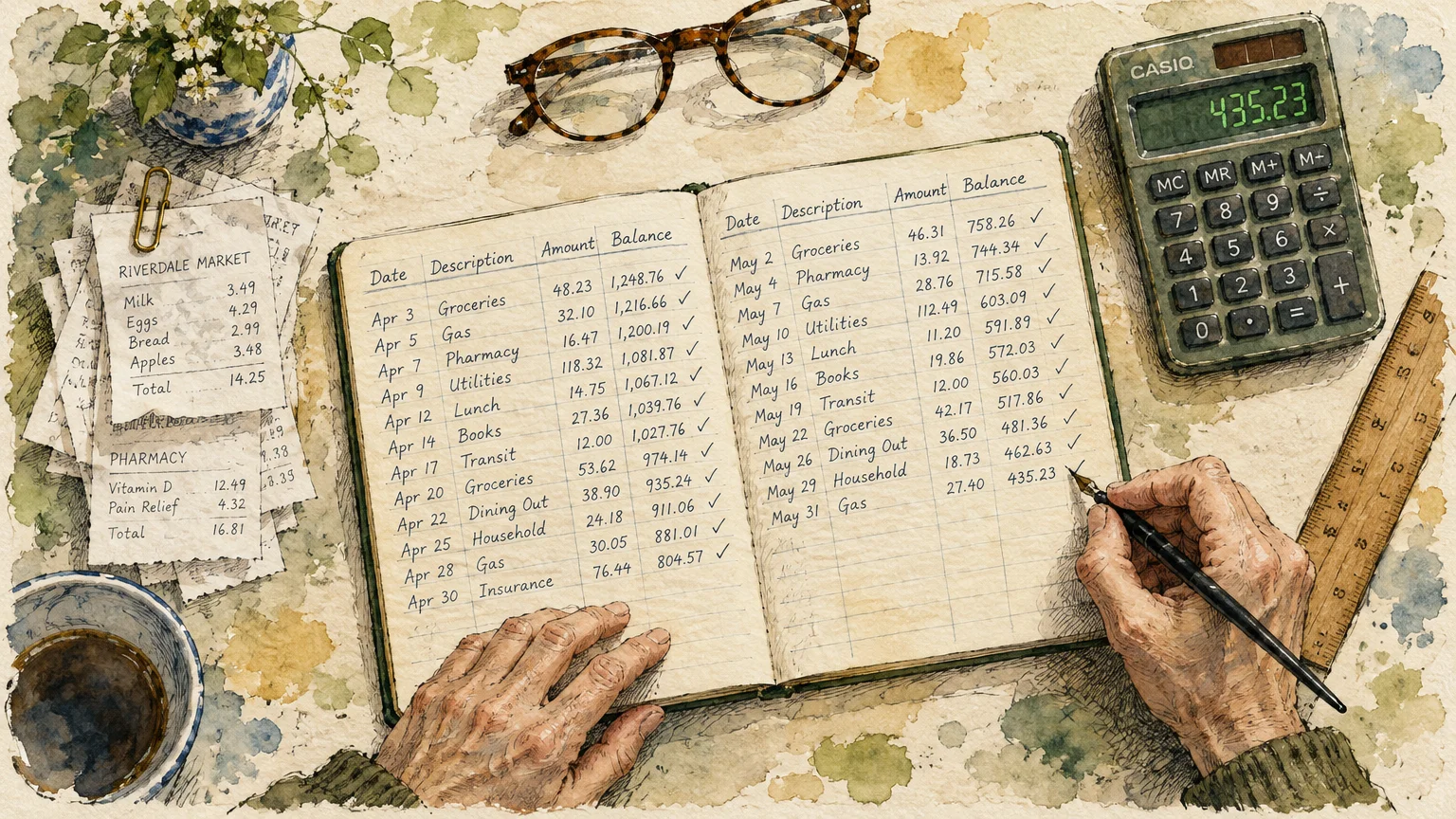
Long before automated financial dashboards existed, Boomers balanced physical checkbook ledgers line by line each month. That tactile ritual forced them to scrutinize every transaction and catch billing errors immediately.
Federal Reserve data from the May 2026 Report on the Economic Well-Being of U.S. Households indicates that 35% of adults still write checks monthly. In contrast, 83% use cash and 72% rely on credit cards.
While writing paper checks is no longer necessary, hands-on transaction tracking remains invaluable. Automated tracking apps frequently hide overspending because passive push notifications rarely generate behavioral adjustments.
Manually logging your expenditures in a spreadsheet or physical notebook creates deep awareness of where your money goes. You notice small fee increases, mistaken charges, and unnecessary spending spikes before they compound.
This hands-on review also protects you against subscription creep and fraudulent charges. When you examine every transaction individually, hidden recurring fees cannot escape your attention.
- Log into your accounts once a week to review and record every cleared transaction manually.
- Flag and dispute any unexplained banking fee or utility service charge within 48 hours.
- Keep a simple running ledger of your fixed monthly obligations and discretionary spending limits.
8. Planning Purchases Around Sales Cycles and Circulars
Boomers rarely entered a grocery store without scanning the weekly circular to identify promotional discounts. They designed weekly menus around what was on sale rather than deciding dinner cravings on the drive home.
Inmar Intelligence data from 2026 reveals that traditional paper insert coupons represent just 2.3% of all coupon redemptions today. Digital load-to-card promotions now dominate grocery savings, accounting for 54% of redemptions.
Younger shoppers embrace digital tools—78% of Gen Z and 77% of Millennials redeem digital coupons, compared to 56% of Boomers. However, many younger consumers apply discounts reactively at checkout rather than planning meals around weekly sales.
Retail grocers rotate discounts on meat, produce, and pantry goods on predictable four-to-six-week sales cycles. Stocking up on non-perishable staples when they hit promotional floor prices slashes your annual grocery bill significantly.
Aligning your appetite with the grocery store’s discount calendar requires minimal effort. Simply check your grocer’s digital app before planning meals for the upcoming week.
- Check your grocer’s weekly digital flyer before writing down your grocery list.
- Clip manufacturer coupons inside store apps before stepping into the supermarket aisles.
- Stock your pantry with shelf-stable proteins, grains, and canned goods only when they hit deep discounts.
9. Maximizing Tax-Advantaged Compounding Accounts Early
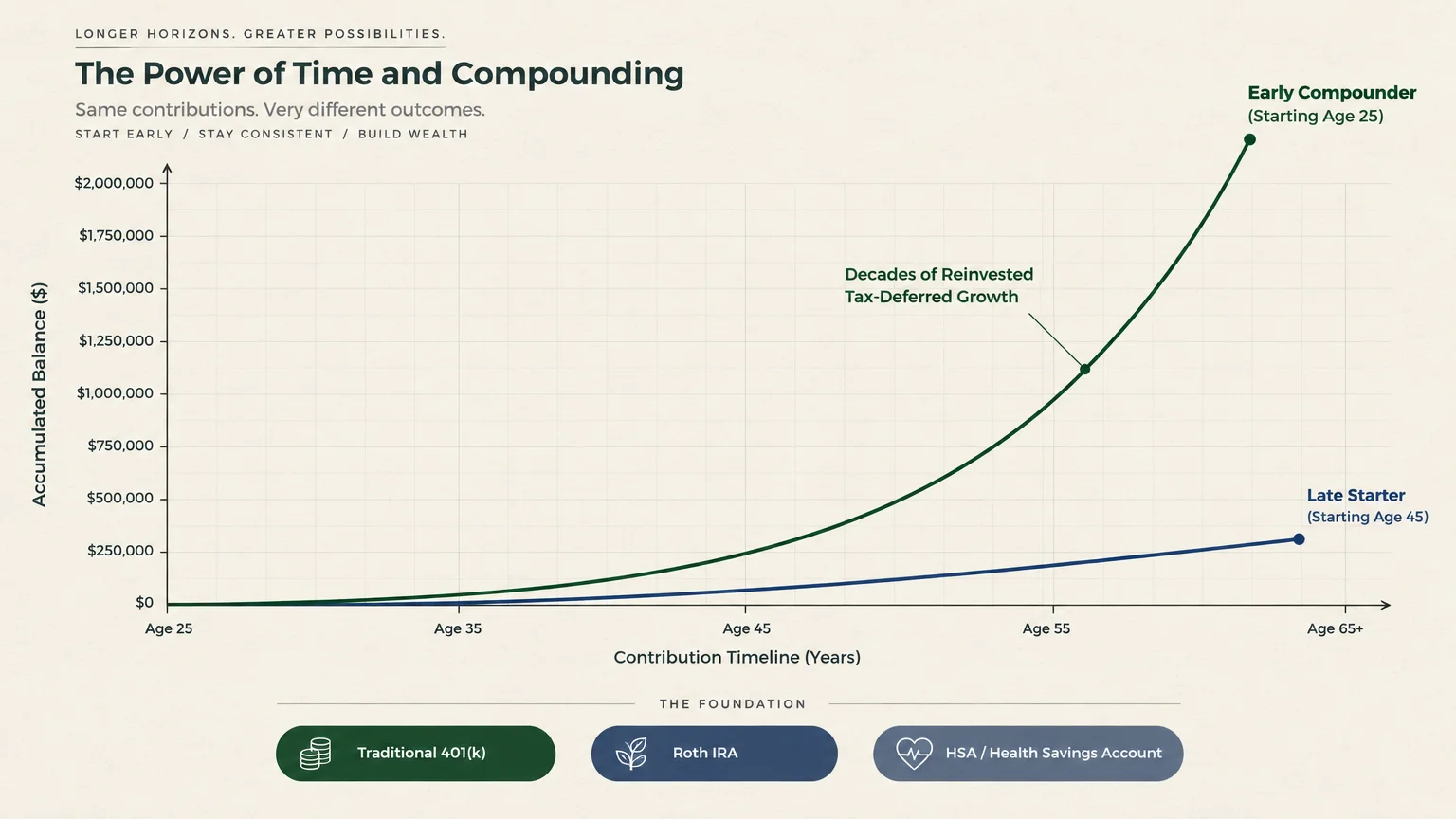
Baby Boomers who achieved comfortable retirements did so primarily through steady, long-term participation in tax-advantaged accounts. They prioritized low-cost index investing and company matches over speculative assets or rapid trading.
The Internal Revenue Service (IRS) provides substantial retirement contribution allowances for 2026 that reward disciplined savers. The base employee contribution limit for 401(k), 403(b), and most 457 plans is $24,500.
Individual Retirement Account (IRA) contribution caps stand at $7,500 for the 2026 tax year. Capturing your full employer match provides an immediate, risk-free 100% return on your contributed funds.
Older workers also benefit from powerful statutory catch-up provisions. Workers aged 50 and older can contribute an extra $8,000 to their 401(k) for a $32,500 total, plus an extra $1,100 to an IRA.
SECURE 2.0 rules provide a special super catch-up limit of $11,250 for savers aged 60 to 63, allowing a maximum 401(k) contribution of $35,750 in 2026. However, workers earning over $150,000 in 2025 FICA wages must direct catch-up funds to Roth accounts.
Compounding interest rewards time in the market far more than timing the market. Visit Investor.gov to model how steady monthly investments build exponential long-term wealth.
“The miracle of compounding returns is overwhelmed by the tyranny of compounding costs.” — John Bogle, Founder of The Vanguard Group
Automating your retirement contributions directly from payroll removes the emotional temptation to skip savings months. Over several decades, consistent tax-advantaged contributions generate financial independence.
10. Calling Service Providers to Negotiate Bills Directly
When insurance rates or cable bills increased, Boomers immediately picked up the telephone to demand an explanation. They understood that loyalty rarely pays in consumer industries, and customer retention departments possess significant discounting authority.
Younger consumers often experience phone hesitation, preferring automated chatbots or silently absorbing price increases. That reluctance costs hundreds of dollars annually across auto insurance, home internet, and mobile phone plans.
Service providers count on customer inertia to inflate profit margins through gradual, unannounced price hikes. A focused twenty-minute conversation once a year can unlock promotional pricing or eliminate unnecessary junk fees.
Contact your service providers armed with competing quotes to maximize your negotiating leverage. Politely ask to speak with customer retention specialists who have the authority to apply promotional discounts.
Remain professional and calm throughout the conversation, but be prepared to switch providers if they refuse to negotiate. Companies routinely offer their best rates to customers who actively demonstrate a willingness to leave.
- Call your internet service provider annually to request current promotional rates.
- Compare auto insurance rates every twelve months and ask your carrier to match lower competitor pricing.
- Review medical bills for billing errors and request itemized statements before submitting payment.
Comparing Old-School Habits with Modern Financial Practices
Examining traditional money habits alongside modern behaviors highlights opportunities to combine the best of both worlds. The goal is not to abandon modern technology, but to apply classic discipline through digital tools.
| Financial Category | Old-School Boomer Habit | Common Modern Habit | The Practical Hybrid Approach |
|---|---|---|---|
| Everyday Purchases | Physical cash envelopes | Contactless digital wallets | Dedicated debit card with a strict weekly spending allowance |
| Discretionary Buying | Saving the full amount first | Buy Now, Pay Later (BNPL) loans | Automated high-yield sinking funds for anticipated purchases |
| Food Budgeting | Home-cooked meals and leftovers | On-demand delivery apps and takeout | Meal planning around sales cycles with planned dining out |
| Account Monitoring | Balancing paper checkbooks | Passive push notifications | Weekly manual spreadsheet tracking to review all outflows |
| Recurring Expenses | Single utility bills and cable | Unmonitored digital subscriptions | Quarterly subscription audits and single-service streaming rotation |
Merging traditional intentionality with modern banking features creates a robust personal finance framework. You retain the convenience of digital payments while preserving the spending control of physical cash.
What Can Go Wrong (and How to Avoid It)
While traditional money habits provide incredible stability, applying them too rigidly can create unintended financial drawbacks. Blindly following old-school methods without evaluating modern economic realities limits your financial growth.
Hoarding physical cash outside the banking system exposes your wealth to inflation risk and theft. While holding modest emergency cash makes sense, keeping large sums in physical bills guarantees purchasing power erosion over time.
Extreme frugality can also lead to penny-wise, pound-foolish decisions. Driving twenty miles to save four dollars on groceries wastes more in fuel and personal time than the discount provides.
Avoiding credit cards completely can also backfire in modern commerce. Responsible credit card usage builds the strong credit profile required for competitive mortgage rates, while providing vital fraud protection.
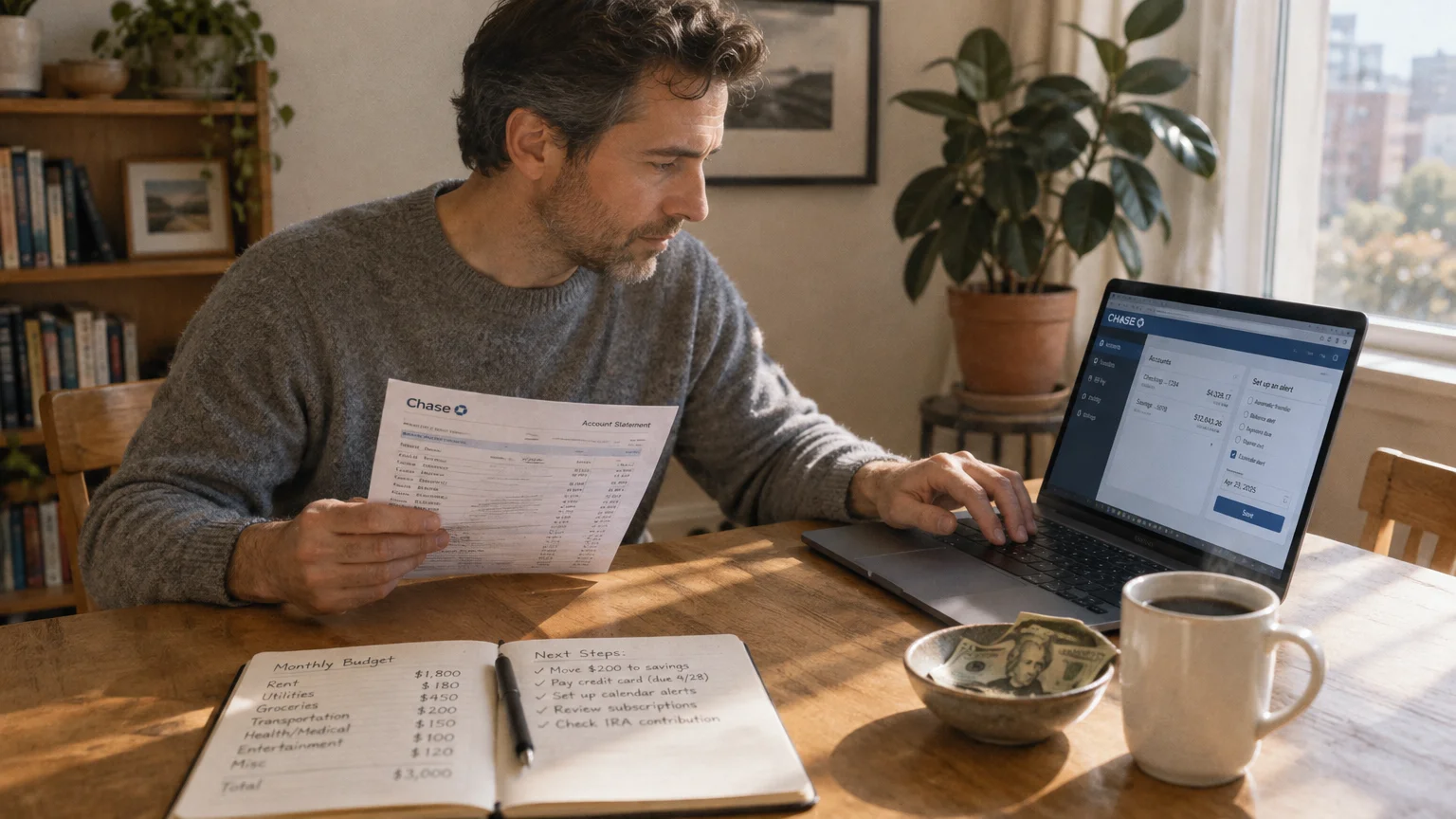
Finally, completely resisting financial automation can cause missed bill deadlines and inconsistent investing. Use automation to fund your investments and pay recurring bills, while preserving manual oversight for daily discretionary spending.
Frequently Asked Questions
Is using physical cash really better than using credit cards for rewards?
Physical cash provides a psychological spending barrier that credit cards simply cannot replicate. Studies consistently demonstrate that consumers spend significantly more when paying with plastic or digital wallets than when handing over paper currency.
If earning a 2% cash-back reward tempts you to spend 15% more on impulse purchases, the rewards program costs you money. Using cash for discretionary outlays keeps your spending grounded in reality.
How much emergency savings should I keep before investing aggressively?
You should build at least three to six months of essential living expenses in an accessible high-yield savings account before expanding your investment portfolio. That cash reserve acts as an insurance policy that protects your investments from forced liquidation during market downturns.
Once you secure that liquidity foundation, you can comfortably channel surplus monthly cash flow toward retirement accounts and broader market index funds.
Why are Buy Now, Pay Later plans riskier than traditional budgeting?
Buy Now, Pay Later services break single purchases into micro-payments that conceal your true spending rate. When multiple installment plans hit your account simultaneously, tracking your cash flow obligations becomes difficult.
Missing an installment incurs late fees and damages your credit score. Saving up front ensures you only purchase items your current cash flow supports.
How can I balance Boomer frugality with modern digital convenience?
The most effective strategy combines old-school financial intentionality with modern digital tools. Use automated transfers to fund savings goals and retirement accounts the day your paycheck arrives.
Simultaneously, enforce old-school discipline by conducting weekly manual transaction audits and using dedicated debit accounts for discretionary spending. This combination maximizes convenience while preventing mindless overspending.
Putting Old-School Discipline into Modern Practice
Adopting old-school financial habits does not require ditching your smartphone or writing paper checks at the supermarket checkout. It simply means bringing conscious intentionality, patience, and tangible boundaries back to your daily spending choices.
Start small by choosing one classic habit to test this week, such as auditing your recurring subscriptions or planning meals around weekly grocery discounts. Over time, these small disciplines compound into substantial savings, reduced stress, and genuine financial independence.
This article provides general financial education and information only. Everyone’s financial situation is unique—what works for others may not work for you. For personalized advice, consider consulting a qualified financial professional such as a CFP or CPA.
Last updated: November 2026. Financial regulations and rates change frequently—verify current details with official sources.