Retiring does not mean sitting on the sidelines when part-time work can fund travel and protect your nest egg. Finding a community with flexible employment keeps your retirement prosperous, socially connected, and financially secure.
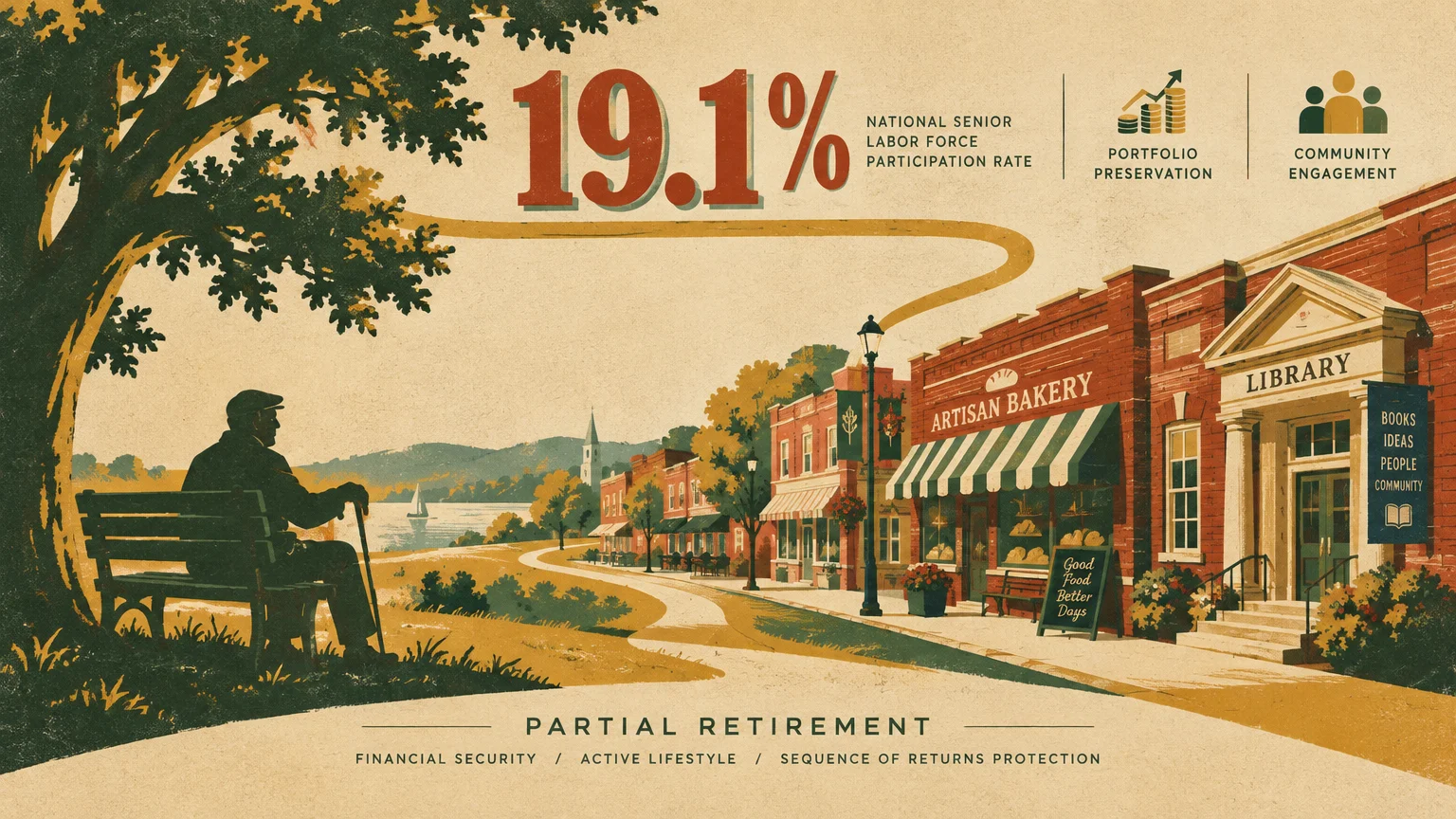
According to the Bureau of Labor Statistics, senior labor force participation reached 19.1% as older adults increasingly combine leisure with meaningful work. Moving to the right location ensures your skills stay valued and well rewarded.
Explore nine standout retirement towns with jobs, low unemployment, and vibrant local economies tailored for active, working retirees.
Why Working in Retirement Is Reshaping Senior Living
Modern retirement rarely follows the traditional all-or-nothing model. Many retirees today transition gradually by scaling back hours rather than stopping work completely.
Working twenty hours a week provides structured social interaction and intellectual engagement. It also shields your investment portfolio from early sequence-of-returns risk during market downturns.
Recent Bureau of Labor Statistics data shows the monthly senior labor force participation rate hovering between 18.4% and 18.9% throughout 2026. Older Americans clearly want rewarding options to stay active in their communities.
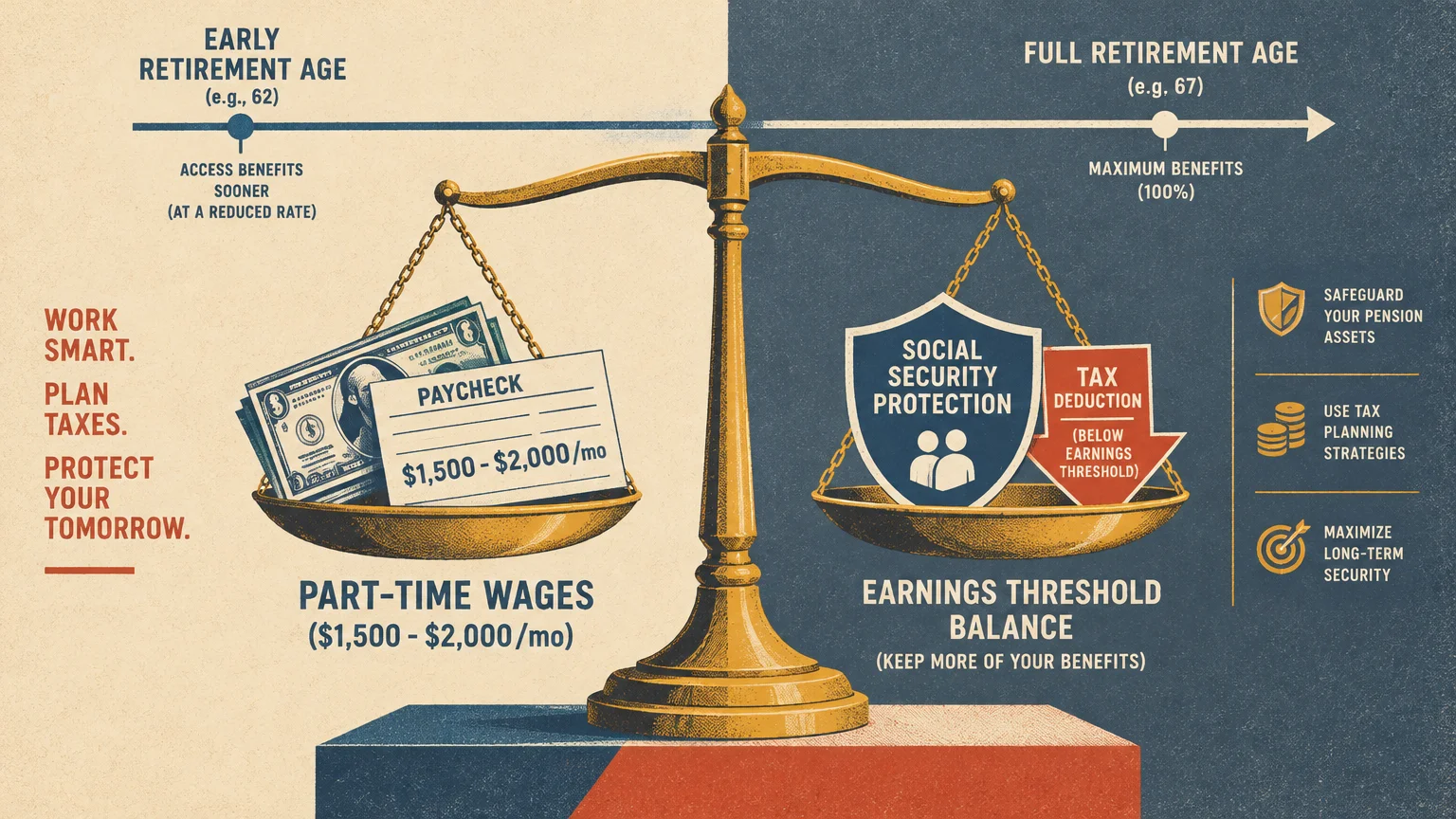
Earning an extra $1,500 to $2,000 per month can cover daily living expenses. That supplemental income allows your core nest egg to compound untouched for future needs.
However, location dictates your success. The best towns offer high concentrations of seasonal tourism, higher education institutions, specialized healthcare, and small businesses seeking reliable talent.

1. Midland, Michigan
Midland ranked as the number one best place to retire in 2026 by U.S. News & World Report. The city earned top marks by pairing high affordability with an unusually resilient senior job market.
As a global hub for chemical engineering and materials science, Midland features deep corporate and philanthropic roots. This industrial foundation supports extensive civic centers, botanical gardens, and community programs.
SeniorLiving.org highlighted Midland as a premier labor-constrained market where older workers enjoy abundant opportunities. Local employers actively recruit retirees for administrative, non-profit, and project coordination roles.
The healthcare sector anchored by MyMichigan Health continually seeks patient escorts, clerical workers, and laboratory couriers. These positions offer flexible scheduling without physical strain.
Michigan exempts Social Security benefits from state income taxes. That exemption makes Midland an exceptionally tax-efficient base for supplementing your retirement funds.
2. Portsmouth, New Hampshire
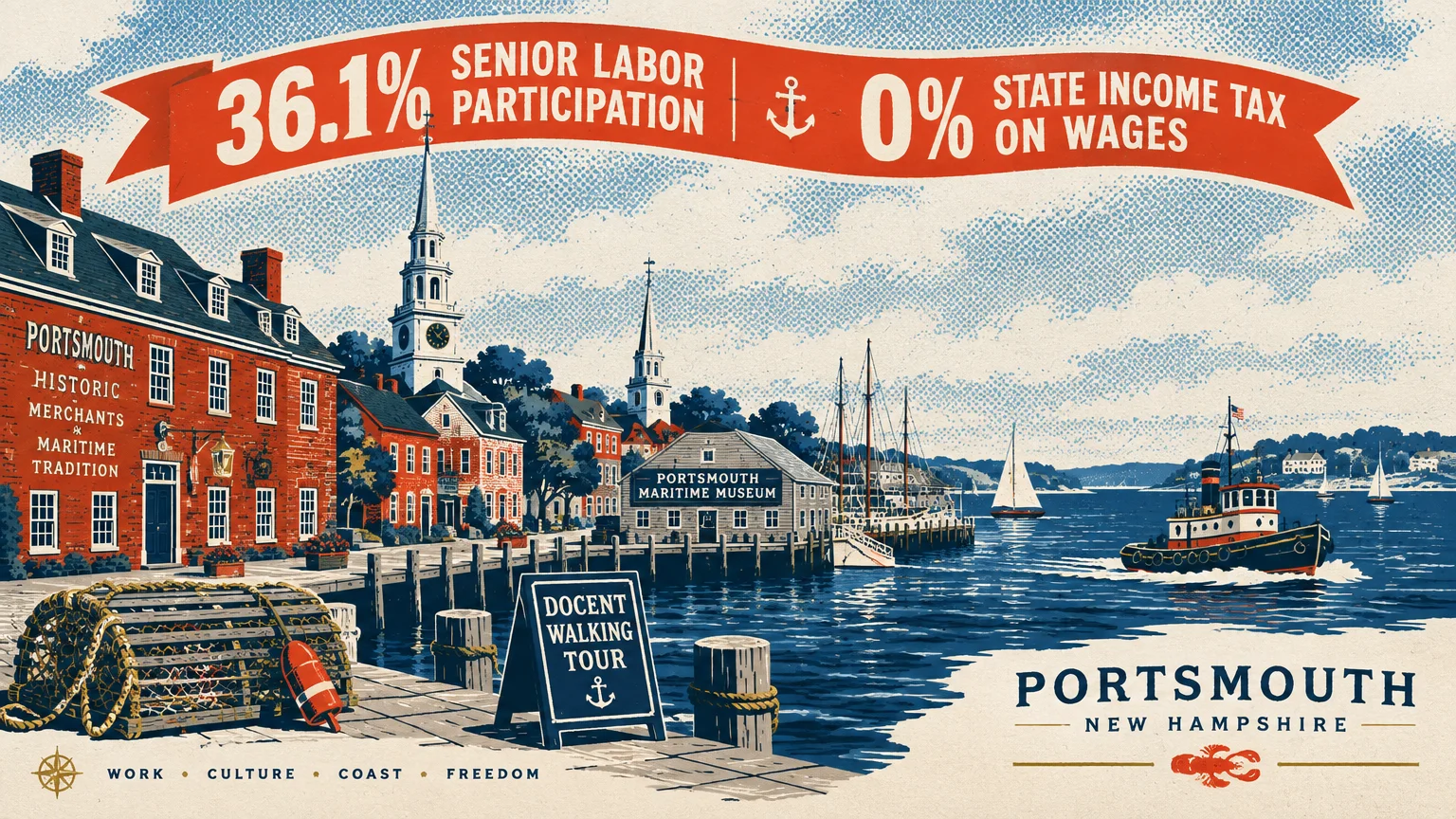
New Hampshire earned the top spot as the number one state for older workers in 2026 rankings from AARP and CareScout. The state boasts a 36.1% senior labor force participation rate alongside minimal age discrimination reports.
Portsmouth serves as the cultural anchor of New Hampshire’s scenic Seacoast region. Its historic downtown features busy art galleries, boutique shopping, and celebrated culinary establishments.
Retirees in Portsmouth benefit from a bustling tourism and hospitality industry operating year-round. Historic preservation trusts and maritime museums regularly hire seniors for educational tours and visitor coordination.
The financial advantage of working here is hard to overstate. New Hampshire levies zero state income tax on earned wages, leaving your entire part-time paycheck in your pocket.
The state does not tax Social Security benefits either. You can earn supplemental wage income without worrying about state tax brackets taking a bite out of your earnings.

3. Burlington, Vermont
Burlington ranked third overall in Indeed Hiring Lab’s 2026 Best Cities for Work report. WalletHub also placed the South Burlington metro area fourth nationally, driven by a rock-bottom 2.0% unemployment rate.
Nestled along Lake Champlain, Burlington combines progressive culture with an active outdoor lifestyle. The town maintains strong employment balance, giving applicants significant leverage when negotiating part-time hours.
The University of Vermont and its associated medical network serve as massive employment engines. Seniors find consistent part-time roles in academic mentoring, campus event coordination, and departmental support.
The city’s active food and craft markets also create flexible opportunities. Local specialty retailers and community co-ops value mature workers for their reliability and customer care.
Keep your tax profile in mind before packing your bags. Vermont remains one of only eight states that still taxes Social Security benefits under certain income thresholds.

4. Portland, Maine
Portland secured the number three spot in WalletHub’s 2026 Best Cities to Find a Job study. The city recorded a low 2.6% unemployment rate coupled with a 2.37% employment growth rate.
This coastal New England jewel features a world-renowned dining scene and working waterfront. The local economy thrives on seasonal tourism, specialized food production, and maritime services.
Working retirees thrive in Portland’s vibrant hospitality and retail sectors. Waterfront tour operators, tasting rooms, and specialty food producers eagerly employ seniors during extended tourist seasons.
MaineHealth operates its flagship hospital network in Portland, creating steady demand for administrative assistants, receptionists, and patient navigators. These positions offer reliable schedules and predictable duties.
Maine exempts Social Security benefits from state income taxation for all retirees. Your baseline retirement check remains completely sheltered while you pick up part-time shifts.

5. Pittsburgh, Pennsylvania
Pittsburgh ranked fifth overall in WalletHub’s 2026 national employment analysis. The study placed the city number one in the country for overall job opportunities and recognized its minimal underemployment rates.
Once an industrial powerhouse, Pittsburgh has transformed into a leading center for healthcare, robotics, and academic research. Despite this modernization, housing costs remain well below the national median.
The University of Pittsburgh Medical Center and Allegheny Health Network employ thousands of part-time workers across Allegheny County. Seniors find steady work in clinic administration, patient intake, and customer support.
The city’s dozens of colleges and universities regularly hire part-time exam proctors, library assistants, and campus ambassadors. These roles provide intellectual stimulation in comfortable settings.
Pennsylvania offers one of the most generous tax environments in the United States for retirees. The state exempts Social Security benefits along with public and private pension distributions from state personal income tax.

6. Lawrence, Kansas
Lawrence earned special distinction from SeniorLiving.org in 2026 as a standout smaller market for senior employment. Working seniors in Lawrence maintain a median household income exceeding $60,000.
Home to the University of Kansas, Lawrence blends Midwestern affordability with collegiate energy. The city’s walkable downtown corridor along Massachusetts Street features independent bookstores, music venues, and cafes.
The university serves as the primary engine for flexible, part-time jobs for seniors towns need. Seniors frequently secure roles as laboratory administrative assistants, research study coordinators, and athletic event staff.
The city also supports an extensive municipal library system and community arts network. These institutions routinely seek mature workers for community programming, youth tutoring, and archive management.
Kansas fully eliminated its state income tax on Social Security benefits starting in 2024. Local retirees now earn part-time wages without triggering surprise state taxes on their retirement checks.

7. Reno, Nevada
LinkedIn identified Reno as one of the nation’s top five emerging mid-sized job markets in its 2026 Cities on the Rise report. The region’s job postings and hiring momentum continue to outpace national averages.
Located in the Sierra Nevada foothills, Reno attracts retirees who love hiking, skiing, and year-round sunshine. The town offers quick access to Lake Tahoe without California’s crushing price tags.
Reno’s economy has expanded far beyond traditional casino gaming into technology, logistics, and corporate operations. Warehouses, technology campuses, and municipal venues need dependable seasonal and part-time coordinators.
Outdoor recreation outfitters, golf courses, and mountain shuttles consistently hire energetic retirees. These roles let you work outdoors while earning competitive hourly pay.
Nevada imposes zero state income tax on any personal income, including wages, pensions, and Social Security. Every dollar you earn in Reno stays directly in your bank account.

8. North Port-Bradenton-Sarasota, Florida
The North Port-Bradenton-Sarasota metro area joined LinkedIn’s 2026 Cities on the Rise list due to remarkable job creation. The Gulf Coast region blends classic resort amenities with rapid business expansion.
Sarasota is widely known for world-class cultural institutions, including the Ringling Museum of Art and the Sarasota Opera. These non-profit organizations regularly employ retirees for box office management and docent roles.
Private golf resorts, luxury marinas, and beach clubs hire seasonal staff for front-desk operations, pro shop retail, and starter positions. These jobs provide social interaction in picturesque settings.
Sarasota Memorial Health Care System continually recruits customer experience liaisons and patient dispatchers. Healthcare employers in the region value the maturity and calming presence older workers bring.
Florida charges no state personal income tax on earned wages or retirement benefits. That favorable tax structure makes the Sunshine State a haven for working retirees.

9. Augusta, Georgia
Augusta led LinkedIn’s 2026 Cities on the Rise ranking as one of the fastest-growing mid-sized job markets in the country. The city combines Southern charm with explosive growth in cybersecurity and healthcare.
Fort Eisenhower and the Georgia Cyber Center have drawn dozens of defense contractors and technology providers to the city. These companies frequently hire experienced professionals for part-time compliance and document management.
Augusta’s medical district features several major hospital systems alongside Augusta University. These medical networks offer consistent part-time roles in patient transport, supply inventory, and telephone scheduling.
The city also hosts the prestigious Masters Tournament every spring, which supercharges hospitality hiring. Local golf clubs, hotels, and event organizers hire hundreds of temporary workers for premium seasonal wages.
Georgia provides generous retirement income exclusions for individuals age 62 and older. The state also fully exempts Social Security benefits from state income taxation.
Comparing Senior Job Markets and Tax Climates
Evaluating potential retirement towns requires balancing hourly pay rates against local taxes and living costs. A slightly lower wage goes much further in a low-cost, tax-free state.
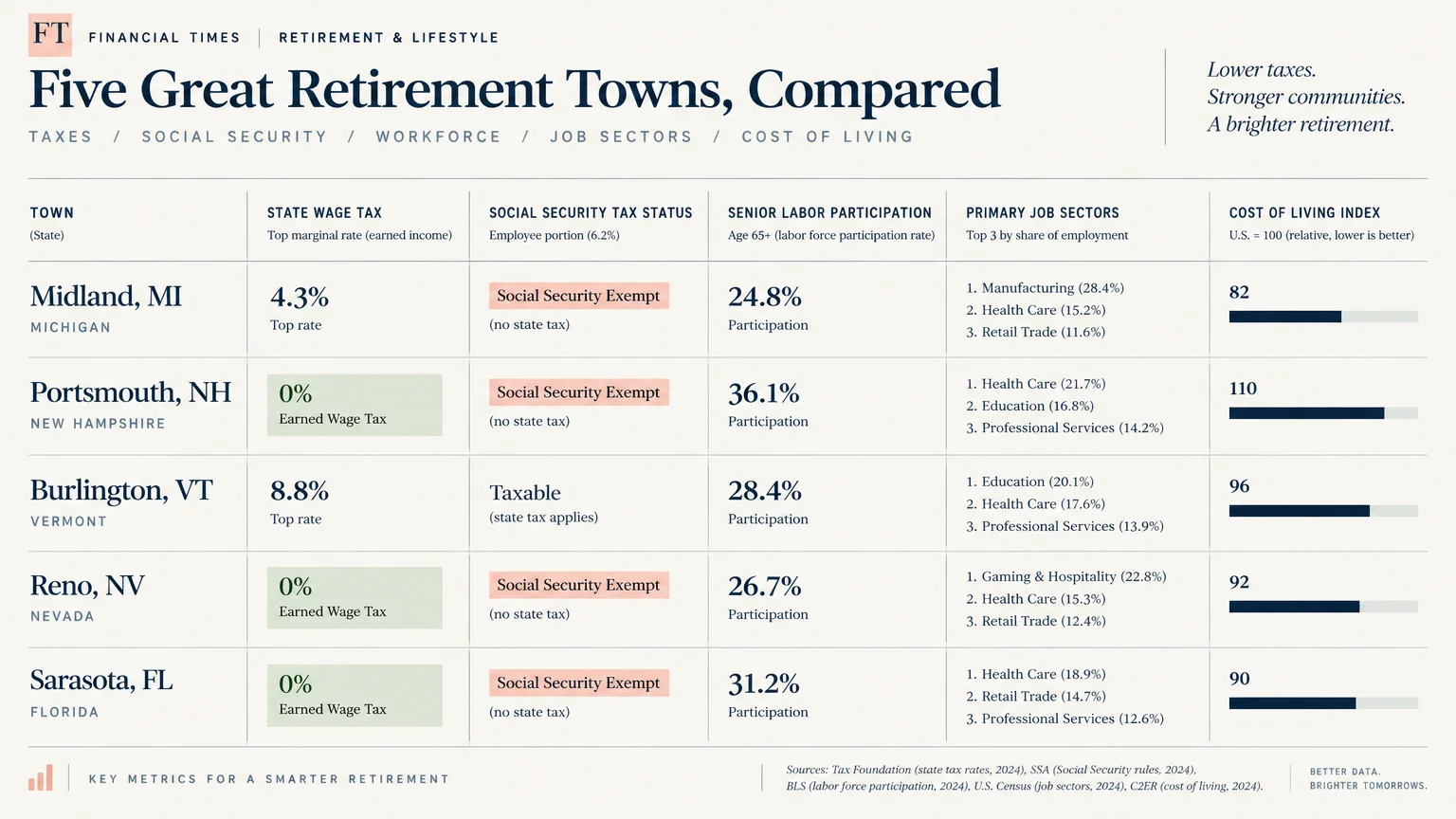
Use the comparison table below to evaluate how these nine senior job markets handle taxes and industry opportunities.
| Town / Metro Area | State Wage Tax | State Tax on Social Security | Primary Senior Job Sectors | 2026 Job Market Strength |
|---|---|---|---|---|
| Midland, MI | Flat 4.25% | No tax | Healthcare, Corporate Admin, Non-profits | #1 U.S. News Best Place to Retire |
| Portsmouth, NH | None (0%) | No tax | Tourism, Maritime, Retail, Healthcare | #1 AARP State for Older Workers |
| Burlington, VT | Graduated (up to 8.75%) | Taxable for some | Higher Ed, Healthcare, Artisan Retail | 2.0% Unemployment Rate |
| Portland, ME | Graduated (up to 7.15%) | No tax | Hospitality, Culinary, Marine, Medical | 2.6% Unemployment Rate |
| Pittsburgh, PA | Flat 3.07% + local | No tax | Universities, Healthcare, Tech Support | #1 WalletHub Job Opportunities |
| Lawrence, KS | Graduated (up to 5.7%) | No tax | Collegiate Services, Libraries, Arts | High Senior Median Income ($60k+) |
| Reno, NV | None (0%) | No tax | Logistics, Recreation, Hospitality | LinkedIn Top 5 Mid-Sized Growth |
| Sarasota, FL | None (0%) | No tax | Arts & Culture, Golf Resorts, Healthcare | Top Regional Hiring Momentum |
| Augusta, GA | Flat 5.39% | No tax | Cybersecurity, Healthcare, Event Ops | #1 LinkedIn Fast-Growing Mid-Sized |
Tax differences between states can alter your net monthly take-home pay significantly. For example, earning $20,000 part-time in New Hampshire or Florida incurs zero state income tax.
Conversely, earning that same amount in states with progressive income taxes requires careful accounting. Always check municipal wage taxes, such as Pittsburgh’s local earned income tax, when projecting your budget.
How Part-Time Wages Affect Your Social Security and Taxes
Working while collecting Social Security requires a clear understanding of federal rules to avoid unpleasant surprises. Earning wages before reaching Full Retirement Age triggers the federal earnings test.
Under the Social Security Administration guidelines for 2026, the annual earnings limit is $24,480 for retirees who remain under Full Retirement Age all year. The agency withholds $1 of benefits for every $2 earned above this limit.
If you reach Full Retirement Age during 2026, the limit jumps to $65,160 for the months preceding your birthday. For that period, the government withholds $1 for every $3 earned above the cap.
Once you reach your Full Retirement Age—which is 67 for anyone born in 1960 or later—the earnings cap vanishes completely. You can earn an unlimited income from part-time or full-time work without any benefit reductions.
Withheld benefits are not permanently lost. When you reach Full Retirement Age, the agency recalculates your monthly benefit upward to credit you for the withheld amounts.
Federal tax deductions also provide substantial relief for older workers under current Internal Revenue Service rules. The 2026 base standard deduction stands at $16,100 for single filers and $32,200 for married couples filing jointly.
Taxpayers age 65 and older receive an additional standard deduction of $2,050 for singles and $1,650 per qualifying spouse on joint returns. Furthermore, the enhanced senior bonus deduction provides up to an extra $6,000 per person ($12,000 for married couples).
A single senior can deduct up to $24,150 in 2026 before paying a single penny of federal income tax on wages. A married senior couple can deduct up to $47,500 if both spouses qualify.
Be aware that extra wage income can trigger federal taxes on your Social Security benefits. If your combined income exceeds $25,000 as a single filer or $32,000 as a couple, up to 85% of your benefits may become taxable.
Combined income equals your adjusted gross income, plus nontaxable municipal bond interest, plus one-half of your annual Social Security benefits. Part-time wages push many working retirees over these unindexed thresholds.

Pitfalls to Watch For
Supplementing your income through part-time work provides tremendous freedom, but unexpected traps can diminish your financial gains. Watch out for these three major pitfalls before starting a job.
The first trap involves Medicare premium surcharges known as the Income-Related Monthly Adjustment Amount. If your part-time wages elevate your modified adjusted gross income past statutory limits, Medicare.gov assesses higher premiums for Part B and Part D.
These surcharges use a two-year lookback period, meaning wages earned in 2026 dictate your Medicare monthly premiums in 2028. Earning just a few dollars over an income tier can cost you hundreds of dollars in annual surcharges.
The second pitfall is miscalculating state taxes on retirement income. As of 2026, 42 states and Washington, D.C. exempt Social Security benefits entirely from taxation, with West Virginia completing its phaseout this year.
However, eight states still tax Social Security benefits: Colorado, Connecticut, Minnesota, Montana, New Mexico, Rhode Island, Utah, and Vermont. Moving to a town like Burlington means part-time earnings might indirectly increase your state tax burden.
The third pitfall is physical burnout and loss of schedule autonomy. Taking on too many shifts can leave you feeling as stressed as you were during your primary career.
Prioritize seasonal roles or contracts that allow you to take unpaid time off for family visits and travel. Always negotiate your schedule boundaries clearly before accepting an offer.

Top Part-Time Roles for Working Retirees
Older workers bring emotional intelligence, reliability, and institutional problem-solving skills that younger cohorts often lack. Many employers intentionally craft flexible schedules to attract this demographic.
The following roles consistently offer strong pay, minimal physical strain, and high satisfaction for working seniors:
- Higher Education Campus Support: Working as an exam proctor, admissions tour guide, or department assistant in university towns like Lawrence or Pittsburgh.
- Cultural Institution Guides: Serving as paid docents, ticketing managers, or gift shop supervisors in arts centers like Sarasota and Portsmouth.
- Healthcare Navigation: Working as patient liaisons, clinic greeters, or medical couriers for major systems in Midland and Augusta.
- Outdoor Recreation Operations: Managing pro shops, coordinating boat rentals, or checking trail passes in scenic destinations like Reno and Portland.
- Virtual Consulting and Bookkeeping: Providing specialized industry guidance or basic accounting for local small businesses on a remote basis.
“Retirement is not the end of the road. It is the beginning of the open highway, where you choose the speed and direction of your life.” — Suze Orman, Personal Finance Author
Finding a job that matches your passions transforms your working hours into enjoyable community service. You earn hourly pay while remaining mentally energized and socially connected.

Getting Expert Help
Navigating the intersection of wage income, pension distributions, Social Security rules, and healthcare coverage requires careful planning. Seeking professional counsel ensures you keep the money you earn.
Consider consulting a credentialed advisor from the Certified Financial Planner Board in the following situations:
- Approaching the Social Security Earnings Limit: An advisor can help you model your exact take-home pay if you work prior to Full Retirement Age, ensuring you avoid cash flow crunches.
- Relocating to Another State: Tax professionals can calculate whether state income tax savings compensate for higher local property taxes or insurance rates in your target town.
- Managing Medicare IRMAA Surcharges: A planner can project your two-year adjusted gross income to make sure your hourly wages do not trigger an expensive Medicare premium hike.
- Coordinating Required Minimum Distributions: Once you reach the age for mandatory retirement account withdrawals, working part-time requires precise tax bracket management to avoid excessive marginal tax rates.
A professional fee-only planner can review your total financial picture and help you craft an optimal glide path into complete retirement.
Frequently Asked Questions
How much can I earn in retirement without reducing my Social Security benefits?
If you are under Full Retirement Age all year in 2026, you can earn up to $24,480 before benefits are withheld. If you reach Full Retirement Age in 2026, you can earn up to $65,160 before your birth month without penalty.
Do part-time wages increase my future Social Security benefit check?
Yes, your wages can increase your benefit if your current earnings rank among your top thirty-five highest-earning years. The Social Security Administration automatically recalculates your benefit amount annually to include new high-earning years.
Which states do not tax part-time wages earned by seniors?
Eight states do not levy any state personal income tax on earned wages: Alaska, Florida, Nevada, New Hampshire, South Dakota, Tennessee, Texas, and Wyoming. Working retirees in these states pay zero state income tax on part-time wages.
Will working part-time cause my Medicare premiums to increase?
Part-time work only increases your Medicare Part B and Part D premiums if your modified adjusted gross income surpasses statutory IRMAA brackets. These surcharges are based on tax returns from two years prior.
Next Steps for Your Retirement Career
Start your transition by drafting a personal inventory of skills you enjoy using and tasks you wish to avoid. Consider how many hours per week you want to dedicate to work versus leisure and travel.
Research target communities by visiting off-season and networking with local business owners and cultural non-profits. Testing a town’s job market before moving permanently guarantees your retirement matches your expectations.
The information in this guide is meant for educational purposes. Your specific circumstances—including income, debt, tax situation, and goals—may require different approaches. When in doubt, consult a licensed professional.
Last updated: October 2026. Financial regulations and rates change frequently—verify current details with official sources.