You do not need to pay the full $139 annual fee to enjoy fast shipping and streaming perks. Strategic shoppers cut this recurring cost down or eliminate it entirely.
A standard Amazon Prime membership costs $14.99 per month, which quickly drains your annual household budget. Multiple official discounts and legal loopholes allow you to access the exact same benefits for significantly less.
Whether you qualify for targeted assistance or simply split costs with a roommate, actionable pathways exist to save your hard-earned money. Here are five proven methods to secure Prime for cheap or completely free.
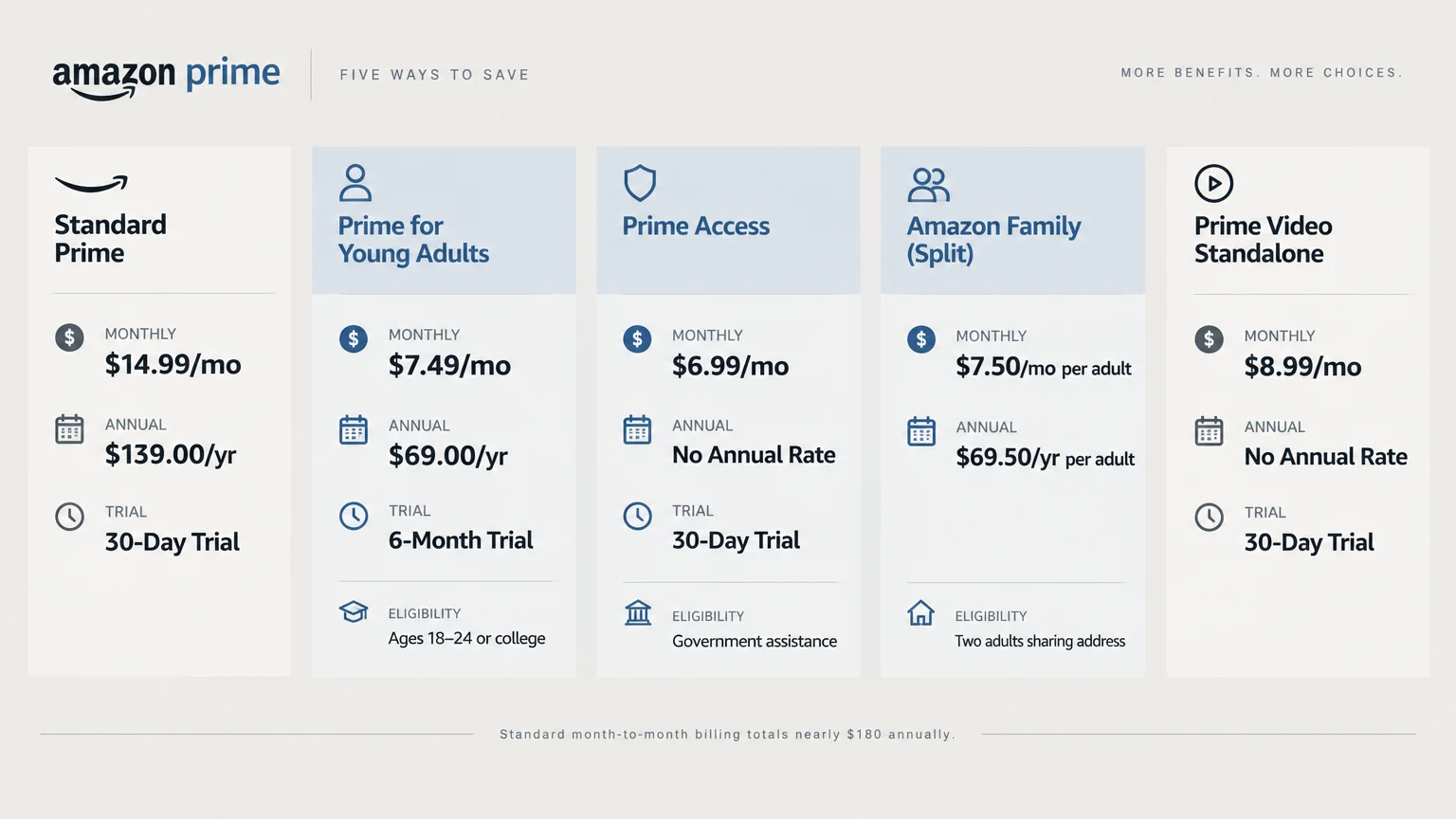
At a Glance: How Prime Pricing Compares Across Options
Amazon offers several membership tiers, yet most consumers default to paying standard retail pricing. Evaluating every tier reveals massive price discrepancies for virtually identical services.
The table below outlines the current pricing structures, trial durations, and eligibility standards across every official membership category.
| Membership Tier | Monthly Cost | Annual Cost | Free Trial Length | Primary Requirement |
|---|---|---|---|---|
| Standard Prime | $14.99 | $139.00 | 30 Days | None (Open to all) |
| Prime for Young Adults | $7.49 | $69.00 | 6 Months | Ages 18–24 or college enrollment |
| Prime Access | $6.99 | Not Available | 30 Days | Qualifying government assistance |
| Amazon Family (Split) | $7.50 (per adult) | $69.50 (per adult) | Varies | Two adults sharing a primary address |
| Prime Video Standalone | $8.99 | Not Available | 30 Days | Standalone streaming only |
Standard members who pay month-to-month pay nearly $180 annually. Choosing an alternative plan or switching billing cadences immediately preserves cash flow.

Trick 1: Capitalize on Standard and Extended Free Trials
Free trials represent the simplest method to access premium membership benefits without paying a dime. Amazon uses generous promotional windows to attract shoppers before converting them to paid plans.
You can leverage these introductory offers strategically around specific buying seasons. Doing so lets you order emergency goods or stream exclusive content without a long-term commitment.
The 30-Day Rolling Reset Method
First-time subscribers receive an automatic 30-day free trial upon entering their payment details. However, this promotional window is rarely a once-in-a-lifetime opportunity.
Amazon frequently resets trial eligibility for former subscribers who have not held an active membership for roughly twelve months. Check your account settings periodically to see if a complimentary trial link reappears on your dashboard.
You can initiate the trial, take immediate advantage of priority shipping, and set a calendar notification to cancel before renewal. Canceling early maintains your active benefits until the trial’s final day.
The 6-Month Young Adult Trial
If you meet qualifying criteria for Prime for Young Adults, Amazon extends the standard trial dramatically. Eligible participants receive a full six months at zero cost.
This promotional trial provides unrestricted access to two-day shipping, Prime Video, and Prime Gaming. It gives young shoppers half a year of premium logistics without spending a penny.
Once the six-month period ends, the plan automatically transitions to $7.49 per month or $69 per year. That remains roughly 50% below standard consumer rates.
Strategic Timing for Peak Shopping Events
Never activate a free trial arbitrarily in the middle of a low-spending month. Coordinate your trial activation with high-volume retail events like Prime Day or the winter holidays.
Launching a 30-day window in early July or mid-November captures maximum shipping value. You secure doorbuster promotions and avoid seasonal expedited freight fees.
Once your critical purchases arrive, evaluate whether the service warrants continued investment. If your purchase frequency drops off in January, cancel immediately to lock in the savings.

Trick 2: Cut Costs by Over 50% With Prime Access
Amazon operates a dedicated financial relief tier called Prime Access. This program supports lower-income households by slashing the standard monthly subscription rate down to $6.99.
Prime Access provides the full suite of standard benefits, including rapid logistics, photo storage, and digital entertainment. It contains no service limitations despite costing less than half the standard monthly rate.
Qualifying Government Assistance Programs
Eligibility hinges on participation in verified public assistance programs. You can qualify instantly if you participate in state or federal aid initiatives.
Qualifying assistance programs include:
- Supplemental Nutrition Assistance Program (SNAP/EBT)
- Medicaid coverage
- Women, Infants, and Children (WIC) assistance
- Supplemental Security Income (SSI)
- Temporary Assistance for Needy Families (TANF)
- Direct National School Lunch Program documentation
Review the comprehensive public benefits listings on USA.gov Benefits to see if your household currently qualifies for these state-administered programs. Even temporary participation in state healthcare programs can open eligibility.
Income Verification Requirements
You do not need to rely solely on public assistance cards to qualify. Amazon also allows qualifying consumers to prove eligibility through direct income verification.
Applicants may upload tax returns, pay stubs, or state-issued documentation demonstrating income below defined federal poverty lines. This pathway helps households experiencing temporary job loss or transitions.
The application portal reviews digital documents within a few business days. Once approved, the reduced $6.99 monthly rate applies automatically to your next billing cycle.
Program Limits and Annual Recertification
Prime Access remains valid for up to four consecutive years per customer account. However, Amazon requires you to re-verify your qualifying status every twelve months.
The system sends renewal notifications as your anniversary approaches. Failing to submit updated proof of assistance resets your billing account back to standard pricing.
Set an annual reminder to gather your paperwork two weeks before expiration. Consistent renewal keeps your annual subscription cost capped at approximately $84 instead of $139.
“Look at your recurring expenses every few months. Tiny leaks sink great ships, and small subscription fees silently destroy your monthly budget.” — Suze Orman, Personal Finance Author

Trick 3: Cut Your Bill in Half With Amazon Family
You can cut your annual subscription costs directly in half without qualifying for specialized discounts. Sharing your benefits across an established household remains completely compliant under Amazon’s platform terms.
The program—previously known as Amazon Household and rebranded as Amazon Family—allows two adults living at the same address to link distinct profiles. Both users retain their personal logins while sharing a single paid subscription.
How Amazon Family Replaced Legacy Programs
In late 2025, Amazon phased out the older “Prime Invitee” setup and restructured its account pooling under the Amazon Family framework. This modern structure links distinct consumer profiles to an overarching primary billing account.
The system lets you connect one additional adult, four teen accounts, and four child profiles. Each profile maintains personalized browsing history, individualized shopping carts, and private order recommendations.
When you split an annual $139 membership with a roommate, partner, or family member, each adult pays just $69.50 per year. That equates to roughly $5.79 per month for full shipping and media privileges.
Managing Shared Wallets and Payment Boundaries
Linking accounts under Amazon Family requires a high degree of financial trust. Both participating adults must agree to share their saved digital wallet and stored payment methods.
While the other adult cannot see your entire credit card number, they can legally select your saved cards to fund purchases. Establish clear boundaries and verbal agreements before linking accounts with non-spouses.
The platform prevents accidental cross-charges by sending real-time email notifications whenever a card is used. Review monthly transactions using consumer protection principles outlined by the Consumer Financial Protection Bureau to keep shared spending organized.
Profile Capabilities and Benefit Limitations
Not every single peripheral perk transfers cleanly between linked profiles. Both adults enjoy fast shipping, Prime Reading, and basic Prime Video access containing standard advertisements.
However, promotional memberships cannot form Amazon Family groups. Accounts enrolled in 30-day trials, 6-month Young Adult trials, or Prime Access cannot link with secondary adult accounts.
If you want to use the family-sharing strategy, one adult must hold a standard paid membership. The linked partner then gains zero-cost access through the shared portal.
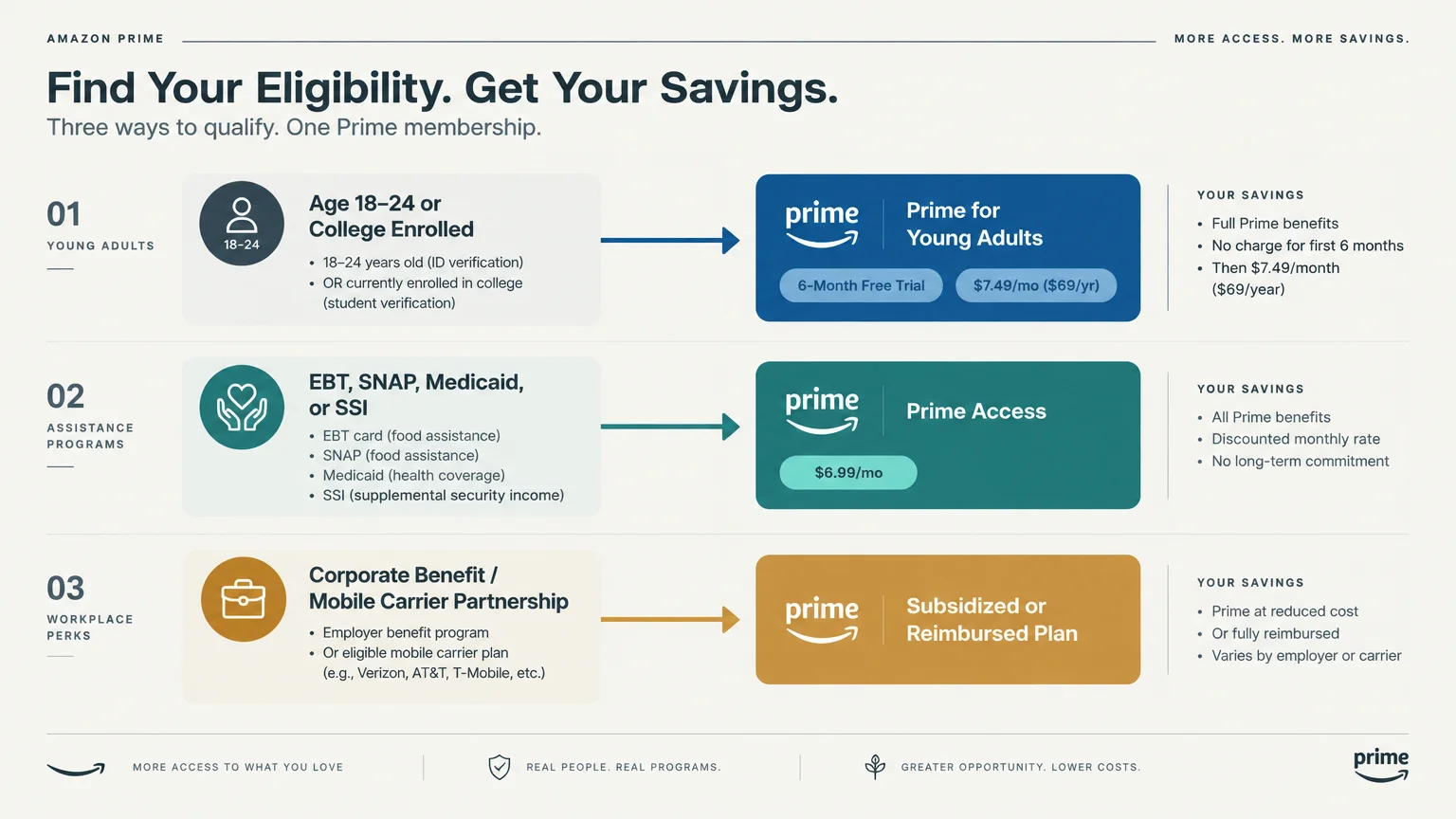
Trick 4: Claim Age, Student, and Employer Perks
Significant demographics qualify for targeted membership price cuts that fly under the radar. Amazon has expanded demographic programs well beyond traditional four-year college students.
Reviewing your employment benefits, corporate relationships, or demographic category can reveal substantial hidden subsidies. Several major employers and educational platforms completely cover these annual costs.
The 18-to-24 Age Bracket Expansion
Amazon recently widened its youth discount footprint by rebranding Prime Student into Prime for Young Adults. This revision fundamentally shifted how young shoppers qualify for discounted memberships.
You no longer need an active enrollment status or an accredited “.edu” email address to qualify. Anyone between the ages of 18 and 24 can register simply by uploading valid age identification.
A driver’s license, state ID card, or passport proves your age immediately. The membership stays at $7.49 monthly until your first annual renewal following your 25th birthday.
Higher Education Student Eligibility
Students aged 25 and older can still access the discounted $7.49 monthly or $69 annual pricing. Eligibility simply shifts to academic enrollment verification rather than age proof.
Amazon verifies college credentials using third-party academic clearance databases. You can submit tuition bills, class schedules, or active student identification cards to verify enrollment.
This discounted collegiate status lasts for up to four continuous years or until your verified graduation date. Once graduated, your account automatically rolls into the standard retail tier.
Corporate and Whole Foods Workforce Subsidies
Corporate benefits programs and retail employment perks offer another avenue for free membership. Amazon provides complimentary Prime accounts to eligible corporate personnel and fulfillment center staff.
Furthermore, Amazon extended this perk across its grocery subsidiary network. Hourly Whole Foods Market employees receive free Amazon Prime memberships starting January 1, 2027.
If you work for Amazon or Whole Foods, check your internal employee portal to claim your benefit. Activating your corporate-sponsored subscription removes the membership charge from your personal banking statements entirely.
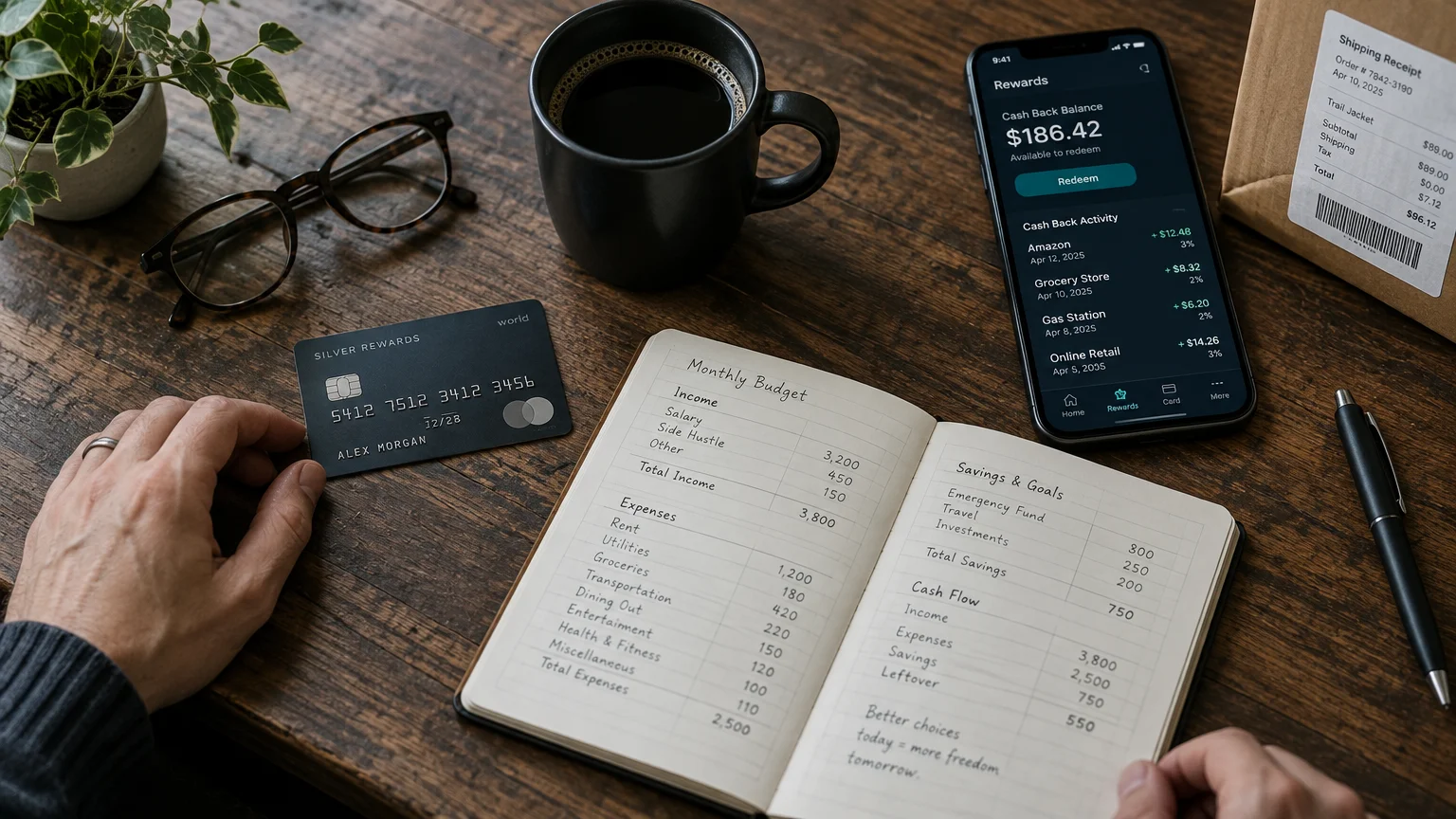
Trick 5: Offset Membership Fees With Card Rewards
If you do not qualify for age-based, public, or corporate discounts, you can offset retail membership fees using strategic consumer credit cards. Many cards generate enough cash rebates to wipe out the annual cost entirely.
Reviewing credit card rewards can convert essential household spending into membership subsidies. Evaluating card structures helps you determine if cardholder cash back offsets your annual dues.
The 5% Prime Visa Rebate Math
The Prime Visa card—issued by JPMorgan Chase—charges no annual card fee but requires an active Prime membership. It generates an unlimited 5% cash back on Amazon purchases, Whole Foods orders, and Chase Travel bookings.
You can use this rebate math to eliminate your effective membership cost. Spending $2,780 annually on retail goods and groceries at 5% back yields exactly $139 in cash rewards.
For households that purchase groceries at Whole Foods or buy staples on Amazon, this threshold is modest. The earned rewards wipe out the annual fee dollar-for-dollar.
Leveraging Welcome Gift Card Promos
Applying for co-branded retail cards often yields instant balance credits. Amazon regularly offers approved cardholders an immediate digital gift card ranging from $100 to $200.
This sign-up incentive deposits directly into your Amazon gift card balance upon approval. You do not need to meet aggressive initial spending requirements to collect the reward.
You can immediately apply that balance toward your next annual Prime renewal charge. Comparing financial incentives through NerdWallet helps you verify current promotional offers before submitting a credit application.
Grandfathered Wireless and Banking Perks
Third-party subscription partnerships fluctuate regularly, requiring consumers to audit their legacy cellular and banking perks. Telecom carriers historically bundled Prime into premium cellular service tiers.
Metro by T-Mobile officially ended its bundled Prime perk for new cellular subscribers on September 17, 2026. However, legacy customers who enrolled before the cutoff maintain their free Prime perk as long as they keep their plans unchanged.
Similarly, Navy Federal Credit Union historically offered a $139 annual statement credit on its Flagship Rewards card to cover Prime. While closed to new applicants, existing cardholders should verify that their recurring automated membership charge triggers the annual credit.
“Do not save what is left after spending, but spend what is left after saving.” — Warren Buffett, Chairman and CEO of Berkshire Hathaway

Do You Actually Need Amazon Prime?
Securing a discounted membership is a victory, but paying zero dollars delivers the ultimate savings. Many shoppers maintain subscriptions simply out of ingrained habit rather than practical economic necessity.
Calculating your real purchasing volume helps determine whether dropping the subscription makes financial sense. You might find that alternative shopping tactics eliminate your reliance on paid memberships.
Calculating Your True Break-Even Order Volume
Standard Prime costs $139 annually or $14.99 monthly. To break even, you must save more on shipping or media consumption than the membership costs you out-of-pocket.
If you place only one or two small orders per month, standard shipping fees cost far less than an active subscription. Paying $7 for occasional shipping twice a year totals $14—far below the $139 membership fee.
Track your shipping receipts over the past six months to identify actual platform usage. If your order frequency has plummeted, paying for priority logistics wastes household capital.
Free Shipping Without a Subscription
Amazon offers completely free shipping to non-subscribers on eligible merchandise orders that meet a minimum purchase threshold. Most non-Prime accounts receive free standard shipping on orders containing $35 or more of qualifying items.
You can accumulate everyday household items in your online cart over several weeks until you cross the threshold. Once your cart hits $35, select the free standard shipping option at checkout.
Non-Prime delivery frequently arrives in three to five business days instead of two. For non-urgent purchases, waiting two extra days easily justifies keeping $139 in your pocket.
Evaluating the Value of Prime Video
Many households keep Prime primarily for its digital streaming catalog. Yet Amazon shifted its entertainment model by placing default commercial breaks into its video stream.
Amazon charges an additional $4.99 per month—effective April 10, 2026—to remove advertisements from Prime Video. This ad-free add-on drives the total monthly cost of Prime to nearly $20.
If streaming is your sole goal, standalone Prime Video costs $8.99 per month without expedited retail shipping. Consumer evaluations published by Consumer Reports show that switching to specialized seasonal streaming subscriptions yields better entertainment value for less money.
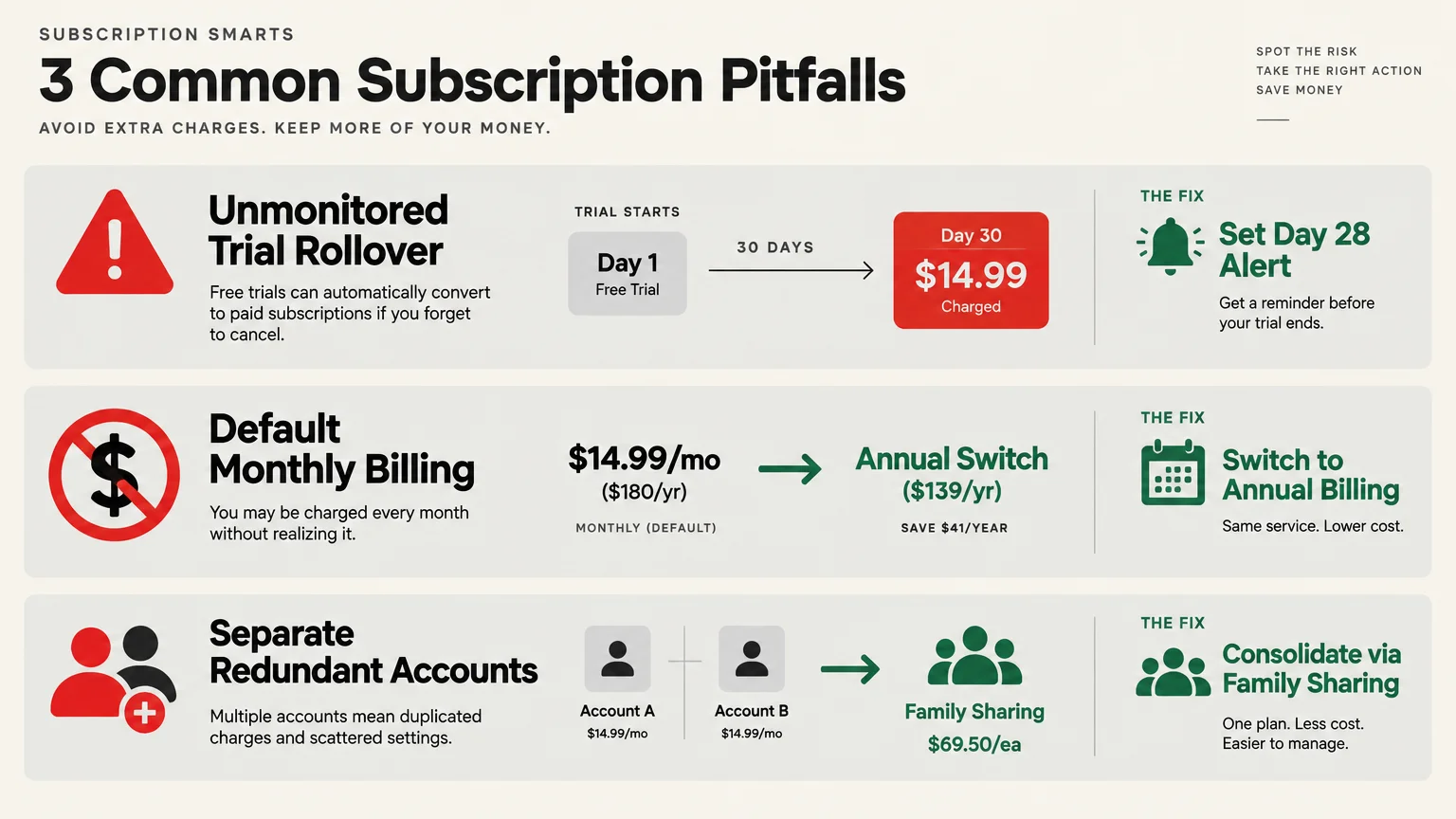
Avoiding Common Errors When Seeking Prime Discounts
Pursuing membership discounts can sometimes create unexpected financial snags if you fail to manage terms carefully. Avoiding recurring traps preserves your overall savings.
Being proactive about trial management and household account security keeps unexpected charges off your bank statements. Watch out for these three common missteps.
The Auto-Renewal Trap
The most frequent consumer error involves activating a free trial and forgetting to cancel before the billing trigger. When a 30-day or 6-month trial lapses, Amazon charges the payment method on file instantly.
To avoid unexpected charges, navigate straight to your account management page immediately after starting a trial. Click on the cancellation prompt and confirm that you want to end benefits at trial expiration.
Amazon preserves your full access through the final trial day even if you cancel within minutes of enrolling. This simple step protects your cash flow from unexpected automatic renewals.
Overlooking Shared Payment Methods
Enrolling in Amazon Family links your payment profile directly with your household partner. When someone in the household clicks “Buy Now,” an incorrect payment card can easily be billed.
Review your default payment settings to prevent accidental card cross-charging. Designate specific default cards for each profile to prevent your debit card from funding someone else’s purchases.
Regularly communicate with your linked family members regarding large planned orders. Open communication prevents awkward financial discussions when bank statements arrive at month-end.
Failing to Re-Verify Assistance Status
Prime Access and Prime for Young Adults require periodic verification updates to remain active. If you ignore re-verification reminders, Amazon automatically resets your account to full price.
When this happens, your monthly charge jumps from $6.99 or $7.49 up to $14.99 without warning. That unexpected price jump drains an additional $90 annually from your budget.
Check the email address linked to your primary Amazon profile at least once a month. Responding to recertification requests keeps your reduced rate locked in without interruption.
Frequently Asked Questions
Finding the right combination of discounts often raises practical questions about eligibility, household sharing, and payment management. Below are answers to the most common inquiries regarding Prime discounts.
Can two friends share an Amazon Family account to split the cost?
Amazon Family requires both users to share a single primary residential address and agree to share stored digital wallet methods. While close friends or roommates can technically share the fee, both parties gain the ability to charge purchases to each other’s credit cards.
What happens to my Young Adult discount when I turn 25?
Your membership remains at the discounted $7.49 monthly or $69 annual rate until the end of your current billing period. Upon your first renewal date following your 25th birthday, Amazon automatically transitions your account to standard retail pricing unless you submit proof of active college enrollment.
Can I pay for Prime Access using an EBT card?
While an EBT card proves your eligibility for the $6.99 monthly Prime Access rate, you cannot use SNAP funds to pay the membership fee. Federal SNAP regulations prohibit spending food assistance benefits on subscription fees, so you must link a personal debit card, credit card, or bank account.
How often can I claim an Amazon Prime free trial?
Amazon typically limits free trials to once every twelve months per consumer account. If your account has not maintained an active membership for approximately one full year, the platform often presents a new 30-day trial option upon visiting the membership portal.
Taking Action on Your Subscription Budget
Trimming recurring subscription fees creates immediate breathing room in your monthly cash flow. Spending full retail price on Amazon Prime is entirely optional if you capitalize on available demographic programs, trial cycles, or family sharing.
Audit your current membership details today. Check whether you qualify for Prime Access, verify your household sharing options, or transition your renewal to an extended trial.
The information in this guide is meant for educational purposes. Your specific circumstances—including income, debt, tax situation, and goals—may require different approaches. When in doubt, consult a licensed professional.
Last updated: November 2026. Financial regulations and rates change frequently—verify current details with official sources.