Missing critical early-year government deadlines can quietly cost you hundreds of dollars in lost benefits, higher health premiums, or IRS penalties. Acting before key cutoffs in January protects your medical coverage and preserves your hard-earned retirement cash.
While the holiday season distracts many households, federal agencies enforce strict post-holiday timetables that take effect immediately. Taking decisive steps during the first two weeks of January ensures you secure every benefit dollar you earned.
Whether you collect Social Security, purchase individual medical insurance, or manage Medicare selections, early action yields substantial financial returns. Reviewing your accounts right after the holiday season prevents expensive gaps throughout the rest of the year.
Healthcare Marketplace Open Enrollment Deadlines
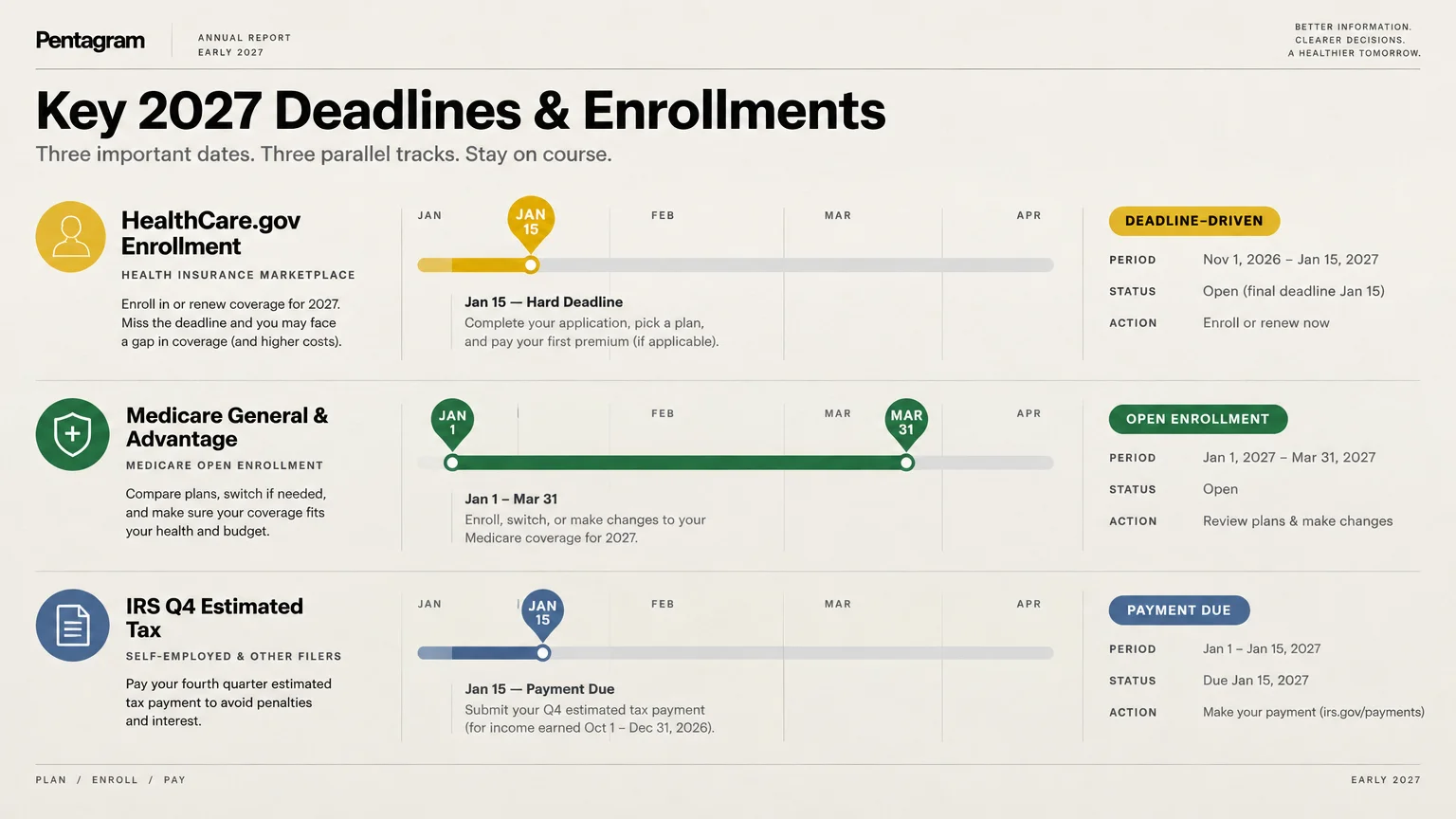
The national deadline for enrolling in individual health coverage on HealthCare.gov arrives swiftly on January 15, 2027. This critical date marks the end of the standard Open Enrollment Period across the federal exchange and most state platforms.
If you submit your application or switch your policy between December 16, 2026, and January 15, 2027, your new medical coverage begins on February 1, 2027. Enrollees who missed the mid-December window cannot obtain January 1 protection, making an immediate January application vital.
Failing to enroll by midnight on January 15 locks you out of individual health coverage for the remainder of the calendar year. You cannot purchase a marketplace policy later unless you qualify for a specific Special Enrollment Period triggered by qualifying life events.
Qualifying events include losing employer-sponsored coverage, getting married, or moving to a new service area outside your current provider network. Without one of these life transitions, going without coverage exposes your family to catastrophic out-of-pocket medical expenses.
Budgeting for marketplace coverage requires extra scrutiny this year. Finalized benchmark silver plan premiums are increasing by an average of 13% in 2027 across the country.
This premium increase breaks down to an average 11% rise on HealthCare.gov and a 16% jump on state-based exchanges. Rising medical equipment costs and the prior expiration of enhanced federal tax credits drive these price adjustments.
Reviewing your policy options before January 15 allows you to compare plans and prevent automatic re-enrollment into an overpriced plan. Updating your expected 2027 household income ensures that you receive the exact advance premium tax credit you deserve.
If your projected earnings drop, your subsidy eligibility increases, which immediately lowers your monthly insurance bill. Conversely, underreporting income creates surprise tax liabilities when you file your annual federal tax return the following spring.

Medicare Deadlines and Critical Prescription Drug Changes
Beneficiaries managing Medicare face several vital Medicare deadlines January through March that influence healthcare access and out-of-pocket spending. Two distinct enrollment windows open simultaneously on New Year’s Day.
The Medicare General Enrollment Period runs from January 1 through March 31, 2027. This window serves individuals who failed to sign up for Medicare Part A or Part B when they first became eligible at age 65.
Enrolling during this three-month general window ensures your coverage begins the first day of the month following your application submission. However, you may still owe permanent late-enrollment penalties added to your monthly premium depending on your delay.
Concurrently, the Medicare Advantage Open Enrollment Period also spans from January 1 through March 31, 2027. This window allows individuals currently enrolled in a Medicare Advantage plan to make one decisive coverage change.
During these three months, you can switch to a competing Medicare Advantage plan that offers better provider networks or lower copayments. Alternatively, you can drop your private Advantage plan entirely to return to Original Medicare and add a standalone Part D drug plan.
Standard Medicare expenses also reset across the board starting on New Year’s Day. Projections from the Medicare Trustees Report indicate the standard monthly Part B premium will rise to $209.50 in 2027, up from $202.90 in 2026.
The annual Part B deductible also climbs, rising to a projected $292 for the 2027 calendar year. You must pay this deductible out-of-pocket before Part B covers outpatient doctor visits, physical therapy, and durable medical equipment.
Significant improvements to prescription drug coverage take effect on January 1, 2027. The legal annual out-of-pocket spending cap for prescription drugs under Medicare Part D increases to $2,400 for the year.
Once your catastrophic drug spending hits this $2,400 ceiling, you pay nothing for covered Part D prescription medications for the remaining year. This cap provides immense financial relief to seniors managing costly chronic medical conditions.
Furthermore, Medicare’s newly negotiated prices for 15 high-cost Part D drugs officially take effect on January 1, 2027. Beneficiaries taking these specific medications will notice substantially lower retail coinsurance charges at their local pharmacy counters.
Social Security and Supplemental Security Income Adjustments
The arrival of January introduces important updates for millions receiving monthly checks from the Social Security Administration. Beneficiaries must track these operational shifts to budget effectively and avoid clawbacks.
Social Security retirement, disability, and Supplemental Security Income benefits receive a 3.6% cost-of-living adjustment in 2027. This COLA boost increases the average monthly retirement benefit by approximately $75 per recipient.
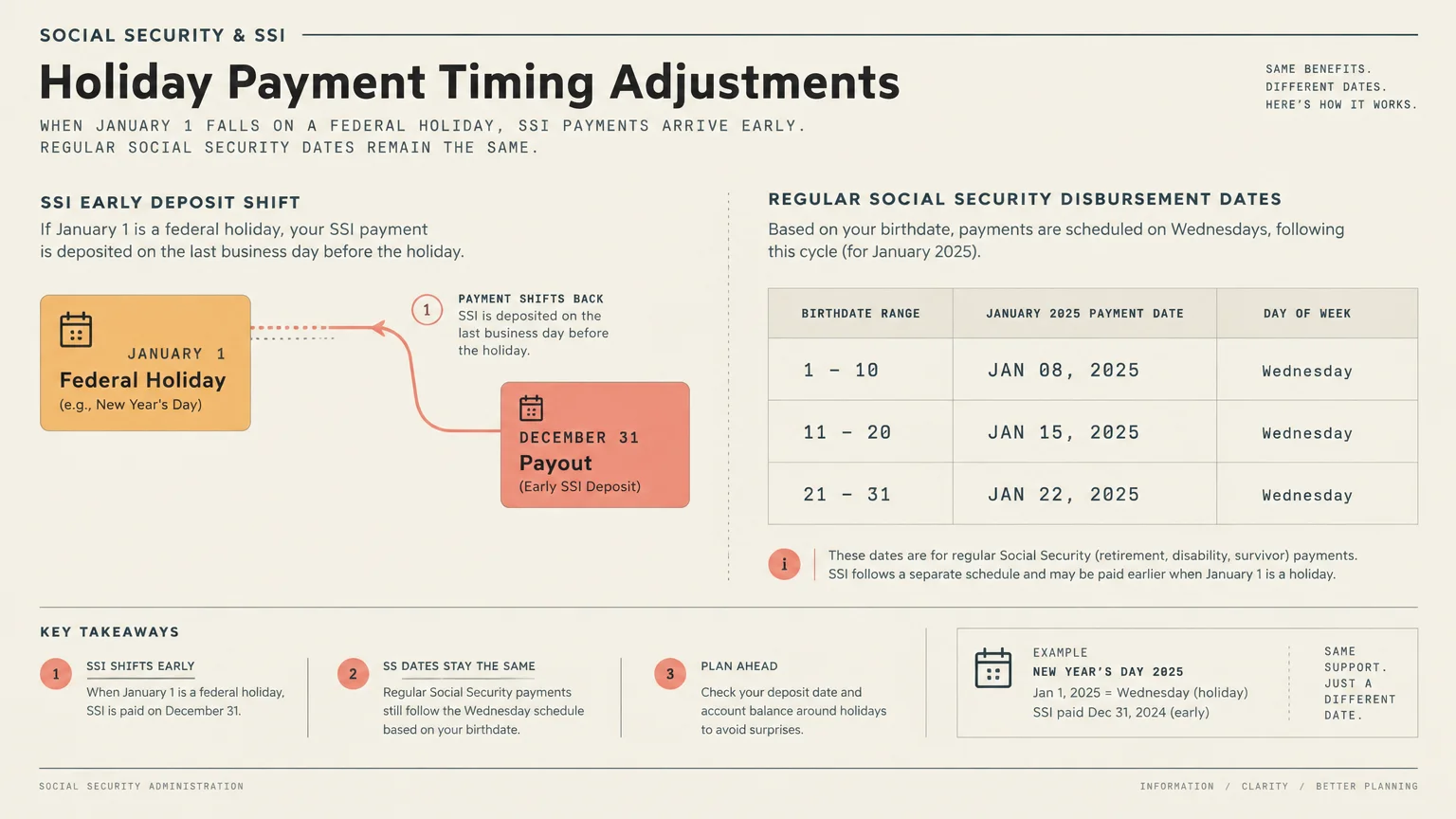
Payment distribution dates require careful calendar management during the holiday transition. Because January 1 is a federal holiday, the government issues January 2027 SSI payments early on December 31, 2026.
Standard Social Security retirement and disability payments that reflect the 3.6% COLA begin arriving on their regular Wednesday cycles throughout January. Depositing two checks in late December can distort your holiday budget if you do not plan ahead.
Beneficiaries who continue to work while collecting retirement checks prior to reaching full retirement age face revised annual earnings tests starting January 1. Earning more than the statutory cap triggers temporary benefit withholding.
For workers who remain under full retirement age throughout all of 2027, the earnings threshold rises to $25,560. The government withholds $1 in benefits for every $2 earned above this annual limit.
If you reach full retirement age during 2027, a more generous earnings cap of $67,920 applies up until your birth month. Above that higher amount, the administration withholds $1 for every $3 you earn.
Once you reach the exact month of your full retirement age, all earnings limitations vanish entirely. You can earn an unlimited income without surrendering any portion of your monthly Social Security payments.
Working taxpayers also face updated contribution rules starting on January 1. The maximum amount of wages subject to the 6.2% Social Security payroll tax rises to $192,300 in 2027, up from $184,500.
High earners will see payroll deductions continue until their wages cross that higher threshold. Meanwhile, earning a single Social Security work credit requires $1,970 in covered earnings, up to the annual four-credit maximum.
Estimated Tax Deadlines for Benefit Recipients and Freelancers
Managing government benefits requires close attention to the Internal Revenue Service calendar right after the New Year. Tax obligations on federal benefits and non-wage earnings come due quickly.
January 15, 2027, marks the official deadline for fourth-quarter estimated tax payments for the 2026 tax year. Self-employed workers, independent contractors, and retirees without automatic tax withholding must submit Form 1040-ES by this date.
Retirees frequently overlook this deadline when they take taxable pension distributions or realize unexpected capital gains. Up to 85% of your Social Security benefits can become subject to federal income tax if your combined income crosses federal thresholds.
Missing the January 15 estimated payment deadline triggers IRS underpayment penalties even if you pay your entire liability by April. Making your fourth-quarter payment protects your cash flow from unnecessary interest charges.
Qualifying farmers and commercial fishers receive a unique statutory exemption from this mid-January cutoff. If you earn at least two-thirds of your gross income from farming or fishing, you can skip the January 15 estimated tax payment entirely.
To use this exception, you must file your complete 2026 Form 1040 and pay all taxes owed in full by March 1, 2027. Missing the March 1 deadline forfeits your special status and reinstates standard underpayment penalties.
You can prevent estimated tax headaches altogether by requesting voluntary tax withholding directly from your monthly benefit payments. Submitting Form W-4V to the Social Security Administration allows you to withhold 7%, 10%, 12%, or 22% automatically.
Automating your benefit tax withholding eliminates the need to calculate quarterly vouchers throughout the year. It guarantees your tax liability remains current without calendar tracking or surprise year-end penalties.
Essential New Year Benefits Checklist
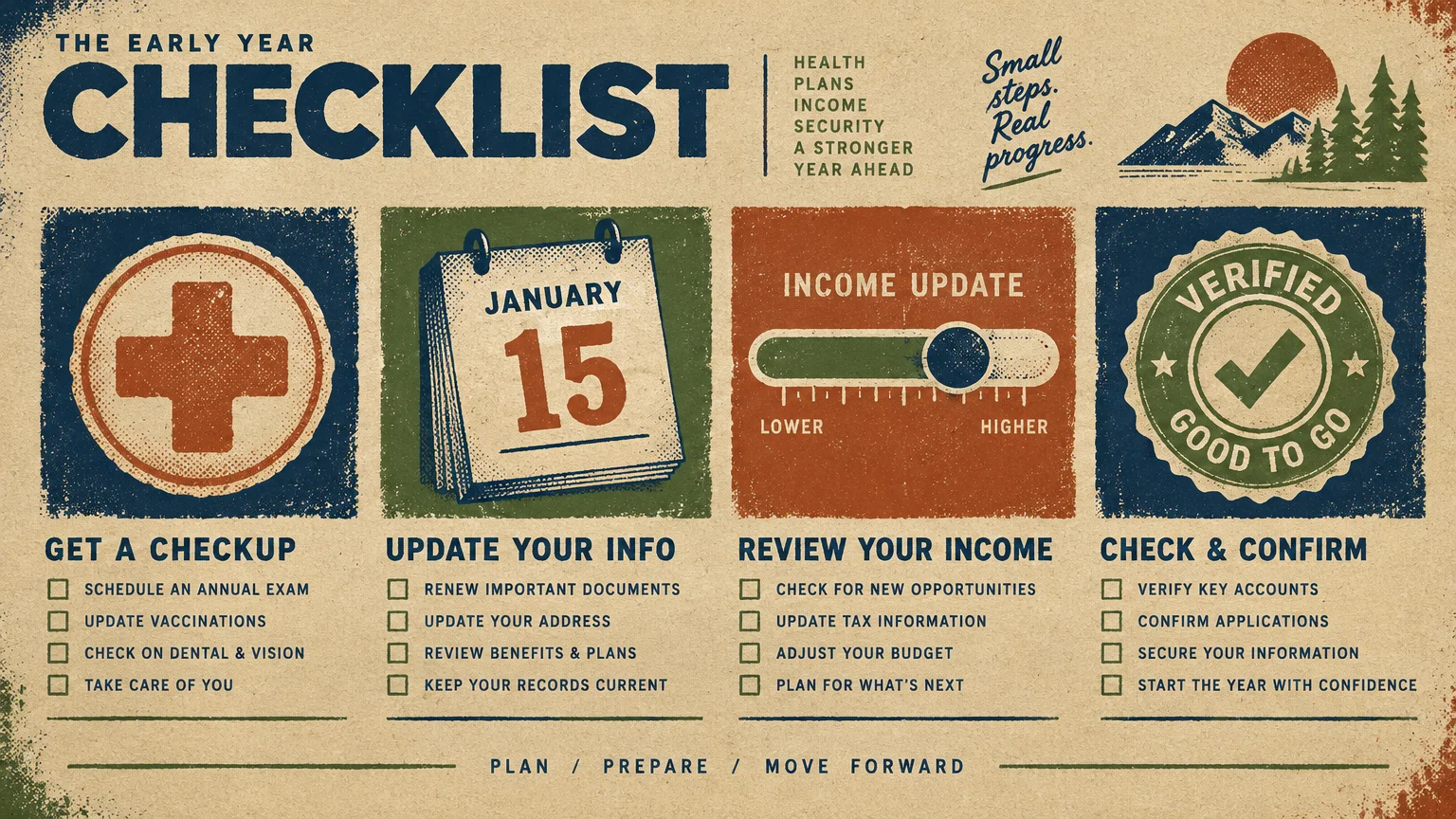
Navigating overlapping January benefit deadlines demands an organized, step-by-step approach. Using a practical new year benefits checklist helps you track mandatory forms and verify monthly account deposits.
- Audit Health Insurance Coverage: Compare existing marketplace plans against 2027 benchmark silver options before January 15 to balance premiums and out-of-pocket maximums.
- Confirm Automatic Direct Deposits: Check your bank account on December 31, 2026, for early SSI payments and monitor mid-January accounts for updated COLA retirement increases.
- Evaluate Medicare Advantage Quality: Assess your current Advantage plan network rules and drug formularies before March 31 to switch if your preferred providers left the plan.
- Recalculate Work Earnings Forecasts: Project your annual wage earnings for 2027 against the $25,560 earnings test limit to prevent unexpected Social Security benefit withholding.
- Process Estimated Tax Payments: Submit your fourth-quarter 2026 estimated tax payment using IRS Form 1040-ES by January 15 to avoid underpayment penalties.
- Update Income Profiles: Submit revised income figures to HealthCare.gov to ensure your advance premium tax credits match your actual financial profile.
Reviewing this checklist during the first week of January prevents administrative oversights. It ensures you maintain full compliance across all government programs without paying unnecessary fees.
Comparing Key Early-Year Deadlines and Actions
Understanding which dates require mandatory action helps you prioritize your financial tasks after the holidays. The table below outlines the primary federal cutoffs and their direct consequences.
| Benefit Program | Crucial Deadline | Action Required | Consequence of Missing |
|---|---|---|---|
| HealthCare.gov / ACA | January 15, 2027 | Select plan or finalize enrollment | Loss of coverage for all of 2027 |
| IRS Form 1040-ES | January 15, 2027 | Pay Q4 estimated taxes | IRS underpayment interest and penalties |
| Medicare Advantage | March 31, 2027 | Switch Advantage plans or return to Original Medicare | Locked into current Advantage plan until 2028 |
| Medicare General Enrollment | March 31, 2027 | Enroll in Medicare Part A or Part B | Delayed coverage and higher late penalties |
| Agricultural / Fishing Tax | March 1, 2027 | File Form 1040 and pay tax in full | Retroactive underpayment penalties |
This table underscores why early January demands your immediate financial attention. Missing a single cutoff can alter your family budget or medical access for an entire year.

Strategic Timing and Financial Discipline
Aligning your household spending with government schedules creates lasting stability. Expert financial leaders consistently emphasize proactive planning over reactive adjustments.
“A big part of financial freedom is having your heart and mind free from worry about what-ifs of life.” — Suze Orman, Personal Finance Author and Expert
Executing your benefit selections during the first two weeks of the year removes significant mental stress. Proactive filing prevents panic and guarantees access to essential medical care.
Relying on luck or assuming federal agencies will grant grace periods creates costly disruptions. Taking ownership of your filing calendar gives you complete control over your household finances.
Professional vs. Self-Guided Management
Deciding whether to handle early-year government filings on your own or hire a professional depends on financial complexity. The following scenarios illustrate when professional guidance pays for itself versus when self-service works best.
Scenario 1: Straightforward Health Coverage Renewal. If your household income remains stable and your current doctors remain in-network, self-guided enrollment on HealthCare.gov is simple. You can easily compare plans and confirm your subsidy within thirty minutes.
Scenario 2: Transitioning from Medicare Advantage to Original Medicare. If you developed a serious medical condition and require specialized regional care, work with a State Health Insurance Assistance Program (SHIP) counselor. Navigating medical underwriting for a Medigap policy often requires expert guidance.
Scenario 3: Fluctuating Freelance Income and Social Security Benefits. If you collect early retirement benefits while managing inconsistent freelance revenue, hire a Certified Public Accountant (CPA). An accountant calculates your quarterly estimated payments and prevents earnings test violations.
Scenario 4: Farm Income and Specialized Agricultural Deductions. Farmers utilizing the March 1 filing exception benefit substantially from an agricultural tax specialist. A professional ensures complete compliance with unique farm depreciation rules while avoiding estimated penalty pitfalls.

Common Mistakes to Avoid
Many households stumble into costly errors by underestimating strict bureaucratic cutoffs. Recognizing frequent traps helps you safeguard your benefits and avoid administrative delays.
The most common mistake is assuming the fall Open Enrollment window is your only healthcare opportunity. Overlooking the January 15 ACA deadline leaves individuals uninsured after missing the December cutoff for January 1 start dates.
Another frequent trap involves the Social Security earnings test for early retirees. Many working seniors fail to notify the agency about wage increases, resulting in unexpected benefit withholding or demands for repayment.
Retirees also routinely forget that Social Security income can trigger quarterly estimated tax requirements. Failing to submit Form 1040-ES on January 15 causes unwelcome IRS penalty notices later in the year.
Finally, Medicare beneficiaries often ignore formulary changes during the Advantage Open Enrollment window. Failing to verify drug costs allows unexpected price hikes on maintenance medications to drain savings.
Frequently Asked Questions
What happens if I miss the January 15 ACA health insurance deadline?
If you miss the January 15 cutoff, you cannot purchase individual marketplace coverage for 2027 unless you experience a qualifying life event like job loss, marriage, or relocation. Without an exemption, you must wait until the next Open Enrollment period in November 2027.
Why did my Supplemental Security Income payment arrive on December 31 instead of January 1?
The Social Security Administration issues payments early whenever the scheduled payment date falls on a federal holiday or weekend. Because New Year’s Day is an official federal holiday, the agency releases January SSI payments on the final business day of December.
Can I change my Medicare drug coverage between January and March?
You can change your Part D drug coverage between January 1 and March 31 only if you are currently enrolled in a Medicare Advantage plan. Beneficiaries who drop Medicare Advantage during this window can return to Original Medicare and enroll in a standalone Part D prescription drug plan.
How much can I earn in 2027 before Social Security withholds benefits?
If you are under full retirement age for the entire year, you can earn up to $25,560 in 2027 before the government withholds $1 for every $2 above the limit. If you reach full retirement age during 2027, the limit rises to $67,920 until your birth month.
Protecting Your Household Budget in the New Year
Managing government benefit deadlines 2027 right after the holidays provides peace of mind and preserves your cash reserves. Setting calendar reminders today protects your household from coverage gaps, surprise penalties, and unnecessary administrative headaches.
Take an hour this week to gather your tax documents, log into your benefit portals, and review your healthcare enrollments. Early preparation ensures you start the new calendar year with strong coverage and complete financial security.
This article provides general financial education and information only. Everyone’s financial situation is unique—what works for others may not work for you. For personalized advice, consider consulting a qualified financial professional such as a CFP or CPA.
Last updated: October 2026. Financial regulations and rates change frequently—verify current details with official sources.