A massive tax refund might feel like a spring bonus, but it often signals costly planning oversights for retirees. Filing taxes in retirement requires balancing distribution schedules, unexpected benefit taxes, and unique deduction rules.
If you pull income from multiple accounts, a single filing mistake can easily wipe out thousands of dollars in hard-earned retirement savings. Overlooking age-specific tax perks can also unnecessarily trim your monthly cash flow.
Avoiding common tax refund mistakes retirees face helps you preserve wealth and keep your funds working for your future. Here is how to navigate filing season with confidence and keep more money in your pocket.
1. Overlooking Extra Senior Deductions
Many older taxpayers claim the basic standard deduction each spring without looking at age-specific enhancements. Overlooking these additional allowances leads to overpaying taxes and waiting on delayed refunds.
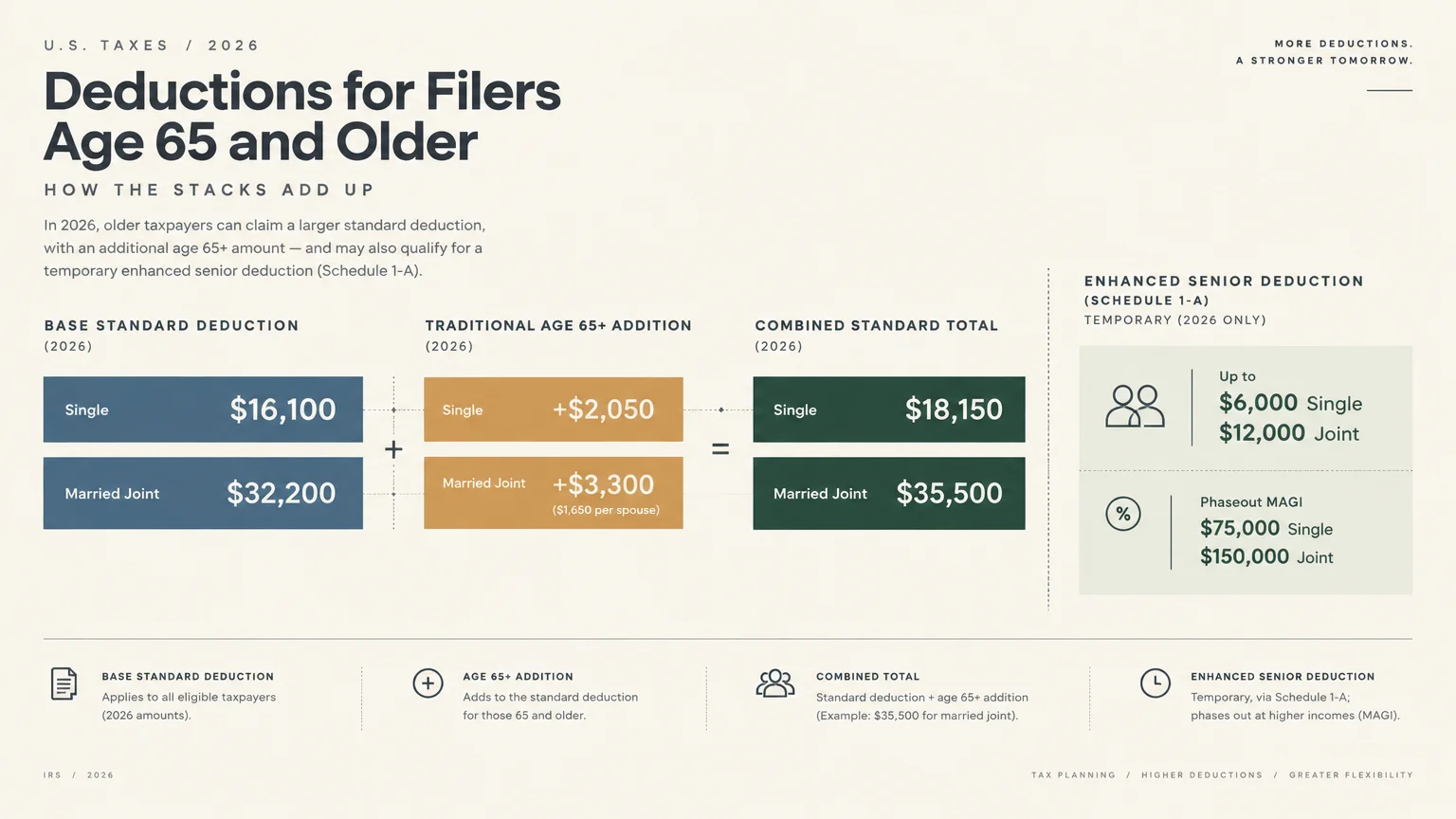
For the 2026 tax year, the base standard deduction is $16,100 for single filers and $32,200 for married couples filing jointly. However, the tax code provides extra relief once you celebrate your 65th birthday.
The Traditional Age 65+ Additional Deduction
Taxpayers age 65 and older can claim an additional standard deduction amount. This extra deduction provides immediate tax relief without requiring you to itemize expenses on Schedule A.
For 2026, the traditional senior addition is $2,050 for single or head-of-household filers. If you are married filing jointly, you receive an extra $1,650 for each spouse who meets the age requirement.
A married couple where both partners have reached age 65 gains an extra $3,300 in deductions. That brings their combined standard deduction to $35,500 for the 2026 tax year.
The Enhanced Senior Deduction (2025–2028)
Recent federal tax legislation introduced a separate, temporary deduction specifically designed for older Americans. This enhanced deduction delivers substantial relief for individuals aged 65 and older through 2028.
Eligible taxpayers can deduct up to $6,000 per person on Schedule 1-A. A qualifying married couple filing jointly can claim up to $12,000 if both spouses qualify.
You can claim this deduction whether you itemize or take the standard deduction. Income phaseouts begin at a modified adjusted gross income (MAGI) of $75,000 for single filers and $150,000 for married couples.
- Check your age eligibility as of December 31 of the tax year.
- File Schedule 1-A to capture the enhanced senior deduction.
- Monitor your MAGI to ensure your income stays below the phaseout thresholds.
- Combine both the traditional and enhanced deductions to lower your taxable income.
2. Miscalculating Required Minimum Distributions (RMDs)
Retiree tax return errors frequently stem from confusing rules surrounding required minimum distributions. Taking out the wrong amount—or withdrawing funds at the wrong time—triggers severe tax consequences.
The SECURE 2.0 Act established age 73 as the starting threshold for mandatory retirement distributions. This age limit applies to account holders born between 1951 and 1959.
The First RMD Deadline Trap
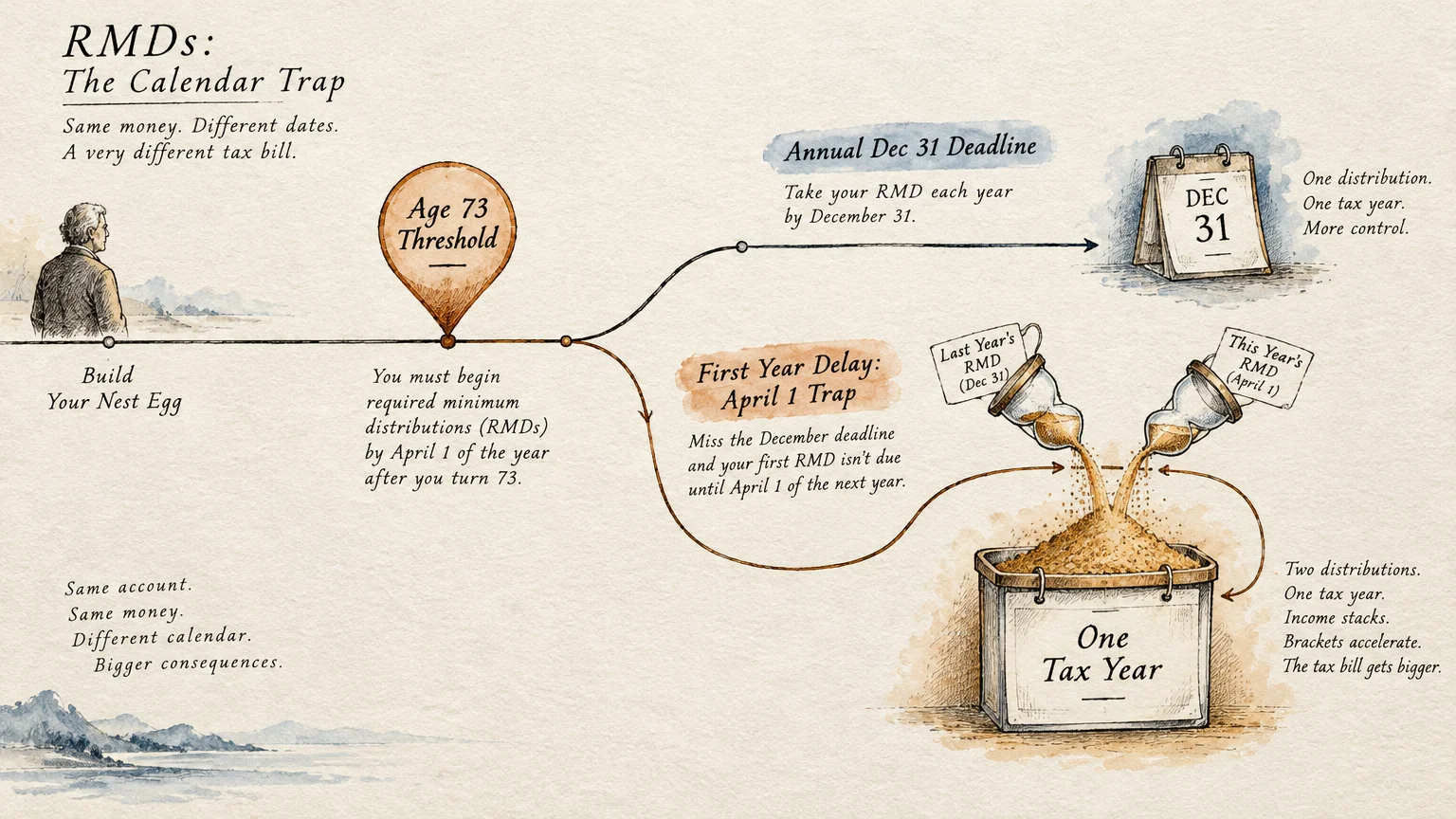
You must take your first distribution by April 1 of the year following the year you turn 73. If you turned 73 in 2026, your deadline for that initial withdrawal is April 1, 2027.
Delaying that first withdrawal until the spring deadline forces you to take two distributions in a single calendar year. Your second RMD remains due by December 31, 2027.
Stacking two large withdrawals into one tax year can push you into a higher tax bracket. It can also increase taxes on your Social Security benefits and trigger higher Medicare premiums.
Steep IRS Penalties for Missed Withdrawals
The Internal Revenue Service (IRS) assesses an excise tax penalty if you fail to take your full annual distribution. The penalty stands at 25% of the amount you neglected to withdraw.
You can reduce that penalty to 10% if you correct the error within a two-year correction window. You must file Form 5329 and withdraw the remaining funds as quickly as possible.
Fortunately, designated Roth accounts in employer plans are exempt from lifetime RMD rules. You do not need to take mandatory distributions from a Roth 401(k) or Roth 403(b) during your lifetime.
3. Writing Direct Checks to Charity Instead of Using QCDs
Generous retirees often write personal checks to their favorite non-profit organizations each year. Donating cash directly from a checking account is often an inefficient way to give during retirement.
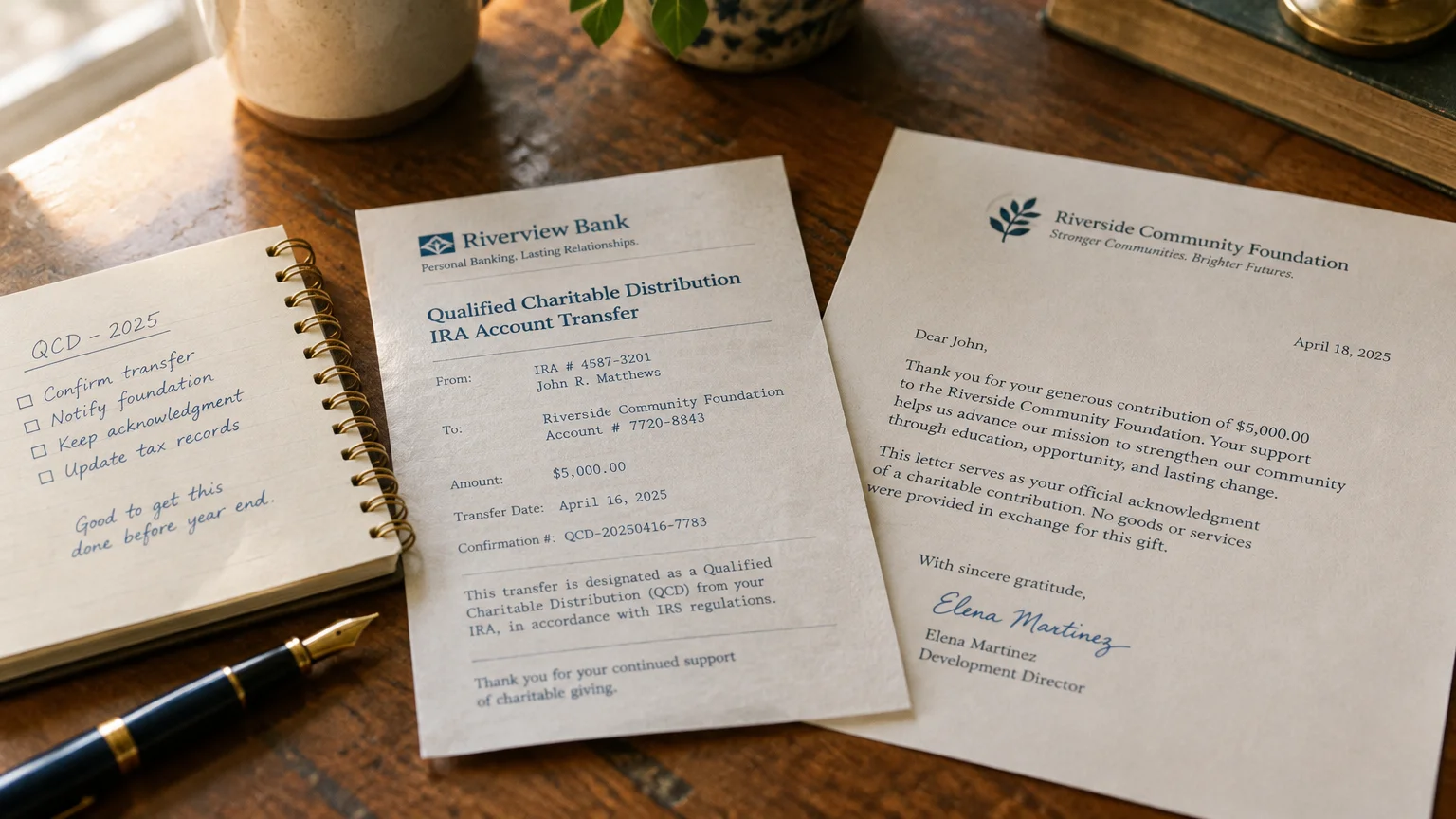
Once you reach age 70½, you can make a Qualified Charitable Distribution (QCD) directly from your traditional IRA. This mechanism lets you transfer funds tax-free to an eligible charity without increasing your gross income.
“A big tax refund is not a gift from the government; it is your own money returned to you without interest.” — Suze Orman, Personal Finance Author
Why QCDs Beat Standard Charitable Deductions
The annual QCD limit is $111,000 per person in 2026. Retirees can also direct a one-time QCD transfer of up to $55,000 toward a charitable gift annuity or charitable remainder trust.
Direct IRA transfers satisfy your annual RMD requirements once you reach age 73. Because the distributed funds never appear on your Form 1040 as adjusted gross income, your overall tax profile improves.
A lower adjusted gross income keeps you below key thresholds for Medicare premium surcharges. It also shields more of your Social Security income from federal income taxation.
New Charitable Deduction Rules for 2026
Taxpayers who take the standard deduction can now claim an above-the-line deduction for cash gifts. The limit allows single filers to deduct up to $1,000 and joint filers up to $2,000.
Retirees who itemize their deductions face a 0.5% adjusted gross income floor on charitable contributions. You can only deduct charitable gifts that exceed 0.5% of your total AGI for the year.
- Contact your IRA custodian to request a direct charitable transfer form.
- Ensure the check is made payable directly to the qualified 501(c)(3) organization.
- Avoid depositing the distribution into your personal account before donating.
- Obtain a written acknowledgment from the charity stating no goods or services were received.
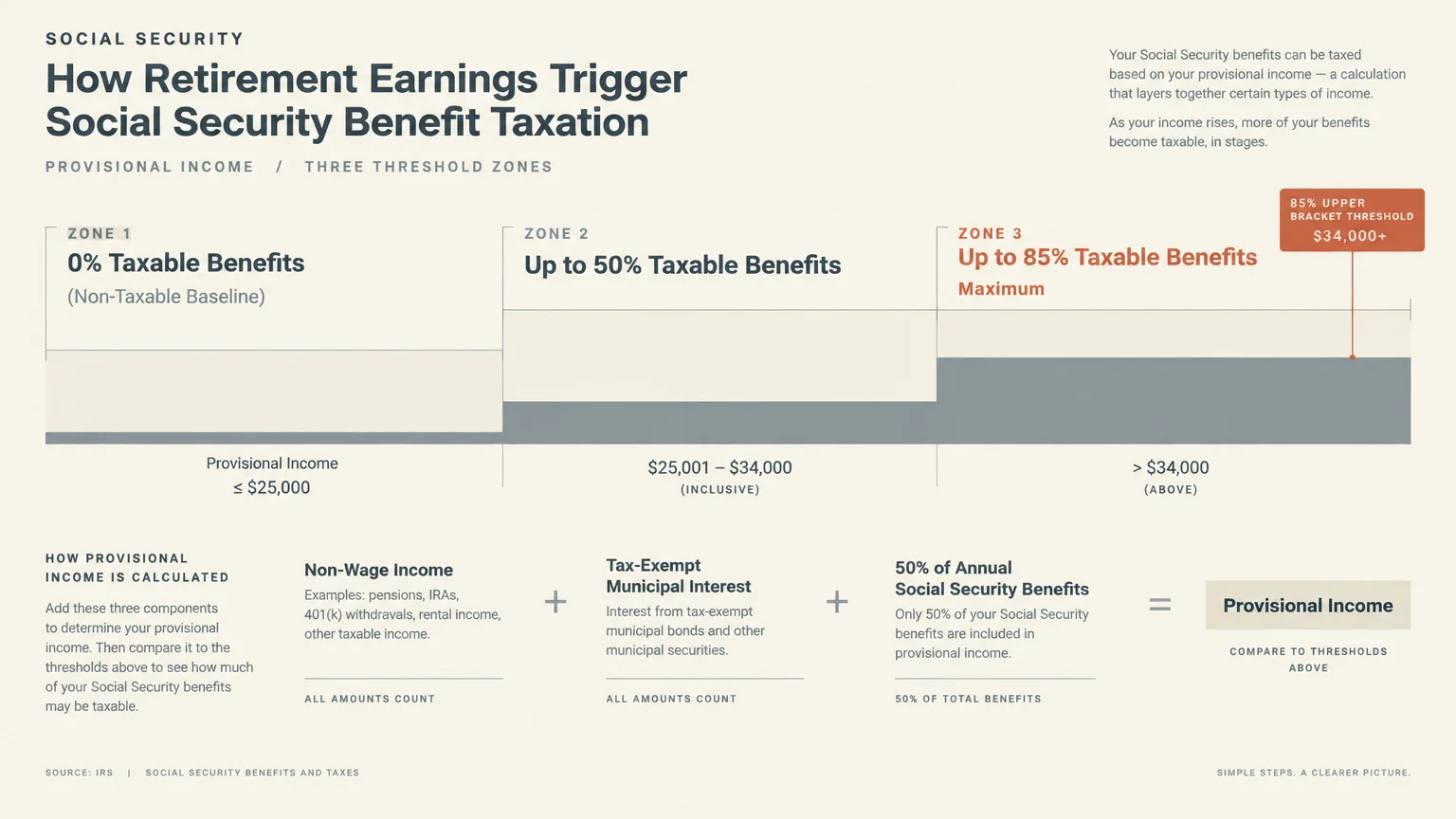
4. Forgetting That Social Security Benefits Can Be Taxed
Many individuals assume their monthly benefits from the Social Security Administration (SSA) are entirely tax-free. Unfortunately, up to 85% of your benefits can become taxable depending on your overall income.
The formula for calculating this liability relies on your combined income. Combined income equals your adjusted gross income, plus any tax-exempt interest, plus one-half of your annual Social Security benefits.
Combined Income Tax Brackets
Federal thresholds for taxing Social Security benefits are not indexed for inflation. Because these numbers have remained fixed for decades, routine cost-of-living adjustments push more retirees over the limits each spring.
If you are a single filer with a combined income between $25,000 and $34,000, you pay taxes on up to 50% of your benefits. Above $34,000, up to 85% of your benefits become taxable.
Married couples filing jointly pay tax on up to 50% of benefits between $32,000 and $44,000. When joint combined income exceeds $44,000, up to 85% of your benefits are subject to federal income tax.
Withholding Errors and Early Retirement Earnings
The government does not automatically withhold federal taxes from your monthly benefit checks. If you do not submit Form W-4V to request voluntary withholding, you might face an unexpected tax bill.
If you claim benefits before your full retirement age and continue working, you face strict earning limits. In 2026, the earnings limit in the year you reach full retirement age is $65,160.
The Social Security Administration withholds $1 in benefits for every $3 you earn above that threshold. Miscalculating these amounts can distort your expected refund and disrupt your spring tax filing.

5. Botching the Medical Expense Deduction Floor
Healthcare expenses often increase during retirement, leading many filers to assume they should itemize their medical bills. However, strict adjusted gross income floors prevent many retirees from claiming these deductions.
You can only deduct unreimbursed medical and dental expenses that exceed 7.5% of your adjusted gross income. If your AGI is $60,000, your first $4,500 of out-of-pocket medical expenses provides zero tax deduction.
Eligible Expenses You Might Overlook
If your medical costs clear the 7.5% floor, you can deduct a wide array of necessary healthcare expenses. Many taxpayers forget to tally eligible payments made throughout the calendar year.
Medicare Part B premiums, Medicare Part D prescription plans, and Medicare Supplement policies count toward the deduction. Qualified long-term care insurance premiums also qualify, subject to age-based statutory limits.
You can include prescription eyeglasses, hearing aids, dental work, and non-reimbursed mobility modifications. You may also deduct transportation costs incurred when traveling to and from medical treatments.
Standard Deduction vs. Schedule A Itemization
With high standard deductions and new senior tax credits, itemizing medical costs is rarely advantageous for most retirees. Your total itemized deductions must exceed your expanded standard deduction to make financial sense.
Review your total deductible expenses carefully before spending hours organizing receipts. Itemizing without beating the standard threshold will cost you valuable time and reduce your overall tax savings.

6. Celebrating a Large Tax Refund Instead of Adjusting Withholding
Receiving a four-figure tax refund check from the IRS can create a false sense of financial success. In reality, a large refund means you gave the federal government an interest-free loan throughout the year.
During retirement, maintaining regular cash flow is vital for covering daily expenses and unexpected home repairs. Letting the IRS hold your money reduces your financial flexibility and robs you of investment returns.
“Do not leave money on the table that the tax code rightfully allows you to keep.” — John Bogle, Founder of Vanguard Group
The Cost of Over-Withholding
Cash parked in a high-yield savings account or money market fund can generate steady, low-risk income. Over-withholding thousands of dollars each year deprives your portfolio of compounding interest.
If you receive a $3,000 refund, you missed out on an extra $250 of monthly liquidity. That extra cash could have cushioned your emergency fund or covered rising utility bills during the winter.
Educational resources from Investor.gov highlight the importance of active cash management in retirement. Ensuring your money works for you every day is critical when living on fixed assets.
Adjusting Your Retirement Withholding
You can fine-tune your tax withholding by updating your distribution paperwork with your plan custodians. Use Form W-4P to adjust withholding on periodic pension and annuity payments.
Use Form W-4R to set exact withholding percentages on non-periodic distributions from your traditional IRA or 401(k). If you receive income from multiple sources, consider making quarterly estimated payments with Form 1040-ES.
- Review your previous year’s tax return to identify your net refund or balance due.
- Submit an updated Form W-4P to your pension administrator to lower monthly withholding.
- Adjust Form W-4V with the Social Security Administration to balance benefit withholding.
- Recalculate your quarterly estimated tax payments if investment yields change significantly.

7. Misreporting Investment Income and Capital Gains
Filing taxes in retirement requires tracking various investment reporting documents that arrive late in the spring. Rushing to file your return before receiving all tax forms creates costly errors and processing delays.
Brokerages often issue corrected 1099 statements well into February or early March. Filing your return too early might force you to submit an amended Form 1040-X later in the year.
The Trap of Tax-Exempt Municipal Bonds
Interest from municipal bonds is generally exempt from federal income tax, making it popular among older investors. However, you must still report this tax-exempt interest on line 2a of Form 1040.
The IRS includes tax-exempt interest when calculating your combined income for Social Security taxation. Forgetting this calculation can lead to underreporting your taxable Social Security benefits and facing surprise penalties.
Tax-exempt interest also counts toward modified adjusted gross income when calculating Medicare Part B and Part D premium surcharges. Always account for municipal bond income in your broader retirement tax projections.
Navigating the 0% Capital Gains Bracket
Retirees with modest taxable incomes can often capitalize on the 0% long-term capital gains tax rate. Selling appreciated taxable investments during low-income years allows you to reset your cost basis without paying tax.
A common mistake involves selling too many assets at once, inadvertently pushing taxable income past the 0% threshold. Once your income crosses the limit, capital gains are taxed at 15% or 20%.
Consumer protection guidance from the Consumer Financial Protection Bureau (CFPB) advises older consumers to monitor financial contracts and transactions carefully. Careful timing of asset sales ensures you stay firmly within lower tax brackets.
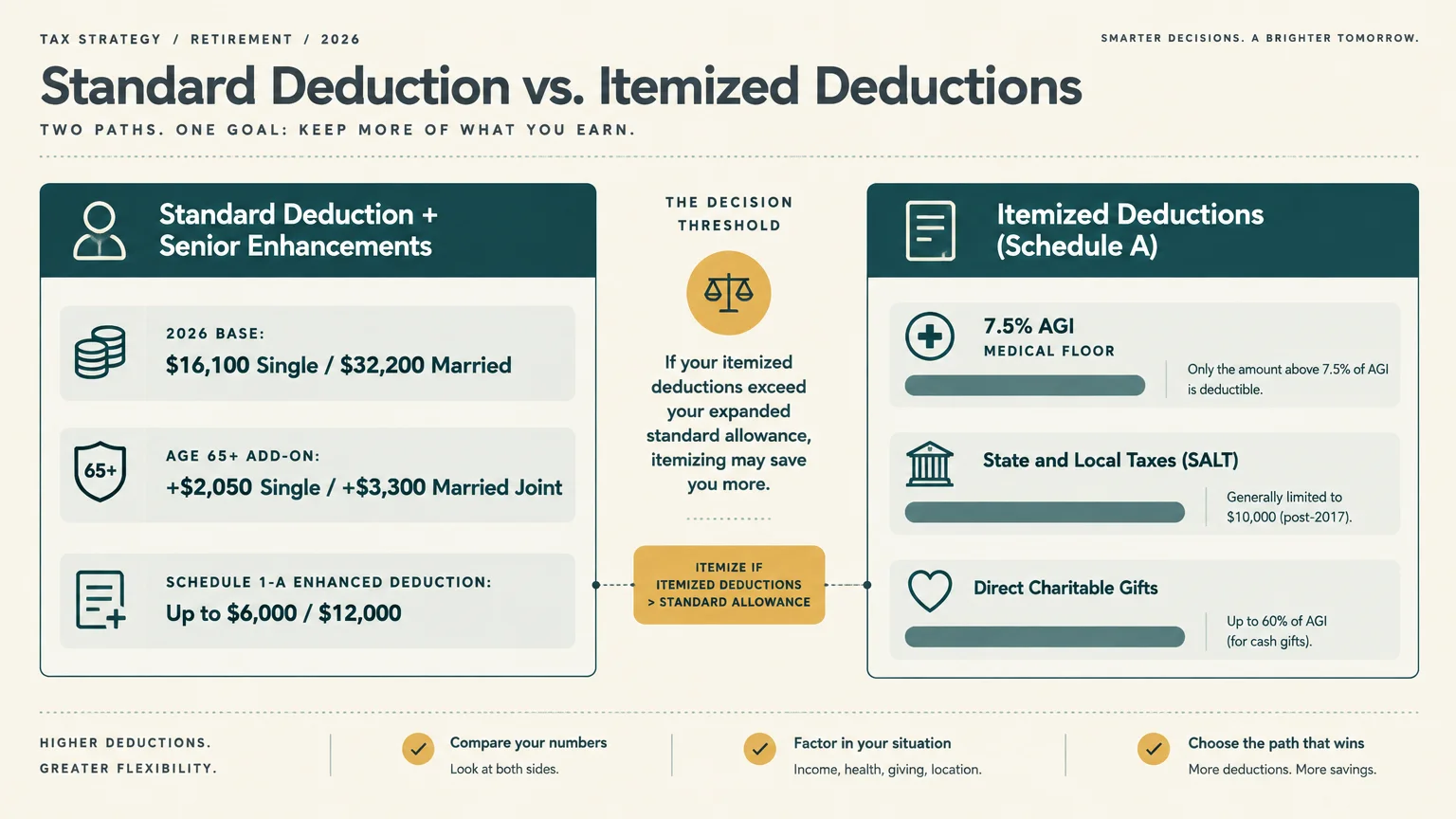
Deduction Options for Retirees Compared
Choosing between itemized and standard deductions depends on your age, filing status, and medical expenditures. The table below outlines how these filing choices compare for the 2026 tax year.
| Deduction Category | Single Filer (Age 65+) | Married Filing Jointly (Both 65+) | Key Eligibility Rules |
|---|---|---|---|
| Base Standard Deduction | $16,100 | $32,200 | Available to all filers who do not itemize deductions. |
| Traditional Age 65+ Add-On | $2,050 | $3,300 ($1,650 each) | Must reach age 65 before the end of the tax year. |
| Enhanced Senior Deduction | Up to $6,000 | Up to $12,000 | Phases out at $75,000 MAGI (Single) and $150,000 (Joint). Claim on Schedule 1-A. |
| Itemized Medical Deductions | Variable | Variable | Only expenses exceeding 7.5% of AGI are deductible on Schedule A. |
| Charitable Non-Itemizer Deduction | Up to $1,000 | Up to $2,000 | Cash donations to qualified charities for standard deduction filers. |
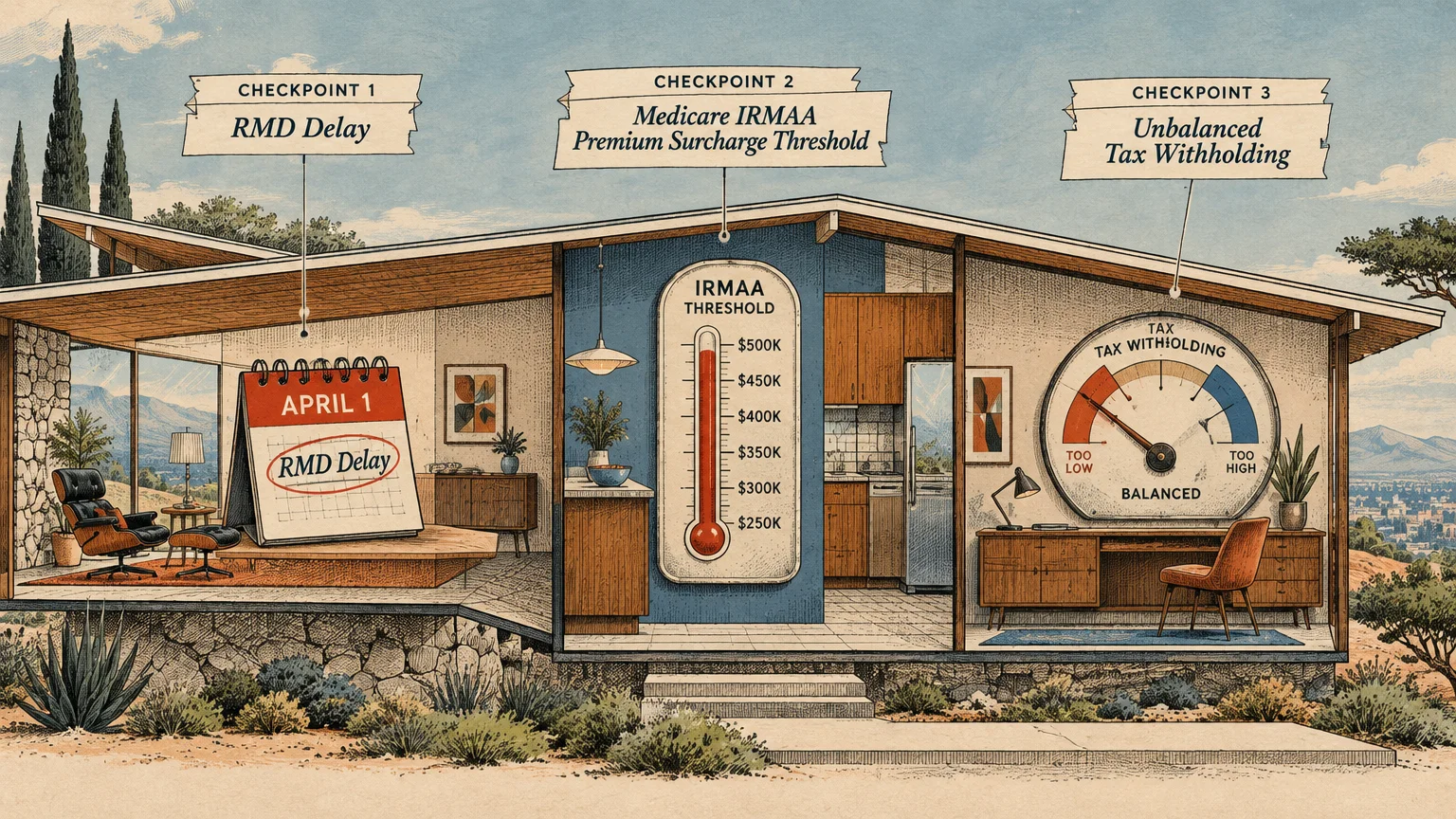
Pitfalls to Watch For
Retirees must navigate unique structural rules in the tax code to avoid expensive surprises every spring. Being proactive helps you keep more income available for your personal goals.
The Retirement Tax Torpedo
The tax torpedo occurs when an extra dollar of retirement distribution triggers taxes on your Social Security benefits. This effect can push your marginal tax bracket far higher than your statutory rate suggests.
Taking an extra $1,000 from a traditional IRA can cause an additional $850 of Social Security to become taxable. You effectively pay tax on $1,850 of income from a $1,000 withdrawal.
Medicare IRMAA Surcharges
Income-Related Monthly Adjustment Amounts (IRMAA) increase your Medicare Part B and Part D premiums if your income rises. These surcharges are based on your tax return from two years prior.
Crossing an IRMAA tier by a single dollar increases your healthcare premiums for an entire calendar year. Review your modified adjusted gross income before taking non-essential retirement distributions.
Overlooking State Tax Exemptions
Many states treat retirement distributions and Social Security income far more favorably than the federal government. Failing to review state rules can cause you to overpay your state income taxes.
Several states completely exempt Social Security benefits, military pensions, or public retirement payments from taxable income. Verify your state’s senior exclusions before finalizing your state return.
Falling for Spring Tax Scams
Scammers aggressively target older adults during tax filing season with fraudulent calls and emails. These criminals impersonate IRS agents demanding immediate payment or promising inflated refund deposits.
The IRS never initiates contact through phone calls, text messages, or social media to demand money. Never share personal information or banking credentials with unverified callers.

Getting Expert Help
Managing taxes in retirement involves complex rules that do not apply during your working career. Consulting a qualified tax professional or financial advisor can prevent costly filing errors.
Navigating Your First RMD Year
When you reach age 73, calculating minimum withdrawals across multiple retirement accounts can become confusing. A CPA or enrolled agent calculates your correct RMD amounts and helps you avoid the 25% excise tax penalty.
Planning Multi-Year Roth Conversions
Converting traditional retirement accounts to Roth accounts requires careful coordination across multiple years. A professional helps you fill lower tax brackets while keeping income below Medicare IRMAA surcharges.
Handling the Loss of a Spouse
A surviving spouse often experiences a sharp tax increase known as the widow’s penalty. When filing status changes from married joint to single, tax brackets compress while income often remains steady.
A certified financial planner can restructure distribution plans to minimize this unexpected tax jump. Proactive planning softens the financial impact during an already challenging life transition.
Frequently Asked Questions
Do all seniors automatically receive the extra standard deduction?
You qualify for the traditional additional standard deduction if you turn 65 by December 31 of the tax year. You must check the appropriate box on Form 1040 to claim the benefit.
Can I still contribute to an IRA after age 73?
You can contribute to a traditional or Roth IRA at any age as long as you have earned income. Investment returns, pension benefits, and Social Security payments do not count as earned income.
What should I do if I missed my RMD deadline?
Withdraw the required distribution immediately from your account to resolve the shortfall. File Form 5329 with your tax return and request a waiver of the penalty for reasonable cause.
Are Social Security benefits ever completely exempt from federal tax?
If your combined income remains below $25,000 for single filers or $32,000 for married couples, your benefits are not taxed. Once your income crosses those amounts, a portion becomes taxable.
Final Steps for a Smarter Tax Season
Filing taxes during retirement does not have to be an overwhelming or stressful annual ordeal. By claiming proper senior deductions and managing your distributions, you can protect your savings and eliminate tax surprises.
Review your withholding rates, explore tax-smart charitable giving, and watch out for benefit taxation thresholds. Taking control of your tax plan today ensures a more secure and predictable financial future.
This article provides general financial education and information only. Everyone’s financial situation is unique—what works for others may not work for you. For personalized advice, consider consulting a qualified financial professional such as a CFP or CPA.
Last updated: October 2026. Financial regulations and rates change frequently—verify current details with official sources.