Paying hundreds of dollars to file a straightforward retirement return cuts into your fixed income for no good reason. IRS-certified volunteers and free online platforms prepare millions of senior returns every year at zero cost.
Getting free tax preparation for seniors also helps you claim major new breaks, including a temporary $6,000 deduction for taxpayers age 65 and older. Knowing where to look before filing season opens saves both money and stress.
Use this guide to compare the top free programs, check your eligibility for the 2026 tax year, and gather the exact forms you need.
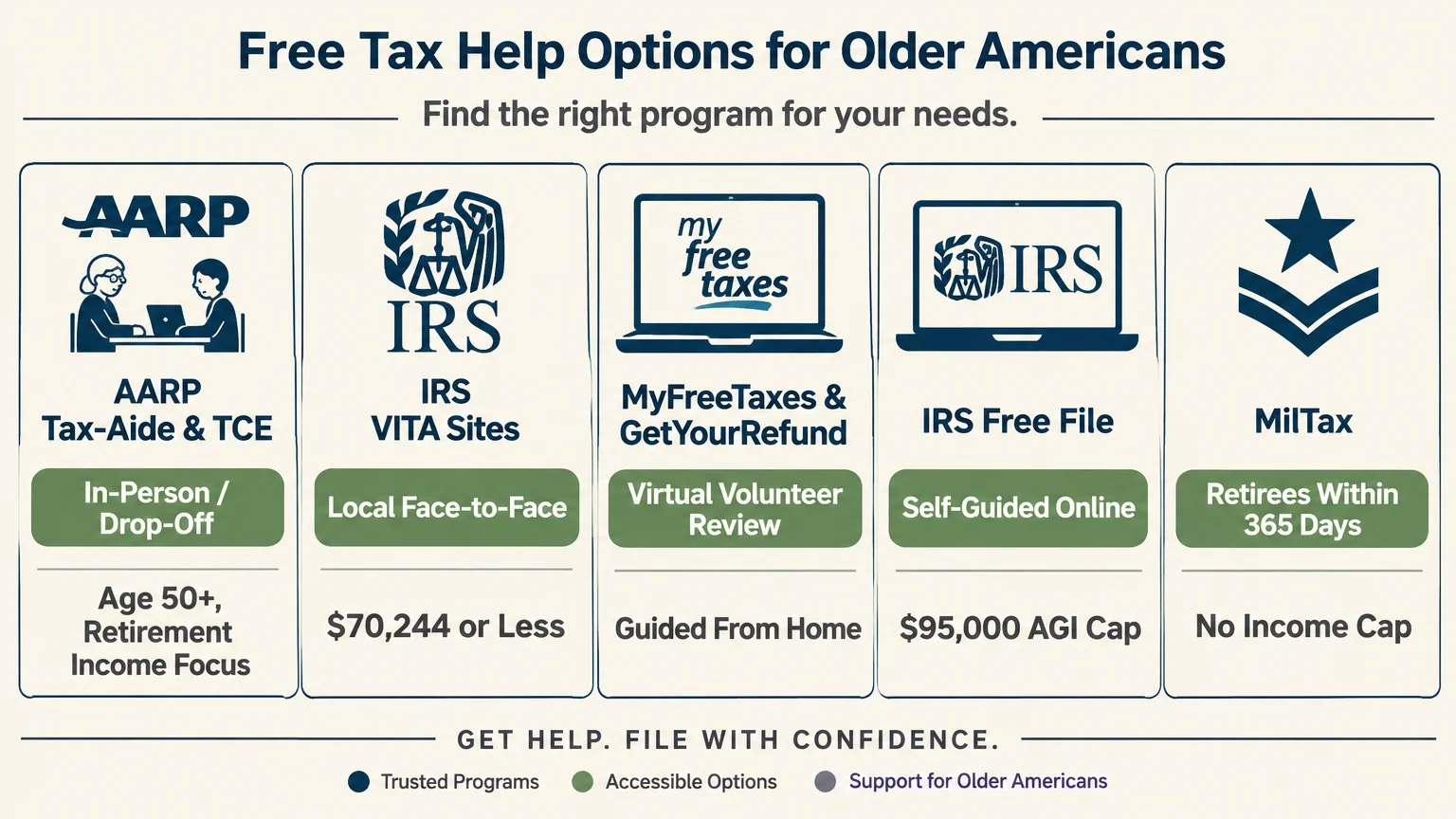
At a Glance: Your Top Free Tax Options
You can choose from in-person volunteer clinics, phone-guided nonprofits, or self-guided software depending on your comfort with technology and your income.
- AARP Foundation Tax-Aide and IRS TCE: Best for in-person or drop-off help from volunteers trained specifically in pensions, Social Security, and retirement income for people age 50 and older.
- IRS VITA Sites: Ideal if you prefer local face-to-face assistance and meet the Earned Income Tax Credit guideline of roughly $70,244 or less.
- MyFreeTaxes and GetYourRefund: Strong virtual choices if you want VITA-certified volunteers to review your uploaded forms or guide your filing from home.
- IRS Free File Guided Software: Useful if you feel comfortable filing online yourself and meet partner age rules plus the $95,000 Adjusted Gross Income threshold listed for 2027.
- MilTax: Tailored to military retirees within 365 days of separation or retirement, offering free federal and state filing with no income cap.
Why Knowing Your 2026 Tax Rules First Can Save You a Trip
Before booking an appointment for tax preparation, confirm whether you even need to file a federal return for the 2026 tax year. Recent federal legislation also reshaped senior deductions for returns you will file in early 2027.
According to IRS Publication 505 (2026), a single taxpayer age 65 or older generally needs to file a 2026 return only when gross income reaches at least $18,150. A married couple filing jointly where both spouses are 65 or older generally crosses the filing threshold at $35,500.
If Social Security benefits represent your only source of income, you typically do not owe federal tax and do not need to file a return. Check your benefit records through the Social Security Administration if you remain unsure how much of your benefit counts as taxable income.
Even if your income falls below the filing threshold, filing a return still makes sense whenever an employer or pension administrator withheld federal taxes from your checks. You can only claim a refund of withheld money or refundable credits by submitting a return.
The Temporary $6,000 Senior Deduction
Under the One Big Beautiful Bill Act, Congress created a temporary $6,000 enhanced senior deduction covering tax years 2025 through 2028. According to the IRS (September 2026), taxpayers age 65 or older by year-end with a valid Social Security number can claim this extra $6,000 write-off on Schedule 1-A.
Married couples filing jointly can deduct $12,000 when both spouses qualify by age and hold valid Social Security numbers. Married seniors who choose the married filing separately status cannot claim this enhanced deduction.
This deduction applies whether you itemize expenses or take the standard deduction, and it stacks directly on top of your existing age-65-and-older standard deduction. However, the benefit phases out once Modified Adjusted Gross Income exceeds $75,000 for single filers or $150,000 for joint filers, disappearing completely at $175,000 and $250,000 respectively.
Keep one vital distinction in mind: this temporary $6,000 write-off lowers your taxable income, not the gross-income threshold that determines whether you must file. Volunteer preparers stay trained on Schedule 1-A so you do not leave this deduction behind.
Standard Deductions, Charitable Gifts, and Form 1040-SR
Standard deduction amounts also rose for the 2026 tax year compared to 2025. According to IRS Publication 505 (2026) and IRS Publication 4491 (October 2026), the 2026 base standard deduction equals $16,100 for single filers and $32,200 for married couples filing jointly.
Head-of-household filers receive a $24,150 base deduction for 2026, up from $23,625 in 2025. Single filers age 65 or older add an extra $2,050, while married joint filers add $1,650 per qualifying spouse age 65 or older.
Combine those figures, and a married couple both age 65 or older with qualifying income under $150,000 can shelter $32,200 in base deduction, $3,300 in age add-ons, and $12,000 via the enhanced senior deduction. That totals $47,500 in federal deductions before you even list a single itemized expense.
Starting with tax year 2026, non-itemizers also gain a fresh charitable tax break. Taxpayers who take the standard deduction can deduct up to $1,000 in qualified cash charitable donations, or up to $2,000 for married couples filing jointly.
If you decide to file on paper or review your volunteer-prepared return, look for Form 1040-SR. Built specifically for taxpayers age 65 and older, this version features larger print and embeds a standard deduction chart directly on the form.
Mark April 15, 2027, as your federal deadline for 2026 tax returns. You can request an extension until October 15, 2027, though any tax balance you owe remains due on April 15.
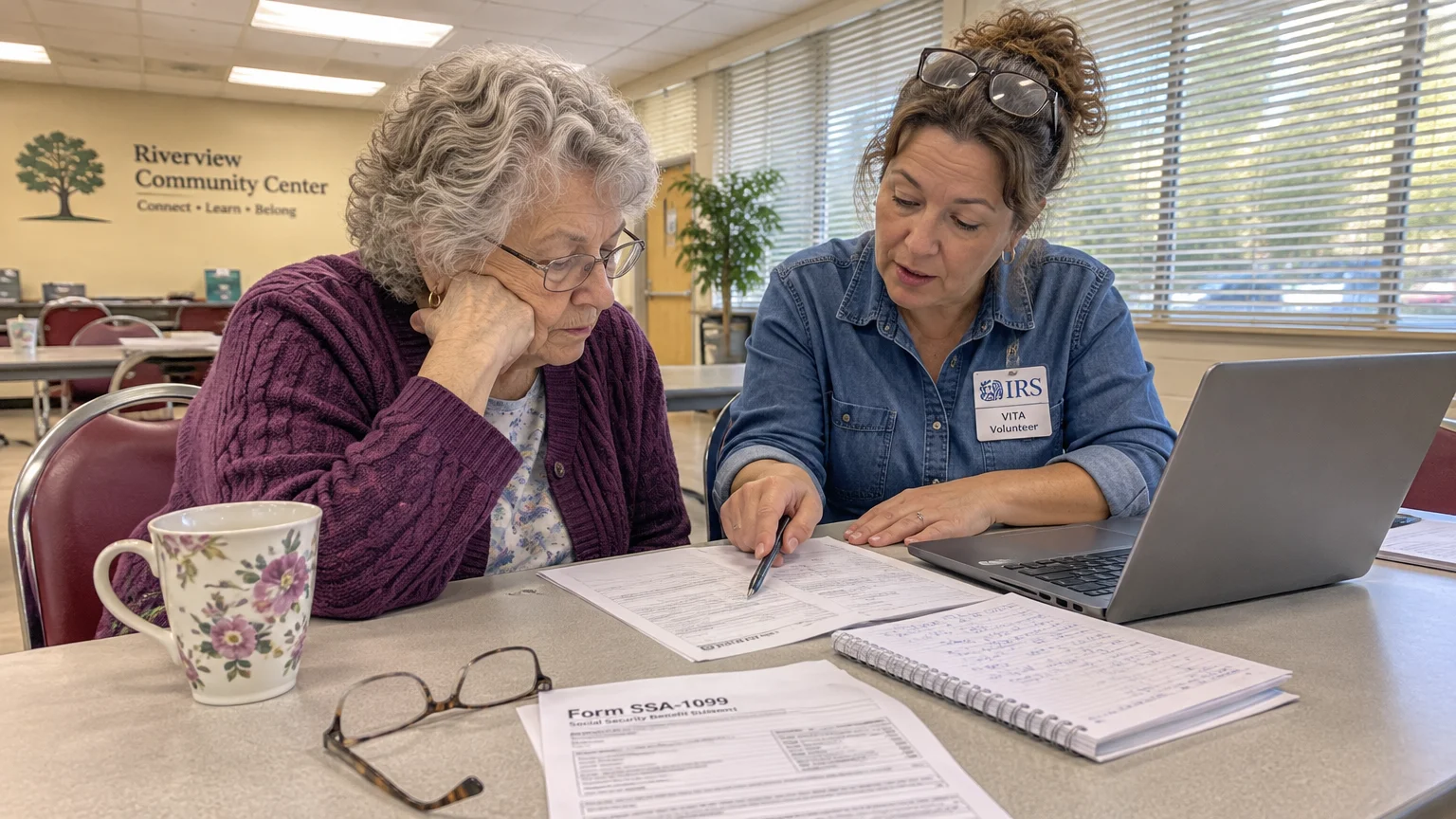
IRS Tax Counseling for the Elderly (TCE) and AARP Foundation Tax-Aide
When older adults search for free tax help for seniors, they usually end up at either an IRS Tax Counseling for the Elderly site or an AARP Tax-Aide location. In practice, these two programs work side by side across the country.
Established in 1978, TCE delivers free federal tax preparation and counseling specifically for individuals age 60 and older. Volunteers at TCE clinics receive specialized training in pensions, annuities, Social Security, and other retirement tax questions, and the program sets no published nationwide income cap.
AARP Foundation Tax-Aide operates the majority of IRS TCE sites nationwide. Launched in 1968, Tax-Aide stands as the largest volunteer-run free tax filing service in the country, serving more than 82 million people since its start according to AARP Foundation (February 2026).
Tax-Aide focuses on taxpayers age 50 and older with low-to-moderate income, paying special attention to adults age 60 and above. You do not need an AARP membership to use Tax-Aide, and the program enforces no strict dollar income limit.
The scale of these volunteer networks remains massive heading into the 2027 filing season. During the 2026 filing season, VITA and TCE sites combined prepared more than 2.9 million tax returns nationwide according to the IRS (November 2026).
To keep those clinics running for 2027, the IRS awarded $58 million in grants across 331 organizations in November 2026. That total includes $12 million directed to 49 TCE grantees and $46 million supporting 282 VITA grantees.
In the filing season reported by AARP Foundation in early 2026, more than 28,300 Tax-Aide volunteers helped over 1.7 million taxpayers. Those volunteers secured more than $1.3 billion in refunds and credits while saving low-income older adults $578 million in preparation fees.
What to Expect at a Site and How to Book
Every VITA and TCE volunteer must pass annual IRS tax-law training and certification exams before touching a single return. Once a volunteer finishes your return, a second certified volunteer conducts a mandatory quality review before transmitting it electronically.
Most Tax-Aide sites open each year from February 1 through April 15, meaning the 2027 season is expected to open on February 1, 2027. Clinics operate inside accessible local spaces such as public libraries, senior centers, community halls, malls, and neighborhood banks.
Many locations now offer flexible ways to work with volunteers based on your mobility and schedule:
- Traditional In-Person Preparation: Sit with a volunteer who interviews you, reviews your paperwork, prepares your return on site, and walks you through the final numbers.
- Drop-Off or Low-Contact Service: Leave copies or scans of your tax documents with volunteers during intake, then return later or speak by phone for quality review and signatures.
- Volunteer-Coached Self-Prep: Use free tax software provided through the site while an IRS-certified coach answers your questions step by step.
To locate a nearby Tax-Aide site once schedules post in early 2027, visit AARP.org/TaxAide or call 888-227-7669. You can also search all TCE and VITA locations through the IRS VITA Locator Tool—typically updated between February and April—or call 800-906-9887.
VITA Tax Help and Virtual Nonprofit Filing Platforms
If nearby TCE or AARP Tax-Aide appointments fill up early, IRS Volunteer Income Tax Assistance (VITA) sites offer a dependable backup. Established in 1969, VITA provides free basic return preparation for people who meet Earned Income Tax Credit guidelines, individuals with disabilities, and taxpayers with limited English proficiency.
According to the IRS (October 2026), VITA eligibility generally covers households earning roughly $70,244 or less, though individual local sites may set their own caps. Many VITA clinics serve retirees alongside working families, especially when you have a straightforward pension or Social Security return.
You can also access VITA tax help without leaving your living room through two trusted nonprofit platforms.
MyFreeTaxes by United Way
United Way operates MyFreeTaxes, providing free federal and state tax preparation in two distinct tiers based on household income. According to United Way (2026), households earning under $89,000 can use free self-preparation software backed by phone, chat, and email support from IRS-certified VITA specialists.
If you earn under $69,000 and prefer not to enter numbers yourself, MyFreeTaxes connects you with full VITA preparation either online or in person. Keep in mind that full VITA service through this pathway excludes returns containing rental property income.
GetYourRefund.org
Built by Code for America in partnership with local VITA programs, GetYourRefund.org lets eligible low-to-moderate-income taxpayers work with volunteers completely remotely. You snap photos of your tax forms and identification using a smartphone, tablet, or computer camera and upload them securely.
An IRS-certified volunteer prepares your federal and state returns and calls you for a thorough quality review before e-filing. This setup works especially well for homebound seniors or older adults who live far from an in-person clinic.
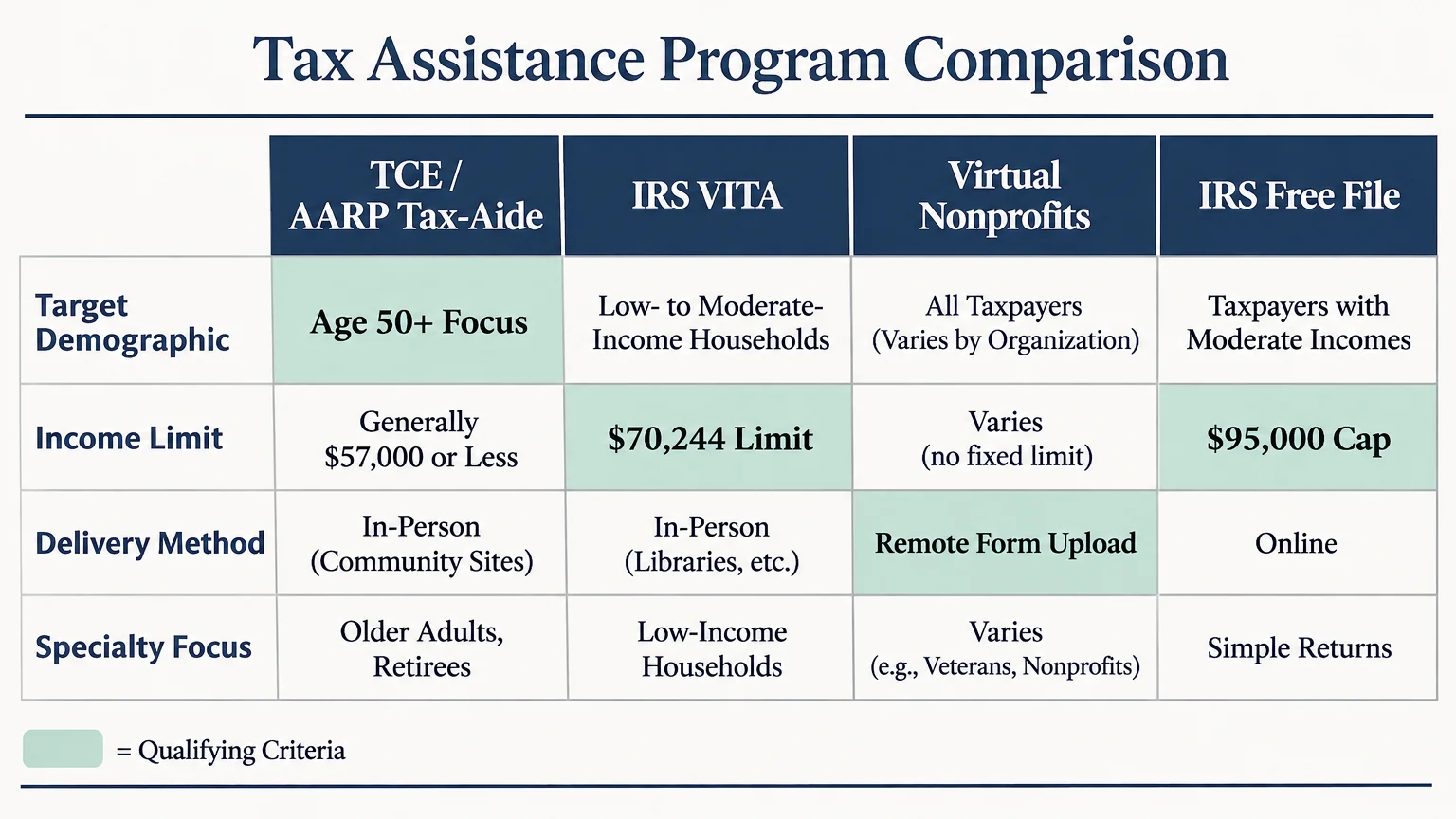
Comparing Free Tax Preparation Services for Seniors
Because each program sets different age rules, income caps, and service formats, reviewing them side by side helps you pick the right fit immediately.
| Program | Age or Status Focus | Income Limit | Format | Key Limitation |
|---|---|---|---|---|
| AARP Foundation Tax-Aide | Focus on age 50+ (especially 60+); no membership needed | No published hard dollar cap | In-person, drop-off, or coached software | Mainly operates Feb 1 through April 15; excludes complex rentals and crypto |
| IRS TCE | Age 60 and older | No published program-wide cap | In-person or drop-off at local clinics | Follows IRS scope rules; appointments fill quickly in February |
| IRS VITA | General public, disabilities, limited English | Generally ~$70,244 or less (varies by site) | In-person or drop-off | Individual sites set local income caps and schedules |
| MyFreeTaxes (United Way) | All ages | Under $89,000 (self-prep) or under $69,000 (full VITA) | Online software with help or full VITA prep | Full prep excludes rental property income |
| GetYourRefund.org | Low-to-moderate income households | Follows local VITA limits (generally ~$70,244 or less) | Virtual document upload plus phone review | Requires camera access and comfort uploading files |
| IRS Free File Guided Software | Varies by partner (some cap at age 67 or younger) | $89,000 AGI in 2026 season; $95,000 listed for Jan 2027 | Online self-prep software | Must enter via IRS.gov/freefile; check partner age rules |
| MilTax | Active duty, survivors, veterans within 365 days of discharge | No income limit | Online software plus phone consultants | Retirees past 365 days from retirement do not qualify |
IRS Free File, Fillable Forms, and the Direct File Update
Many older adults who file taxes online wonder whether they can still use free software directly through the IRS. Understanding the difference between IRS Free File and the discontinued Direct File pilot prevents wasted time and surprise fees.
IRS Free File Guided Software
Through IRS Free File, private tax software companies partner with the federal government to offer guided online preparation at no cost to qualifying households. For the 2026 filing season covering 2025 returns, eight partners offered free guided software to taxpayers with an Adjusted Gross Income of $89,000 or less.
On the IRS Free File portal updated October 21, 2026, the IRS lists an updated guided software eligibility threshold of $95,000 Adjusted Gross Income or less. The portal stays closed during the off-season and is scheduled to reopen in January 2027.
Watch out for one critical senior catch: individual Free File partners set their own age, state, and military eligibility rules. For example, some participating companies restrict free federal filing to taxpayers age 67 or younger, while other partners impose no age ceiling at all.
Always review each partner offer carefully inside the IRS Free File lookup tool before creating an account. Most importantly, you must click through IRS.gov/freefile rather than visiting a software brand directly so partners remain legally barred from upselling or charging hidden fees.
IRS Free File Fillable Forms
If your Adjusted Gross Income exceeds $95,000 or you simply prefer doing taxes yourself without guided interviews, IRS Free File Fillable Forms remains open at any income level. You select the digital IRS forms you need, type in your figures, and submit electronically.
These electronic forms perform only basic math calculations and provide zero tax guidance, so they suit taxpayers who already know their way around Schedule B, Schedule 1-A, and Form 1040-SR. Note also that Free File Fillable Forms covers federal returns only and does not include state tax filing.
Status of IRS Direct File
If you heard about IRS Direct File—the government-run free filing tool piloted in prior years—do not count on using it for upcoming tax prep. According to Congressional Research Service reporting and U.S. tax portals (October 2026), the IRS Direct File pilot was suspended and canceled for the 2026 filing season.
As of November 2026, Direct File web addresses return errors and neither the IRS nor the Treasury has announced plans to revive the system for 2027. Competing bills to restore or permanently ban the program remain pending in Congress, so seniors should rely on TCE, Tax-Aide, VITA, or IRS Free File instead.

Free Tax Filing for Older Veterans Through MilTax
Retired military members often ask whether Department of Defense tax benefits cover them throughout retirement. MilTax, provided through Military OneSource, delivers robust free tax software and one-on-one consultations with no income limit.
Reopening in January 2027, MilTax allows eligible users to file one federal return and up to five state returns for free. However, the program enforces a strict cutoff that surprises many older veterans.
According to Military OneSource (2026), eligibility covers active-duty servicemembers, eligible family members, survivors, and retired or honorably discharged veterans only within 365 days of their separation or retirement date. Once you pass that one-year mark in retirement, you must transition to AARP Tax-Aide, TCE, VITA, or IRS Free File.
If you also want to verify broader federal veteran, pension, or healthcare benefits while organizing your tax records, explore USA.gov Benefits for official program directories.
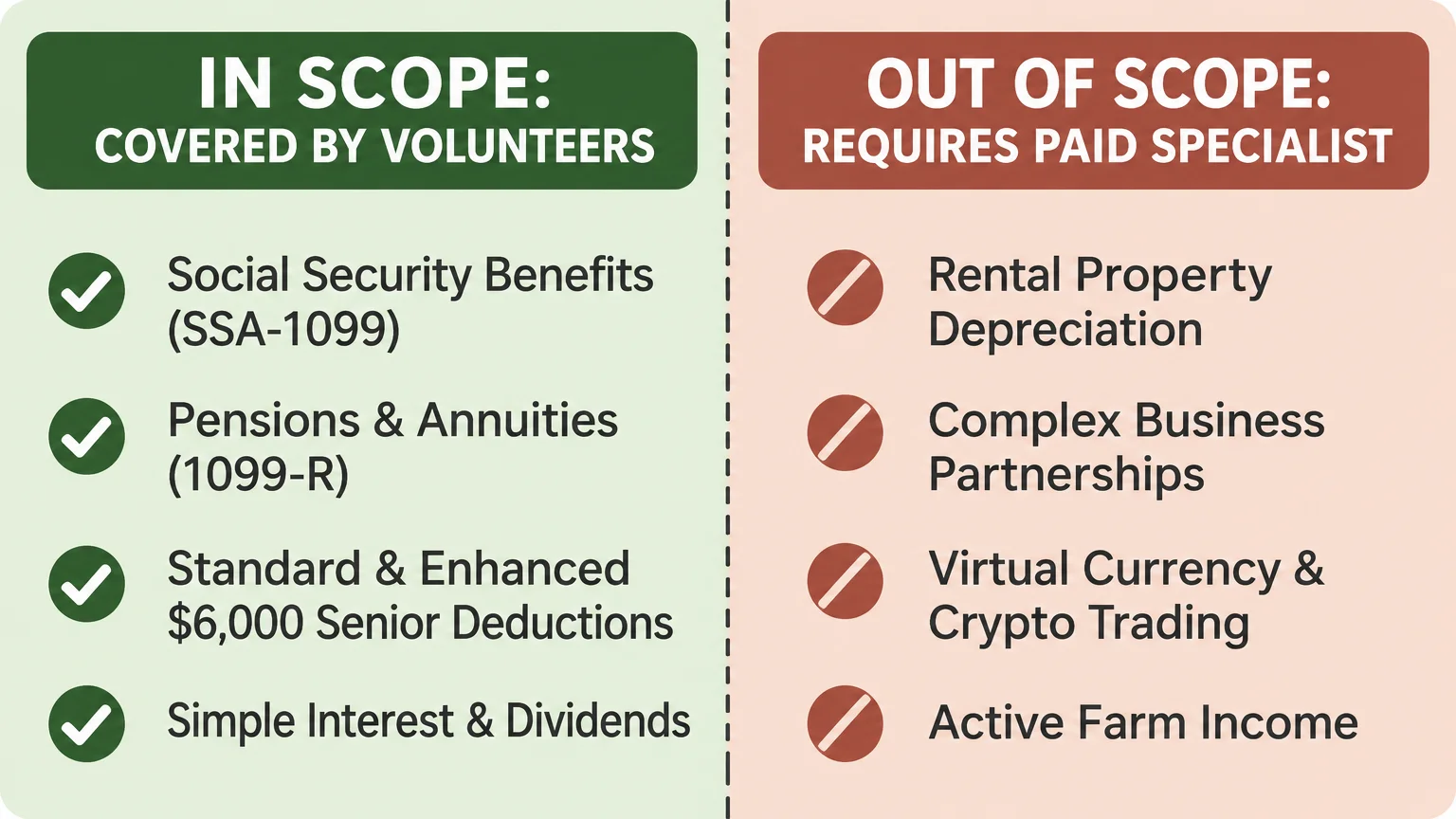
What Volunteer Preparers Cover—and Where They Stop
Because VITA, TCE, and AARP Foundation Tax-Aide operate under the Volunteer Protection Act of 1997, volunteers can legally prepare only tax topics for which they hold current IRS certification. Checking whether your forms fall inside their scope saves you from making a wasted trip.
In-Scope Topics for Most Senior Returns
IRS-certified volunteers comfortably handle the vast majority of retirement tax situations using Form 1040 or Form 1040-SR. According to AARP Foundation Tax-Aide guidelines, in-scope items include:
- Retirement and Benefit Forms: Social Security statements (SSA-1099), Railroad Retirement forms (RRB-1099), and pension, annuity, or IRA distributions (1099-R).
- Investment Income: Bank interest (1099-INT), ordinary and qualified dividends (1099-DIV), and standard capital gains or losses from selling stocks or mutual funds.
- Healthcare and Deductions: Health Savings Account distributions (1099-SA), itemized deductions including noncash charitable gifts up to $5,000, and the $6,000 senior deduction on Schedule 1-A.
- Past-Due and Corrected Returns: Amended returns and up to three prior tax years of unfiled returns.
Out-of-Scope Topics Volunteers Cannot Prepare
Volunteers must decline returns that cross into complex business, real estate, or high-net-worth tax rules. Common out-of-scope triggers include:
- Rental Property Income: Any rental property with expenses or depreciation, except simple land-only rentals carrying zero expenses or depreciation.
- Complex Self-Employment: Freelance or consulting businesses showing net losses, employees, inventory, depreciation, home office deductions, or business expenses exceeding $50,000.
- Specialized Investments and Farm Income: Farm income, cryptocurrency sales or dispositions, futures, options, and other complex capital transactions.
- High-Income Surtaxes: Returns triggering the Alternative Minimum Tax (AMT) or the Net Investment Income Tax.
What to Bring to Your Free Tax Appointment
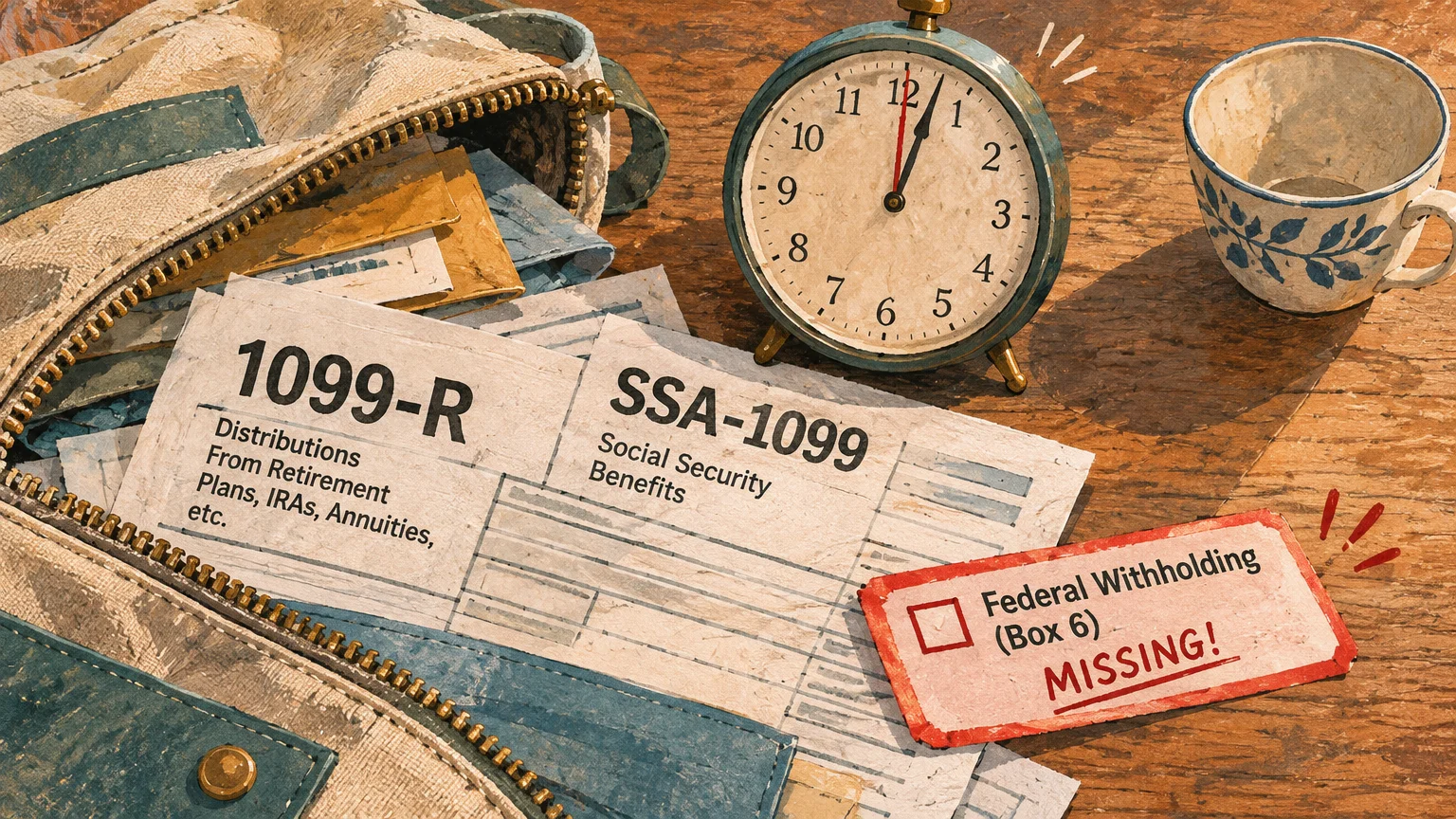
Volunteers cannot finalize or quality-review your return if key documents sit at home on your kitchen table. Gathering everything inside one folder before February arrives helps you secure early appointments and receive any refund faster.
Most federal refunds arrive within 21 days when you file electronically and select direct deposit, according to IRS Tax Tip 2026-08. Bring these items to your in-person or drop-off appointment:
- Identification and Social Security Numbers: A valid government-issued photo ID plus Social Security cards or official SSA benefit statements for everyone listed on the return.
- Prior-Year Return: A copy of last year’s federal and state returns so volunteers can verify carryovers and personal details.
- Retirement and Benefit Statements: Form SSA-1099, RRB-1099, and every Form 1099-R from pensions, annuities, 401(k) plans, or IRAs.
- Wage and Investment Forms: Any W-2s from part-time work alongside 1099-INT, 1099-DIV, and 1099-B brokerage statements showing original purchase dates and cost basis.
- Health and Charity Records: Form 1099-SA for Health Savings Accounts, Form 1095-A if you used HealthCare.gov, and receipts for cash or noncash charitable donations.
- Banking Details: A blank check or printed routing and account numbers for safe direct deposit or electronic tax payment.
If you file jointly with a spouse, both spouses must usually attend the appointment or sign required authorization forms together. Call your chosen site ahead of time if mobility challenges prevent your spouse from traveling.
What Can Go Wrong
Even well-prepared seniors run into avoidable snags during tax season, especially when commercial ads imitate government programs. Knowing these common pitfalls upfront keeps your personal data and bank account protected.
Never enter a commercial tax software website directly when seeking IRS Free File; always start at IRS.gov/freefile so you do not trigger unexpected preparation fees.
Typing a brand name into a search engine often lands you on a paid retail version that charges extra for retirement forms like 1099-R or state returns. Starting through the official IRS portal locks in the free agreement.
Seniors also lose out when they assume they do not need to file because of the temporary $6,000 senior deduction. Because that deduction reduces taxable income rather than the gross-income filing threshold, skipping a return when gross income exceeds $18,150 single or $35,500 joint can trigger failure-to-file penalties.
Waiting until late March or early April creates another frequent headache. Local AARP Tax-Aide and TCE slots fill weeks in advance, leaving latecomers scrambling for paid preparers or filing extensions.
Finally, guard against tax-season scams targeting older adults through phone calls, texts, and fake preparers. The IRS never initiates contact by text message, social media, or threatening phone calls demanding gift cards or wire transfers, and the Consumer Financial Protection Bureau publishes ongoing guidance on spotting elder financial fraud.
When to Consult a Professional
Free volunteer clinics deliver outstanding work within IRS guidelines, yet certain financial events require a paid Certified Public Accountant (CPA) or Enrolled Agent (EA). Hiring a credentialed pro protects you from costly reporting mistakes in four specific scenarios:
- You Own Rental Real Estate: Managing depreciation schedules, repairs, and passive activity rules falls outside volunteer scope unless you lease bare land with zero expenses.
- You Sold Cryptocurrency or Traded Options: Digital asset dispositions, futures, and options require specialized cost-basis tracking that VITA and TCE sites cannot legally prepare.
- You Run a Substantial Side Business: Consulting or small businesses with inventory, employees, home office write-offs, net losses, or over $50,000 in expenses need professional bookkeeping and tax review.
- You Face AMT, Net Investment Income Tax, or Large Estate Changes: High-income years driven by large Roth conversions, property sales, or inherited trusts merit tailored tax-planning advice.
If your finances cross into one of these areas for a single year—such as selling a long-held rental property—hire a licensed preparer for that transition year. Once your income returns to standard Social Security and pension distributions the following year, you can step right back into free TCE or Tax-Aide services.
Frequently Asked Questions About Free Tax Help for Seniors
Do I need an AARP membership to use AARP Foundation Tax-Aide?
No, AARP membership is never required to use Tax-Aide. While the program focuses on taxpayers age 50 and older with low-to-moderate income, volunteers assist non-members free of charge.
Is there an income limit for IRS Tax Counseling for the Elderly?
The IRS TCE program sets no published nationwide income cap for taxpayers age 60 and older. However, volunteers must still decline returns with out-of-scope income such as rental properties, cryptocurrency sales, or high-income surtaxes.
Can free volunteer preparers file prior-year returns for seniors?
Yes, IRS-certified Tax-Aide and TCE volunteers can generally prepare amended returns and up to three prior years of unfiled returns. Bring all old wage, Social Security, and pension statements for each year you need to catch up on.
Will free tax software handle the new $6,000 senior deduction?
Yes, IRS Free File partners and VITA/TCE volunteer software incorporate Schedule 1-A for the enhanced $6,000 senior deduction. Just make sure you qualify by age, hold a valid Social Security number, and file jointly if married.
Can I still use IRS Direct File in 2027?
No, the IRS suspended and canceled the Direct File pilot for the 2026 filing season and has announced no reopening for 2027. Plan to use AARP Tax-Aide, TCE, VITA, MyFreeTaxes, GetYourRefund, or IRS Free File instead.

Your Next Steps Before Filing Season Opens
Start gathering your SSA-1099, 1099-R, and charitable donation receipts as they arrive in January 2027 so you stay ahead of the spring rush. Mark February 1, 2027, on your calendar to book an early AARP Tax-Aide or TCE appointment before local time slots disappear.
The information in this guide is meant for educational purposes. Your specific circumstances—including income, debt, tax situation, and goals—may require different approaches.
When in doubt, consult a licensed professional.
Last updated: November 2026. Financial regulations and rates change frequently—verify current details with official sources.