
Earning $200 a day from home injects roughly $6,000 into your monthly household budget. This reliable revenue stream accelerates debt repayment, expands savings, and provides genuine financial security.
Securing this income requires selecting high-value digital services rather than chasing low-paying survey sites. You must also budget for platform fees and tax withholdings to protect your net take-home earnings.
These eight proven, home-based income paths provide actionable operational workflows and realistic daily earnings targets. With the right systems in place, you can generate a dependable $200 daily return from your living room.

1. Train Artificial Intelligence Models and Annotate Domain Data
Artificial intelligence companies need human subject matter experts to evaluate and improve large language models. This work involves fact-checking model outputs, evaluating conversational logic, and rewriting faulty code or technical explanations.
Platforms like DataAnnotation.tech, Outlier AI, and Alignerr provide direct access to remote evaluation queues. You can log into your account when time permits and complete tasks without managing external clients.
Entry-level tasks involving general writing and foundational evaluation pay between $18 and $25 per hour. Hitting $200 per day at this base level requires roughly 8 to 11 hours of active review.
Specialized tracks offer far more leverage for your working hours. Projects focused on computer programming, STEM disciplines, legal analysis, or medical evaluations pay between $40 and $60 or more per hour.
Top software engineering evaluation tracks frequently advertise compensation reaching $150 per hour. At a $50 hourly rate, completing four hours of focused technical review fulfills your daily $200 goal.
To qualify for premium rates, you must complete rigorous onboarding assessments. Focus your testing on clear reasoning, adherence to complex guidelines, and precise attribution of source data.
2. Deliver High-Impact B2B Copywriting and Technical Content
Commercial enterprises constantly produce written content to attract prospective clients and close sales. Companies readily pay premium compensation to writers who understand complex business products and direct-response principles.
High-paying assignments include technical whitepapers, in-depth customer case studies, software documentation, and corporate email sales sequences. These specialized deliverables carry higher perceived value than generic lifestyle blog entries.
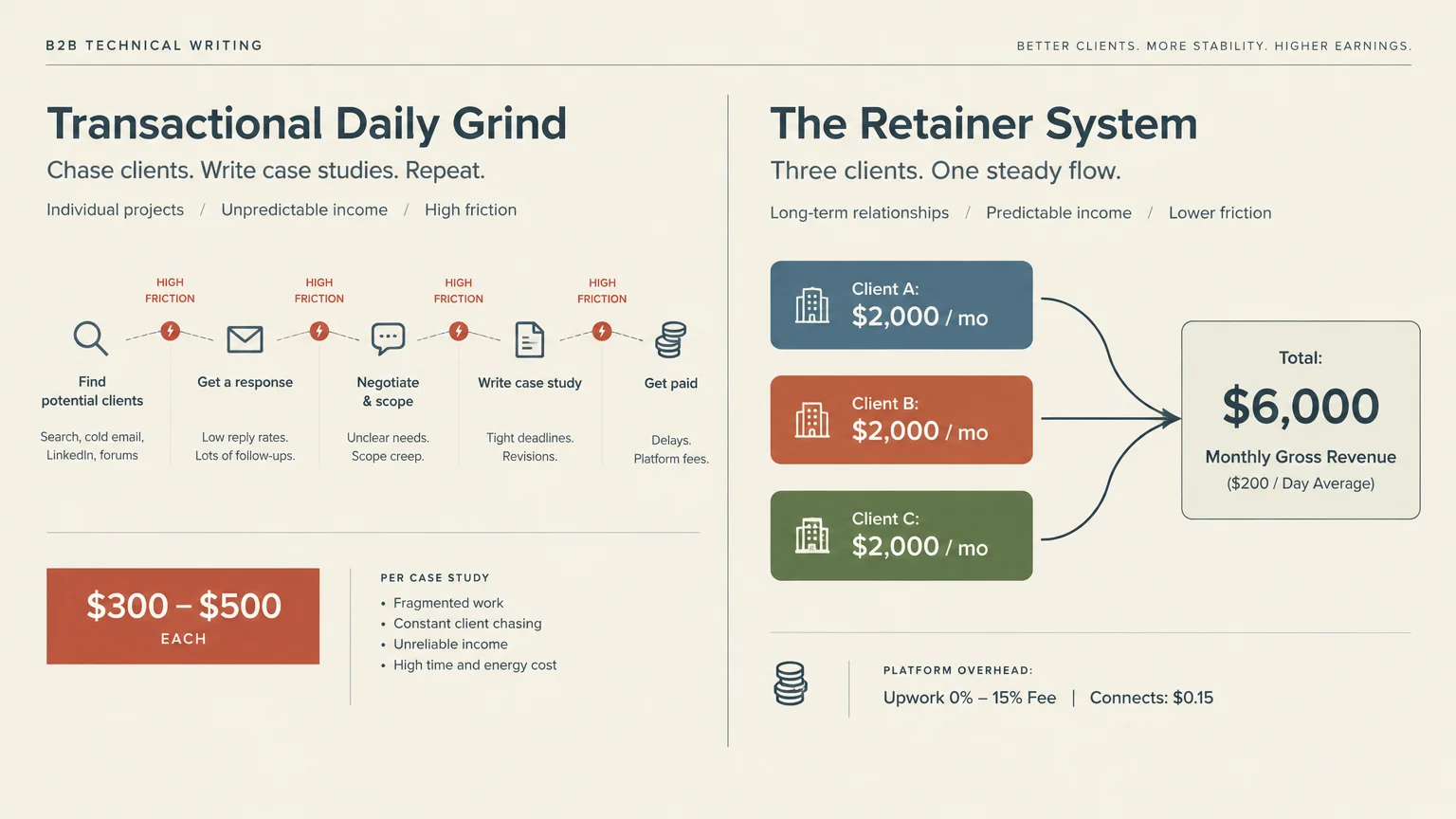
Corporate clients routinely pay between $50 and $100 per hour for technical copywriting. Alternatively, you can bill by the project; a single 1,200-word corporate case study easily commands $300 to $500.
Writing one complete project every single day can quickly lead to mental burnout. Instead, secure three ongoing corporate retainers valued at $2,000 each per month.
Three monthly retainers yield $6,000 in gross revenue, achieving your $200 daily average across a thirty-day month. This structure provides predictable cash flow while capping your daily workload at a manageable level.
You can find prospective corporate clients through freelance marketplaces such as Upwork. Upwork applies a variable freelancer service fee between 0% and 15% per contract depending on category dynamics.
Submitting project bids requires Upwork Connects, which cost $0.15 each, while the optional Freelancer Plus membership costs $19.99 monthly. Target established business buyers to ensure your project earnings easily outpace these minor platform overhead expenses.
3. Offer Virtual Bookkeeping and Financial Reconciliation
Small business owners often struggle with routine financial organization and daily transaction tracking. Offering remote bookkeeping solves a major administrative challenge for entrepreneurs who need clean ledgers.
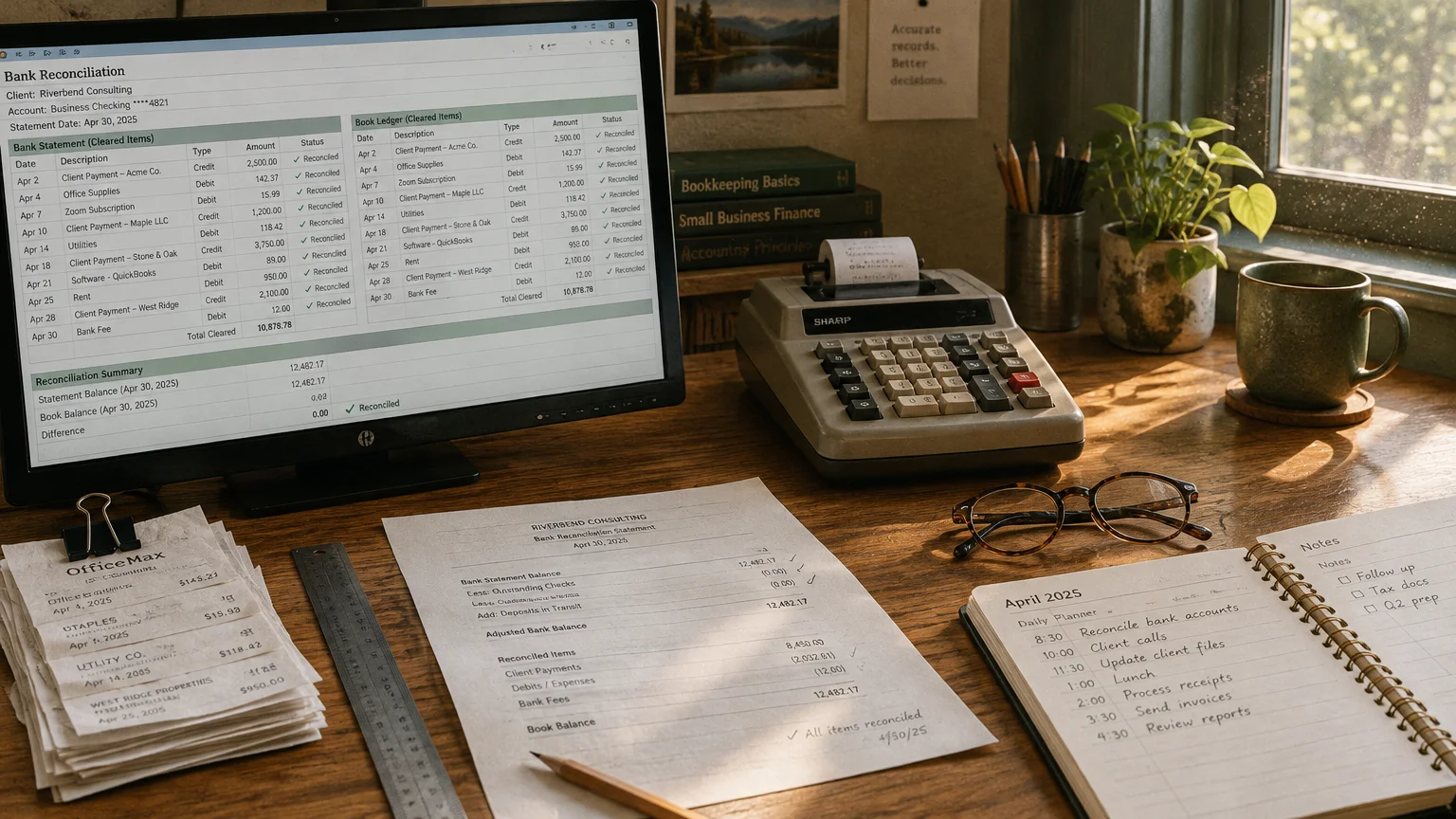
Modern cloud software like QuickBooks Online and Xero allows you to reconcile client accounts from any web browser. You do not need a CPA license to categorize operational expenses and run standard profit-and-loss reports.
Independent virtual bookkeepers generally charge between $40 and $60 per hour for cleanup and monthly management. Many professionals transition clients onto fixed monthly retainers ranging from $300 to $600 per business.
Managing twelve small business clients at a $500 monthly retainer generates $6,000 in monthly gross revenue. That equals your target $200 daily income while requiring roughly 15 to 20 hours of work per week.
According to the Consumer Financial Protection Bureau (CFPB), sound financial management helps consumers and business operators maintain stability and avoid costly administrative mistakes. Providing organized records helps your clients avoid payroll errors and painful tax filing penalties.
You can earn professional certifications directly through QuickBooks or Xero at no cost. Displaying these badges establishes instant credibility and helps you command higher hourly billing rates.

4. Provide Remote Academic Coaching and Standardized Test Prep
Families and adult learners consistently invest in personalized coaching to clear critical educational and professional milestones. Preparing students for the SAT, ACT, GRE, or professional licensing exams commands exceptional hourly rates.
General homework assistance for middle school subjects often caps out at $25 to $35 per hour. In contrast, specialized instructors coaching students through college admissions testing routinely charge $60 to $100 per hour.
At an $80 hourly rate, conducting two and a half hours of live video tutoring achieves your $200 daily target. Delivering sessions during late afternoons, evenings, or weekends allows you to schedule around other personal commitments.
You can build your client roster through community groups, school parent networks, or platforms like Wyzant. While platforms take a commission for student matching, independent tutors keep their entire billing fee by using direct invoicing.
Develop proprietary practice drills, study templates, and test-taking frameworks to distinguish your services. Specialized curriculum materials justify premium pricing and encourage satisfied families to refer new clients to your practice.
5. Run an Online Arbitrage and Niche Reselling Business
Online arbitrage involves purchasing underpriced inventory from clearance websites, liquidators, or estate sales, then reselling those items for a profit on secondary marketplaces. Reselling physical products provides a fast route to daily cash flow.
Generating $200 in net profit daily requires clear mathematical margins. You must account for inventory acquisition expenses, packaging supplies, outbound shipping fees, and marketplace platform cuts.
If you source items with an average net margin of $25 per sale, you need to sell eight units daily. Alternatively, sourcing higher-value electronics or designer items yielding $100 in net profit requires only two completed sales daily.
On eBay, casual sellers receive 250 free listings per month, with subsequent listings costing $0.35 each. For most merchandise categories, eBay charges a 13.6% final value fee on the total sale up to $7,500.
eBay also charges a per-order fee of $0.30 for orders $10 and under, or $0.40 for orders exceeding $10. Factoring these transactional costs into your initial purchase decisions prevents margin erosion.
If you resell apparel on Poshmark, the platform charges a flat $2.95 fee for sales under $15. For orders of $15 or more, Poshmark retains a 20% commission, meaning you keep 80% of the sale price.
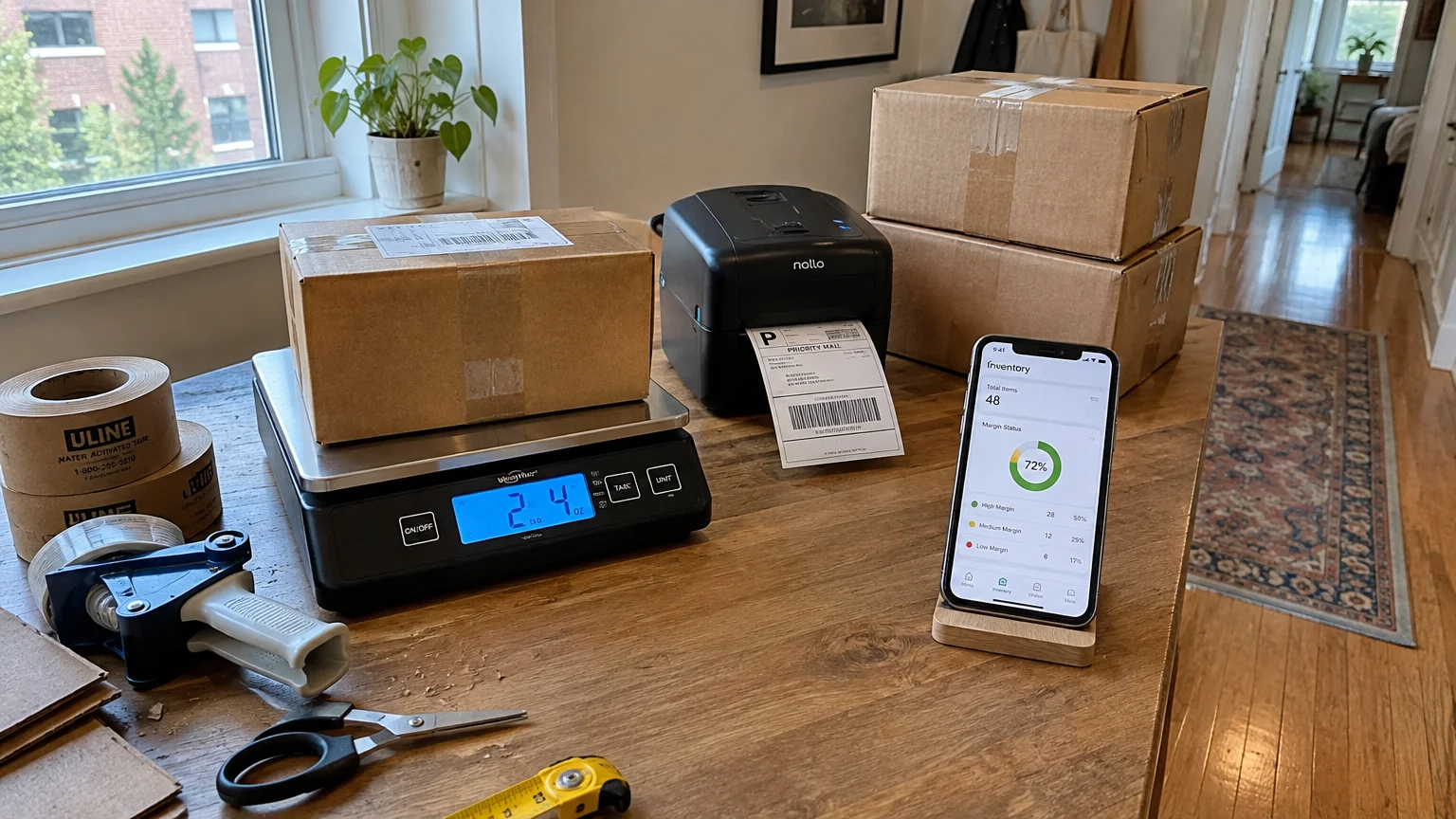
Maintain an organized inventory storage system and dedicated shipping station inside your home. Streamlining your packaging workflow ensures that processing high order volumes does not consume your entire day.

6. Design and Sell Digital Downloads and Workflow Templates
Creating and selling digital assets provides an exceptional business model because you build the product once and sell it indefinitely. Digital downloads eliminate recurring inventory purchases, storage constraints, and physical shipping fees.
Popular digital products include Notion productivity dashboards, specialized budgeting spreadsheets, resume kits, and social media media kits. Business owners and consumers gladly buy structured digital files that save them time and effort.
Etsy serves as a massive distribution marketplace for digital downloads and creative templates. Setting up your shop requires understanding the platform’s specific transaction fees and operational costs.
Etsy charges a $0.20 listing fee per item, which renews every four months or upon sale. When a customer purchases your item, Etsy levies a 6.5% transaction fee alongside a U.S. payment processing fee of 3% plus $0.25.
If an Etsy shopper finds your listing through mandatory Offsite Ads, an additional 12% to 15% advertising fee applies. Even after these marketplace deductions, digital downloads regularly maintain net profit margins above 75%.
Selling ten functional financial planning templates daily at $25 each generates $250 in gross revenue. After accounting for platform processing cuts, your net profit easily exceeds your $200 daily objective.
Optimizing your product titles, image previews, and keyword tags helps drive continuous organic traffic to your store. You can research competitive product performance using market data tools on Investopedia and specialized e-commerce analytical software.

7. Provide Executive Remote Assistance and Operations Management
Founders, digital agency operators, and corporate executives frequently need high-level organizational assistance to run their operations. These busy professionals gladly pay dependable remote specialists to manage administrative workflows.
Executive assistants handle calendar management, corporate travel planning, customer onboarding workflows, and project coordination across distributed teams. High-level operators also oversee email communications and update customer relationship management systems.
While basic data entry tasks pay modest wages, specialized executive assistants bill between $30 and $50 per hour. Working five billable hours daily at $40 per hour delivers your target $200 income.
You can split these daily hours across two retainer clients who each require 12 to 15 hours of weekly support. Long-term retainers provide stable recurring revenue while avoiding the continuous search for new one-off gigs.
Strong communication skills and proficiency with tools like Slack, Asana, Google Workspace, and Notion are essential. Mastering these collaboration platforms allows you to integrate smoothly into a client’s business operations.

8. Execute Conversion Rate and Website Audits for E-Commerce
Online retail brands spend substantial budgets on advertising to attract shoppers to their websites. However, clunky checkout flows, slow loading pages, and confusing layouts frequently cause prospective buyers to leave without purchasing.
You can generate strong income by reviewing e-commerce storefronts and providing actionable conversion rate optimization (CRO) teardowns. Store owners eagerly hire specialists who can spot conversion friction and improve their return on ad spend.
A comprehensive website audit examines visual hierarchy, mobile layout responsiveness, checkout simplicity, and persuasive product descriptions. You deliver your findings through a recorded video walkthrough paired with a written checklist of recommended fixes.
Freelancers package these technical evaluations as standalone deliverables priced between $200 and $400 per audit. Completing a single comprehensive audit each morning hits your $200 daily benchmark before lunchtime.
You can also offer implementation services to fix the design and technical issues highlighted in your review. Billing these site updates at $50 to $75 per hour creates a secondary income stream from every audit completed.
Prospect for prospective store owners on platforms like LinkedIn, or offer packaged audit services on freelance marketplaces. As you build a portfolio of verifiable sales improvements, you can raise your audit pricing significantly.
Understanding Platform Cuts: Calculating Gross vs. Net Earnings
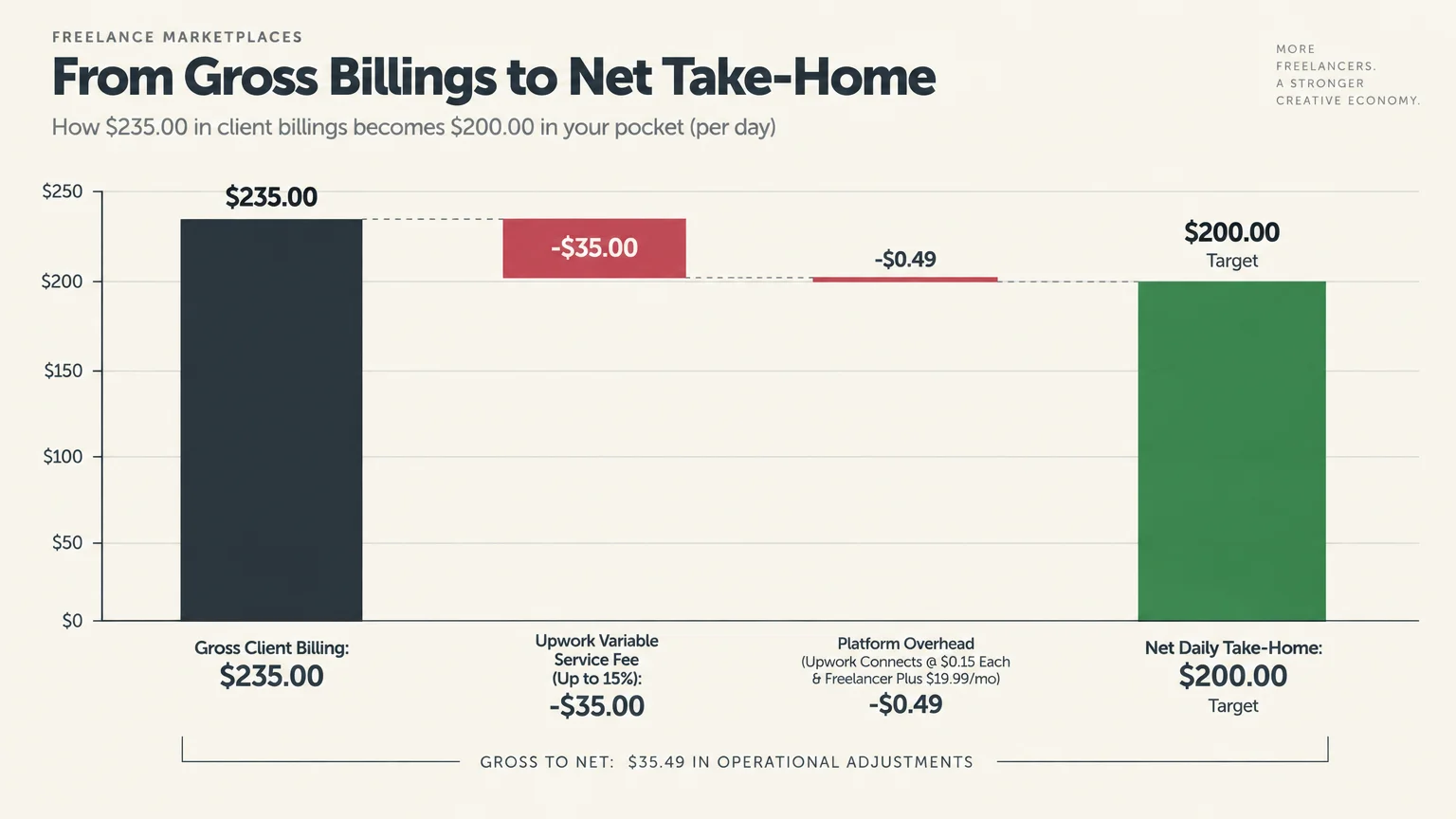
To bring home a genuine $200 each day, you must differentiate between gross receipts and net spendable cash. Marketplace platforms charge listing fees, transaction cuts, and processing charges that chip away at your top-line revenue.
For example, Fiverr charges sellers a flat 20% commission across all project orders, gig extras, and client tips. To clear $200 in net profit on Fiverr, you must bill at least $250 in gross client invoices.
Fiverr also implements an earnings clearance window before funds become available for withdrawal. Standard earnings take 14 days to clear after order completion, though Top Rated Sellers receive a shortened 7-day clearance window.
Upwork uses a variable freelancer fee ranging from 0% to 15% per contract depending on category and billing structure. Bidding on available jobs requires purchasing Connects at $0.15 each, and some freelancers maintain the $19.99 monthly Freelancer Plus subscription.
Selling on Etsy incurs a $0.20 listing fee, a 6.5% transaction fee, and a payment processing fee of 3% plus $0.25. If sales originate from mandatory Offsite Ads, an additional 12% to 15% deduction applies to the transaction.
On eBay, you must budget for a 13.6% final value fee on most categories up to $7,500, plus a $0.30 or $0.40 order fee. Poshmark takes a flat $2.95 fee on orders under $15 and a 20% cut on sales of $15 or more.
Factoring these deductions into your pricing model prevents painful cash flow surprises. Always set your gross client prices high enough to absorb platform commissions and still leave $200 in your pocket.

Navigating Self-Employment Taxes and 1099 Thresholds
Earning money independently transforms you into a business operator in the eyes of federal and state tax authorities. Failing to prepare for self-employment taxes can derail your finances when tax filing season arrives.
Independent contractors, sole proprietors, and side-hustlers must file and pay self-employment tax once net earnings reach $400 or more in a tax year. The federal self-employment tax rate stands at 15.3%.
This 15.3% tax consists of two separate components: 12.4% for Social Security and 2.9% for Medicare. The 12.4% Social Security portion applies to net earnings up to the annual statutory wage base limit of $184,500.
You can review detailed guidelines regarding contractor obligations directly on the Internal Revenue Service (IRS) website. Setting aside 25% to 30% of your net profits into a separate savings account covers both self-employment and income tax obligations.
Tax reporting requirements also involve specific documentation rules for digital platforms and client payments. Under the One Big Beautiful Bill Act (OBBBA), the previously proposed $600 reporting rule for third-party networks was repealed.
Third-party payment networks and online marketplaces like PayPal, Venmo, Etsy, and eBay issue Form 1099-K only if you exceed $20,000 in gross payments and 200 transactions. Meanwhile, direct client contractor payments trigger a Form 1099-NEC once billing reaches $2,000 per payee.
Regardless of whether a platform or client issues an official tax form, all earned income remains taxable. You must report all earnings to the IRS, maintaining meticulous records of your gross revenue and legitimate deductible business expenses.
Financial education resources on Bankrate suggest tracking mileage, home office square footage, software subscriptions, and equipment purchases. Tracking these valid deductions lowers your net taxable income and preserves more of your daily earnings.
Remote Income Strategy Comparison
Choosing the best work-from-home model depends on your existing skills, available capital, and preferred daily schedule. Review this comparison table to identify which path aligns with your income timeline.
| Income Strategy | Earning Potential | Daily Time to Net $200 | Platform Cuts / Overhead | Primary Channels |
|---|---|---|---|---|
| AI Model Training | $18 to $60+ / hr | 3.5 to 10 hours | Zero platform fees | DataAnnotation, Outlier, Alignerr |
| B2B Copywriting | $50 to $100 / hr | 2 to 4 hours | 0% to 15% (Upwork), Connects ($0.15) | Upwork, Direct Outreach |
| Virtual Bookkeeping | $40 to $60 / hr | 3 to 5 hours | Software fees ($30 to $90/mo) | QuickBooks ProAdvisor, Direct |
| Academic Tutoring | $50 to $100 / hr | 2 to 4 hours | Payment processing (approx 3%) | Wyzant, Private Client Referrals |
| Marketplace Reselling | $20 to $50 margin / item | 4 to 6 hours | 13.6% to 20% commission + order fees | eBay, Poshmark, Mercari |
| Digital Template Sales | $15 to $40 per unit | 1 to 2 hours (maintenance) | $0.20 listing + 6.5% + processing | Etsy, Gumroad, Stan Store |
| Executive Assistance | $30 to $50 / hr | 4 to 6 hours | Zero fees (direct invoicing) | LinkedIn, Specialized Agencies |
| Website CRO Audits | $150 to $300 per audit | 2 to 3 hours | Zero to 20% depending on platform | Fiverr, Direct B2B Pitching |

Avoiding Common Errors in Remote Income Generation
Pursuing a daily income target requires discipline and sound operational habits. Avoiding these frequent missteps will keep your home-based venture profitable and compliant over the long haul.
- Spending gross revenue immediately: Always separate your business revenue from personal spending money. Transfer 30% of all incoming payments into a dedicated tax reserve account before paying personal expenses.
- Ignoring platform commission schedules: Factor market transaction cuts into your baseline pricing. If you sell on Fiverr with a 20% fee, price your packages at $250 to clear $200 in spendable income.
- Underpricing your services: Competing solely on cheap prices attracts difficult clients and leads to professional burnout. Price your services based on the measurable business value you deliver to buyers.
- Relying on a single platform: Account suspensions or algorithm changes can halt your cash flow overnight. Transition your best clients toward direct invoicing agreements and maintain presences across multiple channels.
- Failing to track business deductions: Neglecting receipts for software, internet access, and computer hardware inflates your tax bill. Maintain organized records to claim all legitimate business write-offs.
Establishing these protective operational habits early preserves your capital. Treating your remote earnings as a formal business enterprise shields you from sudden financial disruptions.

Expert Perspective on Building Sustainable Daily Income
Generating daily revenue from home demands consistency, self-discipline, and strict money management. Experienced financial educators emphasize that bringing in cash represents only the first step; maintaining control over that capital determines your lasting financial success.
“You must gain control over your money or the lack of it will forever control you.” — Dave Ramsey, Personal Finance Author
Earning $200 each day provides tremendous financial momentum only if you allocate those funds purposefully. Funneling that revenue into high-interest debt payoff and long-term investment vehicles transforms daily labor into enduring wealth.
Frequently Asked Questions
How can I make $200 a day without any upfront investment?
Service-based models like specialized AI model evaluation, executive virtual assistance, and freelance writing require zero inventory or upfront capital. You only need a dependable computer, an internet connection, and your existing domain expertise to start earning.
Do I have to pay taxes on side hustle income if I make under $20,000?
Yes, all earned income is taxable regardless of whether you receive a tax reporting form. The $20,000 threshold under the OBBBA only governs when payment processors must issue Form 1099-K. You must file and pay self-employment tax on net self-employment earnings of $400 or more.
How many hours does it take to make $200 from home?
The time required depends entirely on your hourly compensation rate or product profit margins. A specialized test prep tutor or B2B copywriter charging $75 per hour hits $200 in under three hours. In contrast, entry-level data annotation paying $20 per hour requires ten hours of daily effort.
What is the quickest way to hit $200 in a single day?
Offering specialized, high-ticket services like conversion rate audits or booking private tutoring sessions yields the fastest cash turnaround. Selling existing possessions or liquidated items on local marketplaces can also generate $200 in same-day profit.
Starting Your $200 a Day Routine
Bringing in $200 a day from home is an achievable target when you execute high-value services rather than chasing low-paying digital tasks. Choose one or two methods that match your background, build your client pipelines, and price your offerings to absorb platform fees and taxes.
Stay consistent with your daily outreach and task completion to build lasting momentum. Tracking your numbers diligently ensures that your daily earnings translate into lasting personal financial independence.
This is educational content based on general financial principles. Individual results vary based on your situation. Always verify current tax laws, investment rules, and benefit eligibility with official sources.
Last updated: October 2026. Financial regulations and rates change frequently—verify current details with official sources.


