Choosing the wrong Medicare coverage can quietly drain thousands of dollars from your retirement budget each year. Comparing your options across premiums, copays, and drug formularies reveals immediate opportunities to lower medicare costs.
Navigating the divide between private network rules and traditional government coverage often feels overwhelming. By evaluating side-by-side trade-offs, you can secure dependable protection without overpaying for coverage you will never use.
Here are nine essential Medicare plan comparisons designed to expose hidden expenses, maximize your benefits, and help you compare medicare plans with confidence.
1. Original Medicare with Medigap vs. Medicare Advantage
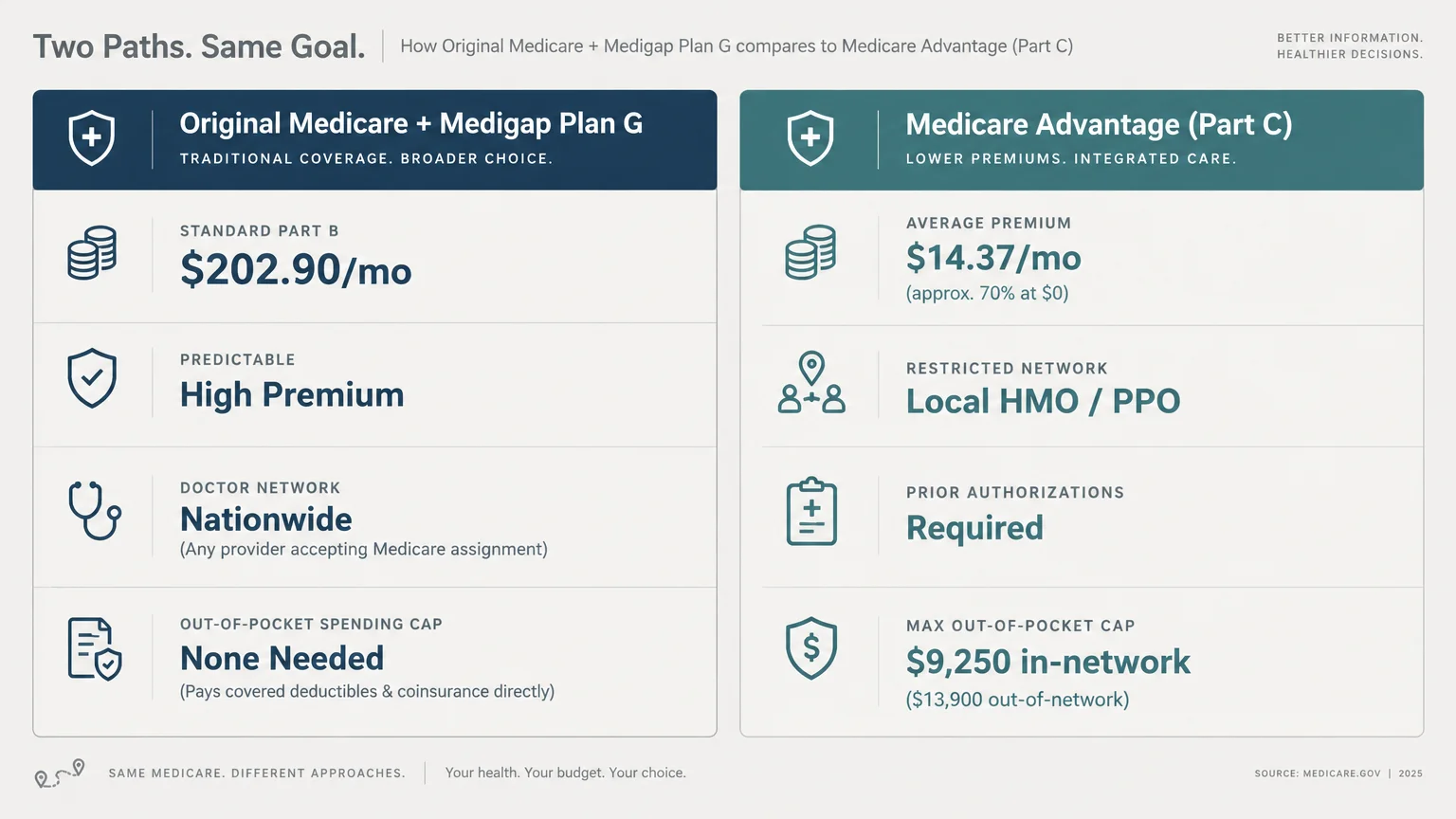
The choice between Original Medicare paired with a Medigap policy and a Medicare Advantage plan represents your primary healthcare fork in the road. Original Medicare provides unrestricted access to any provider nationwide who accepts Medicare assignment.
When you evaluate medicare advantage vs medigap, you balance monthly premium predictability against network flexibility. Medigap policies demand higher monthly premiums but eliminate nearly all out-of-pocket costs when you receive care.
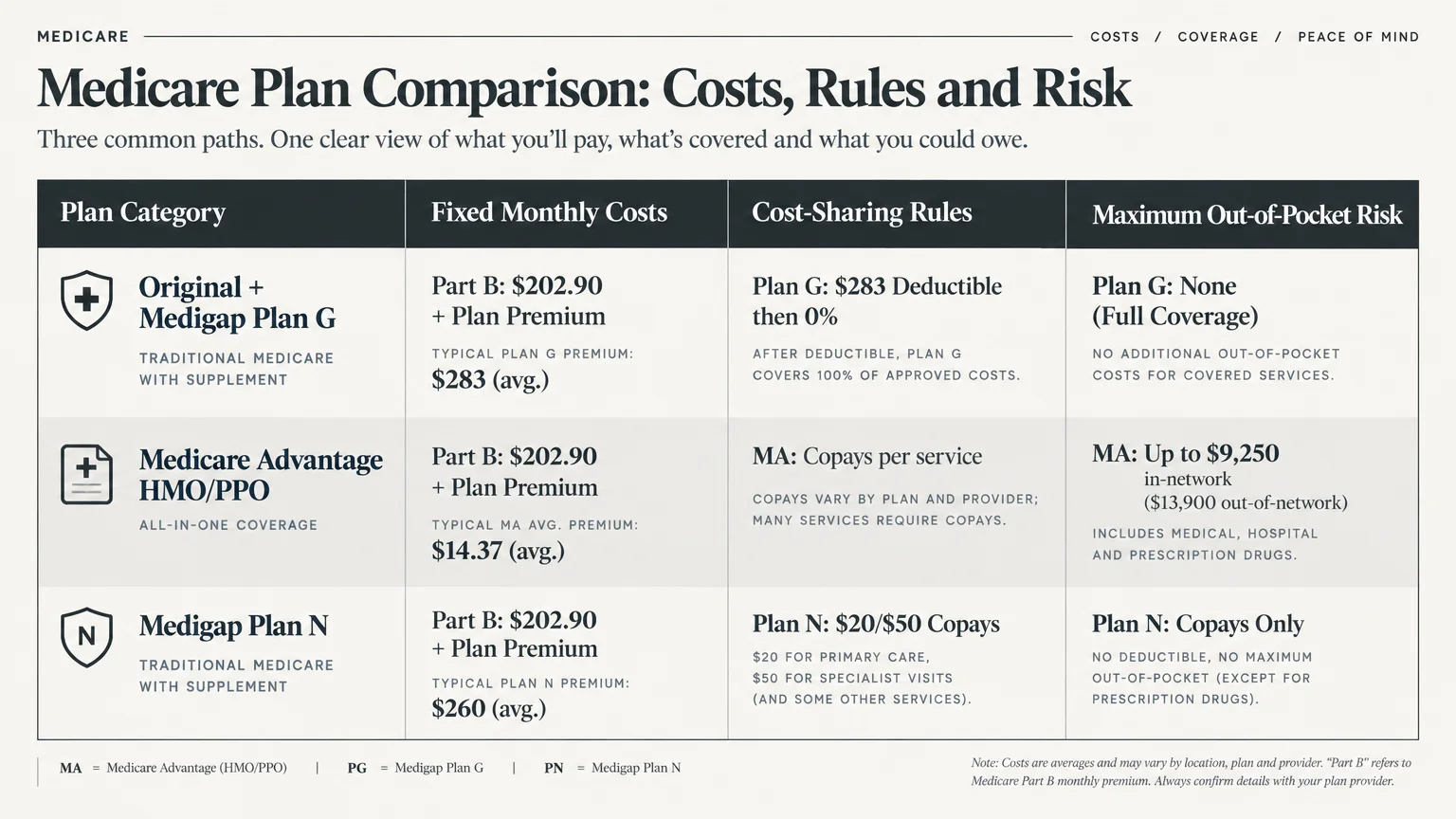
In 2026, the standard Part B premium is $202.90 per month, which you pay regardless of which framework you choose. Medicare Advantage plans charge an enrollment-weighted average monthly premium of just $14.37, with roughly 70% of plans charging zero dollars.
However, Medicare Advantage plans substitute open nationwide access with localized Health Maintenance Organization (HMO) or Preferred Provider Organization (PPO) provider networks. You must navigate strict prior authorization rules for imaging, specialist referrals, and inpatient hospitalizations.
Federal rules cap in-network out-of-pocket spending on Medicare Advantage at $9,250 for 2026, with combined out-of-network ceilings reaching $13,900. Medigap policies like Plan G feature no out-of-pocket caps simply because they pay all covered deductibles and coinsurance directly.
Healthy retirees who visit doctors infrequently can capture substantial medicare savings through Medicare Advantage. Beneficiaries managing chronic conditions or traveling across state lines usually save more overall by choosing Medigap to bypass expensive copayments.
2. Medigap Plan G vs. Medigap Plan N
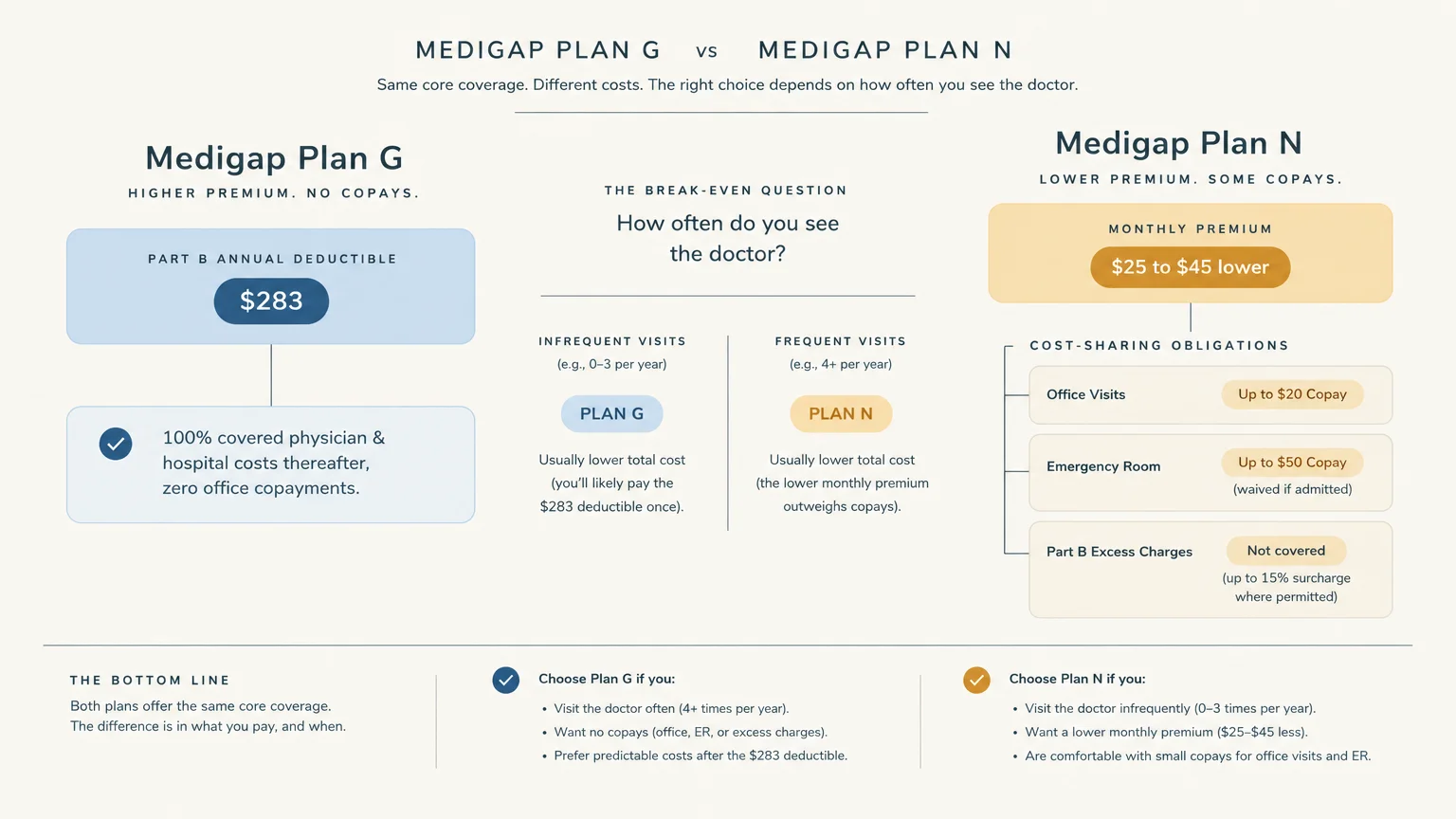
Medigap Plan G is the standard choice for comprehensive supplemental protection. Plan G covers 100% of your Medicare-approved hospital and medical cost-sharing once you meet the annual Part B deductible.
For 2026, the Part B annual deductible is $283. Once you pay that one-time amount, Plan G covers every remaining Medicare-approved physician charge, laboratory test, and hospital stay for the rest of the calendar year.
Medigap Plan N lowers your fixed monthly overhead by introducing targeted cost-sharing responsibilities. On average, Plan N premiums run $25 to $45 lower per month than Plan G premiums in the same zip code.
In exchange for lower premiums, you agree to pay copayments of up to $20 for doctor visits. You also face a copayment of up to $50 for emergency room visits that do not result in immediate inpatient hospital admission.
Plan N also does not cover Part B excess charges. Excess charges occur when non-participating physicians bill up to 15% above Medicare-approved rates, though eight states explicitly prohibit this billing practice entirely.
If you visit your physician four or fewer times per year, Plan N generates noticeable annual savings. Active seniors who require monthly clinical consultations often exhaust that premium savings through office visit copayments, making Plan G more economical.

3. Standard Medigap Plan G vs. High-Deductible Plan G
High-Deductible Plan G provides the exact same broad coverage scope as standard Plan G once you meet its separate deductible. For 2026, the high deductible is set at $2,950 per year.
Standard Plan G policies typically cost between $150 and $240 per month depending on age, sex, and geographic location. High-Deductible Plan G policies regularly cost between $45 and $75 per month.
Selecting the high-deductible alternative can save you between $1,200 and $1,900 annually in guaranteed premium savings. You keep that cash liquid in your personal account rather than paying it upfront to an insurer.
You pay your Part B deductible of $283 and any subsequent 20% Medicare coinsurance costs until your total spending reaches $2,950. Once you cross that deductible threshold, the policy pays 100% of covered expenses for the rest of the year.
This plan serves as a powerful financial safety net for healthy retirees seeking catastrophic protection. You retain nationwide provider access without network restrictions while keeping your monthly fixed overhead remarkably low.

4. Medicare Advantage HMO vs. Medicare Advantage PPO
Medicare Advantage HMO plans enforce strict cost controls through closed provider networks. You must select a primary care physician who coordinates your treatments and issues formal referrals before you visit specialists.
Except in emergency situations, an HMO plan provides zero coverage if you receive care outside its network. This strict structure allows insurers to offer low copayments alongside extra dental, vision, and wellness benefits.
Preferred Provider Organizations (PPOs) deliver greater freedom by permitting you to consult out-of-network physicians without referral hurdles. However, receiving services outside the designated network incurs substantially higher coinsurance rates.
In 2026, the median in-network out-of-pocket maximum across Medicare Advantage plans is $6,500. For PPO plans offering out-of-network access, combined limits reach as high as $13,900 in 2026 and rise to $14,800 in 2027.
An HMO plan can lower medicare costs if your doctors and local medical systems already belong to the contracted network. If you maintain second homes or prefer consulting independent specialists, a PPO prevents costly out-of-pocket claim denials.

5. Stand-Alone Part D (PDP) vs. Medicare Advantage Drug Coverage (MAPD)
Beneficiaries enrolled in Original Medicare buy stand-alone Part D prescription drug plans (PDPs), while Medicare Advantage enrollees receive bundled prescription coverage (MAPD). Comparing these models prevents unexpected pharmacy bills.
The enrollment-weighted average monthly premium for stand-alone Part D plans sits at $35.09 in 2026. Conversely, most Medicare Advantage plans incorporate prescription drug benefits at no additional monthly plan charge.
Federal drug reforms completely restructured Part D by establishing a $2,100 out-of-pocket prescription cap for 2026. This cap increases to $2,400 in 2027, permanently eliminating the legacy coverage gap known as the donut hole.
Stand-alone PDP options have contracted by 63% over recent years, leaving an average of only 11 plans available per region. This consolidation makes verifying formularies and tier structures essential during the annual enrollment window.
A bundled MAPD plan looks inexpensive due to its zero-dollar premium, but specialized medications can fall into higher cost-sharing tiers. A stand-alone PDP paired with Original Medicare often delivers superior savings for complex drug regimens.
6. Medigap Plan N vs. Medicare Advantage Plans
Retirees seeking low monthly expenses frequently weigh Medigap Plan N against Medicare Advantage plans. Both options serve as popular middle ground strategies between expensive supplemental coverage and bare government benefits.
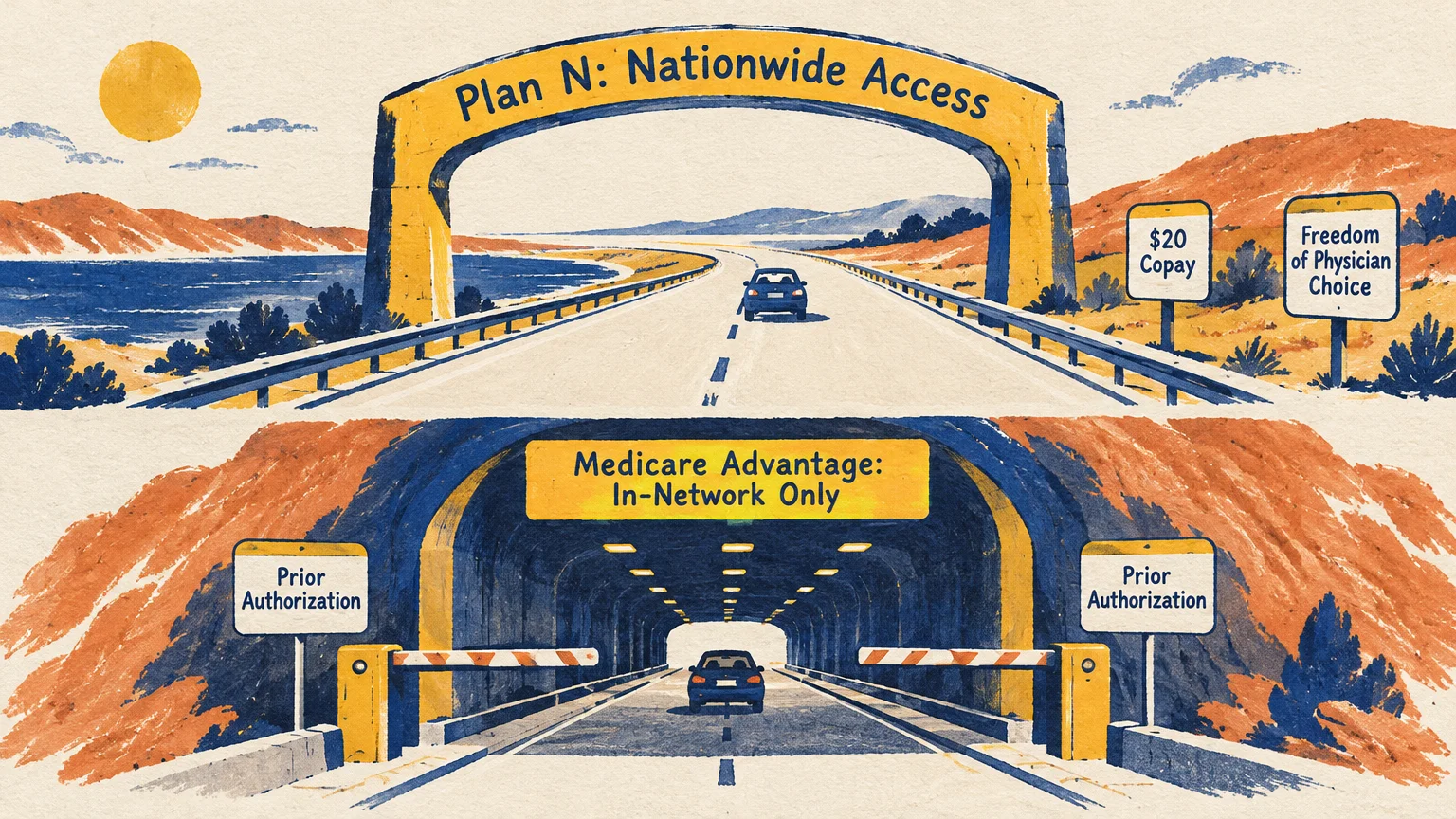
Medicare Advantage plans minimize upfront costs through low or zero-dollar premiums. However, they subject your care to restrictive networks, clinical prior authorizations, and variable copayments across hospital stays.
Plan N requires a monthly premium of around $100 to $160, but it connects you directly to Original Medicare. You can consult any healthcare provider in the nation who accepts Medicare without requesting prior authorization.
Your exposure under Plan N is limited to the $283 Part B deductible and copayments of up to $20 for office visits. On Medicare Advantage, a major illness can trigger out-of-pocket costs up to your plan’s maximum ceiling.
Plan N eliminates the bureaucratic friction of private insurance while keeping out-of-pocket exposure predictable. It remains the top choice for retirees who want affordable coverage without network restrictions.
7. Medigap Plans K and L vs. Standard Plan G
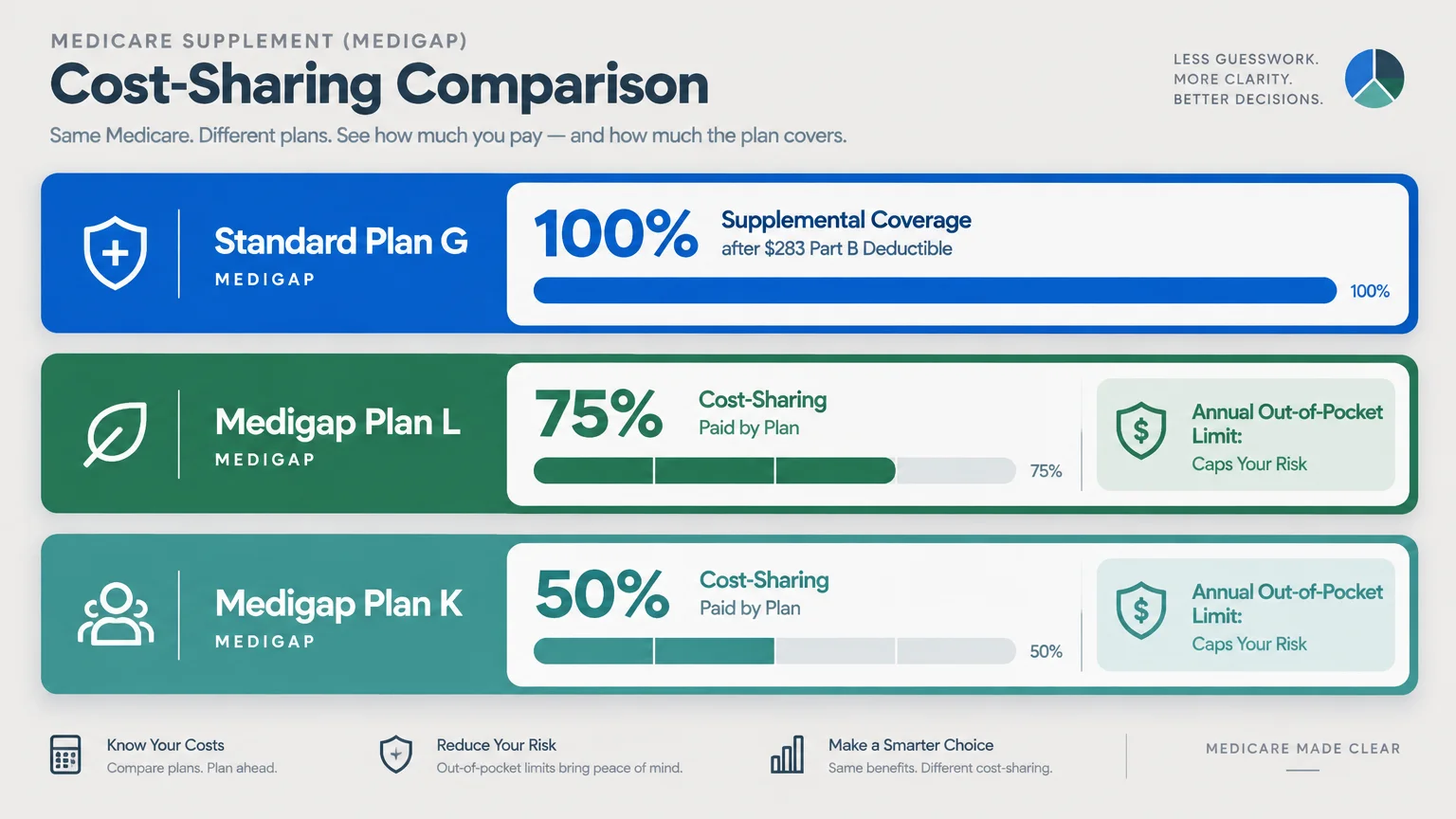
Medigap Plans K and L offer cost-sharing alternatives to full-coverage supplemental plans. Instead of covering 100% of gaps, these plans pay a designated percentage of your Medicare cost-sharing requirements.
Plan K covers 50% of covered medical cost-sharing, while Plan L covers 75%. Both plans include annual out-of-pocket limits that cap your total out-of-pocket medical expenses each calendar year.
For 2026, the out-of-pocket maximum is $8,000 for Plan K and $4,000 for Plan L. Once your cost-sharing matches that threshold, the plan pays 100% of all covered Medicare expenses for the rest of the year.
Because you assume partial cost-sharing responsibility, monthly premiums for Plans K and L are significantly lower than Plan G. You keep complete freedom to visit any Medicare physician without network rules.
If you rarely use medical services but want a safety valve for catastrophic events, Plan L provides a disciplined compromise. You avoid high fixed monthly premiums while shielding your wealth from massive hospital bills.

8. Preferred Network Pharmacies vs. Standard Retail Pharmacies
Part D prescription plans categorize pharmacies into preferred network, standard network, and out-of-network tiers. Where you pick up your medications directly impacts your out-of-pocket spending.
Preferred pharmacies maintain contractual agreements with insurers to dispense generic and brand drugs at negotiated discount copayments. Standard network pharmacies can charge twice as much for the identical prescription medication.
The maximum Part D annual deductible allowed by federal regulation is $615 in 2026. Many plans waive this deductible entirely for Tier 1 preferred generics filled through preferred retail locations or home mail-order delivery.
You can use the official medicare plan comparison tool on Medicare.gov to evaluate pharmacy networks in your community. Entering your exact dosages shows which pharmacies offer the lowest annual drug outlays.
Switching from a standard retail store to a preferred mail-order pharmacy frequently saves retirees hundreds of dollars each year. Plan pharmacy contracts change annually, so you should audit your pharmacy assignments every autumn.
9. Legacy Plans C and F vs. Modern Plan G
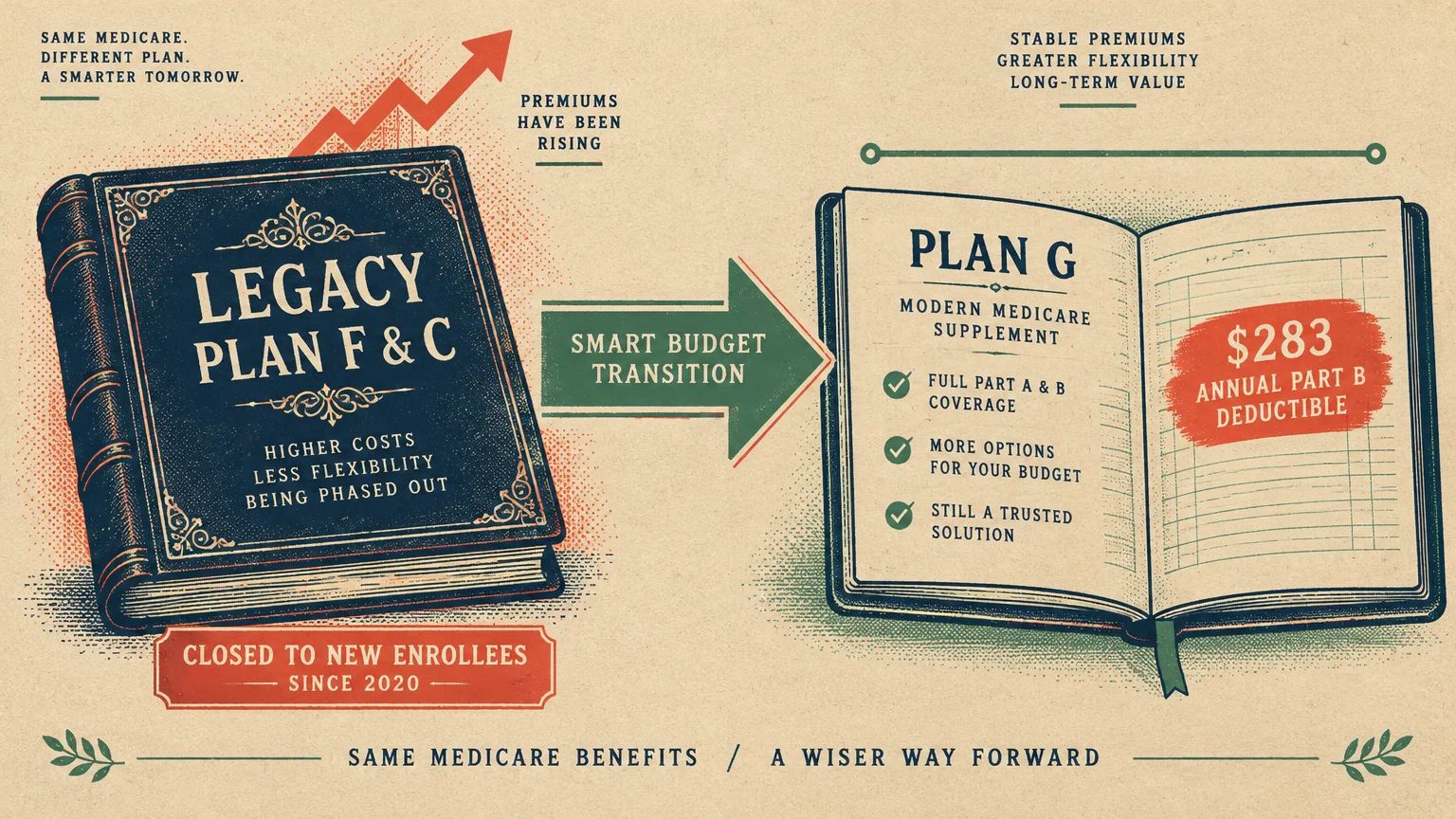
Beneficiaries eligible for Medicare before January 1, 2020, often remain enrolled in grandfathered Medigap Plan F or Plan C. These legacy plans cover 100% of all Medicare cost-sharing, including the annual Part B deductible.
Federal law closed Plans C and F to newly eligible beneficiaries on January 1, 2020. Because new, younger enrollees cannot join, the existing risk pool in these plans is aging rapidly.
This aging enrollment base causes Plan F and Plan C premiums to escalate much faster than modern plan premiums. In many markets, Plan F costs $350 to $700 more per year in premiums than Plan G.
The sole structural difference between Plan F and Plan G is payment of the annual Part B deductible. In 2026, that deductible is just $283 for the entire year.
Paying an extra $500 in annual premiums simply to avoid paying a $283 deductible is poor financial math. Switching to Plan G immediately puts the net cash difference back into your retirement budget.
“Price is what you pay. Value is what you get.” — Warren Buffett, Chairman and CEO of Berkshire Hathaway
Medicare Plan Options: Financial Cost Comparison
Comparing coverage types side by side clarifies how upfront premiums balance against out-of-pocket exposure. Use this financial comparison table to weigh the baseline costs of major Medicare coverage structures for 2026.
| Plan Structure | Average Monthly Premium (2026) | Annual Deductible Responsibilities | Annual Out-of-Pocket Cap | Provider Network Freedom |
|---|---|---|---|---|
| Medigap Plan G | $150 – $240 (plus Part B) | $283 Part B deductible only | None required; 100% covered after deductible | Nationwide; any provider accepting Medicare |
| Medigap Plan N | $110 – $180 (plus Part B) | $283 Part B deductible | None; up to $20 office and $50 ER copays | Nationwide; any provider accepting Medicare |
| High-Deductible Plan G | $45 – $75 (plus Part B) | $2,950 policy deductible | $2,950 policy deductible limit | Nationwide; any provider accepting Medicare |
| Medigap Plan L | $80 – $130 (plus Part B) | Part A & B cost-sharing splits | $4,000 maximum annual limit | Nationwide; any provider accepting Medicare |
| Medicare Advantage HMO | $0 – $25 (plus Part B) | Plan-specific (medical and drug) | $9,250 federal cap (median $6,500) | Strict local HMO network only |
| Medicare Advantage PPO | $15 – $65 (plus Part B) | Plan-specific (medical and drug) | $13,900 combined in/out-of-network cap | Regional PPO network with out-of-network tier |
Your total healthcare costs depend on how frequently you seek medical care and where you purchase services. Evaluating your annual medical usage against these structures ensures you do not overpay for unnecessary protection.
Common Mistakes That Erode Medicare Savings
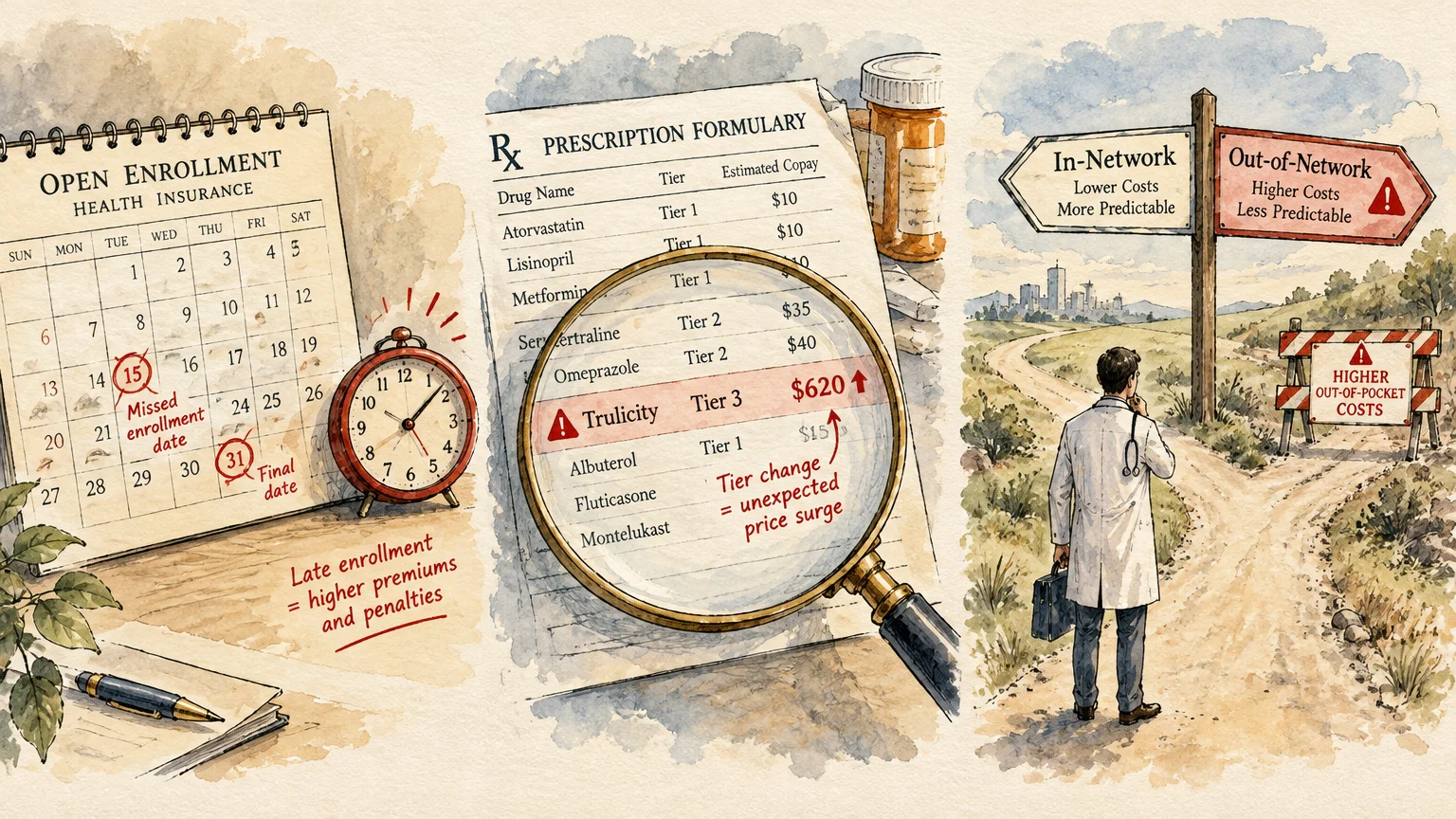
Making inaccurate assumptions about Medicare rules can cost you thousands of dollars in surprise medical bills and penalties. Avoiding these four common missteps protects both your healthcare access and your savings.
- Ignoring Open Enrollment Dates: The Medicare Fall Open Enrollment Period runs every year from October 15 to December 7. If you skip this window, you remain locked into your current plan for another calendar year regardless of premium spikes.
- Overlooking IRMAA Tax Surcharges: High-income earners face an Income-Related Monthly Adjustment Amount (IRMAA) on Part B and Part D premiums. In 2026, surcharges trigger if your 2024 modified adjusted gross income exceeded $109,000 for single filers or $218,000 for joint filers.
- Buying Redundant Coverage: Staying enrolled in legacy Plan F pays a $283 deductible at the cost of hundreds in excess premiums. Check your premium renewal notices annually to ensure your benefits justify the cost.
- Neglecting Formularies: Part D plans alter their lists of covered drugs and pharmacy tiers every calendar year. A plan that offered the cheapest medications this year may drop your prescription entirely next January.
“A big part of financial freedom is having your heart and mind free from worry about what-ifs of life.” — Suze Orman, Personal Finance Author

Professional vs. Self-Guided Medicare Navigation
Deciding whether to compare plans independently or consult an independent insurance broker depends on your health, finances, and comfort with federal rules. Here are four practical scenarios to help guide your path.
Scenario 1: Chronic Conditions and Specialty Prescriptions. If you take multiple expensive medications, working with a licensed, independent Medicare specialist is smart. A broker can cross-reference multiple formularies simultaneously, preventing unexpected claim denials.
Scenario 2: High Net Worth Retirees Navigating IRMAA. Individuals with significant investment income should consult a financial advisor alongside Medicare resources. Coordinated guidance through the Internal Revenue Service and the Social Security Administration helps minimize Part B and D surcharges.
Scenario 3: Snowbirds and Multi-State Travelers. If you split your time between states, a self-guided search might lead you into restrictive regional HMO plans. An independent advisor can identify Medigap options or national PPO networks that cover you across state lines.
Scenario 4: Healthy Retirees with Predictable Care. Healthy individuals taking one or two generic medications can easily use self-guided tools. The Medicare.gov plan comparison portal provides clear information on local premiums, deductibles, and pharmacy networks.
You can also check educational consumer resources through the Consumer Financial Protection Bureau to understand how healthcare debt affects retirement finances. Independent self-education helps you spot aggressive sales tactics from captive insurance agents.
Frequently Asked Questions
When can I switch between Medicare Advantage and Original Medicare?
You can switch during the Fall Open Enrollment Period from October 15 to December 7, with changes taking effect January 1. Beneficiaries already enrolled in Medicare Advantage can also switch during the Medicare Advantage Open Enrollment Period from January 1 to March 31.
Does a $0 premium Medicare Advantage plan mean healthcare is free?
No, a zero-dollar premium simply means you pay no additional monthly membership fee to the private insurance company. You must continue paying your monthly Part B premium ($202.90 in 2026) alongside copayments, coinsurance, and deductibles whenever you receive medical care.
Can I be denied a Medigap policy if I switch plans later in life?
Yes, outside of your initial six-month Medigap Open Enrollment Period or specific guaranteed issue situations, private insurers can apply medical underwriting. They can review your medical history, charge higher rates, or deny your application based on pre-existing health conditions.
What happens if my doctor leaves my Medicare Advantage network mid-year?
If your doctor leaves your plan’s contracted network, you must select another in-network provider or pay higher out-of-network rates. A doctor leaving a network does not trigger a special enrollment period to change your plan mid-year.
Next Steps for Your Healthcare Budget
Review your Annual Notice of Change (ANOC) every September to identify upcoming alterations to your premiums, deductibles, and drug formularies. Comparing your current coverage against alternative plans using the Medicare Plan Finder tool ensures you capture maximum savings.
Prioritizing your medical needs and evaluating realistic out-of-pocket exposure lets you build a secure healthcare plan without overpaying. Small adjustments to your plan choices today can preserve thousands of dollars throughout your retirement years.
This is educational content based on general financial principles. Individual results vary based on your situation. Always verify current tax laws, investment rules, and benefit eligibility with official sources.
Last updated: October 2026. Financial regulations and rates change frequently—verify current details with official sources.