When you search for Medicare help online, the links at the very top of your screen are often paid traps rather than official government pages. In September 2026, the Federal Trade Commission warned consumers about fake search ads imitating federal health sites.
Clicking those look-alike links can funnel your private contact details to aggressive lead brokers or trick you into buying worthless discount cards.
Knowing how these deceptive ads work—and where to verify your plan safely—protects both your healthcare coverage and your wallet during enrollment season.
How the Online Search Medicare Scam Works
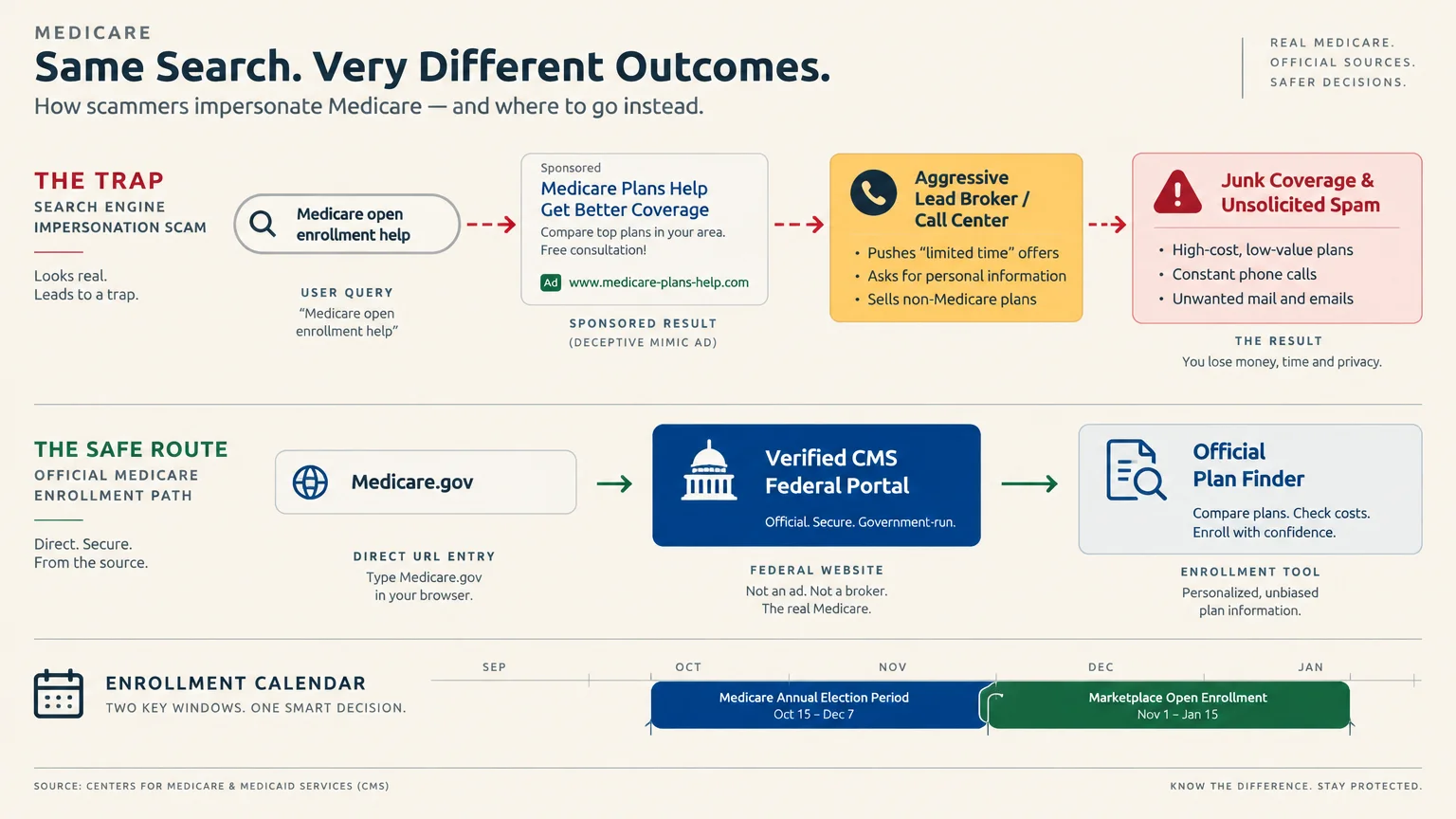
According to a September 28, 2026 alert from the Federal Trade Commission (FTC), dishonest marketers pay to place fake Medicare ads at the top of search engine results. These sponsored listings mimic official addresses and logos from Medicare.gov and HealthCare.gov.
When you click an impersonation link or call the phone number displayed on the page, you do not reach a federal agency. Instead, you connect with a high-pressure sales center or a lead-generation company hunting for commissions.
Many people assume the first result on a major search engine is vetted and official. Scammers exploit that habit by bidding on everyday phrases like Medicare open enrollment help or Part B customer service.
The problem grew so widespread that on October 29, 2026, FTC staff sent formal warning letters to health plan marketers and lead generators. Those letters reminded businesses not to deceive consumers about plan terms.
The FTC also cited prior enforcement actions against major lead generators and brokers, including Simple Health Plans, Benefytt Technologies, and Assurance IQ & MediaAlpha. Those cases highlight how aggressively some online brokers push junk coverage.
Timing makes this Medicare scam especially dangerous for busy shoppers. Medicare’s Annual Election Period runs from October 15 through December 7, 2026, with coverage changes taking effect on January 1, 2027.
Meanwhile, Health Insurance Marketplace Open Enrollment runs from November 1 through January 15. Millions of households search for answers during those overlapping windows, giving fraudulent advertisers a massive pool of hurried targets.
Fake Medicare Ads on Social Media and Your Phone
Search engines are not the only place where you will encounter deceptive Medicare promotions. Social media feeds have become a primary hunting ground for scammers targeting retirees and older adults.
A May 12, 2026 report by the Center for Countering Digital Hate (CCDH) analyzed Meta’s ad library to measure the scale of the problem. Researchers found that 30 major Medicare scam advertiser accounts generated 215 million ad impressions on Facebook over the prior year.
Roughly 73% of those impressions reached users aged 65 and older. Many ads relied on AI deepfake endorsements from celebrities or politicians alongside false promises of grocery cards or extra cash.
The financial incentives behind these fake Medicare ads are enormous. CCDH estimated that Meta earned $14.3 million from those scam ads, including $12.4 million directly from Medicare-related scammers.
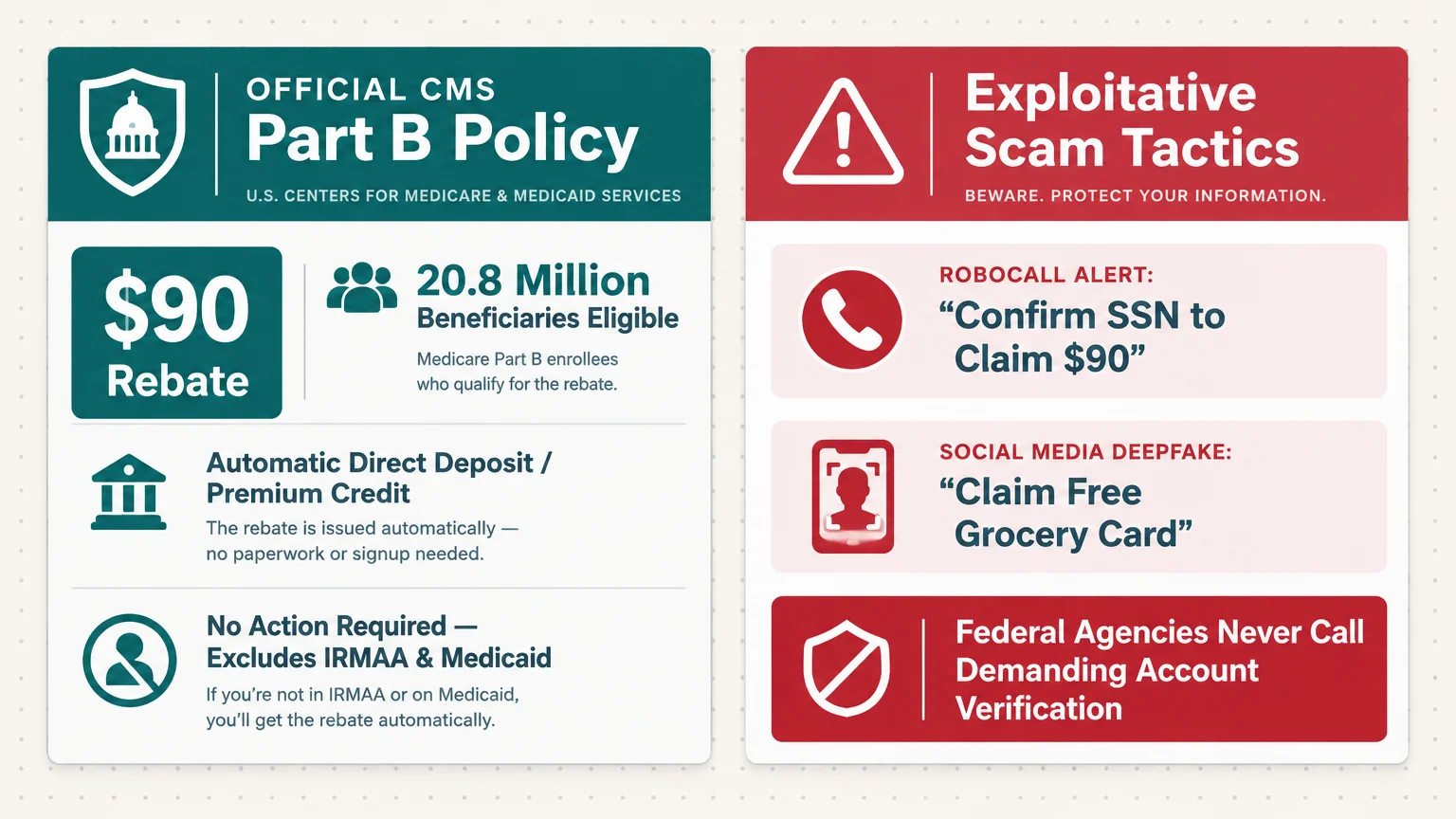
Phone calls and text messages carry similar risks during the 2026 enrollment cycle. The FTC confirms that prerecorded robocalls marketing health insurance are illegal, yet fraudsters still blast millions of automated calls nationwide.
One of the newest phone and text lures centers on a real government payout. In October 2026, the Centers for Medicare & Medicaid Services (CMS) issued a one-time $90 Medicare Improvement Fund rebate to roughly 20.8 million Original Medicare Part B beneficiaries.
Medicare Advantage enrollees, Medicaid premium-assistance recipients, and beneficiaries paying income-related IRMAA surcharges did not qualify for that rebate. Scammers quickly hijacked the headline to trick seniors into handing over banking details.
Both CMS and Medicare emphasize that the $90 rebate is completely automatic via direct deposit or a Treasury check. You never need to apply, tap a text link, or verify your bank account to receive it.
Why Medicare Fraud Costs You—and Every Taxpayer—Billions
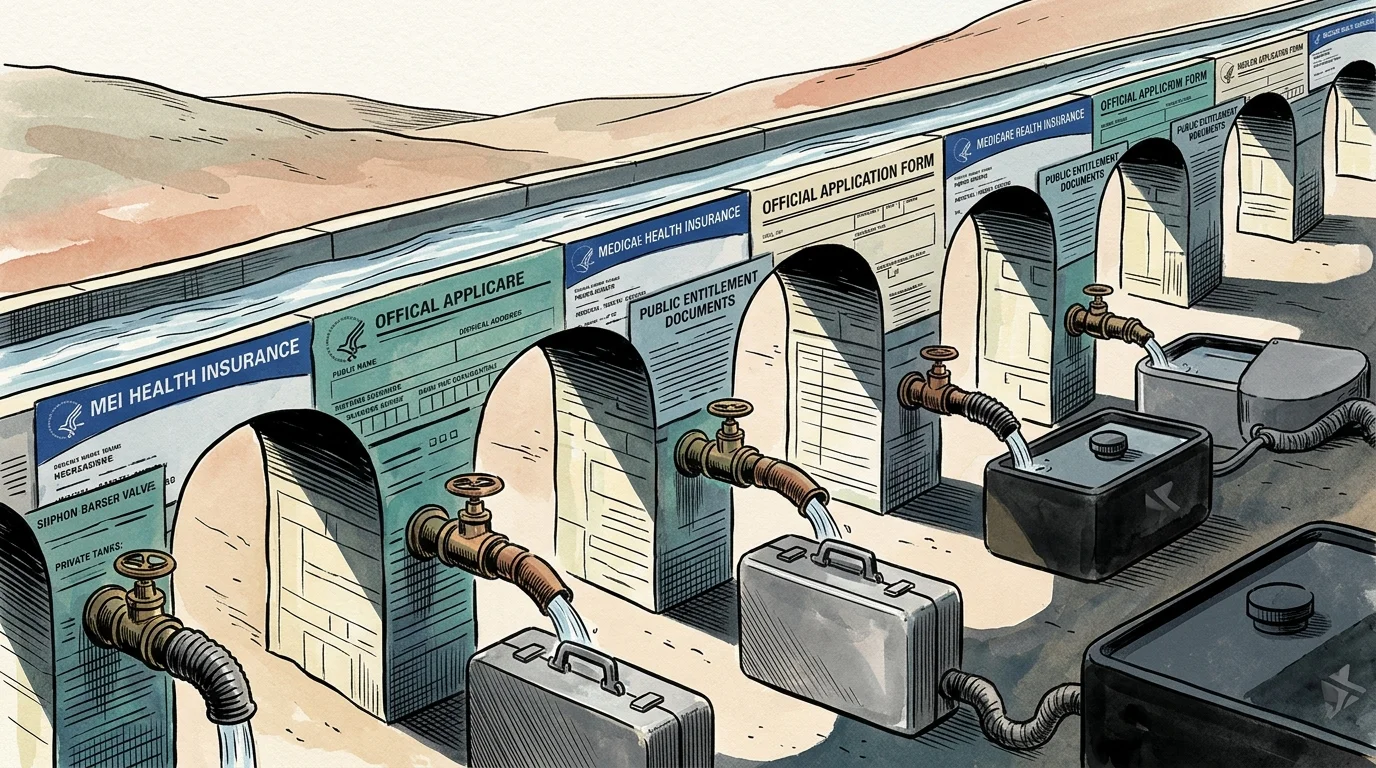
Clicking a misleading ad might seem like a minor annoyance, yet the financial fallout from elder-targeted fraud has surged dramatically. Fresh federal data shows just how costly these schemes have become.
In its October 19, 2026 report to Congress, Protecting Older Consumers 2025–2026, the FTC reported that adults aged 60 and older lost roughly $3 billion to fraud in 2025. That figure represents about five times the $600 million reported in 2020.
Because most victims never report what happened, the real damage runs far deeper. The FTC estimated that the total true cost of fraud to older adults in 2025 could reach $119.5 billion.
Older Americans also face sharper losses per incident. Per 2025 FTC Consumer Sentinel data, adults aged 80 and older reported a median individual fraud loss of $2,000, and older consumers were disproportionately likely to report losing money to government-impersonation scams.
Even if you never fall for a fake ad personally, you still help foot the bill through taxes and healthcare premiums. In May 2026, the FTC noted that Medicare fraud, errors, and abuse cost taxpayers around $60 billion annually.
Across a federal program serving more than 68.5 million Americans, CMS improper-payment estimates range from 3% to 10% per year. That equals $60 billion to $100 billion or more draining out of the system annually.
What Can Go Wrong When You Click a Fake Ad
Falling for a Medicare open enrollment scam does more than waste an afternoon on the phone. Once a shady operator captures your information, several expensive problems can unfold at once.
- Buying worthless non-insurance products: Scammers often sell limited-benefit plans or medical discount cards disguised as comprehensive Medicare coverage, leaving you with massive unpaid hospital or doctor bills.
- Suffering medical identity theft: Fraudsters who obtain your Medicare Number can bill the government for fake wheelchairs, lab tests, or prescriptions in your name, corrupting your medical records and exhausting benefits.
- Losing your preferred doctors and drugs: High-pressure agents sometimes switch beneficiaries into an unfamiliar Medicare Advantage or Part D plan without informed consent, cutting off access to trusted specialists.
- Triggering relentless spam calls: Lead generators frequently package and resell your phone number and email address to dozens of telemarketers, flooding your phone for months.
- Missing the December 7 enrollment deadline: If you believe a fake website updated your coverage, you might not discover the truth until January 1, 2027, when fixing your plan becomes far harder.
Recovering from an unauthorized plan change or stolen medical identity takes months of phone calls and paperwork. Stopping at the browser bar before you click saves you from that ordeal.
Real Medicare vs. Scam Traps: How to Spot the Difference
Scammers work hard to imitate federal agencies, so your best defense is knowing exactly how legitimate Medicare communication operates. Use the comparison table below whenever an online ad, caller, or website asks for your attention.
| Warning Sign | Official Medicare & Authorized Help | Online & Phone Scam Traps |
|---|---|---|
| Website address | Always ends in .gov, such as Medicare.gov or SSA.gov | Uses .com, .org, misspelled look-alike domains, or paid Ad tags |
| Initial contact | Never calls you uninvited to sell a plan or visit your home | Uses illegal robocalls, urgent text links, or unsolicited flyers |
| Account sign-in | Uses verified sign-ins like Login.gov, ID.me, or CLEAR | Demands your Medicare Number before showing basic plan details |
| Rebates and refunds | Issues automatic payments like the $90 Part B rebate with no form needed | Asks for bank numbers, gift cards, or fees to unlock cash |
| Sales pitches | Offers neutral plan comparisons through official tools or SHIP counselors | Promises free groceries, cash rewards, or deepfake celebrity deals |
Strict federal marketing prohibitions protect beneficiaries from aggressive sales tactics. Keep this core verification rule from CMS, Medicare.gov, and the Senior Medicare Patrol (SMP) in mind whenever someone contacts you unexpectedly:
Medicare will never call you uninvited to sell a plan, visit your home without permission, or ask for your Medicare Number, Social Security number, or bank information over an unsolicited phone call. Insurance plans are also prohibited from claiming Medicare endorsement or leaving unsolicited flyers on your home or car.
If an ad, caller, or doorstep visitor breaks even one of those rules, end the interaction immediately. Legitimate government agencies and compliant brokers do not operate in the shadows.
2026–2027 Medicare Costs and Rule Changes Scammers Exploit
Every fall, real changes in premiums, drug caps, and marketing regulations generate headlines that confuse beneficiaries. Scammers deliberately twist these real policy updates to make their fake pitches sound urgent and credible.
Understanding the verified numbers for 2026 and 2027 helps you spot lies right away. For example, callers often claim you will face an immediate penalty unless you switch plans through them, or they invent fake premium discounts.
Here are the verified Part B figures you should know right now:
- 2026 Part B costs: According to CMS and Medicare.gov, the standard 2026 Medicare Part B monthly premium is $202.90, though higher-income beneficiaries pay IRMAA surcharges, and the annual Part B deductible is $283.
- Projected 2027 Part B costs: As of mid-November 2026, CMS had not yet released final 2027 Part B rates, while the 2026 Medicare Trustees Report projected a $209.50 monthly premium and a $292 deductible for 2027.
Prescription drug coverage under Part D is also shifting between 2026 and 2027. Scammers routinely exaggerate these cost changes to panic seniors into switching plans over the phone.
- Higher annual out-of-pocket cap: CMS announced that the Part D annual out-of-pocket spending cap rises from $2,100 in 2026 to $2,400 in 2027.
- Higher maximum deductible: The maximum standard Part D deductible increases from $615 in 2026 to $700 in 2027.
- Negotiated drug savings: Negotiated lower prices take effect on January 1, 2027 for 15 prescription drugs, with CMS projecting average monthly premiums of $36 for stand-alone Part D plans and $7 for Medicare Advantage drug plans.
Even federal rules governing how agents talk to you changed just before this enrollment cycle. Under the CY 2027 Marketing Final Rule (CMS-4212-F), issued on April 2, 2026 and effective October 1, 2026, CMS revised three important safeguards.
First, CMS eliminated the 48-hour waiting period after you sign a Scope of Appointment (SOA) form. An agent no longer has to wait two days to hold a personal marketing meeting or enroll you.
Because enrollment can now happen on the spot, you have less built-in cooling-off time. Never let an agent rush you into signing up during a single phone call or kitchen-table pitch.
Second, Third-Party Marketing Organizations (TPMOs) must now state their disclaimer before discussing specific plan benefits, rather than within the first 60 seconds of a call. That disclaimer tells you the marketer does not offer every plan available in your area, though State Health Insurance Assistance Programs (SHIPs) were removed from the required script.
Third, CMS narrowed call-recording rules so only marketing or sales calls resulting in an enrollment must be recorded. Retention dropped from 10 years to 6 years, with audio required for years 1 through 3 and transcripts allowed for years 4 through 6.
Knowing these updates keeps you in the driver’s seat. If a salesperson skips the disclaimer before pitching benefits or pressures you to enroll immediately, walk away.
How to Protect Yourself from Medicare Scams Online and Offline
You do not need advanced tech skills to protect yourself from Medicare scams. Following a few deliberate habits every time you research coverage shuts down nearly every common trap.
- Type official web addresses directly: Skip the search bar altogether and type Medicare.gov straight into your browser’s address bar.
- Scroll past sponsored search results: If you must use a search engine, look closely for tiny Ad or Sponsored labels above the top links, scroll down past them, and confirm the URL ends in .gov before clicking.
- Lock down your official Medicare account: Create or access your profile on Medicare.gov using verified identity tools like Login.gov, ID.me, or CLEAR so impersonators cannot hijack your account.
- Verify government benefits through official portals: Cross-check your retirement and Medicare records through the Social Security Administration (SSA.gov) or explore federal assistance directories on USA.gov Benefits instead of clicking social media ads.
- Treat your Medicare Number like a credit card: Never share your Medicare Number, Social Security number, or bank routing numbers with anyone who initiated contact by phone, text, email, or social media message.
- Check your Medicare Summary Notices every month: Review your statements and Explanation of Benefits promptly for unfamiliar clinics, medical equipment you never ordered, or duplicate charges.
- Take your time before signing anything: Even though the 48-hour Scope of Appointment wait is gone, give yourself at least a day to verify a plan’s drug formulary and doctor network directly on Medicare.gov.
Protecting your finances also means keeping an eye on broader scam trends targeting older adults. Resources from the Consumer Financial Protection Bureau (CFPB) offer practical checklists to safeguard bank accounts and spot financial exploitation early.
If a pitch sounds urgent, secretive, or too generous to be true, pause immediately. Real Medicare enrollment rules follow published calendars, never overnight flash deals.

When to Consult a Professional
Navigating healthcare and retirement rules alone can feel overwhelming, especially when fraudsters muddy the waters. Knowing exactly who to call gives you trustworthy answers without a sales pitch.
- You want free, unbiased plan comparisons: Call 1-800-MEDICARE (1-800-633-4227; TTY 1-877-486-2048) 24 hours a day, seven days a week, or contact your local State Health Insurance Assistance Program (SHIP) for free, conflict-free counseling.
- You suspect medical billing fraud or compromised credentials: Call the Senior Medicare Patrol (SMP) at 1-877-808-2468 or contact the HHS Office of Inspector General (OIG) at 1-800-HHS-TIPS (1-800-447-8477; TTY 1-800-377-4950) or online at tips.oig.hhs.gov.
- You encountered a fake search ad, impersonator, or scam text: Submit a complaint to the FTC at ReportFraud.ftc.gov (or call 877-382-4357), alert your state attorney general, and forward suspicious text messages to 7726 (SPAM).
- You face complex tax brackets or IRMAA surcharges: Consult a fee-only Certified Financial Planner or licensed tax professional who has no insurance commission riding on which Medicare plan you pick.
Reporting fake ads and suspicious calls does more than protect your own records. Every report gives federal investigators the evidence they need to shut down scam networks before they reach someone else.
Frequently Asked Questions About Medicare Scams
Can Medicare call me uninvited to enroll me in a plan or offer a rebate?
No, Medicare will never call you out of the blue to sell a plan, threaten your coverage, or ask for personal numbers. CMS and the Senior Medicare Patrol confirm that Medicare never makes uninvited sales calls or visits your home unannounced.
How can I tell if a Medicare website at the top of search results is real?
Check for an Ad or Sponsored tag next to the listing, because federal agencies warn that scammers buy top search placements. Real federal Medicare pages always end in .gov, so typing Medicare.gov directly into your browser is the safest route.
Do I need to apply or share bank details to get the $90 Medicare Part B rebate?
No, you do not need to fill out a form, click a text link, or confirm your bank account. CMS issued the one-time $90 rebate automatically via direct deposit or Treasury check to eligible Original Medicare Part B beneficiaries starting in October 2026.
What should I do if I already gave my Medicare Number to a fake ad?
Call 1-800-MEDICARE (1-800-633-4227) right away to report the compromise and check whether anyone altered your coverage. You should also alert the HHS Office of Inspector General at 1-800-HHS-TIPS, contact the Senior Medicare Patrol at 1-877-808-2468, and file a report at ReportFraud.ftc.gov.
Your Next Steps Before Enrollment Closes
Before December 7 arrives, bookmark Medicare.gov on your computer or phone and save 1-800-MEDICARE in your contacts so you never rely on search engine ads for help. Sharing this Medicare fraud warning with aging parents, neighbors, or friends helps stop scammers before they ever get a click.
The information in this guide is meant for educational purposes. Your specific circumstances—including income, debt, tax situation, and goals—may require different approaches.
When in doubt, consult a licensed professional. Taking five extra minutes to verify a source protects your healthcare and peace of mind all year long.
Last updated: November 2026. Financial regulations and rates change frequently—verify current details with official sources.