If the IRS assigned you an Identity Protection PIN, submitting your tax return without it guarantees an immediate e-file rejection. This six-digit security code acts as an electronic lock on your Social Security number, stopping unauthorized filers in their tracks.
Missing or mistyping just one digit halts electronic transmission instantly, leaving your tax return in limbo.
Fortunately, understanding how the IP PIN functions allows you to resolve error codes, prevent costly refund hold-ups, and keep your filing on schedule. Here is what you need to know before you submit your return.
What Is an IRS IP PIN and Who Actually Needs One?
An Identity Protection Personal Identification Number is a confidential six-digit number assigned to eligible taxpayers. It prevents criminals from filing fraudulent federal tax returns using a stolen Social Security number or Individual Taxpayer Identification Number.
This code serves as a unique authentication key that proves your true identity directly to the tax agency.
A common misconception is that every American taxpayer must use an IP PIN. That is incorrect; there is no universal government mandate requiring all filers to obtain one.
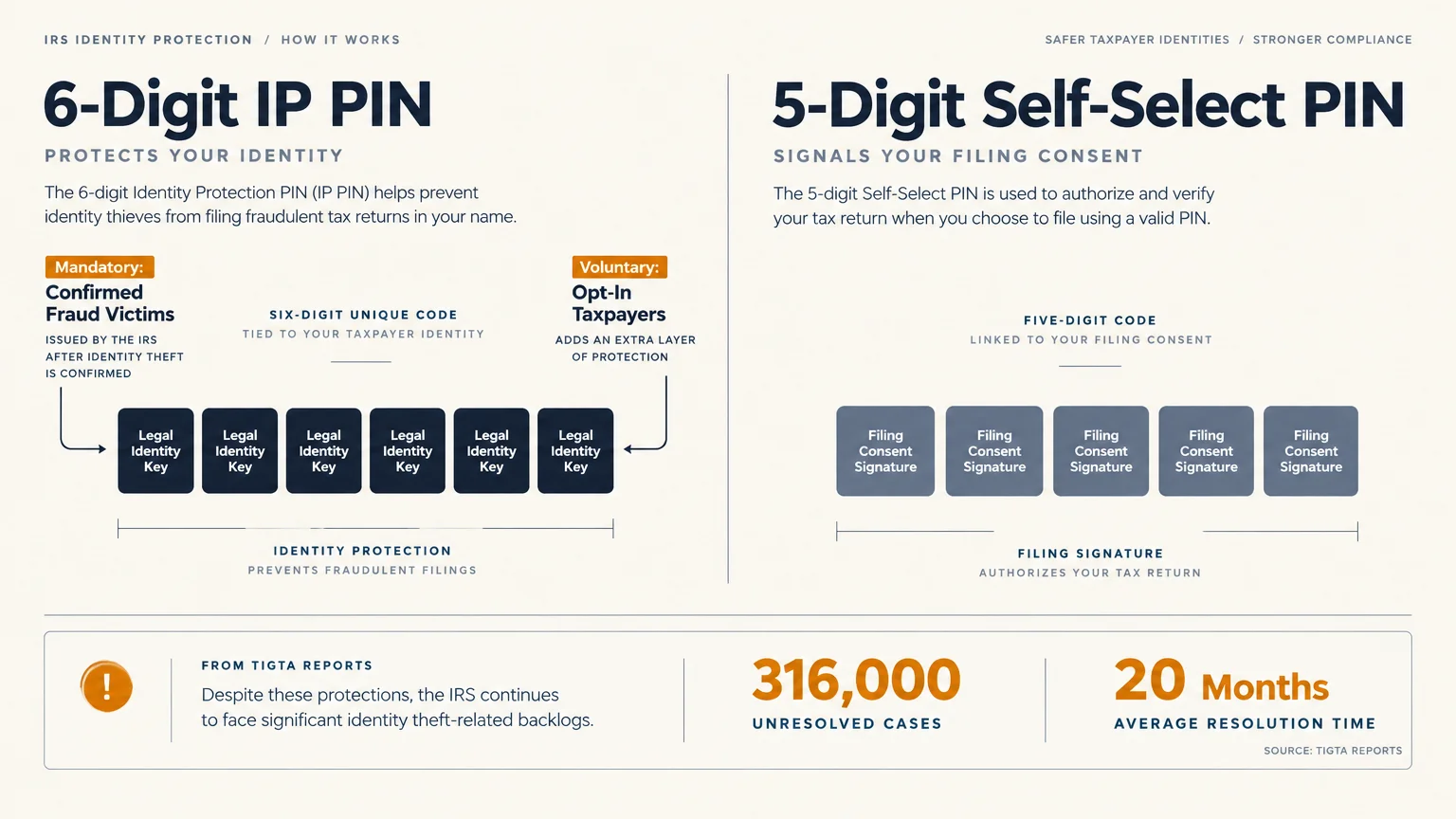
Instead, the IRS automatically assigns an IP PIN to confirmed victims of tax-related identity theft. For these individuals, using the assigned code is compulsory on all eligible returns.
At the same time, any taxpayer who can verify their identity may voluntarily choose to opt into the program. Millions of Americans opt in each year to proactively shield their financial data from cyber criminals.
Do not confuse your six-digit IP PIN with the five-digit Self-Select PIN used as your electronic signature. The five-digit PIN verifies your filing consent, while the six-digit IP PIN validates your legal identity.
“Identity theft is a serious crime that can wreak havoc on your finances and take months or even years to resolve.” — Suze Orman, Personal Finance Author and TV Host
The stakes surrounding tax-related fraud remain enormous. According to a September 2026 Treasury Inspector General for Tax Administration (TIGTA) report, unresolved identity theft cases took an average of roughly 20 months to settle.
That same audit revealed nearly 316,000 cases remained unresolved at the end of fiscal year 2025. These processing bottlenecks forced the IRS to pay $124.2 million in refund interest due to mandatory delays.
TIGTA also reported that across calendar years 2024 and 2025, IRS fraud filters flagged approximately 7.5 million returns for extra identity screening. Enrolling in the IP PIN program prevents your legitimate return from getting caught in that administrative web.

Why Missing Your IP PIN Triggers an Instant E-File Rejection
When you file your taxes electronically, the IRS Modernized e-File system checks your identification numbers before accepting the return. If IRS databases show an active IP PIN assigned to your account, the system looks for that exact match.
If the field is blank or contains an incorrect number, the IRS computer system kicks the return back automatically. Your tax software will display a transmission failure within minutes or hours.
This automated rejection is intentional. The entire purpose of the IP PIN program is to block any electronic submission that lacks proper authentication.
Because an identity thief rarely possesses your private six-digit code, the automated filter protects your refund from being diverted. However, this strict wall also stops legitimate filers who simply forgot to enter their assigned numbers.
The requirement applies to several standard tax documents submitted electronically. These include Forms 1040, 1040-SR, 1040-NR, 1040-PR, and 1040-SS.
You must also include your current IP PIN when filing an amended return using Form 1040-X. Omitting the number on an amended filing leads to the same automatic rejection.
Conversely, you do not need an IP PIN for every tax-related form. The IRS does not require or accept IP PIN entries on Form 4868, which is used to request an automatic filing extension.
Additionally, state income tax returns do not use federal IP PINs. State departments of revenue manage their own distinct security protocols and anti-fraud verifications.
Before panicking over a rejected submission, check official resources at the Internal Revenue Service to verify which federal forms require active protection codes.
Decoding IRS Rejection Codes: Primary, Spouse, and Dependent Errors
When an electronic return fails validation due to identity number mismatches, the IRS generates a specific reject code. Knowing what these alphanumeric codes mean helps you quickly diagnose and repair the problem.
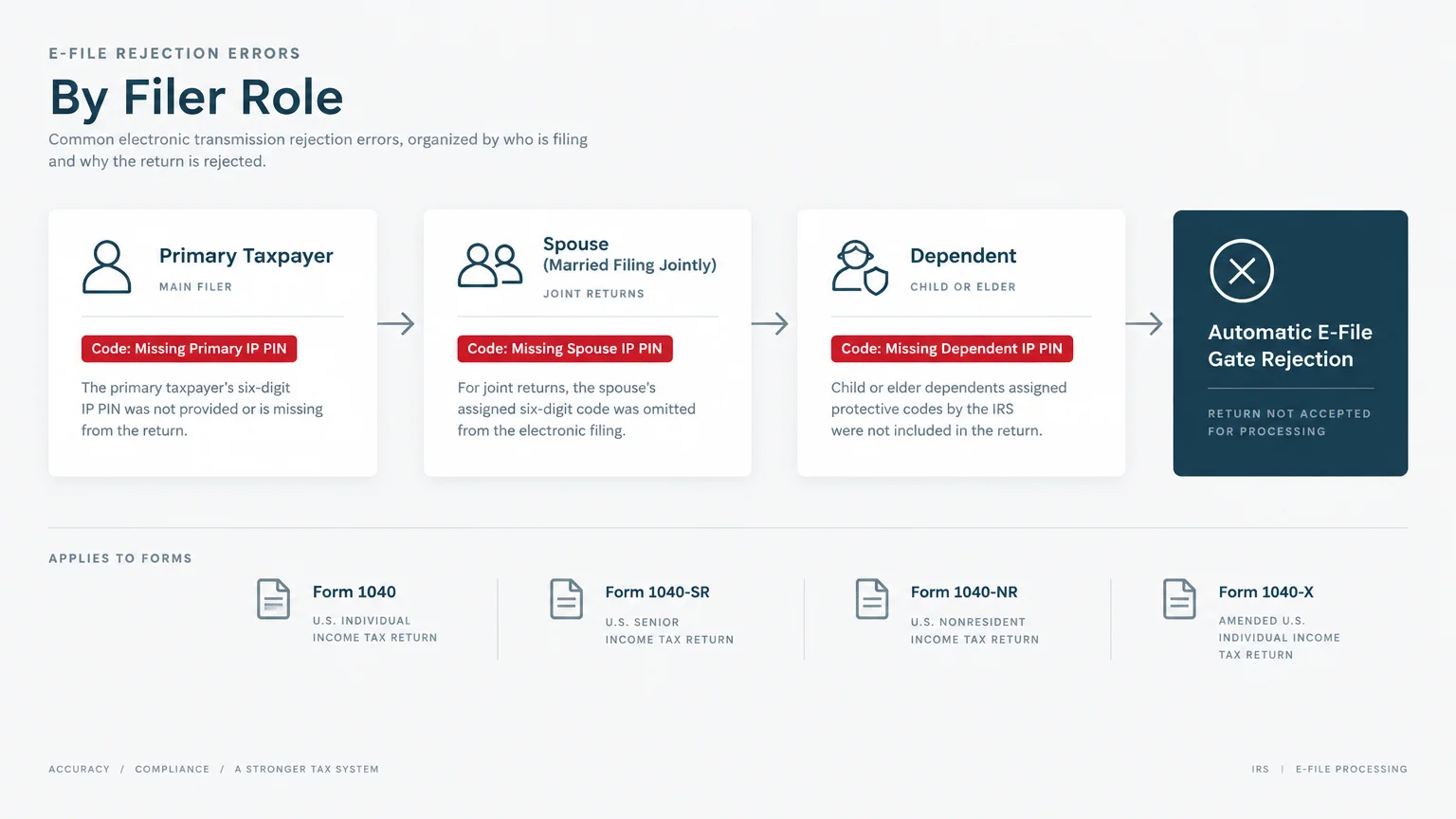
The IRS assigns distinct codes depending on whether the error involves the primary taxpayer, the spouse, or a claimed dependent.
- IND-180-01: The primary taxpayer was assigned an IP PIN, but the electronic return did not include it.
- IND-181-01: The primary taxpayer entered an IP PIN, but the number does not match IRS records for the current calendar year.
- IND-182-01: The secondary taxpayer (spouse) on a married filing jointly return has an assigned IP PIN that was omitted.
- IND-183-01: The spouse’s entered IP PIN does not match the IRS master database.
- IND-995: A dependent or qualifying child listed on the return has an assigned IP PIN that was not provided.
- IND-996: The IP PIN entered for a dependent does not match IRS records.
- IND-507-01: A dependent’s Social Security number was already claimed on another return, and a primary IP PIN is required to proceed.
Dependent reject codes frequently surprise parents and guardians. If your child was previously a victim of identity fraud or was issued an IP PIN, you must include their code on your return.
Dependent codes must appear on your main Form 1040, as well as accompanying schedules like Form 2441 for child care expenses and Schedule EIC. If you omit the child’s code on any of these schedules, your return will fail processing.
Reject code IND-507-01 involves a special duplicate-dependent rule. For Tax Year 2026 filings, the IRS allows an e-filed return to pass even if another filer already claimed the same dependent SSN.
However, that exception only works if the primary filer provides a valid current-year IP PIN. Without an IP PIN, a taxpayer facing a duplicate dependent dispute must file by paper.
For additional consumer protection tips on managing financial disputes, review guidelines from the Consumer Financial Protection Bureau.
E-Filing vs. Paper Filing When You Have an IP PIN
When an e-filed return is rejected, many taxpayers wonder whether they should simply print their forms and mail them. While paper filing is an option, it behaves very differently under IP PIN rules.
The table below summarizes the key differences between electronic filing and paper filing when an IP PIN is involved.
| Filing Feature | Electronic Filing (E-File) | Paper Filing (Mail) |
|---|---|---|
| Missing IP PIN Response | Immediate rejection | Accepted for manual review |
| Dependent IP PIN Required | Yes, on Form 1040 and schedules | No, not entered on paper forms |
| Processing Speed | Usually under 21 days | Typically 6 to 12 weeks or longer |
| Identity Screening | Automated instant check | Manual identity verification review |
| Refund Delay Risk | Zero delay once accepted | High risk of extended refund holds |
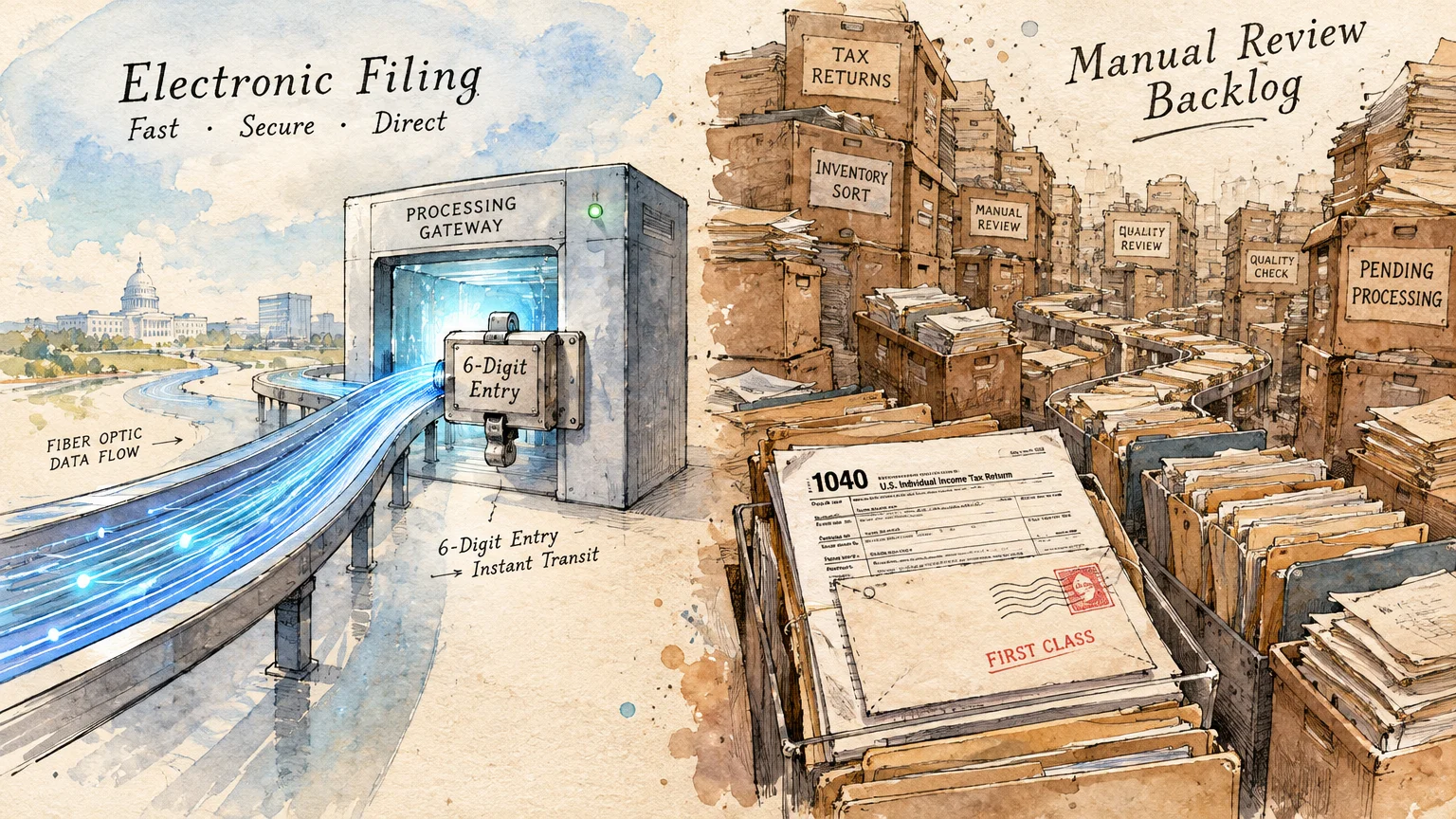
As the table illustrates, a paper return filed without an assigned IP PIN does not trigger an instant rejection. Instead, IRS staff must manually inspect the return to confirm your identity.
This manual review process frequently causes substantial delays in processing your return and issuing your tax refund. What could have been resolved in minutes online often turns into months of waiting by mail.
Paper filing also carries higher error rates due to physical data entry and postal delivery risks. Tax professionals generally recommend fixing your electronic submission rather than turning to paper.
Notice also that paper returns do not require you to input a dependent’s IP PIN. The paper Form 1040 does not contain a physical entry box for dependent protection codes.
If you cannot locate your child’s code and face an urgent deadline, paper filing avoids an instant electronic bounce. However, you should still expect extended processing timelines for your refund.
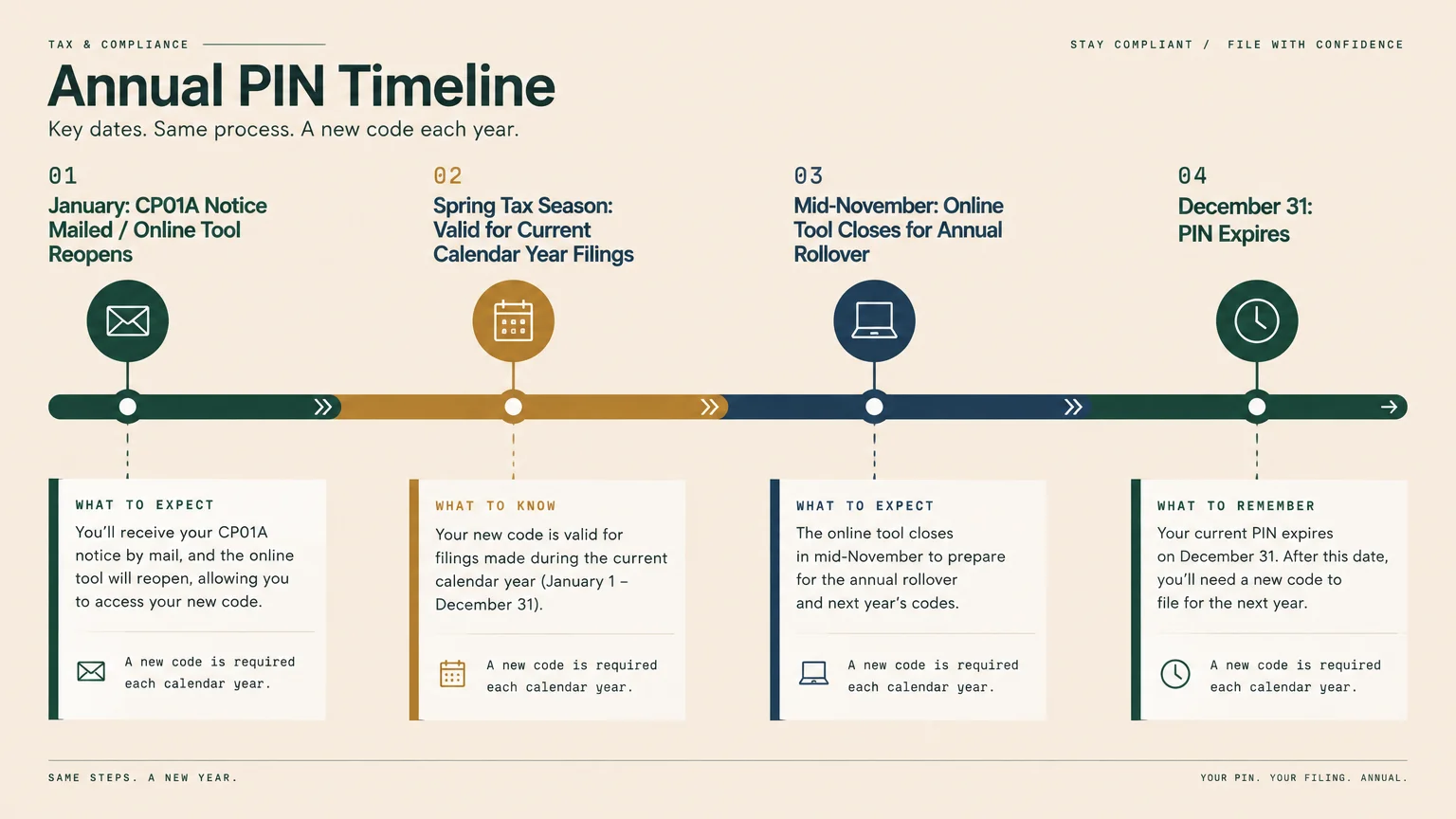
The Annual Expiration and Renewal Timeline
An IRS IP PIN is not a permanent, static password. Every code is strictly valid for a single calendar year.
Each January, the IRS generates a brand-new six-digit code for every active participant in the program. Your previous year’s code expires immediately and cannot be reused.
A crucial rule to remember is that you must use the IP PIN valid for the calendar year of filing, not the tax year being filed. Many filers get tripped up by this timing mechanism.
For example, if you submit a prior-year tax return or an amended return during 2026, you must enter your 2026 IP PIN. Entering the code from the original tax year will trigger an immediate reject code IND-181-01.
How you receive your new annual number depends entirely on how you entered the program. Confirmed identity theft victims and taxpayers who enrolled via paper forms receive Notice CP01A by mail.
The IRS mails Notice CP01A between mid-December and early January each year. Keep this notice in a secure location alongside your W-2s and 1099s.
If you opted into the program online after 2019, the IRS will not mail you a physical CP01A letter. Instead, you must log into your IRS Online Account each January to view your new code.
Keep in mind that newly generated codes become available in mid-January as the agency prepares for opening day. You cannot access your new filing season code during the late autumn months.
How to Retrieve a Lost or Forgotten IP PIN
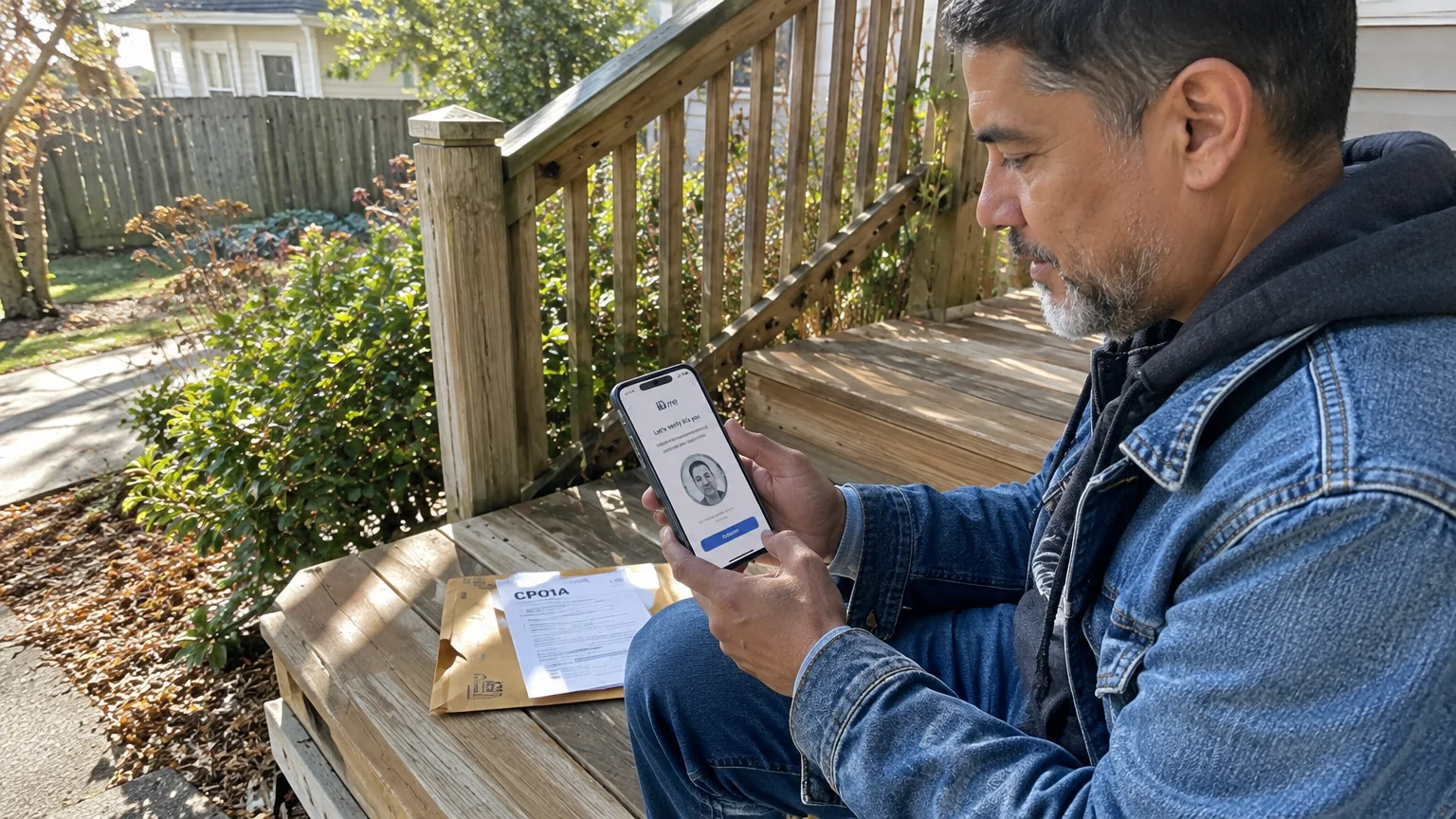
Losing your six-digit code right before filing can feel stressful, but recovery paths exist. Your primary retrieval method depends on your age and whether you have an active digital account.
Adult taxpayers can retrieve their IP PIN instantly through their IRS Individual Online Account. Simply log in, navigate to the Profile tab, and view your current six-digit number.
You can also access your code through the official IRS mobile app, which replaced IRS2Go in November 2026. The app provides identical access to your profile data on mobile devices.
However, the online retrieval system is not open year-round. Every autumn, the IRS shuts down the online IP PIN portal for planned system maintenance.
The online tool is completely offline from November 16, 2026, until mid-January 2027. If you attempt to access the tool during this planned shutdown, the system will be unavailable.
If you cannot use the online portal, you can request reissuance by telephone by calling 800-908-4490. Customer service representatives assist callers Monday through Friday between 7 a.m. and 7 p.m. local time.
International taxpayers can call 267-941-1000 for identity assistance. The telephone representative will verify your identity and mail your IP PIN to your address of record within 21 days.
Telephone reissuance is also unavailable during the annual year-end system maintenance period. Furthermore, representatives cannot reissue a code over the phone if you enrolled for the first time during the current calendar year.
Minors under the age of 18 cannot set up an IRS Online Account due to identity credentialing rules. Parents must call the toll-free assistance line to request a mailed replacement for a child’s lost PIN.
Keep these processing windows in mind when tax planning, as outlined in broad financial guides on NerdWallet.
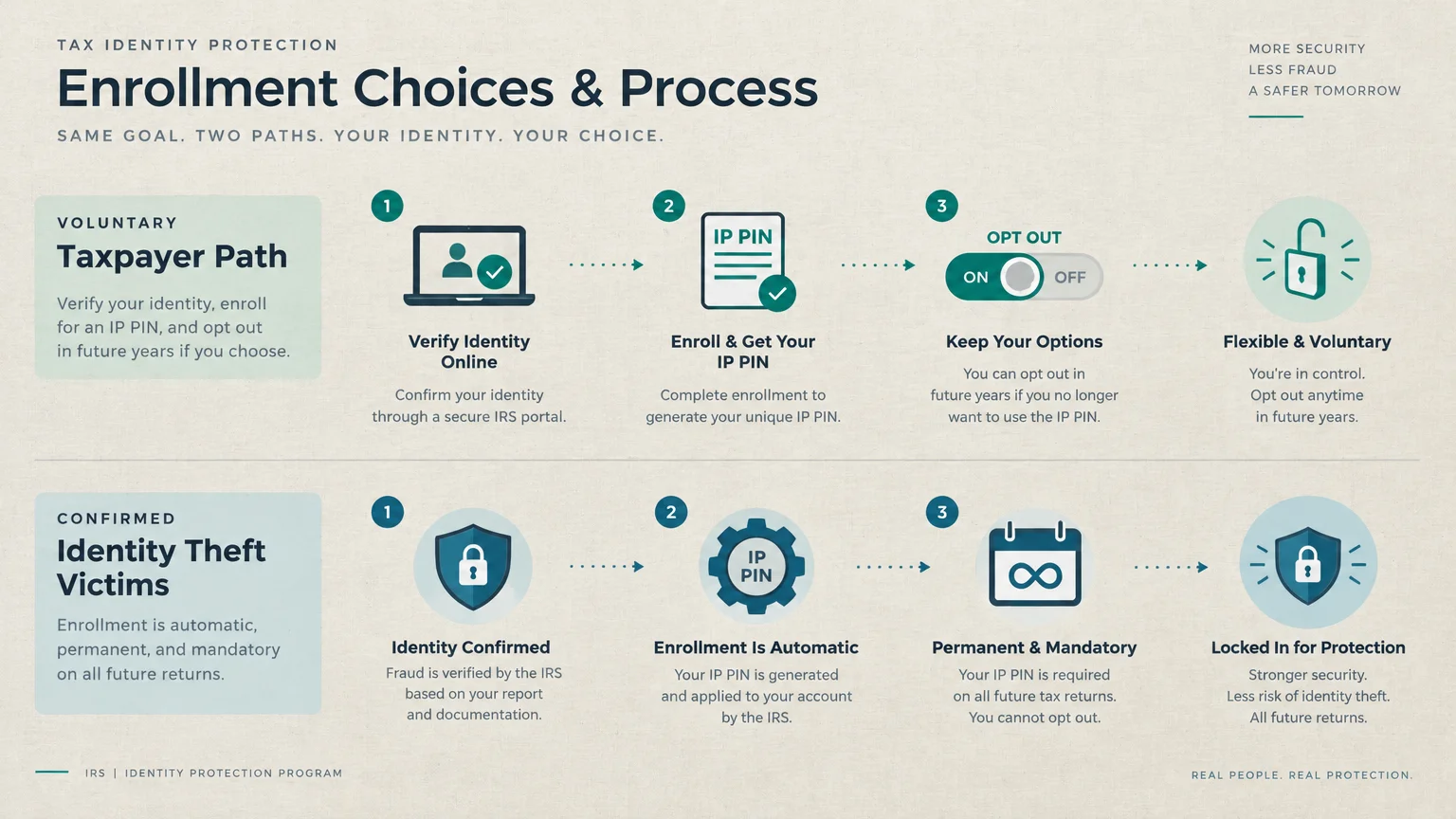
Enrolling in or Opting Out of the Program
If you have not been a victim of tax fraud but want extra protection, voluntary enrollment is straightforward. Any taxpayer with a valid SSN or ITIN can apply.
The fastest enrollment pathway is through your IRS Individual Online Account. The platform guides you through an identity proofing sequence to confirm your credentials.
During digital enrollment, you can choose continuous enrollment or a one-time enrollment. Continuous enrollment renews automatically every January, keeping your tax record protected year after year.
A one-time enrollment applies only to the current calendar year and expires on December 31. This option works well for taxpayers who want temporary protection during high-risk life transitions.
If you cannot satisfy the online identity verification standards, you can enroll by submitting Form 15227. This paper application requires your prior-year Adjusted Gross Income (AGI) to fall below specific thresholds.
To qualify for Form 15227, your prior-year AGI must be below $84,000 for individual filers or $168,000 for married couples filing jointly. Once the IRS receives the form, an agent calls you to verify your identity before mailing your code.
This paper application process generally takes between four and six weeks from submission to receipt. Plan well ahead of tax filing deadlines if you choose this route.
Taxpayers exceeding those income limits who cannot verify online must schedule an in-person appointment. You can make an appointment at a local Taxpayer Assistance Center by calling 844-545-5640.
What if you voluntarily enrolled in the program and later decide you no longer want to use an IP PIN? Voluntary participants can opt out through their online profile or by phone.
However, confirmed identity theft victims cannot opt out; protection remains permanent for their accounts. If you do opt out, you must wait up to 72 hours before submitting an e-filed return without a PIN.
To learn more about everyday budgeting and identity management, explore tax analysis articles at Bankrate.
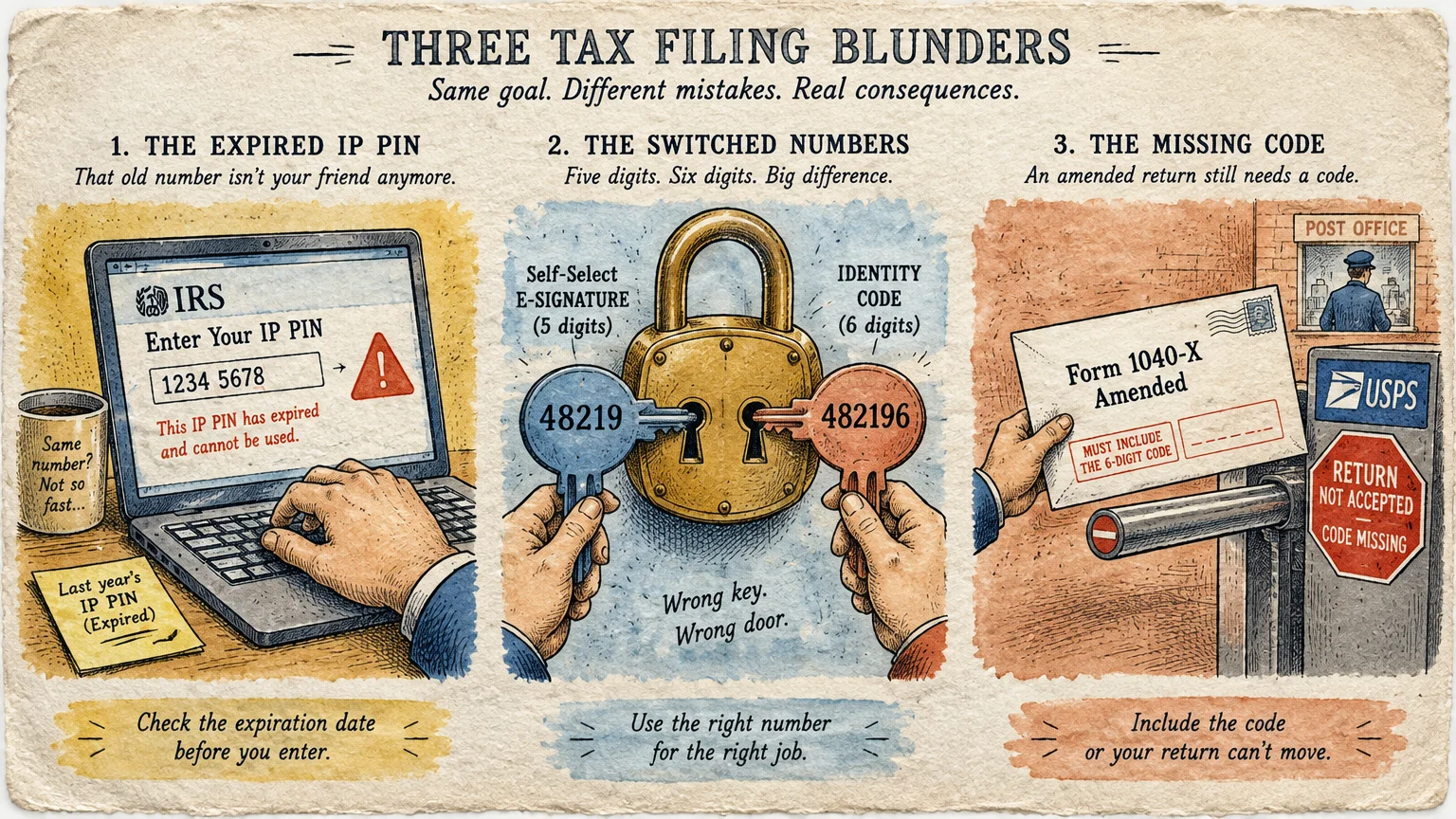
What Can Go Wrong: Critical Mistakes to Avoid
Managing an IP PIN is relatively simple, but small oversights can disrupt your entire filing process. Understanding common filing pitfalls helps protect both your data and your tax timeline.
The most frequent error is entering an expired IP PIN from a prior filing year. Remember that your number changes every January; last year’s code will always bounce.
Another common mistake is entering your IP PIN into the software box intended for your electronic signature PIN. Ensure you place the six-digit number into the dedicated Identity Protection field.
Failing to account for a spouse’s or dependent’s IP PIN also causes immediate rejections. Always ask family members listed on your return whether they received Notice CP01A before hitting submit.
Timing issues can also create filing headaches. When you first receive or retrieve an IP PIN, the national e-file database can take 24 to 48 hours to update.
If you attempt to transmit your return five minutes after generating a new PIN online, it might still reject. Give the IRS systems at least one full day to sync your new credentials.
Finally, stay vigilant against fraudulent communications seeking your security numbers. Identity thieves routinely create imposter schemes to steal newly generated IP PINs.
The IRS will never initiate contact with you by email, text message, or social media to demand your IP PIN. Any unsolicited message asking for your six-digit code is an aggressive scam attempt.
Treat your IP PIN with the same confidentiality as your online banking passwords. Only share the number with your trusted, verified tax preparer when you are ready to sign and file.

When to Consult a Professional
While most taxpayers can navigate the IP PIN process using commercial software, certain complex scenarios warrant professional guidance. Working with an enrolled agent or CPA can save weeks of frustration.
Consider seeking professional help if you find yourself facing any of the following circumstances:
- Persistent Unresolved Rejections: Your return repeatedly rejects under codes IND-181-01 or IND-183-01 despite entering the exact number from your IRS profile.
- Contested Dependent Claims: You and an ex-spouse share custody, and conflicting claims trigger reject code IND-507-01 during electronic filing.
- Active Identity Theft Investigations: You have unfiled prior-year returns while an open IRS fraud case remains unresolved in the agency’s backlog.
- Emergency Deadlines During Portal Outages: You must file time-sensitive forms while the IRS online retrieval system is offline for annual winter maintenance.
A licensed tax professional can access dedicated IRS practitioner priority lines to clarify account discrepancies. They can also structure paper submissions with proper documentation to minimize processing delays.
Frequently Asked Questions
Does my state tax return require an IRS IP PIN?
No, state tax returns do not use your federal six-digit IP PIN. The code is strictly designed for federal tax forms submitted directly to the IRS.
Some states offer their own separate identity protection programs, but those use state-specific credentials. Always check your state department of revenue guidelines for local requirements.
Can I file an extension using Form 4868 without an IP PIN?
Yes, you can file Form 4868 to request an automatic extension without providing an IP PIN. The IRS does not require identity protection codes on extension requests.
However, once you are ready to submit your full Form 1040, you must enter your valid six-digit code. The exemption applies only to the extension voucher itself.
What happens if my dependent was assigned an IP PIN but I don’t have it?
If you e-file without your dependent’s IP PIN, the IRS will reject the return under code IND-995. You cannot complete electronic filing without that number.
You can retrieve the number by phone, or file a paper return without the code. A paper return does not require a dependent PIN, though manual review may slow your refund.
How long does a newly retrieved IP PIN take to activate for e-filing?
Newly issued or retrieved IP PINs typically take 24 to 48 hours to fully sync across IRS electronic filing databases. Transmitting a return immediately after generating a code may cause a temporary mismatch.
If your return rejects right after retrieving a code, wait two business days and resubmit before requesting a new number. This allows the centralized processing system time to register your active profile.
Can I permanently cancel an IP PIN once enrolled?
You can opt out of the IP PIN program only if you enrolled voluntarily and have never been a confirmed identity theft victim. Opting out is done through your IRS Online Account.
Confirmed fraud victims are permanently enrolled to safeguard their accounts against recurring attacks. Once an account is compromised, the IRS keeps mandatory authentication in place permanently.
Keeping track of your tax credentials ensures that your filing experience remains smooth and stress-free. Take a moment today to verify your IRS account access and locate your current documentation.
The information in this guide is meant for educational purposes. Your specific circumstances—including income, debt, tax situation, and goals—may require different approaches. When in doubt, consult a licensed professional.
Last updated: November 2026. Financial regulations and rates change frequently—verify current details with official sources.