Helping your family financially brings immense personal joy, but generous intentions can quietly derail your retirement security. You can support your adult children and grandchildren without jeopardizing your hard-earned financial independence.
A June 2026 AARP study reveals that 90% of grandparents provide direct financial assistance, spending an average of $2,654 annually. That amount easily eclipses the average monthly retiree Social Security benefit of $2,071.
When financial support turns into unchecked sacrifice, everyone suffers. Avoiding these ten common money mistakes protects your nest egg while keeping family bonds strong.

1. Depleting Retirement Accounts Before Securing Your Own Future
Your adult children can borrow funds for college, mortgages, and unexpected emergencies. You cannot take out a loan to fund your retirement.
Pulling extra cash from a traditional IRA or 401(k) pushes you into higher tax brackets. It also triggers permanent losses in compound growth that you cannot recover later in life.
Unplanned withdrawals can also raise your Medicare Part B and Part D premiums through Income-Related Monthly Adjustment Amounts (IRMAA). A generous gift today might generate an expensive premium surcharge next year.
“You must put your own financial oxygen mask on first before assisting your adult children or grandchildren.” — Suze Orman, Personal Finance Author
Calculate your guaranteed lifetime income before promising monthly financial assistance to anyone. Your pension, Social Security, and conservative portfolio drawdowns must cover your baseline living expenses first.
If helping family forces you to cut necessary healthcare visits or downsize your emergency cushion, you are overextending yourself. Loving your family means ensuring you never become financially dependent on them later.
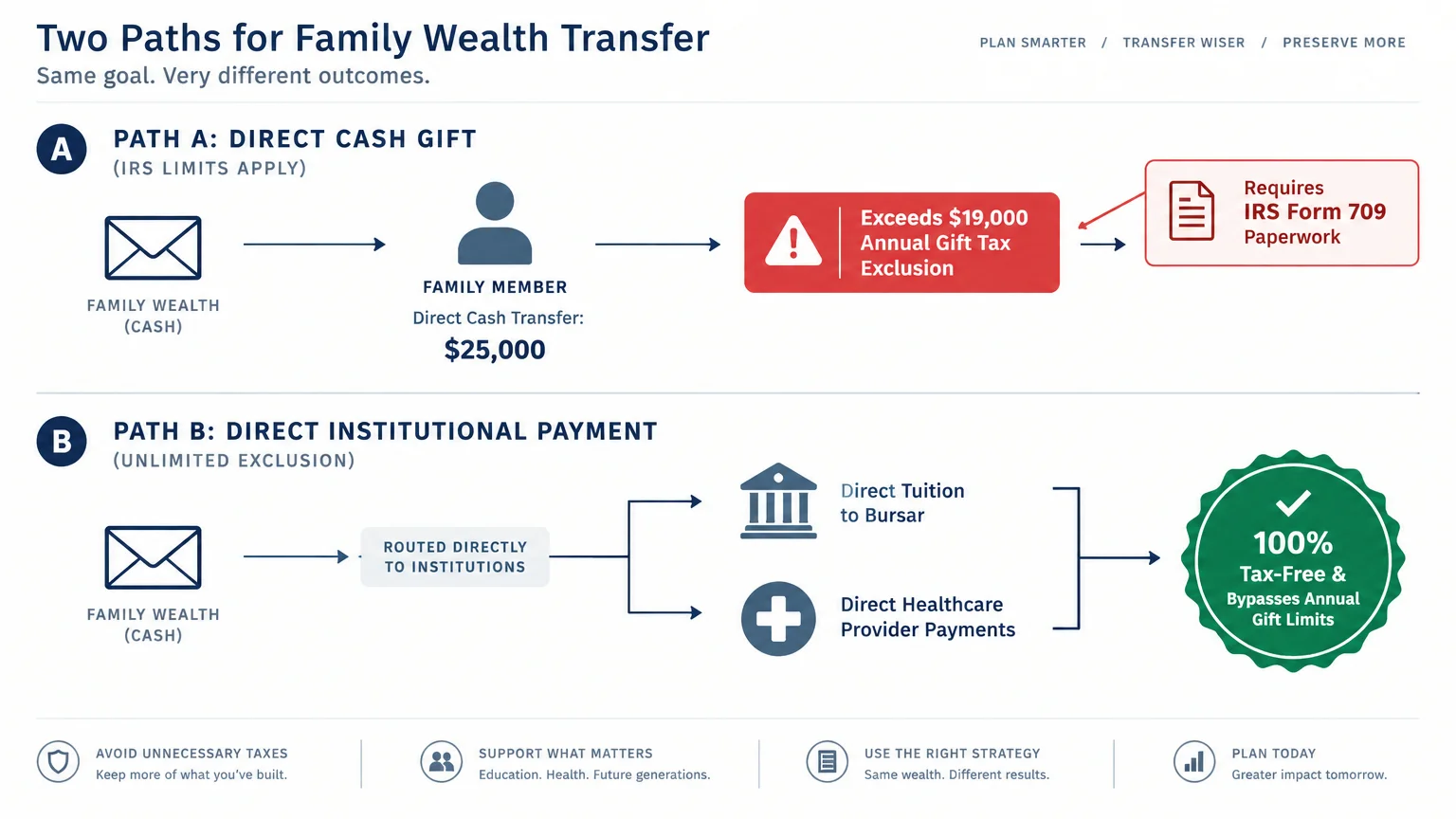
2. Handing Over Cash Instead of Paying Institutions Directly
Writing a personal check to a grandchild for college or surgery seems simple and personal. However, direct cash transfers can trigger unnecessary tax reporting headaches.
For tax year 2026, the Internal Revenue Service (IRS) caps the annual gift tax exclusion at $19,000 per recipient. Married couples filing jointly can give up to $38,000 per recipient without filing gift tax paperwork.
If you hand your grandchild a check for $25,000, you must file IRS Form 709. While you will not owe immediate out-of-pocket tax, you needlessly deplete your lifetime exemption.
You can bypass gift limits entirely by making direct payments to qualified institutions. The tax code provides an unlimited exclusion for medical bills paid directly to healthcare providers and tuition paid directly to educational institutions.
Paying an orthopedic surgeon or university bursar directly allows you to transfer substantial wealth tax-free. Your generosity stays completely invisible to annual gift tax limitations.
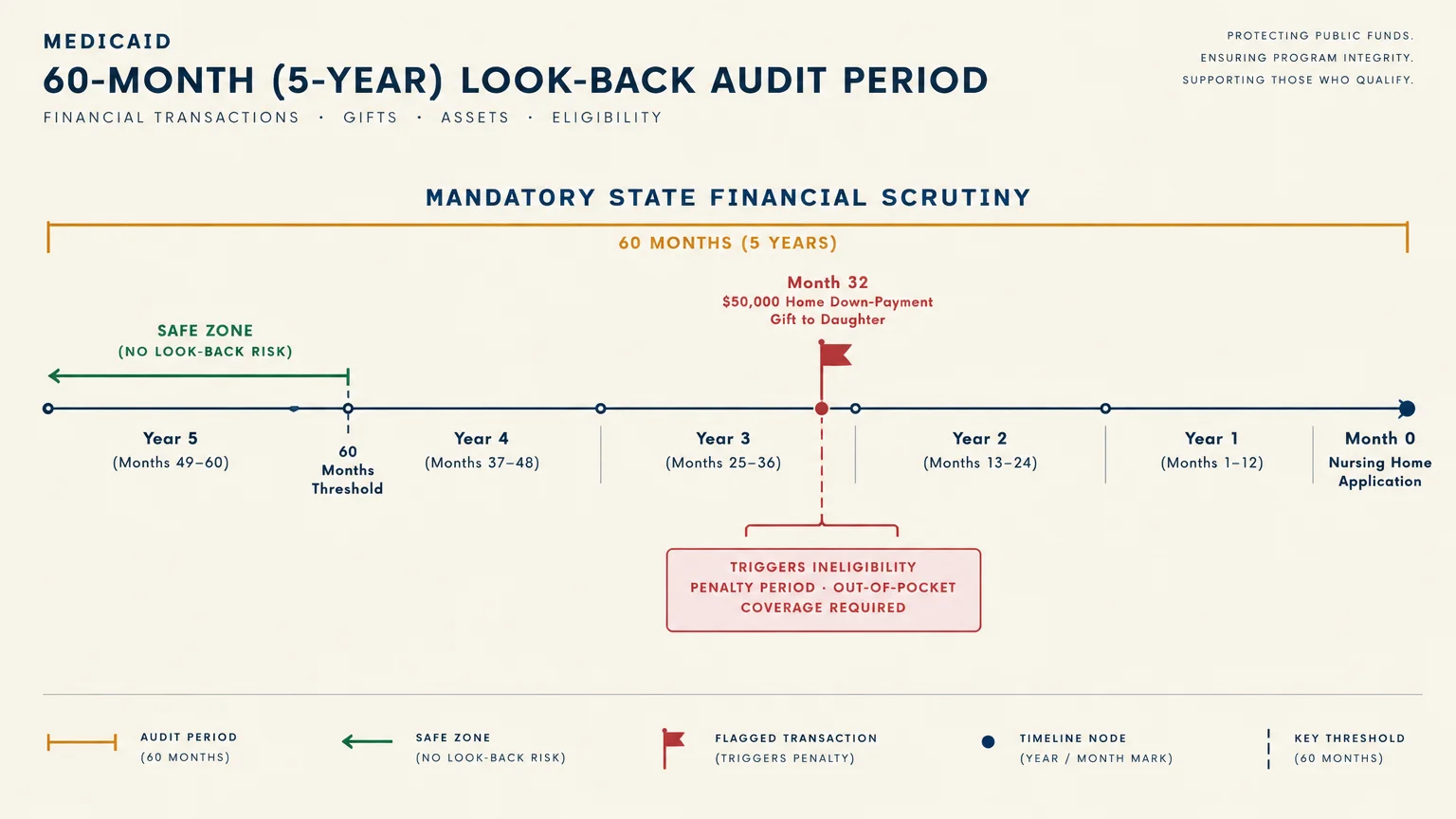
3. Overlooking the Medicaid 60-Month Look-Back Period
Many grandparents fail to anticipate the staggering cost of skilled nursing care down the road. Transferring money to family members can permanently disrupt your safety net.
Long-term care Medicaid covers nursing home stays once you exhaust personal assets. However, states enforce a strict 60-month look-back period on all asset transfers.
Caseworkers review every financial transaction over the previous five years. Any cash gifts, property deed transfers, or discounted sales to family members trigger severe penalty periods of ineligibility.
A $50,000 gift to help your daughter purchase a home could leave you ineligible for nursing home coverage for several months. Your family would have to pay thousands out of pocket to cover the shortfall.
Even states revising their program guidelines maintain tight scrutiny. For instance, California reinstated asset limits of $130,000 for individuals in January 2026, highlighting the renewed regulatory focus on preserving resources.

4. Lending Money Without a Promissory Note or Required Interest
Lending money to family members on a verbal agreement often damages family harmony. It also invites unwanted scrutiny from federal tax authorities.
The IRS treats interest-free family loans exceeding $10,000 as taxable events under imputed interest rules. If you fail to charge adequate interest, the IRS considers that unpaid interest as taxable income to you.
To keep the loan compliant, you must charge at least the Applicable Federal Rate (AFR). Published monthly under Revenue Ruling 2026-19, the annual compounding AFR minimums for October 2026 are:
- Short-Term Loans (up to 3 years): 4.25%
- Mid-Term Loans (3 to 9 years): 4.61%
- Long-Term Loans (exceeding 9 years): 5.22%
Draft a legally binding promissory note outlining the principal balance, interest rate, and strict monthly repayment terms. Both parties must sign the document to ensure legitimacy.
Having clear legal paperwork protects family relationships by eliminating awkward assumptions. If the borrower defaults, documented proof allows you to claim a non-business bad debt deduction on your tax return.

5. Misunderstanding Modern 529 College Savings Rules
Grandparents love contributing to education funds, but many still follow outdated financial aid rules. Modern tax laws offer powerful flexibilities you should utilize.
Under the FAFSA Simplification Act, distributions from grandparent-owned 529 plans no longer count as untaxed student income. Grandparents can now pay college expenses directly from their 529 without shrinking federal financial aid packages.
However, beware of private colleges that use the CSS Profile for institutional aid. Many private universities continue to assess grandparent-owned 529 plans when distributing institutional grants and scholarships.
You can also take advantage of 529 superfunding rules. For 2026, an individual can contribute up to $95,000—or $190,000 for a married couple—in a single year using a five-year gift tax averaging election.
Recent legislation provides additional flexibility for leftover educational funds. You can spend up to $20,000 annually per student on qualifying K–12 expenses under current rules.
Furthermore, the SECURE 2.0 Act allows beneficiaries to roll over up to $35,000 in unused 529 funds into a Roth IRA. This rule eliminates the risk of tax penalties if your grandchild chooses not to attend college.

6. Co-Signing Student Loans, Car Notes, or Mortgages
Co-signing a loan for a family member feels like a safe, non-cash way to help. In reality, co-signing is one of the fastest ways to destroy your credit and savings.
When you co-sign, you become 100% legally liable for the entire debt balance. The lending institution views you as equally responsible for every single monthly payment.
If your child or grandchild misses payments, the lender reports the delinquency on your personal credit report immediately. Your credit score can drop by dozens of points overnight.
The Consumer Financial Protection Bureau (CFPB) warns that lenders pursue co-signers aggressively when primary borrowers fall behind. Creditors can garnish your bank accounts or place liens against your personal property.
Co-signing also inflates your debt-to-income ratio. This legal obligation can prevent you from refinancing your home or securing emergency credit when you need it most.

7. Creating Sibling Resentment Through Secret or Unequal Giving
Financial assistance rarely remains secret within a family. Bailing out one struggling child while withholding funds from a financially responsible child breeds long-term resentment.
Siblings often track perceived favoritism for decades. When parents pass away, unaddressed financial disparities frequently cause ugly estate litigation and broken family ties.
Maintain transparency by discussing your financial philosophy openly with your adult children. Explain clearly whether specific gifts represent early inheritance advances or separate gifts.
If you give one child a significant down payment for a home, document the transfer clearly. Update your estate planning documents to adjust final inheritance distributions accordingly.
Using an equalization clause in your revocable living trust prevents bitter post-mortem arguments. Your heirs will appreciate your fairness and honesty during probate settlement.

8. Funding Chronic Dependence Instead of Financial Literacy
Providing routine cash bailouts often enables destructive financial habits instead of solving root problems. Paying off recurring credit card balances does not teach budgeting discipline.
Data from Generations United and the U.S. Census Bureau shows approximately 2.5 million children live in grandfamilies where grandparents raise them directly. Grandparents often absorb massive household costs on fixed retirement budgets.
If adult children struggle with recurring overspending, cash handouts only postpone the inevitable financial reckoning. You must establish firm boundaries to encourage independence.
Offer constructive assistance by funding practical tools rather than handing out unrestricted cash. Pay for professional sessions with the National Foundation for Credit Counseling (NFCC) or reputable financial planners.
You can also incentivize positive financial behaviors through matching programs. Offer to match whatever emergency savings or retirement contributions your adult child saves independently over twelve months.
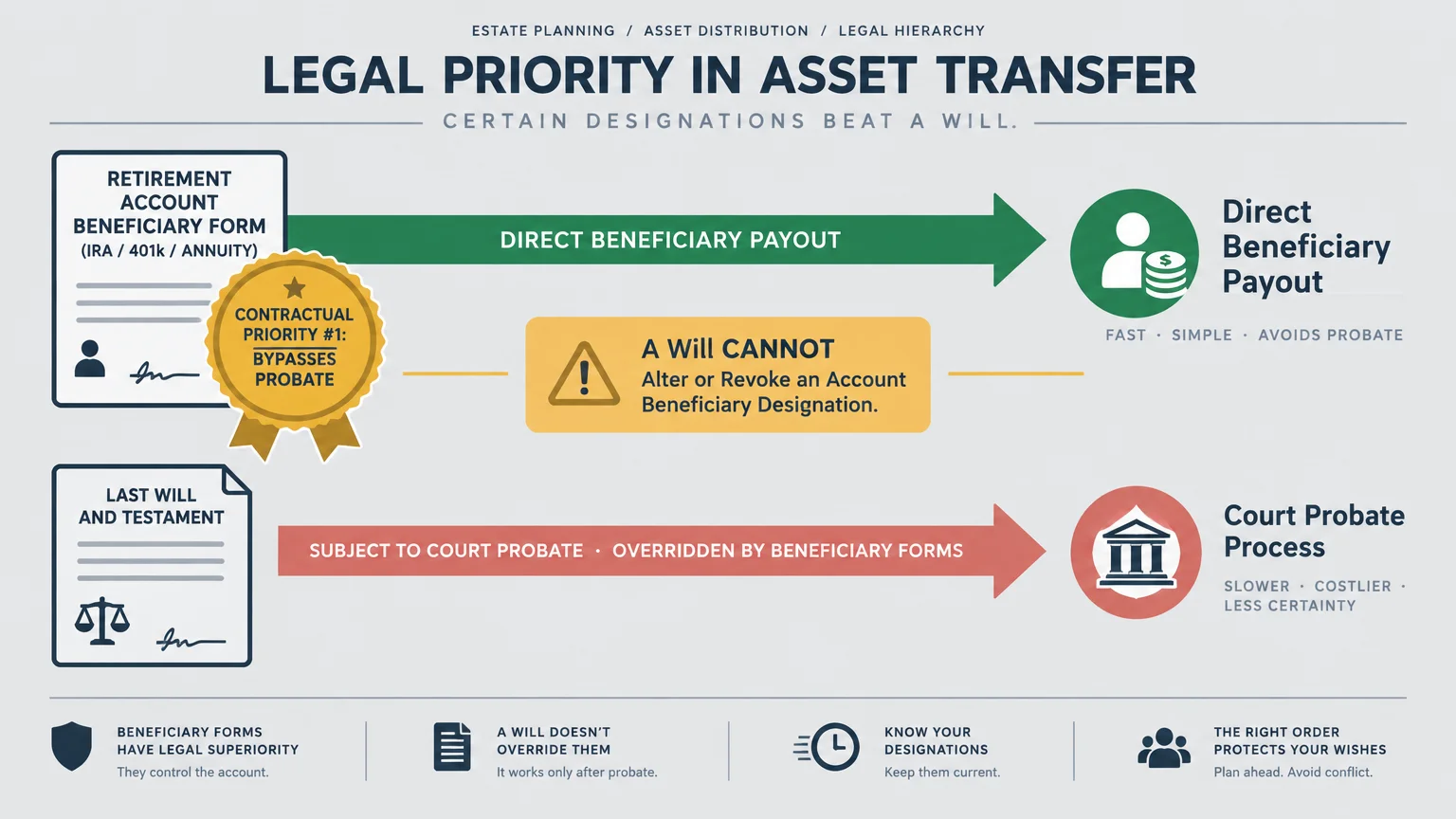
9. Ignoring Beneficiary Designations on Retirement Accounts
Many grandparents assume that writing an up-to-date will guarantees their assets pass smoothly to grandchildren. This critical estate planning misconception causes massive administrative headaches.
Beneficiary designations on 401(k) plans, traditional IRAs, brokerage accounts, and life insurance policies override instructions written in a will. If your will names your grandchildren but your IRA lists an ex-spouse, the IRA custodian pays the ex-spouse.
Review your account designations annually to ensure they reflect your current intentions. Verify whether secondary and contingent beneficiaries are assigned properly across all investment accounts.
Understand the legal distinction between per stirpes and per capita distribution designations. A per stirpes designation ensures a deceased child’s share passes down directly to their children.
Naming minor grandchildren directly as primary account beneficiaries can force the family into court-supervised conservatorships. Work with an estate attorney to establish proper custodial accounts or family trusts instead.

10. Sacrificing Boundaries Out of Emotional Guilt
Emotional guilt often pressures seniors into spending money they cannot afford to lose. Saying no to requests for cash can feel uncomfortable or unnatural.
The June 2026 AARP caregiving report shows grandparents contribute $731 billion in unpaid caregiving alongside $172 billion in direct cash support. Your non-monetary contributions carry profound economic value.
“The most important thing to do if you find yourself in a hole is to stop digging.” — Warren Buffett, Chairman and CEO of Berkshire Hathaway
Practicing loving, firm boundaries preserves both your dignity and your financial solvency. You do not need to explain your account balances when declining a loan request.
Offer alternative support that does not involve writing checks. Providing after-school childcare, preparing home-cooked meals, or mentoring grandchildren in career development provides invaluable assistance without depleting your retirement.
Frame your financial boundaries around your desire to avoid becoming a financial burden on your children later in life. Frame your frugality as an act of generational love.

Comparing Family Financial Support Strategies
Navigating financial help requires choosing the right vehicle for your specific goals. Review the table below to compare the tax and practical consequences of popular funding methods under 2026 rules.
| Funding Strategy | 2026 IRS Rules & Limits | Tax Implications | Best Used For |
|---|---|---|---|
| Direct Cash Gift | $19,000 per recipient ($38,000 married) | Amounts above annual limit require Form 709 reporting | Modest milestone gifts and small family emergencies |
| Direct Institution Payment | Unlimited dollar amount | Exempt from gift tax exclusions and reporting | Tuition costs and large hospital or dental expenses |
| 529 Education Superfunding | Up to $95,000 per grandchild ($190,000 married) | Uses five-year gift averaging election; no lifetime cap hit | Long-term college and vocational school funding |
| Formal Intra-Family Loan | Must charge IRS AFR rates (4.25% to 5.22%) | Interest earned counts as taxable income to lender | First-time home purchases or business startup capital |

Avoiding Common Errors in Family Assistance
Before transferring significant funds to relatives, evaluate your strategy using a systematic checklist. Addressing blind spots early protects your finances from permanent damage.
- Audit Personal Reserves: Maintain a minimum of six to twelve months of living expenses in liquid high-yield savings before helping anyone.
- Consult Tax Professionals: Verify whether structured transfers trigger state gift taxes, capital gains issues, or estate reporting duties.
- Formalize All Loans: Never distribute money without signed promissory notes specifying repayment timelines and interest rates.
- Protect Healthcare Eligibility: Avoid transferring assets within 60 months of applying for Medicaid long-term care assistance.
- Communicate Decisions Openly: Maintain transparent records with all family members to prevent estate disputes among heirs.

When DIY Isn’t Enough
While basic budgeting and gifting decisions remain straightforward, certain family financial situations demand professional guidance. You should schedule a consultation with an attorney, CPA, or Certified Financial Planner (CFP) under the following circumstances:
- Special Needs Beneficiaries: Direct gifts can instantly disqualify a disabled grandchild from Supplemental Security Income (SSI) or Medicaid benefits. An attorney can establish a qualified Special Needs Trust.
- Approaching Nursing Home Needs: If your health deteriorates and long-term care becomes likely within five years, consult an elder law attorney before making transfers.
- Structuring Complex Property Loans: Drafting an intra-family mortgage requires formal recording with local county registries to satisfy IRS mortgage deduction regulations.
- Blended Family Estate Planning: If you have stepchildren, half-siblings, or multiple marriages, professional trust planning prevents unintentional disinheritance.
Frequently Asked Questions
How much money can a grandparent gift tax-free in 2026?
An individual grandparent can give up to $19,000 per recipient per calendar year without filing a gift tax return. Married couples can combine their exclusions to give up to $38,000 per recipient without reducing their lifetime exemption.
Does giving money to my grandchild reduce their college financial aid?
Cash gifts deposited directly into a student’s checking account count as untaxed student income, reducing financial aid eligibility. However, distributions from grandparent-owned 529 plans no longer affect federal aid calculations on the FAFSA.
Can I pay my grandchild’s private high school tuition tax-free?
You can pay an unlimited amount tax-free if you send tuition payments directly to the school administration. Alternatively, you can withdraw up to $20,000 annually per student from a 529 plan for K–12 expenses under current rules.
What should I do if a family member refuses to repay a personal loan?
If you hold a legally executed promissory note and exhaust reasonable collection efforts, you can document the default. You may then claim a non-business bad debt deduction against your capital gains on your federal tax return.
Final Steps for Protecting Your Wealth and Family
Supporting your family should bring joy rather than financial stress. Take time this week to review your fixed monthly expenses and audit your current estate planning designations. Establishing sustainable boundaries ensures your generosity empowers your family without endangering your retirement independence.
This article provides general financial education and information only. Everyone’s financial situation is unique—what works for others may not work for you. For personalized advice, consider consulting a qualified financial professional such as a CFP or CPA.
Last updated: October 2026. Financial regulations and rates change frequently—verify current details with official sources.