A dream vacation should create lifelong memories, not drain your emergency savings. When unexpected medical emergencies, cancellations, or travel disruptions strike, the right policy shields your bank account from catastrophic expenses.
Many travelers ask themselves, do I need travel insurance before booking expensive getaways? The answer depends on your destination, health coverage, prepaid costs, and appetite for financial risk.
Recognizing the warning signs of an underprotected trip helps you protect your hard-earned dollars. Here are ten clear signs you need travel insurance for your upcoming travels.
1. You Are Traveling Outside the United States
Domestic health insurance plans rarely provide comprehensive medical coverage outside the United States. Most private employer plans and preferred provider networks treat international treatment as completely out-of-network care.
If you suffer an injury abroad, foreign hospitals often demand immediate payment before rendering treatment. Standalone travel medical insurance reimburses emergency clinical bills and coordinates vital communications with local doctors.
Without adequate coverage, a broken limb or severe infection can saddle you with thousands in debt. You must arrange independent protection to navigate unfamiliar foreign healthcare systems.
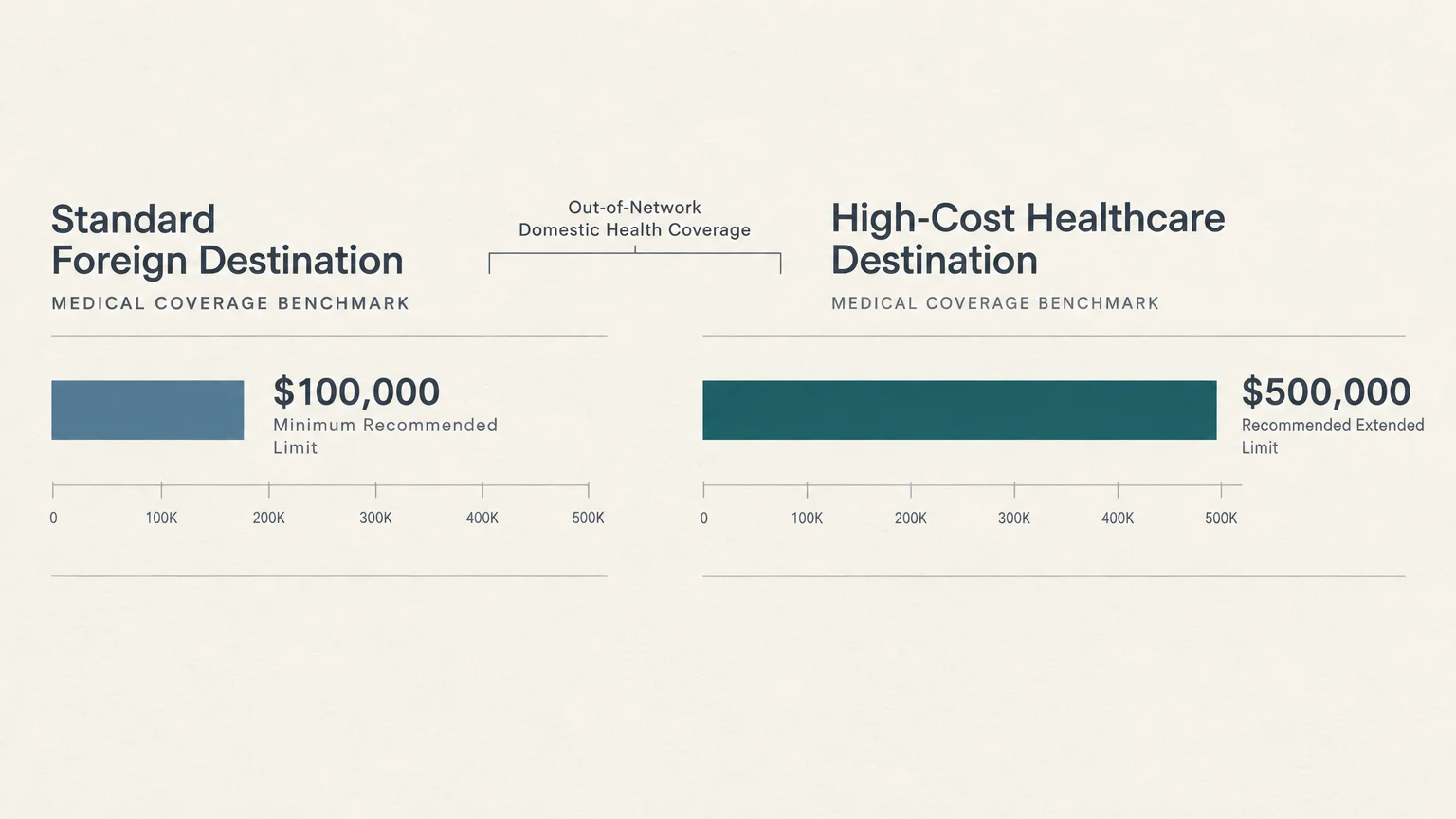
Industry benchmarks recommend securing at least $100,000 in foreign emergency medical benefits. If you travel to destinations with expensive private healthcare systems, consider raising that limit to $500,000.
2. You Rely on Medicare for Your Healthcare Coverage
Original Medicare provides virtually no medical coverage outside the fifty United States and its territories. American seniors traveling overseas face total out-of-pocket exposure for clinic visits, inpatient admissions, and prescription drugs.
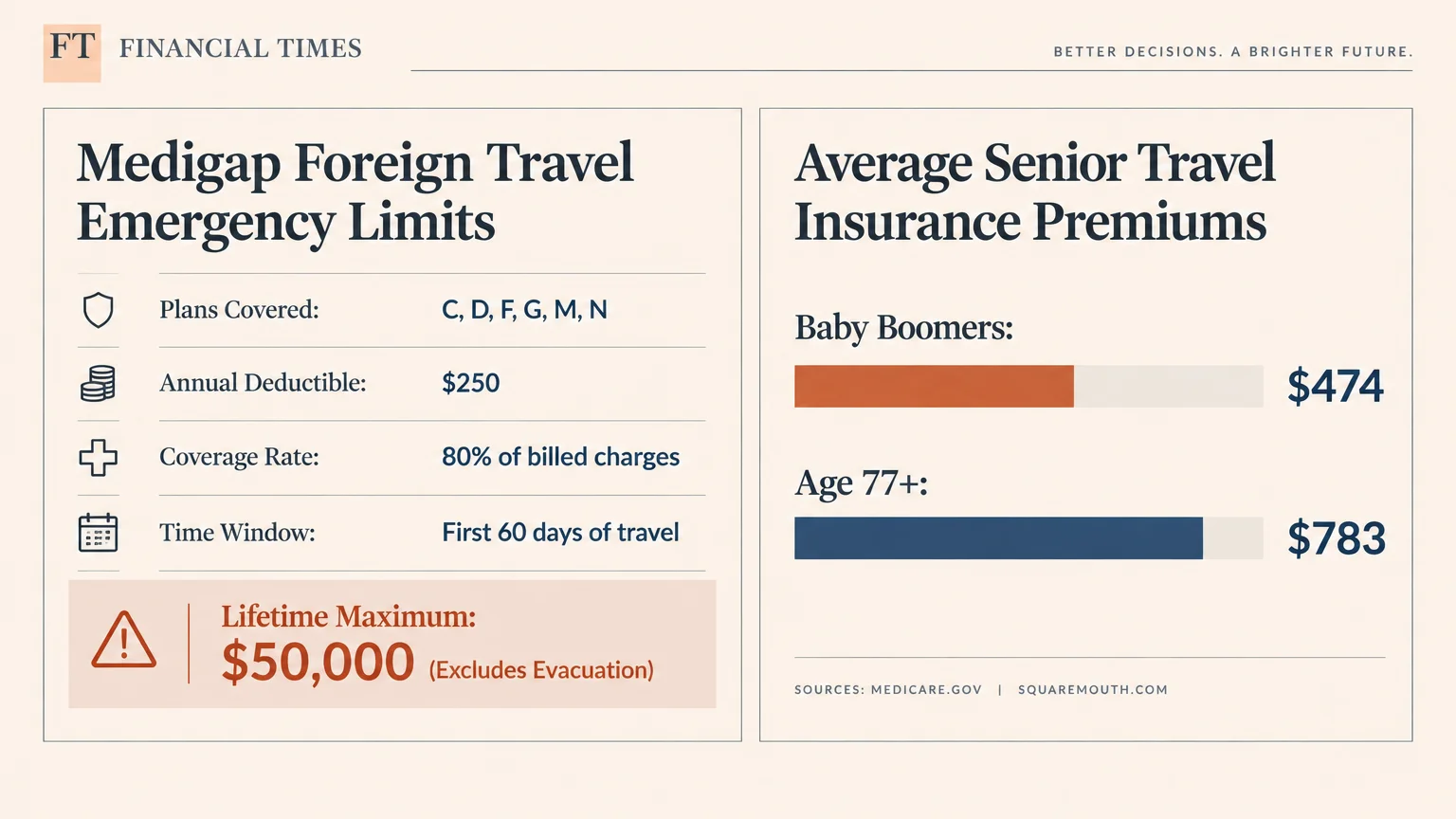
Certain Medigap supplement policies supply foreign emergency benefits, but their scope remains strictly limited. According to Medicare.gov, Medigap Plans C, D, F, G, M, and N cover 80% of billed charges after a $250 annual deductible.
This supplement protection carries a $50,000 lifetime limit and only covers emergencies occurring during the first 60 days of your journey. More importantly, Medigap plans completely exclude emergency medical evacuation back to American hospitals.
Securing specialized travel insurance for seniors fills these massive coverage gaps. Data from InsureMyTrip indicates that average premiums reach $474 for Baby Boomers and $783 for travelers aged 77 and older.
While senior premiums reflect increased medical risk, going uninsured exposes your retirement nest egg to ruinous overseas medical bills. A single hospital admission abroad can easily erase years of accumulated retirement savings.

3. You Have Sunk Significant Cash into Nonrefundable Bookings
Nonrefundable airline tickets, boutique hotel reservations, and chartered excursions pose considerable financial hazards. If an acute illness forces you to stay home, standard booking vendors retain your upfront payments.
Investing in trip cancellation insurance safeguards your prepaid funds against unexpected disasters. Covered triggers typically include sudden personal illness, severe family emergencies, jury duty, or primary carrier default.
Federal airline regulations offer limited financial relief for canceled flights, but they ignore the rest of your itinerary. The Consumer Financial Protection Bureau emphasizes understanding contract refund rules before paying upfront deposits.
Under Department of Transportation regulations effective October 28, 2024, airlines must issue automatic cash refunds if they cancel or significantly change a flight. The rule defines significant changes as delays of 3 or more hours domestically and 6 or more hours internationally.
Airlines must refund credit card purchases within 7 business days and other payment methods within 20 calendar days. However, federal rules do not reimburse your missed prepaid hotel stays or nonrefundable tour fees.
Trip cancellation coverage reimburses those collateral losses when flight disruptions ruin a broader vacation. Carrying independent coverage bridges the gap between airline refunds and your total out-of-pocket investment.

4. Your Itinerary Involves a Cruise or Remote Wilderness
Cruises and wilderness expeditions create severe medical extraction challenges. Shipboard infirmaries operate outside domestic insurance networks and frequently bill thousands of dollars directly to your onboard folio.
If your health deteriorates at sea, maritime doctors must arrange immediate airlift transport to a trauma center. A helicopter rescue or private air ambulance easily costs between $50,000 and $200,000.
You should never board a ship without adequate emergency transportation protection. Medical experts recommend securing a policy that includes at least $100,000 to $500,000 in emergency medical evacuation coverage.
Evacuation benefits also cover the exorbitant cost of flying a medical escort home with you during recovery. Without this coverage, you must coordinate and fund complex international medical transfers entirely out of pocket.
5. You Live With a Chronic or Pre-Existing Medical Condition
Standard policies routinely exclude claims stemming from medical conditions you managed prior to buying coverage. Insurers evaluate your medical history using a look-back window that typically spans 60 to 180 days before purchase.
If a doctor altered your prescription dosage or treated recurring symptoms during that window, insurers classify the condition as pre-existing. Any subsequent claim related to that ailment faces automatic denial.
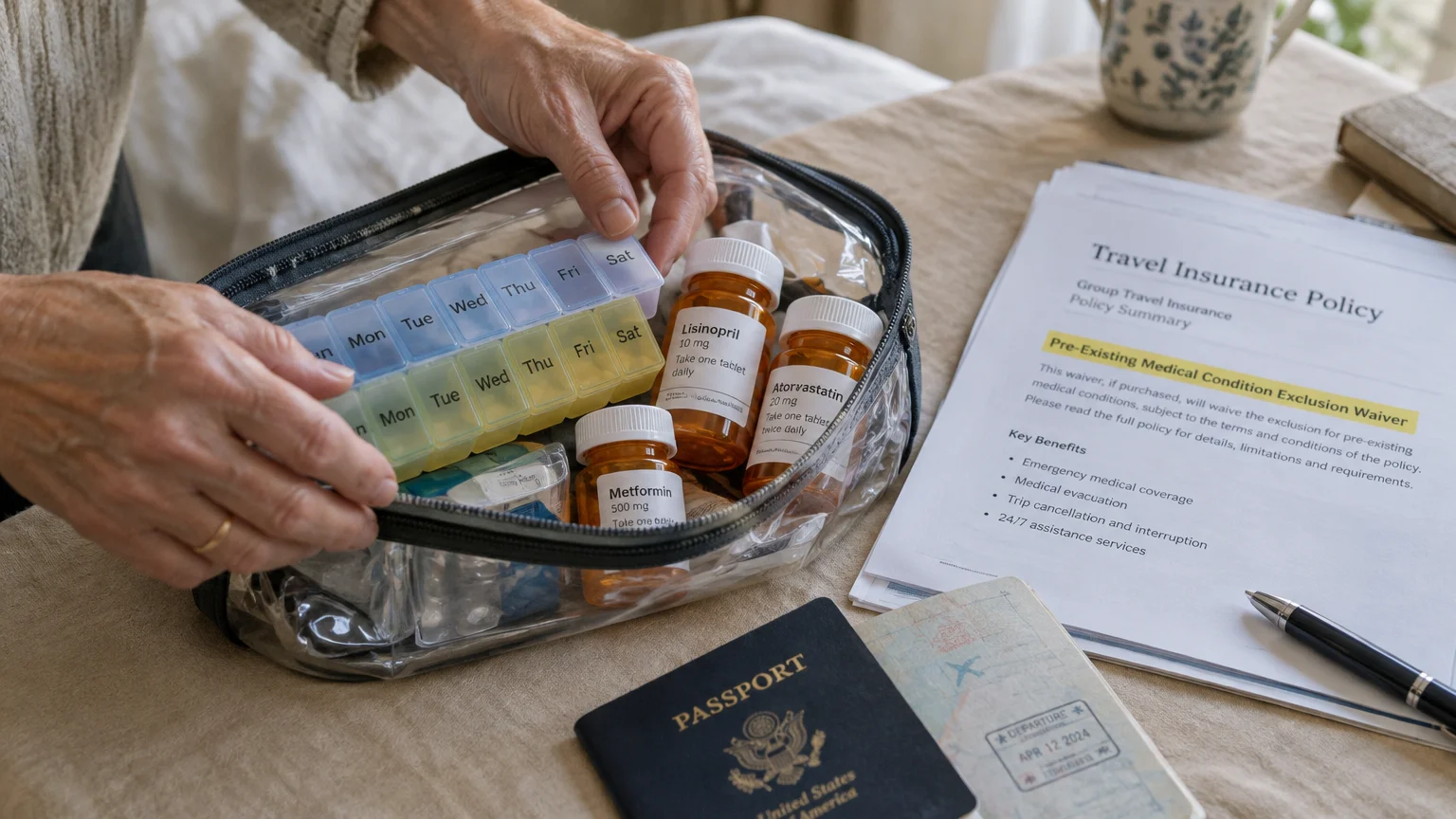
You can neutralize this exclusion by securing a pre-existing medical condition exclusion waiver. To qualify, you must purchase your policy within 14 to 21 days of making your initial trip deposit.
You must also insure 100% of your prepaid, nonrefundable trip costs and remain medically fit to travel upon policy purchase. Missing this narrow purchase window leaves your chronic condition completely unprotected.

6. Your Travel Dates Align With Severe Storm Seasons
Summer hurricane cycles in the Caribbean and winter blizzards across North America routinely disrupt travel networks. Severe weather cancels flights, strands passengers overnight, and creates cascading connection failures across complex itineraries.
Department of Transportation rules require airlines to refund baggage fees if bags arrive 12 or more hours late domestically. For international journeys, airlines must refund baggage fees for delays between 15 and 30 hours.
Even so, airlines bear no legal obligation to pay for alternate carriers or missed hotel bookings. Comprehensive travel insurance reimburses stranded travelers for unexpected lodging, ground transportation, and replacement meals.
Upcoming regulatory adjustments scheduled for February 1, 2027, will reclassify ten flight disruption categories as uncontrollable. This change will reduce the circumstances under which airlines voluntarily supply hotel rooms and meal vouchers during overnight delays.
Carrying comprehensive travel delay and trip interruption coverage provides independent financial protection during widespread weather groundings. You can book an available hotel room immediately, knowing your insurer will reimburse reasonable receipts.
7. Your Prepaid Trip Costs Exceed What Your Savings Can Absorb
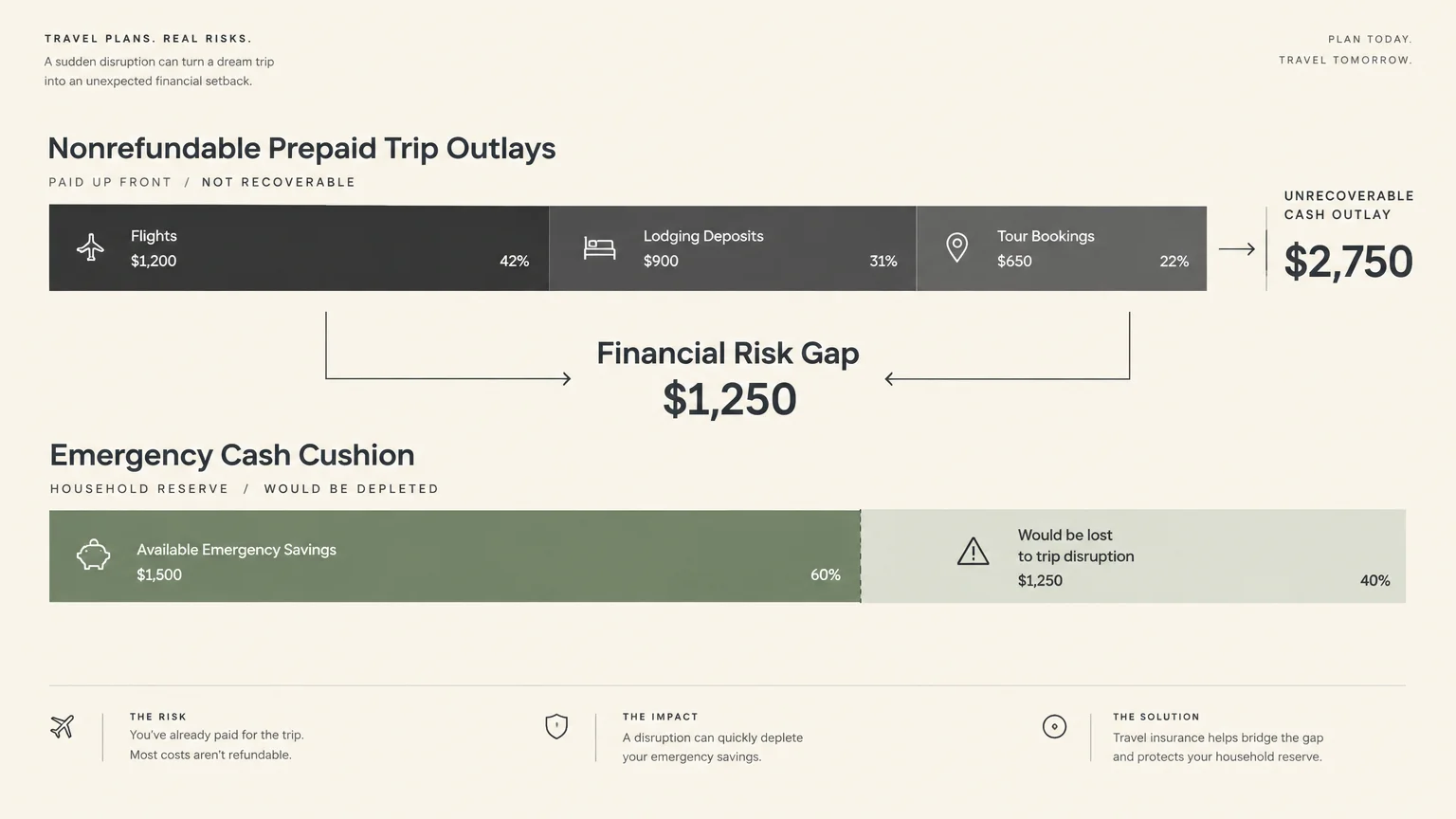
A personal emergency fund exists to cushion unexpected domestic crises, not to finance abandoned vacations. If absorbing the cost of a ruined trip compromises your financial stability, you should not travel without insurance.
Standard comprehensive policies cost between 4% and 10% of total prepaid, nonrefundable travel expenses. Industry data from Squaremouth shows the average policy premium settles between 5.4% and 6%, or roughly $307 for a 15-day journey.
Paying a predictable $307 premium converts an uncapped financial hazard into a controlled, budgeted line item. That modest expense insulates your long-term savings goals from sudden travel catastrophes.
“Insurance is an essential part of a sound financial plan. You buy insurance not because you plan to use it, but to protect yourself against the catastrophic financial loss that can wipe out your savings.” — Suze Orman, Personal Finance Author
Treating insurance as an essential travel component protects your balance sheet from unforeseen liabilities. It ensures that an unexpected cancellation never derails your broader budgeting progress.

8. You Take Multiple Domestic or International Trips Each Year
Purchasing individual single-trip policies for recurring journeys creates compounding expenses and redundant administrative work. Frequent travelers can lower costs significantly by switching to an annual multi-trip insurance structure.
Standalone annual travel medical plans cost an average of $401 per year according to Squaremouth data. These policies provide continuous emergency medical and evacuation coverage across every international departure over twelve months.
Comprehensive annual policies average $523 per year, bundling year-round medical benefits with preset cancellation coverage between $5,000 and $10,000. This consolidated approach protects every quick business trip and weekend getaway under one convenient contract.
If you take three or more trips annually, the cumulative cost of single-trip policies quickly surpasses the annual premium. Buying annual protection streamlines your preparations and guarantees consistent baseline coverage throughout the year.

9. You Need Unrestricted Freedom to Cancel for Personal or Work Reasons
Standard cancellation policies only reimburse claims triggered by specific contractual events like severe injury or jury duty. If unexpected work deadlines, personal relationship shifts, or simple itinerary doubts prompt a cancellation, standard policies pay nothing.
Adding a Cancel for Any Reason (CFAR) endorsement provides absolute schedule flexibility. According to Investopedia, CFAR coverage acts as an optional upgrade that reimburses nonrefundable expenses regardless of your motivation.
This rider reimburses between 50% and 75% of your nonrefundable costs, with 75% being the industry standard. It gives you complete authority to abandon a trip if you simply feel uncomfortable traveling.
CFAR coverage increases your baseline policy premium by 40% to 50%. To maintain eligibility, you must buy the upgrade within 10 to 21 days of your initial deposit and cancel at least 48 to 72 hours before departure.
10. Your Credit Card Benefits Fall Short on Medical and Evacuation Limits
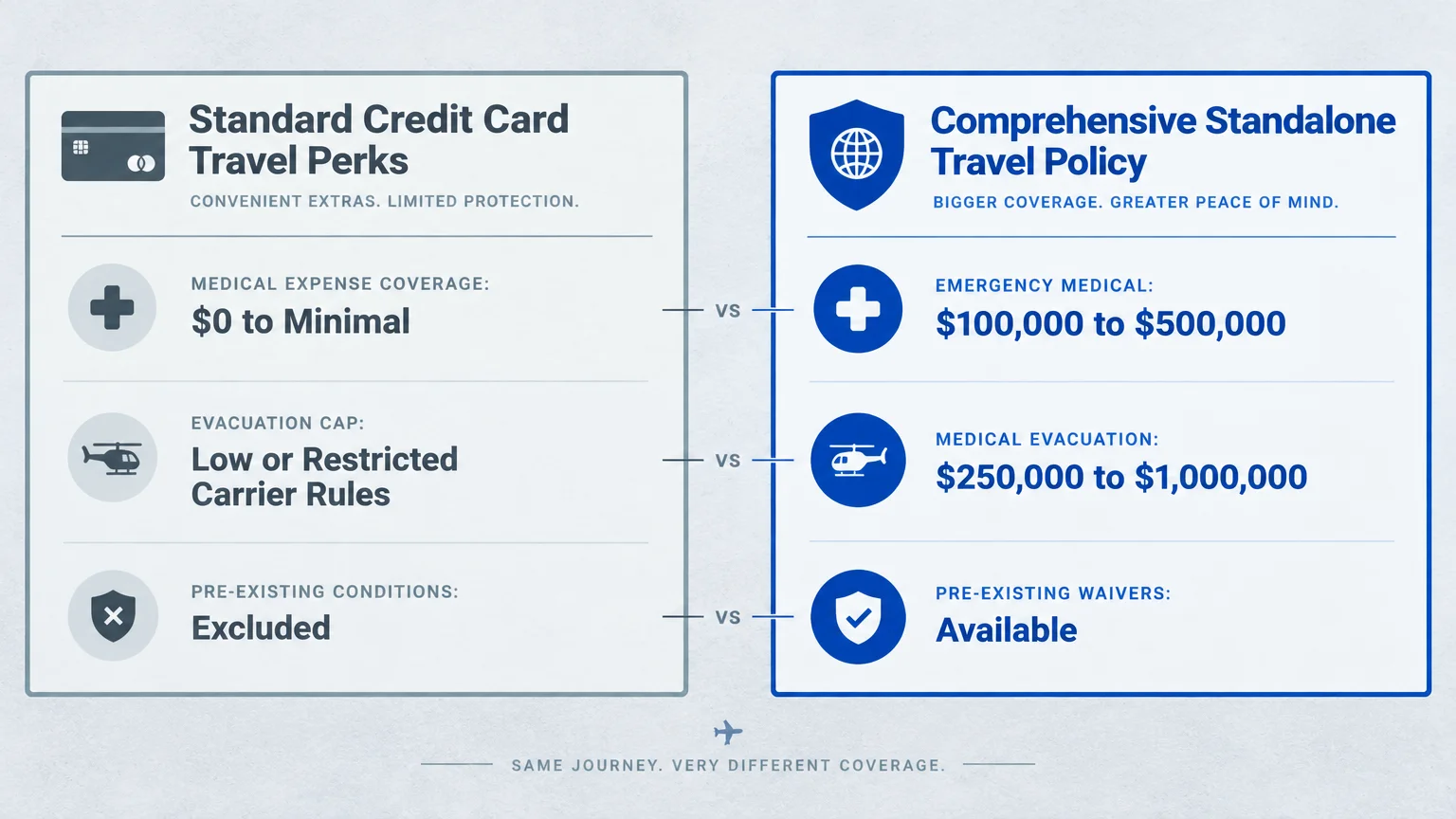
Premium travel rewards credit cards offer embedded trip protections, but their benefits contain substantial operational limitations. Most credit cards provide secondary coverage, meaning you must exhaust personal insurance claims before card administrators pay out.
More critically, credit cards rarely supply adequate medical treatment or emergency evacuation allowances. While a luxury card may replace lost luggage or refund a delayed flight, it rarely covers a six-figure international air ambulance transfer.
Independent research from Consumer Reports highlights that cardholders often discover these restrictive coverage limits only after filing a claim. Card policies frequently cap cancellation payouts at restrictive annual limits that fall well short of luxury vacation costs.
Review your card benefits guide to identify exclusions regarding pre-existing conditions, medical limits, and international medical evacuation. When your credit card benefits leave dangerous gaps, purchasing a standalone policy provides necessary financial insulation.

Comparing Travel Insurance Policy Types
Selecting the right policy structure prevents you from overpaying for unnecessary coverage. The optimal plan aligns with your destination, health history, and total financial exposure.
Review this comparison table to identify which insurance structure matches your upcoming itinerary and budget.
| Plan Type | Best For | Average Cost | Core Benefits Included |
|---|---|---|---|
| Single-Trip Comprehensive | One-off vacations with nonrefundable bookings | 4% to 10% of trip cost ($307 avg) | Trip cancellation, interruption, emergency medical, evacuation, baggage |
| Travel Medical Only | Overseas trips with flexible or cheap bookings | $1 to $5 per day (scales with age) | Emergency foreign healthcare, emergency dental, medical evacuation |
| Annual Multi-Trip | Travelers taking 3 or more trips per year | $401 (medical) to $523 (comprehensive) | Year-round emergency medical, evacuation, capped cancellation ($5,000–$10,000) |
| Cancel For Any Reason (CFAR) | Travelers needing absolute cancellation flexibility | Base premium plus 40% to 50% extra | Reimburses 50% to 75% of nonrefundable costs for non-covered reasons |
Evaluating your specific exposure helps you choose between comprehensive plans and standalone medical protection. Never pay to insure fully refundable reservations, but always secure sufficient medical and evacuation limits for foreign journeys.
Professional vs. Self-Guided: Choosing Your Coverage
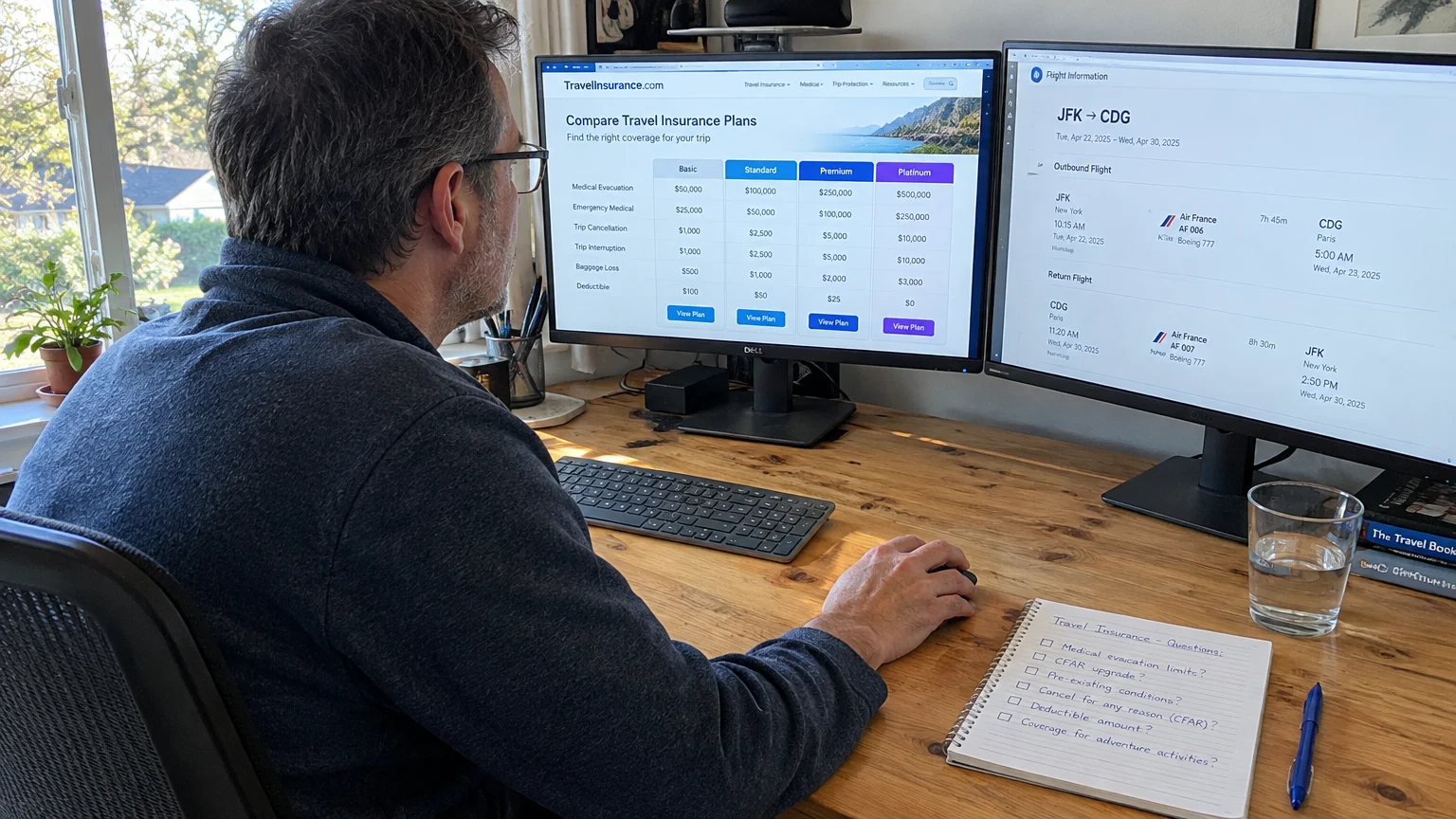
Navigating insurance terms requires balancing policy convenience against contractual precision. You can assemble coverage yourself using comparison engines or hire a specialist to design a bespoke policy.
Selecting between self-guided comparison and professional guidance depends on your itinerary complexity. Review these four practical scenarios to decide which path fits your financial profile.
Scenario 1: Simple Domestic Vacations
A self-guided approach works well for straightforward domestic vacations. If you only need basic cancellation coverage for domestic flights and hotel bookings, online comparison aggregators let you compare policies and finalize coverage in minutes.
Scenario 2: Complex Multi-Destination International Tours
Travelers booking complex overseas journeys benefit from consulting an independent insurance broker. A broker helps identify cross-border medical network restrictions and coordinates multiple transport suppliers under a single comprehensive policy.
Scenario 3: Senior Travelers Navigating Medicare Gaps
Travelers aged 65 and older should strongly consider professional guidance. Specialists verify pre-existing condition look-back clauses and ensure adequate medical evacuation thresholds that Medigap plans completely exclude.
Scenario 4: High-Risk Adventure Expeditions
Self-guided platforms often hide adventure sport exclusions in deep policy text. An insurance professional ensures your policy explicitly covers mountaineering, scuba diving, or backcountry sports without hazardous activity exclusions.
Common Mistakes to Avoid
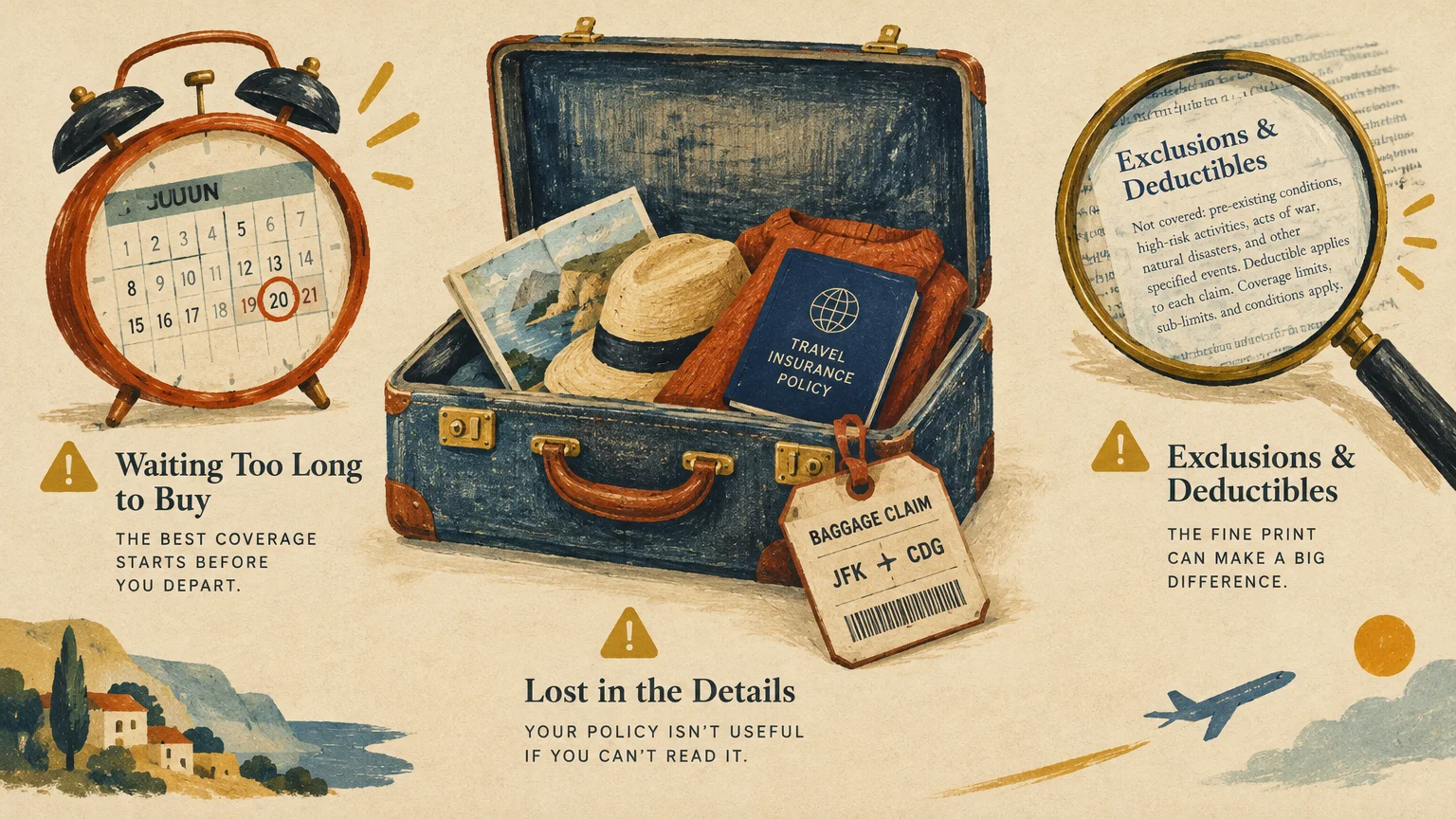
Purchasing your policy at the last minute ruins critical early-booking advantages. Waiting past the 14-to-21-day deposit window forfeits pre-existing condition waivers and CFAR eligibility.
Many travelers mistakenly assume their airline will pay for missed reservations during weather delays. While airlines refund their own canceled tickets, they never reimburse prepaid hotel rooms or independent excursions.
Selecting minimum evacuation limits creates severe balance-billing exposure. An evacuation policy capped at $25,000 leaves you personally responsible for the remaining balance on an intensive-care airlift that costs $150,000.
Skipping the policy exclusions list leads to unpleasant claim denials. Most basic plans strictly exclude injuries resulting from extreme sports, intoxication, or civil unrest unless you purchase specific riders.
Insuring fully refundable travel costs wastes premium dollars. You should only calculate your premium based on prepaid expenses that booking vendors refuse to refund.
Frequently Asked Questions
Does travel insurance cover flight cancellations caused by bad weather?
Yes, comprehensive policies cover cancellations and delays caused by severe weather groundings. Your policy reimburses unused prepaid trip costs and necessary accommodation expenses when storms shut down transit operations.
When is the best time to purchase a travel insurance policy?
You should purchase a policy within 14 days of making your initial trip deposit. Buying early secures time-sensitive benefits, including pre-existing condition exclusion waivers and Cancel for Any Reason upgrades.
Can I get my money back if I cancel my trip because of work?
Standard trip cancellation policies exclude routine work schedule changes. To protect against professional conflicts, you must purchase a Cancel for Any Reason rider or a specialized cancel-for-work-reasons endorsement.
Does travel insurance cover pre-existing medical conditions?
Insurers exclude pre-existing conditions unless you qualify for a formal waiver. To obtain a waiver, you must purchase coverage shortly after your initial booking and insure all nonrefundable expenses.
The information in this guide is meant for educational purposes. Your specific circumstances—including income, debt, tax situation, and goals—may require different approaches. When in doubt, consult a licensed professional.
Last updated: October 2026. Financial regulations and rates change frequently—verify current details with official sources.