A single clerical mistake or unexpected deduction can silently reduce your monthly income before you notice. Learning how to check Social Security deposit records ensures you receive every dollar guaranteed by the 2027 cost-of-living adjustment.
Your net bank deposit rarely matches your headline gross benefit once taxes and health premiums apply. Verifying your figures takes only minutes when you know which items to inspect.
Use these reliable strategies to confirm your 2027 benefit amount, catch hidden payment errors, and protect your household cash flow.
Understanding the 2027 Benefit Adjustments
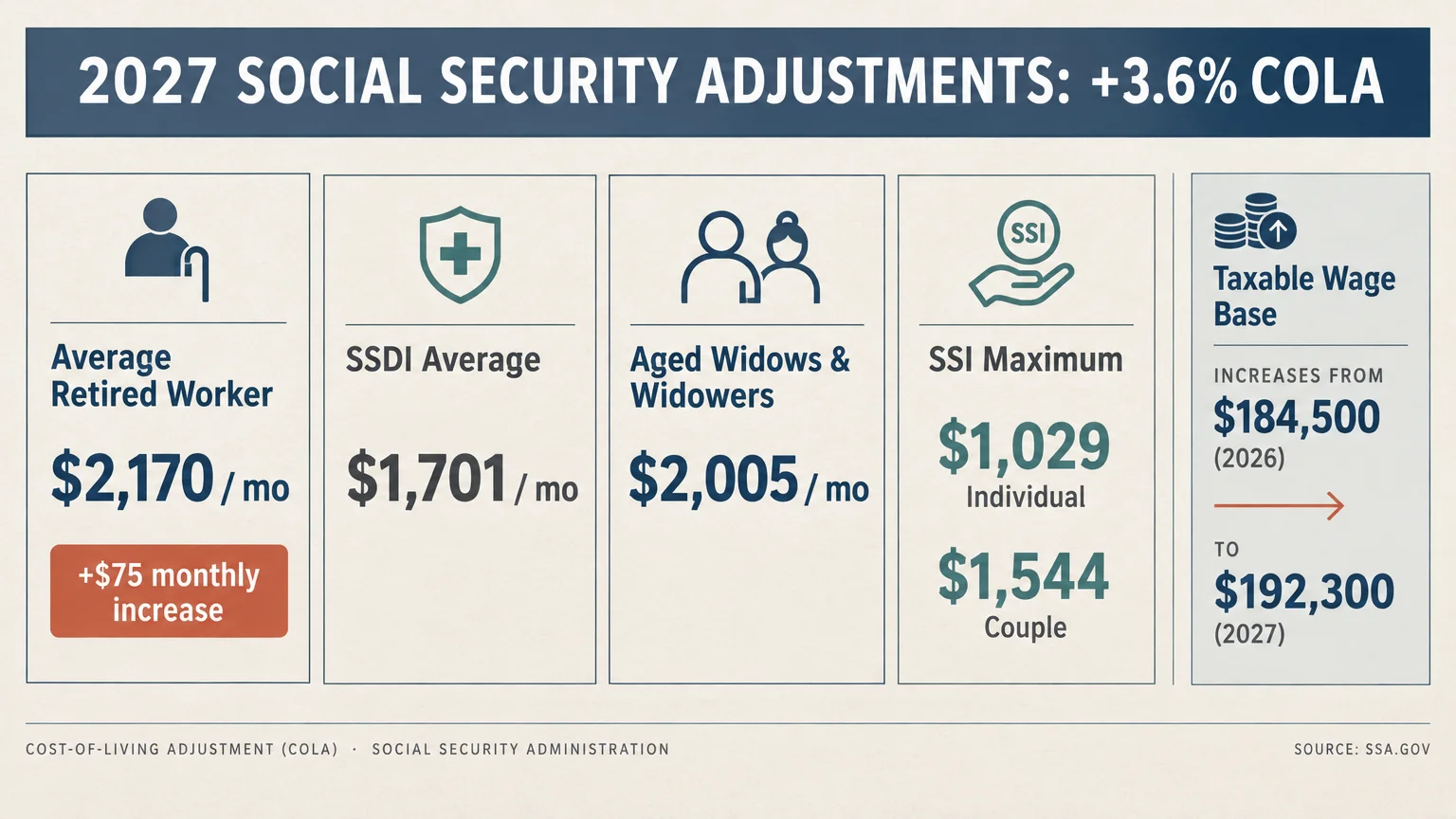
The Social Security Administration announced a 3.6% cost-of-living adjustment (COLA) for 2027 benefits. This increase helps your purchasing power keep pace with stubborn consumer inflation.
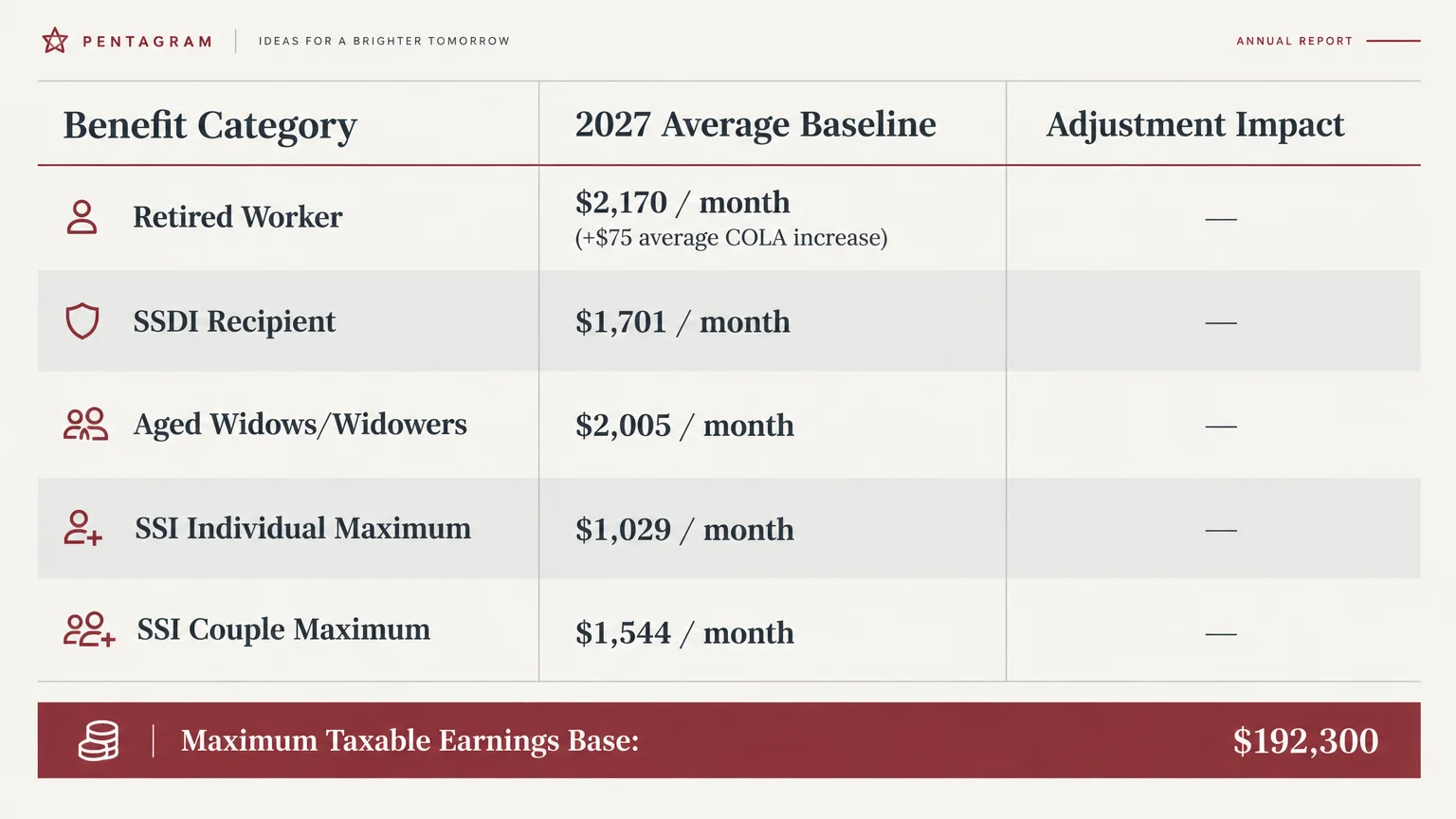
For the typical retired worker, this percentage translates to an average monthly increase of roughly $75. That adjustment lifts the average monthly retirement benefit to an estimated $2,170 in 2027.
Beneficiaries receiving Social Security Disability Insurance (SSDI) will see their average monthly benefit rise to $1,701. Aged widows and widowers receiving survivor benefits will see average payments climb to $2,005.
Supplemental Security Income (SSI) rates also adjust upward under this statutory formula. The maximum federal monthly SSI payment reaches $1,029 for an eligible individual and $1,544 for an eligible couple.
Working taxpayers who fund these programs face updated contribution limits as well. The 2027 Social Security taxable wage base increases to $192,300, up from $184,500 in 2026.
While an increased gross benefit sounds encouraging, your actual take-home deposit could still surprise you. Automatic withholdings, insurance premiums, and tax deductions constantly alter your final settlement figure.
“A big part of financial freedom is having your heart and mind free from worry about what-ifs of life.” — Suze Orman, Personal Finance Author
1. Match Your Net Deposit Against Your Official COLA Notice
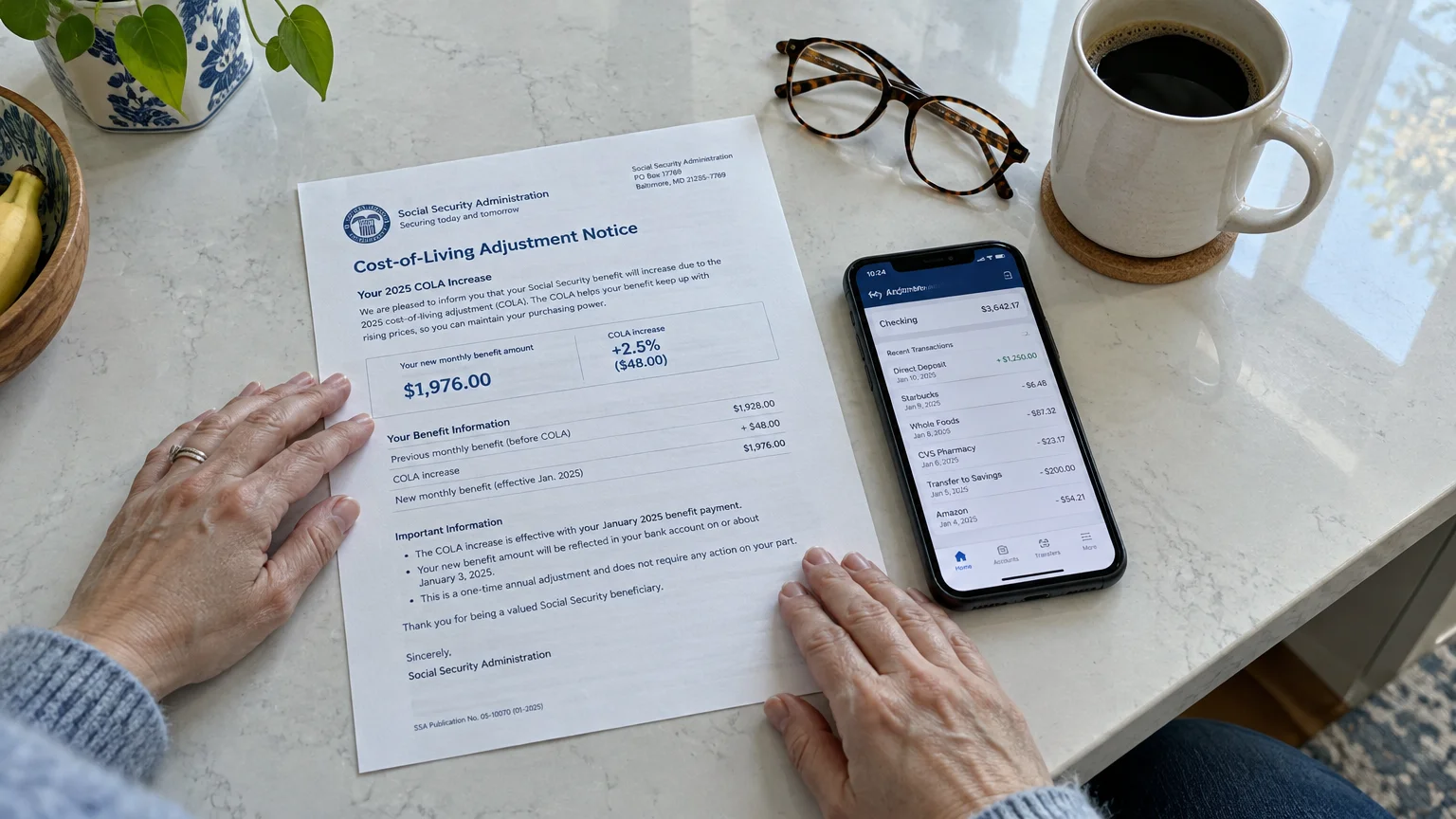
Never rely on mental math to forecast your direct deposit amount. Always verify Social Security payment records against the personalized COLA notice issued directly by the government.
The agency generates a customized, one-page notice detailing your updated gross benefit alongside every itemized deduction. This document spells out exactly how much money will transfer to your bank.
If you prefer digital access, log in to your personal account on the Social Security Administration website. Online notices become available inside the Message Center in late November 2026.
Beneficiaries had until November 18, 2026, to enroll in paperless delivery for early digital access. If you missed that deadline, the agency mails printed notices throughout December 2026.
Postal delays often happen during the winter holiday season. The government advises beneficiaries to wait until January 2027 before reporting a missing paper statement.
Compare the net benefit listed on that official notice against your initial electronic bank deposit. If the numbers differ by even a few pennies, investigate the variance immediately.
2. Verify Your Specific 2027 Payment Date on the SSA Calendar
Assuming your payment arrives on an incorrect date can trigger unnecessary panic or costly overdraft charges. The federal government distributes benefits according to an exact annual calendar.
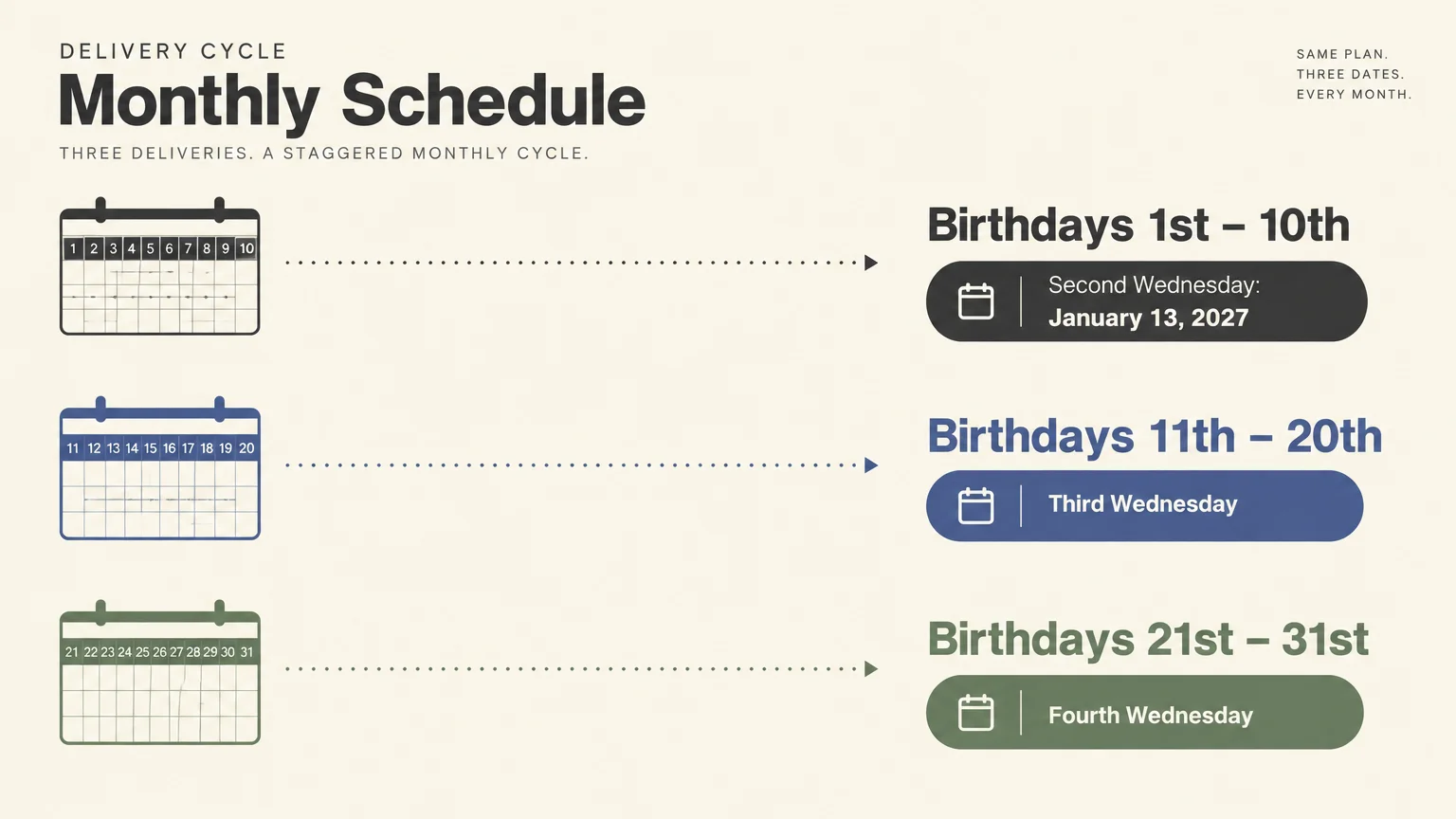
Standard monthly payments follow a staggered schedule determined by your day of birth. This system prevents banking network bottlenecks and ensures orderly processing across the financial system.
- Birthdays 1st through 10th: Paid on the second Wednesday of each month (January 13, 2027).
- Birthdays 11th through 20th: Paid on the third Wednesday of each month (January 20, 2027).
- Birthdays 21st through 31st: Paid on the fourth Wednesday of each month (January 27, 2027).
Certain recipient groups bypass the standard Wednesday cycle entirely. If you filed for benefits before May 1997, your payment traditionally arrives on the third day of the month.
Dual beneficiaries who receive both retirement and SSI benefits also follow this special distribution calendar. Calendar holidays shift these payment dates forward to protect your access to funds.
Because January 1 is a federal holiday, roughly 7.3 million SSI recipients receive their first 2027 payment on Thursday, December 31, 2026. Pre-May 1997 beneficiaries also receive their funds on December 31 because January 3 falls on a Sunday.
Keep these calendar shifts in mind when you complete your COLA deposit check. A payment that seems late may simply be operating on an adjusted holiday processing timetable.
If your scheduled electronic transfer fails to post on the expected date, do not call immediately. Agency guidelines require you to allow three additional mailing days before submitting a formal missing payment inquiry.
3. Calculate Your Medicare Part B Premium Deduction
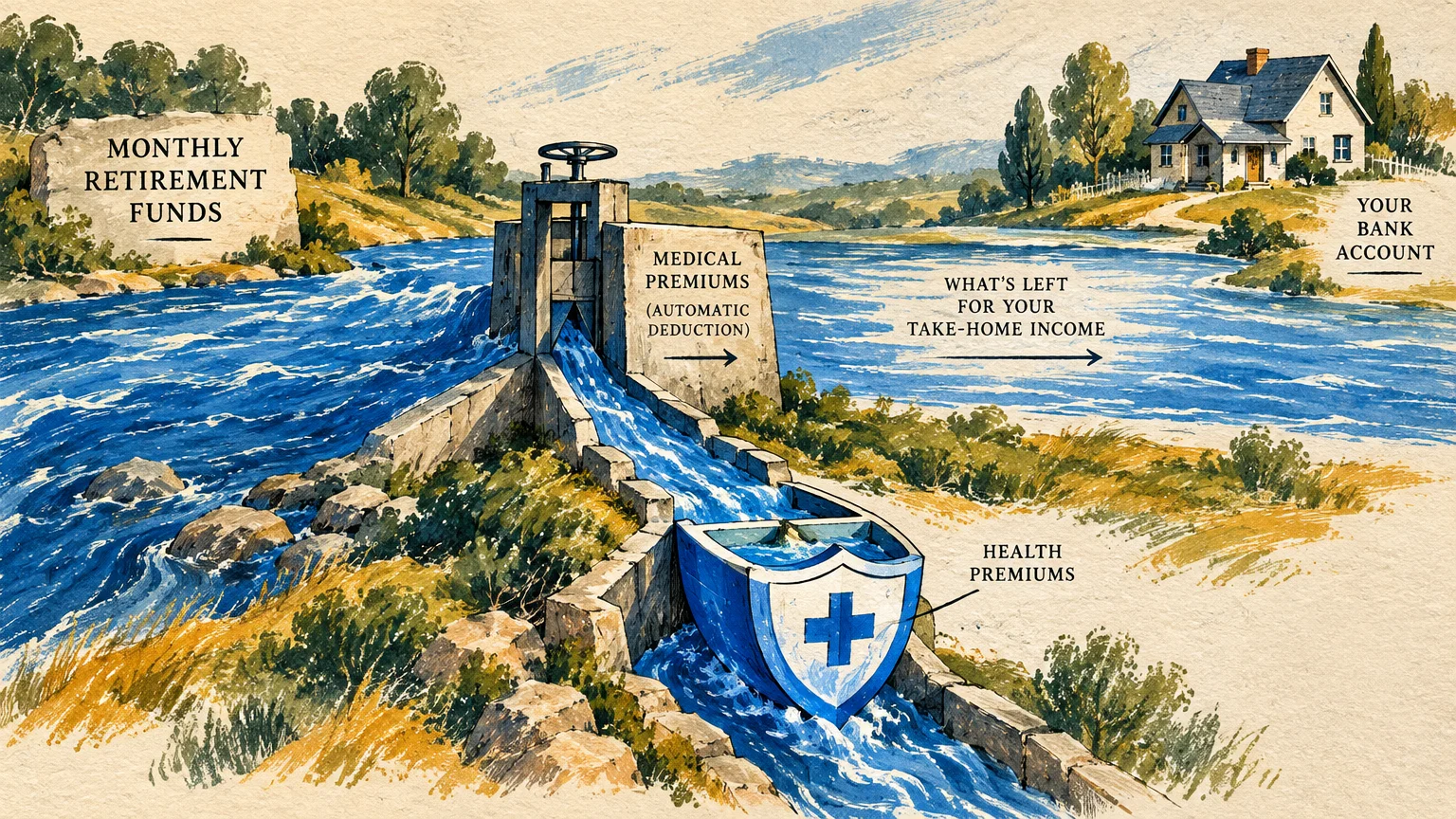
The single most common reason for a lower-than-expected deposit is your health insurance premium. Medicare Part B premiums are deducted automatically from monthly Social Security payments for most retirees.
When healthcare premiums rise, they consume a portion of your annual cost-of-living adjustment. Failing to account for this deduction creates an apparent discrepancy in your deposit ledger.
The Medicare Board of Trustees projected the standard Part B monthly premium will rise by $6.60 to $209.50 for 2027. Review details on Medicare.gov to see how baseline coverage rates affect your check.
High-income retirees must also account for the Income-Related Monthly Adjustment Amount, commonly called IRMAA. These surcharges apply if your modified adjusted gross income from two years prior exceeds federal thresholds.
If your earnings trigger IRMAA, the government deducts substantial additional fees from your gross check. Even a temporary spike in income from selling real estate can elevate your premium bracket.
Cross-reference your Medicare premium tier against the deduction column on your official benefit notice. Verifying this number ensures that your net check reflects the exact rate authorized by federal regulators.
4. Confirm Voluntary Federal Income Tax Withholding
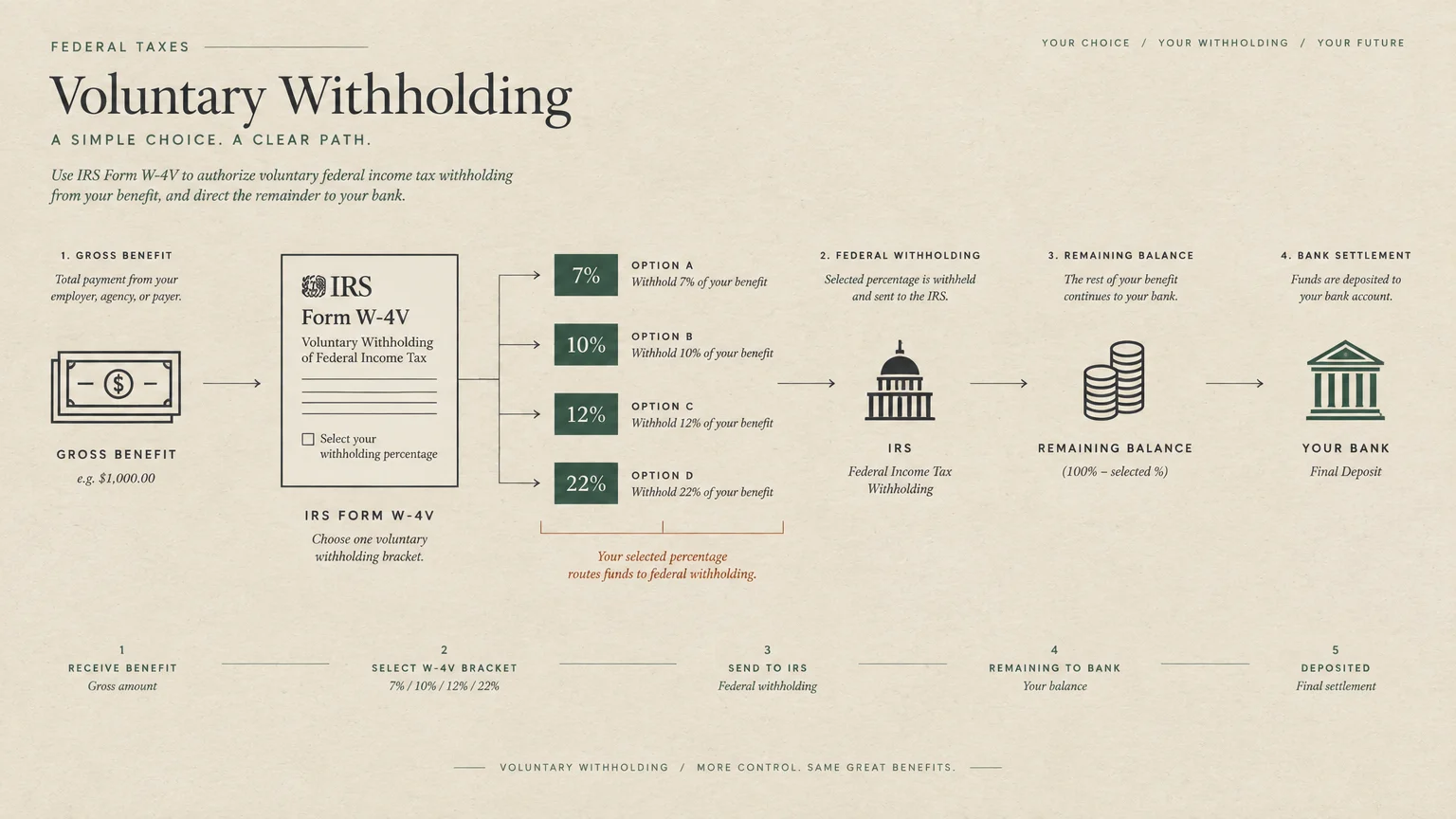
Many beneficiaries choose to withhold income taxes directly from their benefits to avoid estimated tax penalties. If you elected this option, your net check reflects those automatic federal withdrawals.
Benefit recipients authorize these deductions by filing Form W-4V with their local administrative office. The Internal Revenue Service allows withholding rates of 7%, 10%, 12%, or 22%.
When the 3.6% COLA boosts your gross monthly benefit, the dollar amount withheld for taxes increases proportionally. A higher base payment means a slightly larger sum transfers directly to the treasury.
Review your bank deposit statement to verify that your current deduction rate matches your chosen tax strategy. A sudden clerical error could accidentally alter your percentage, leaving you short on monthly cash.
If you recently relocated to a new state, review local taxation rules as well. While states cannot pull taxes directly from federal checks, state obligations influence your broader cash flow.
Adjusting your Form W-4V takes several weeks to process through federal payroll systems. Submit any withholding changes promptly to ensure your net deposits align with your annual tax projections.

5. Cross-Check Overpayment Recovery and Garnishment Offsets
The government maintains strict legal authority to recover previous benefit overpayments directly from your current monthly distributions. Administrative offsets will reduce your monthly electronic transfer until outstanding obligations are resolved.
If the agency previously distributed excess funds to you, automated recovery protocols withhold a mandatory monthly percentage. These withholding adjustments can occur suddenly if agency audits discover past accounting miscalculations.
Court-ordered obligations can also intercept a designated portion of your monthly entitlement. Delinquent child support payments, alimony decrees, and certified restitution orders allow direct garnishment of federal benefits.
Federal student loans and back taxes can also trigger statutory reductions through the Treasury Offset Program. These non-tax debts are managed under federal collection rules enforced across multiple departments.
If your deposit arrives significantly below your calculated projection, check your physical mail for reduction notifications. The government must provide advance written explanation before implementing an administrative garnishment or overpayment recovery.
You maintain the right to appeal unexpected reductions or request a manageable repayment waiver. Filing an immediate appeal temporarily pauses certain collection actions while administrative reviewers evaluate your financial hardship.

6. Audit Your Direct Deposit Account and Bank Routing Details
Even when federal computers calculate your payment perfectly, commercial banking networks can derail delivery. Outdated routing numbers, clerical account typos, and institution mergers often disrupt incoming direct deposits.
Verify your bank routing number and personal checking account details inside your online portal. A single miskeyed digit directs your funds into an unlinked holding queue or returns them to the government.
Bank mergers and institutional acquisitions occur frequently across the regional retail banking sector. While financial institutions usually forward payments during transition periods, automated forwarding arrangements expire after several months.
If your bank recently changed its name or routing credentials, update your profile immediately. Never close an old checking account until your initial 2027 benefit clears your new account successfully.
You can verify direct deposit safety through guidelines published by the Consumer Financial Protection Bureau. Monitoring your accounts prevents preventable communication breakdowns between commercial banks and federal disbursement centers.
Set up automatic mobile or email text alerts through your bank’s digital interface. Real-time alerts inform you the moment a federal wire clears, allowing you to spot anomalies instantly.

7. Reconcile Dual Entitlement and SSI Payment Splits
Many households receive multiple categories of monthly assistance through coordinated federal programs. Managing spousal claims, survivor payments, and disability compensation requires tracking separate accounting streams.
If you receive retirement benefits alongside an auxiliary spousal benefit, the agency calculates them through dual entitlement rules. Your primary benefit pays out first, followed by a secondary supplement to meet the statutory limit.
Beneficiaries who qualify for both Social Security and SSI receive two separate monthly electronic deposits. Each payment arrives on a different day and follows its own accounting rules.
Remember that the maximum federal SSI payment settles at $1,029 for an eligible individual in 2027. Essential persons who provide vital household care can receive up to $516 monthly.
SSI benefits operate under strict resource and unearned income rules established by federal statute. An increase in your Social Security check reduces your SSI payment dollar-for-dollar after a basic $20 exclusion.
Failing to account for this offsetting calculation creates confusion when examining your combined monthly bank deposits. Confirm both payment legs independently to ensure the combined total satisfies your expected household baseline.
2027 Social Security Payment Schedules and Benefit Baselines
To audit your accounts efficiently, you need access to the latest baseline figures and distribution timetables. Use this reference table to verify your deposits against official federal projections.
| Benefit or Program Type | 2027 Average or Maximum | Scheduled Payment Dates | Primary Deductions to Check |
|---|---|---|---|
| Retired Worker (Average) | $2,170 per month | 2nd, 3rd, or 4th Wednesday | Medicare Part B ($209.50), Form W-4V tax |
| Disabled Worker (SSDI Average) | $1,701 per month | 2nd, 3rd, or 4th Wednesday | Medicare premiums, overpayment offsets |
| Aged Widow / Widower (Average) | $2,005 per month | 2nd, 3rd, or 4th Wednesday | Voluntary withholding, health surcharges |
| SSI Eligible Individual (Maximum) | $1,029 per month | Dec 31, 2026 (for Jan 2027) | Countable income offsets, state adjustments |
| SSI Eligible Couple (Maximum) | $1,544 per month | Dec 31, 2026 (for Jan 2027) | Living arrangement changes, outside earnings |
| Pre-May 1997 / Dual Beneficiary | Varies by work history | Dec 31, 2026 (for Jan 2027) | Combined Part B, tax withholding |
Check your net payment against the deduction column to identify any hidden discrepancies. If your figures match this baseline, your payment calculation is functioning properly.

Pitfalls to Watch For
Many beneficiaries miscalculate their deposits by applying the 3.6% COLA to their net bank deposits. The percentage adjustment applies exclusively to your gross Primary Insurance Amount before any deductions occur.
Calculating the percentage against your net deposit produces an inaccurate projection that misleads your household budget. Always run your adjustments against the baseline gross benefit shown on your annual statement.
Another common mistake involves contacting government field offices before the standard grace period expires. Agency representatives cannot process missing payment claims until three business mailing days elapse past the scheduled deposit date.
Calling prematurely ties up support phone lines and causes unnecessary frustration for retirees. Verify your scheduled date on the official payment calendar before assuming an electronic transfer has failed.
Do not forget about potential income shifts that alter your Medicare premium bracket. An inheritance, retirement account distribution, or business sale from two years prior can quietly trigger high-income surcharges.
Never ignore written correspondence sent by federal agencies regarding your monthly entitlement. Letters marked with official seals frequently contain critical notifications about benefit recalculations, garnishments, or audit reviews.

Getting Expert Help
While most direct deposit issues resolve with basic tracking, certain complex administrative situations require professional intervention. Recognizing when to escalate an issue saves you months of lost income.
Seek qualified assistance in the following specific circumstances:
- Missing funds after the grace period: If your electronic transfer does not appear after three business days, contact your local field office to initiate an immediate direct deposit trace.
- Disputed overpayment notices: When the agency demands recovery of past funds you believe were paid correctly, consult a legal aid advocate or accredited representative to file Form SSA-561.
- Unexplained benefit recalculations: If your primary insurance amount drops unexpectedly after a spouse passes away, work with an elder law attorney to audit complex dual-entitlement formulas.
- Persistent tax withholding discrepancies: When voluntary withholding errors disrupt your quarterly tax estimates, meet with a Certified Financial Planner or CPA to align your Form W-4V with federal liabilities.
You can find verified directories of assistance programs and agency contacts through USA.gov Benefits. Accessing experienced guidance protects your monthly income when administrative disputes arise.
Frequently Asked Questions
Why is my 2027 Social Security deposit less than my COLA calculation?
Your net bank deposit reflects deductions for Medicare Part B premiums, voluntary tax withholdings, and any overpayment offsets. The 3.6% COLA applies only to your gross benefit, not your final deposit.
When should I see my first 2027 benefit increase in my bank account?
SSI recipients receive their increased payment on December 31, 2026. Standard retirement beneficiaries receive their updated payment on their designated Wednesday in January 2027, depending on their birth date.
What should I do if my direct deposit does not arrive on schedule?
Check with your financial institution first to ensure there are no internal processing delays or maintenance holds. If three mailing days pass without payment, contact the federal administration to initiate an official transfer trace.
How do I update my direct deposit information safely for 2027?
Log in to your secure online account at ssa.gov to modify your banking credentials directly. Keep your previous bank account open until you verify that your first monthly payment arrives in your new account.
Next Steps for Securing Your Monthly Benefits
Take control of your monthly cash flow today by logging into your digital profile and reviewing your official statement. Confirming your net deposit against scheduled deductions eliminates surprises and keeps your household budget grounded.
Keep a physical or digital copy of your annual benefit notice alongside your household tax records. Regularly monitoring your incoming payments ensures you catch administrative errors before they impact your financial security.
The information in this guide is meant for educational purposes. Your specific circumstances—including income, debt, tax situation, and goals—may require different approaches. When in doubt, consult a licensed professional.
Last updated: October 2026. Financial regulations and rates change frequently—verify current details with official sources.