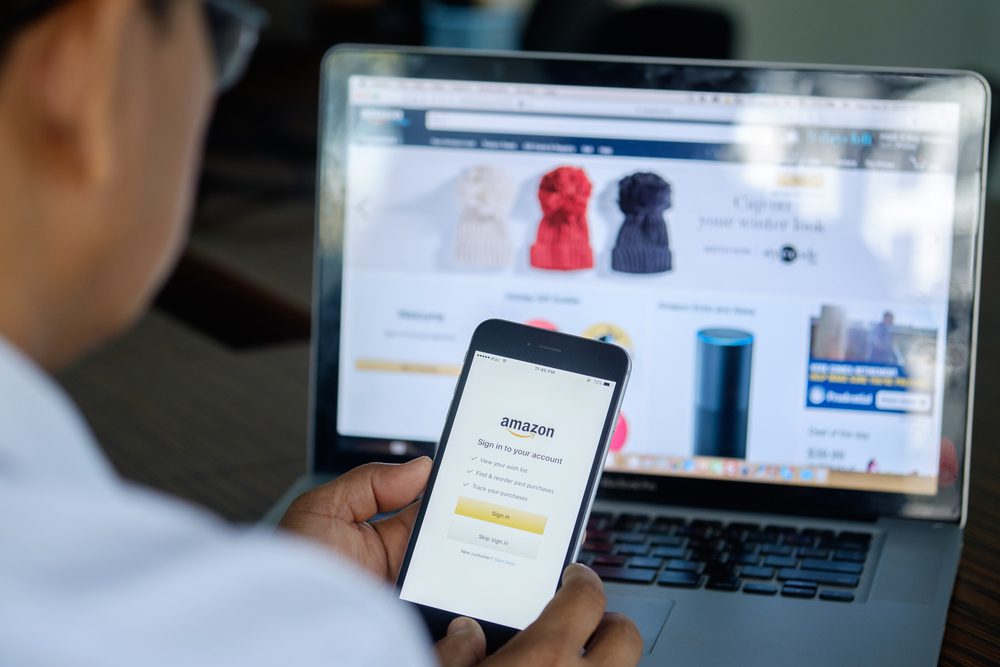
Spending more to save more is an all-too-common pitfall. Don’t be fooled by the spaving trend!
Have you ever spent more than you would have liked just to save a little money? Most of us have… and frequently. Well, it turns out there’s even a name for it and it’s called “spaving!”
The main idea is a blend of the words “spending” and “saving” and it refers to any time we’re asked to “spend more” in order to “save more.” On the one hand, it must be nice knowing you’re not alone in this spaving trend.
On the other, it’s so common and normal nowadays that it can be challenging to recognize when we’re giving in to it. On top of that, there’s no doubt that this practice contributes to clutter in our homes and larger-than-expected credit card statements each month.
So, it’s not exactly something to laugh at. That’s why we’ve decided to drop the curtain on this spaving trend here at The Money Place! Here’s everything you need to know and some tips on how to avoid it!

What exactly IS spaving?
Spaving refers to spending more money upfront to save more in the long run, supposedly. Examples of this include choosing premium products rather than cheaper options, buying in bulk, or splurging on a membership to get a discount.
While some of these spaving trends can make sense in moderation, the practice takes it to an extreme. Paying $100 for an annual subscription to save $8 a month is smart.
But spending 500 extra dollars on a premium appliance you can’t afford in hopes of lower energy bills is considered spaving.

How to recognize if you might be falling for a spaving trend
Spaving happens when we try to justify buying more than we want because of the promise of saving money in the long run. For instance, we might buy a second item at a huge discount or buy more things to qualify for free shipping, thinking we’re making a smart financial decision.
But let’s not forget that retailers are highly skilled at coming up with deals that encourage this kind of behavior, often leading us to spend more.
Large corporations are educated and gifted, and focus groups are tested on the best ways to offer savings for inflated spending, resulting in increased profit. And guess what? Large corporations aren’t the only ones taking advantage of spaving trends.
Even the most rookie online entrepreneurs will be schooled in the subtle art of getting their community to buy just a little more.
Almost every online platform, from sales pages to email delivery systems to online stores and credit card processors, provides simple in-house features to make more by “upselling” products to customers. The end goal is to take your money.
You’ve undoubtedly seen the option to “spave” in countless places. And now there’s even a name for it. The word has been used for many years but has grown in popularity recently because of inflation.
This makes sense when you think about the fact that one of the most dangerous aspects of speaking is that it affects our emotions and decision-making the most during economic uncertainty.
The more worried we are about our household budget and prices, the more likely we are to look for saving opportunities. The secret to avoiding a spaving trend is recognizing it when it happens so it doesn’t cloud your judgment.

Here are some clear indicators you’re falling for the spaving trend:

Spaving trend: You’re promised extra benefits for more purchases
Retailers often tempt us with additional benefits for buying more. Think about the buy one get one 50% off deals. We might purchase more than we initially planned, thinking we’re getting a bargain.
Also, sometimes we get faster shipping if we spend more or store credit to be used next time if we purchase a minimum amount. These are all examples of extra benefits for more buying.

Spaving trend: You make an impulse buy triggered by a promotion
Each time we waltz out of a store with extra items that we didn’t mean to purchase, it would be wise to reflect on what we bought to see if the invitation to save money somehow provoked those purchases.

Spaving trend: You’re asked to buy more in order to save
This is obviously the textbook definition of the word spaving. But every time you notice a benefit or offer, you can clearly recognize the tactic being deployed if you spend just a little bit more. This method takes various forms.
One of the most common is the free shipping threshold. For example, you need a book that costs $10, but the website offers free shipping for all orders over $20.
Rather than paying $5 for shipping, you add another book you didn’t plan on buying, spending $20 instead of $15. Now, where’s the so-called “win” there?

Spaving trend: You spend more than you wanted because of all the seasonal deals
Grocery stores often use promotions like “buy 4 to get the sale price.” We’ve all noticed them.
We go to the supermarket only needing two things but buy 4 just to take advantage of the discount, spending more than we would have liked.
Or we wanted to eat a breakfast burrito from our favorite fast food place but bought two because the app offered the second for just $1 extra.

How can you combat these spaving trends?
Think carefully about all your purchases and consider the trade-offs, especially if it comes at the expense of your economic situation. Here are a couple of ways to avoid the spaving trends:
-Pay with cash: Buying big-ticket items in cash can help avoid impulse buying. You’re less likely to part with your hard-earned bucks on something you didn’t plan on buying or don’t need when handing over actual bills.
This approach doesn’t rule out money-saving opportunities, though. Here’s an idea: Snap pics of your receipts using the Fetch app and earn points, which you can redeem for gift cards at retailers like Target, Walmart, and Amazon.
-Create “hurdles” for yourself: If you’re shopping online, deleting stored payment details can help create a so-called hurdle that forces you to think through your buying decisions before proceeding because you have to get up and get your credit card each time.
-Identify your triggers: These are what lead to impulse buys. Knowing them is critical to dodging them in the future. Unsubscribe from store newsletters and delete shopping apps on your phone that alert you to the latest sales.
Instead, search for coupons only when you need them through deal sites like CouponCabin.com or with a browser plug-in like SideKick, which scans for applicable codes.

-Stay away from temptation: If there’s a particular retailer that temps you with all their limited-time sales, try to avoid going into that store in general. Try to order online instead and choose curbside pick-up whenever you can to get what you need.
-Calculate the deal you’re getting: In most of those “buy more, save more” deals, the actual percent discount is frequently the same but disguised as a better value.
For example, getting $20 off $100 isn’t any better than $10 off $50. So don’t let this fool you into filling your cart with more things you don’t need. You can even use your calculator if you’re not sure.
-Sleep on it: When in doubt, sleep on it! Allow 24 hours to pass and think through a product before you hit that buy button. There’s a good chance that you’ll wake up realizing you don’t need that item and move on.
What are your thoughts about this spaving trend? Be sure to let us know in the comments section below. But don’t leave yet!
If you enjoyed this article, we also think you’ll like: 11 Five Below Shopping Secrets, and How They Keep Prices Incredibly Low