Here’s How Companies Lure You Into Shopping More:
Many of us already know that companies do everything they can to make us spend our hard-earned cash. However, many of their tactics are based on a surprising amount of consumer psychology, especially now that the prices are soaring, and some of them are downright shady.
So here are some of the most notable ways through which you are being primed to spend more, including a brand new explosion in extra fees, that many businesses are justifying in the name of…that’s right, inflation! So hold on tight and let’s see what the tactics used by companies to make you empty your pockets:

Fees, fees, and fees again
While we expect to be greeted by a raft of fees when we’re buying an airline ticket, no one would expect that when it comes to a simple dinner out! To offset inflation, there are a couple of businesses that are introducing a complete range of new fees.
For example, take a look at your bill next time you go out, as you might notice something out of the ordinary. Those extra fees for “fuel surcharge”, “noncash adjustments”, or even “kitchen appreciation” managed to build their way onto bills, as restaurants tried to cope with the unbreakable impact of inflation and a tighter labor market.
On the same note, Uber and Lyft added some fees to riders’ tabs, so they can cope with gas prices, and Visa and Mastercard hiked the “swipe fees” on retailers, a move that’s meant to trickle down to consumers.

Blaming inflation for unnecessary price hikes
The majority of shoppers already know why the prices have been on the rise, even if they don’t like it. But here’s something that’ll make your blood boil: there’s a Digital.com survey of 1,000 business owners and executives that discovered how more than half are raising their prices more than they should.
They do it to recoup the expensive costs of doing business. That’s particularly the case at much larger companies, as 64% of respondents say they already expect increased profits to outpace the needed “inflation” price hikes.
Even more, there’s another study made by Accountable.US that concluded that some retailers, like CVS, Kroger, and T.J. Maxx parent company TJX already increased prices completely unnecessarily, while the nation’s top 10 retailers boosted their profits by…$24.6 BILLION since 2020.

Changing everything except the price
As we’re all more careful with our bottom lines right now, there’s a classic strategy through which companies prefer fooling us: the prices stay the same, but they change the product itself to fatten profits, which is also known as “shrinkflation”.
For example, Burger King’s biggest franchisee is giving customers now eight chicken nuggets, instead of 10, at the same price. They bet that a smaller portion is less objectionable to everyone than a higher price. Some retailers will even mark up jumbo-size packages that everyone sees as a good deal, without actually doing the math.

Limited-time deals
“Order now”, “SALES TODAY” It doesn’t matter if you’re shopping online or in-store, you’ve DEFINITELY seen this kind of urgency around. Many online retailers, like Amazon, will prefer using countdown timers, to tell shoppers exactly how much time they need to purchase at a certain point.
This particular tactic is one of the most transparent ways through which retailers will get you to spend your money, hoping that you’ll rush into buying if you think a sweet deal might pass you by.

One-click ordering
The fact that we can order everything we want, from clothing to groceries, with just the touch of a button, makes the shopping experience much more convenient, right? Sure thing, except the fact that it also comes with a huge upside for some retailers, like Amazon.
One-click ordering will make us much less likely to abandon these virtual carts, which means that we end up spending more than we would have if the process required more additional steps.

Charm pricing
Have you EVER wondered why that bottle of shampoo costs $4,99, instead of $5? I have questioned this maybe a gazillion times. Well, it’s a famous strategy known as “charm pricing”. Researchers discovered that we’re more prone to buying, if we think we’re getting a deal at $4.99, as we associate the price more closely with $4, instead of $5.
It also makes us more likely to buy. On the other side, there’s also “prestige pricing”, where it’s more advantageous for high-end retailers to use rounded prices, because their customers will associate it with quality and luxury.

Subscription services
There’s a good reason why subscription boxes and other similar services are so common, besides convenience. For example, inertia, or the hassle of canceling a subscription (including the ones we don’t use), keeps the companies’ pockets full.
But it’s unlikely we will ever consume anything that will justify the subscription. That’s why researchers believe we would be better off giving in to a splurge once in a while, rather than pay a flat recurring rate, even if it might “seem” like a better deal.
Liberal return policies
Common sense would dictate us that customers return more purchases when retailers adopt a liberal return policies. This might be true, but retailers have also discovered that shoppers are way more likely to buy something in the first place when these policies are in effect.
Interestingly enough, longer return windows might end up being correlated with fewer returns, possibly because shoppers are more attached to their purchases and feel less pressure to decide whether they should take them back.

Supersized carts
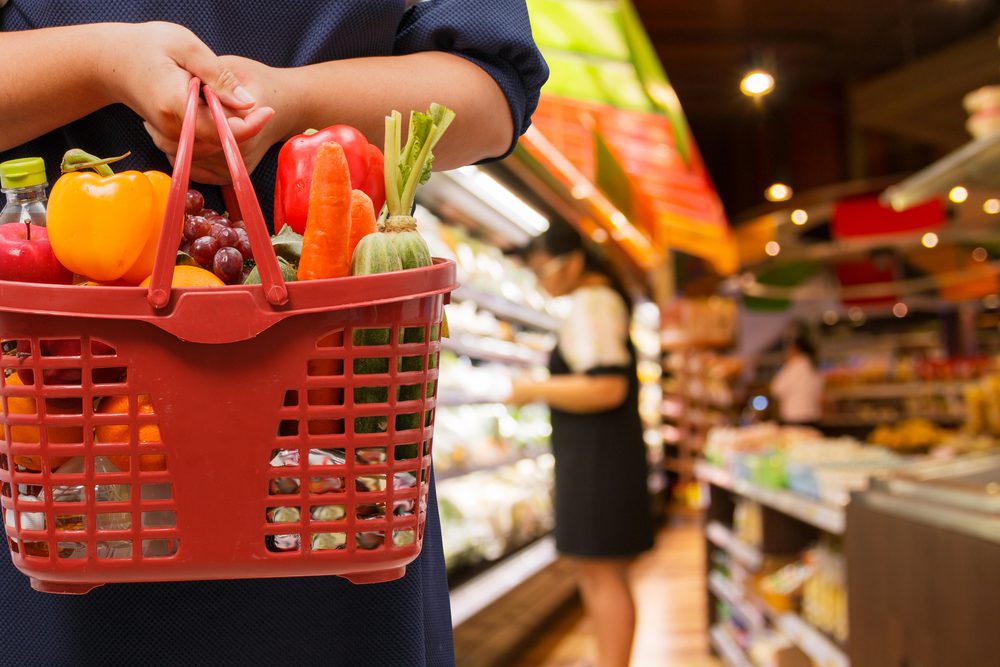
Well, it turns out that shoppers hate pushing around empty carts, and marketing experts say a cart with a double size will eventually lead shoppers to buy 40% more than they actually intended. So next time you head to the grocery store, make sure you go with a basket or a smaller cart, in order to avoid supermarket overspending.

Free samples
Have you ever went to Costco on a weekend just for the samples? I surely did! While our favorite warehouse club might seem very generous with the freebies, there’s obviously a reason behind that: it is more likely for you to buy something with a free sample, mainly because of reciprocity.
Their theory is based on the fact that you might buy something as a “thank you” gesture, rather than out of gratitude or even guilt.

No dollar signs
It is a bit sleek and chick for some high-end restaurants to omit dollars signs on its menu, as well as for that little boutique not to include them on any price tags. But there’s a reason for that, as researchers discovered that we’re more likely to spend more when we don’t see the dollar sign. They say it reduces the psychological “pain of paying”.
If you enjoyed reading this article, we also recommend reading: 8 BEST WAYS TO PREPARE FOR BLACK FRIDAY