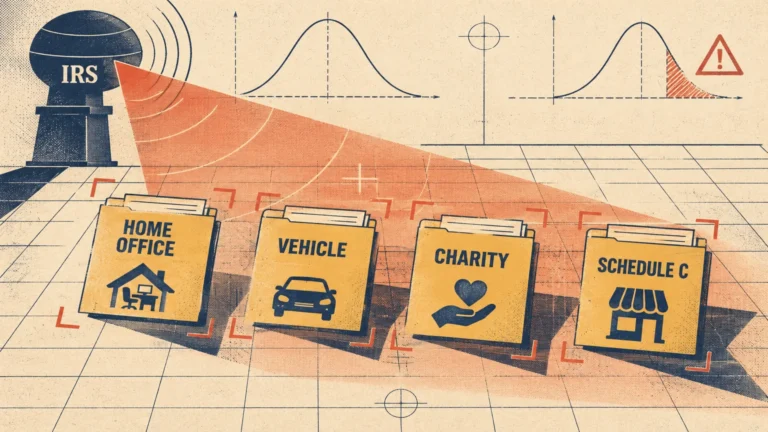
Major irs changes 2027 brings will reshape both the tax return you file in early 2027 and the paycheck deductions you plan all year. Lawmakers and tax officials rolled out sweeping updates affecting brackets, retirement accounts, and how you get your refund.
These new tax rules do not hit every household the same way. Parents, tipped workers, gig sellers, retirees, and high earners each face distinct wins and new traps.
Knowing which updates apply to your income timeline helps you keep more money and avoid filing surprises. Here is exactly who feels the biggest shifts and what to do next.
At a Glance: Two Timelines You Need to Track
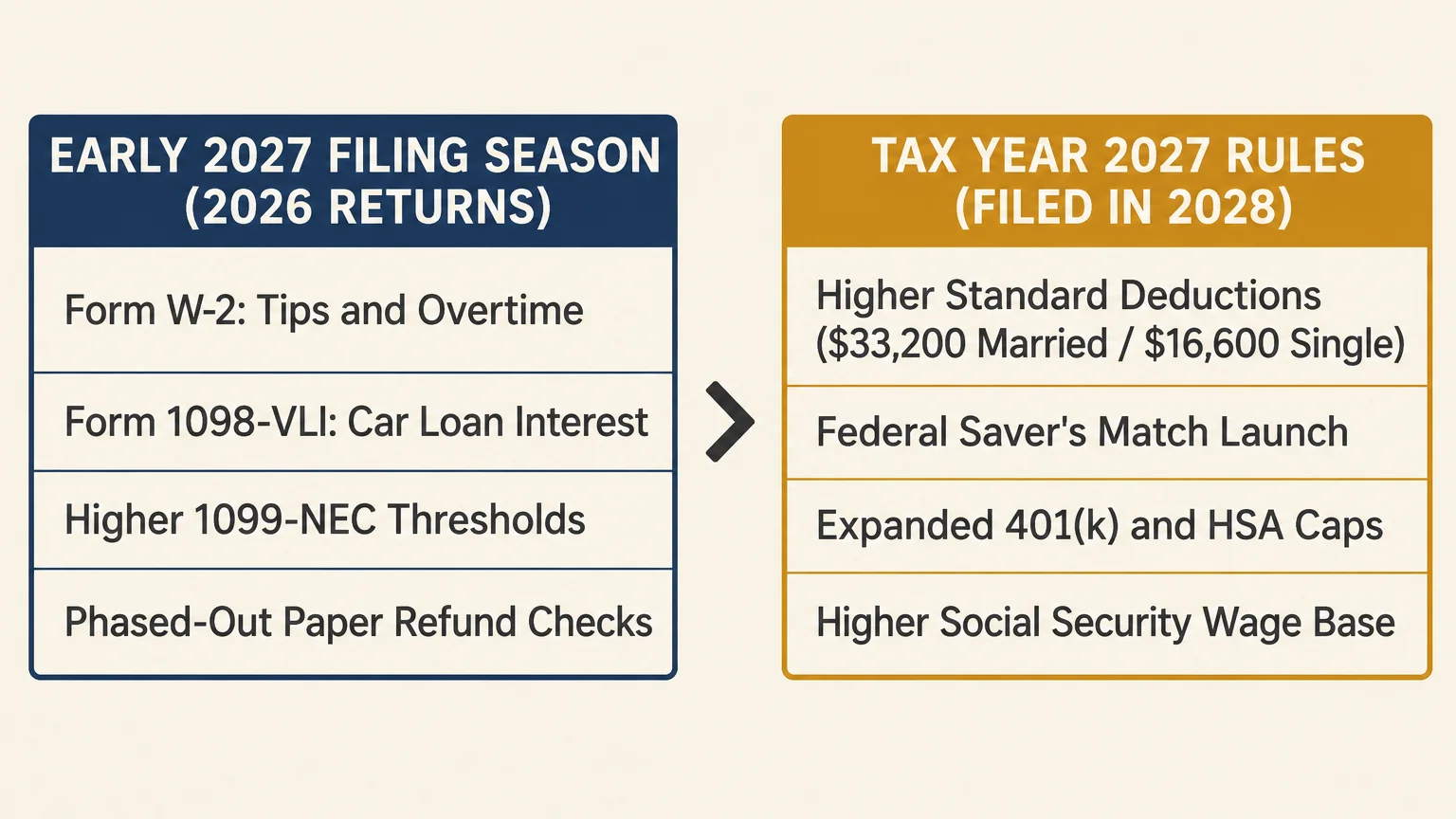
Confusion around irs updates taxpayers face usually starts with the calendar. Changes hitting your finances in 2027 split cleanly into two separate tax years.
First, the 2027 filing season covers income you earned in 2026 and report in early 2027. Second, tax year 2027 rules govern the paychecks, contributions, and deductions you manage from January through December 2027.
- Early 2027 filing season (2026 returns): New Form W-2 reporting for tips and overtime, the Form 1098-VLI for car loan interest, higher 1099-NEC thresholds, the closed Direct File portal, and the phase-out of paper refund checks.
- Tax year 2027 (filed in 2028): Higher 2027 tax brackets and standard deductions, the launch of the federal Saver’s Match, bigger 401(k) and HSA caps, a higher Social Security wage base, and the scholarship donation credit.
Keeping those two buckets separate prevents costly planning mistakes. You can check official forms and transition guidance anytime on IRS.gov before making big withholding changes.
Everyday Filers: 2027 Tax Brackets and Higher Standard Deductions
Most households will see higher taxable income thresholds under IRS Rev. Proc. 2026-35, released November 5, 2026, in IR-2026-133. Nearly 90%—about 89%—of federal filers take the standard deduction instead of itemizing, according to IRS estimates cited by Kiplinger and The College Investor.
For tax year 2027, the standard deduction climbs to $33,200 for married couples filing jointly, up $1,000 from $32,200 in 2026. Single filers and married individuals filing separately get $16,600, up $500 from $16,100.
Heads of household receive a $24,925 standard deduction in 2027, up from $24,150. Taxpayers age 65 and older also claim an extra $2,100 if single, or $1,700 per qualifying spouse on a joint return.
Meanwhile, the personal exemption remains permanently $0 under the One Big Beautiful Bill Act (OBBBA, P.L. 119-21), which the IRS refers to as the Working Families Tax Cuts. That law also made the seven marginal tax rates permanent.
Inflation adjustments widen every bracket for 2027, meaning more of your raise stays taxed at lower percentages. Here is how the 2027 tax brackets break down by taxable income.
| Marginal Tax Rate | Single Filers (2027 Taxable Income) | Married Filing Jointly (2027 Taxable Income) |
|---|---|---|
| 10% | Up to $12,800 | Up to $25,600 |
| 12% | Over $12,800 to $52,025 | Over $25,600 to $104,050 |
| 22% | Over $52,025 to $109,125 | Over $104,050 to $218,250 |
| 24% | Over $109,125 to $208,325 | Over $218,250 to $416,650 |
| 32% | Over $208,325 to $264,550 | Over $416,650 to $529,100 |
| 35% | Over $264,550 to $661,375 | Over $529,100 to $793,650 |
| 37% | Over $661,375 | Over $793,650 |
Takeaway for your paycheck: a modest cost-of-living raise in 2027 should not push you into a higher tax tier as easily. Review your Form W-4 early in the year if your household income shifts significantly.
Families and Parents: Bigger Credits and New Children’s Accounts
Parents and guardians get several targeted boosts across both 2027 credits and long-term savings accounts. Under Rev. Proc. 2026-35, the Child Tax Credit rises to $2,300 per qualifying child in 2027, up from $2,200 in 2026.
Lower-income families benefit from a higher refundable slice as well. Up to $1,800 of the Child Tax Credit is refundable in 2027, compared with $1,700 in 2026.
Working households with modest incomes also see larger maximum payouts from the Earned Income Tax Credit (EITC) in 2027. Per Rev. Proc. 2026-35, the top credit rises to $8,496 for families with three or more qualifying children, up from $8,231.
- Two qualifying children: Maximum 2027 EITC rises to $7,552.
- One qualifying child: Maximum 2027 EITC rises to $4,573.
- No qualifying children: Maximum 2027 EITC reaches $685.
Families growing through adoption gain extra relief too. The 2027 Adoption Credit reaches a maximum of $18,250—up from $17,670 in 2026—with up to $5,280 refundable, according to Rev. Proc. 2026-35 and KPMG.
Beyond traditional credits, OBBBA created Trump Accounts under IRC Section 530A for children. These child IRAs allow combined family and employer contributions of up to $5,000 per child per year in 2026 and 2027, with employer contributions capped at $2,500 annually.
U.S. citizen children born from January 1, 2025, through December 31, 2028, qualify for a one-time $1,000 U.S. Treasury seed deposit via Form 4547. Automatic enrollment began October 1, 2026, yet IRS FAQs note that parents still must claim the account and elect the deposit.
Finally, families in participating states get a new giving incentive in 2027. Starting in 2027, taxpayers in states that opt in can claim a federal credit of up to $1,700 for donations to scholarship-granting organizations, per WCG Inc.
Workers and Retirement Savers: The New Saver’s Match and Higher Limits
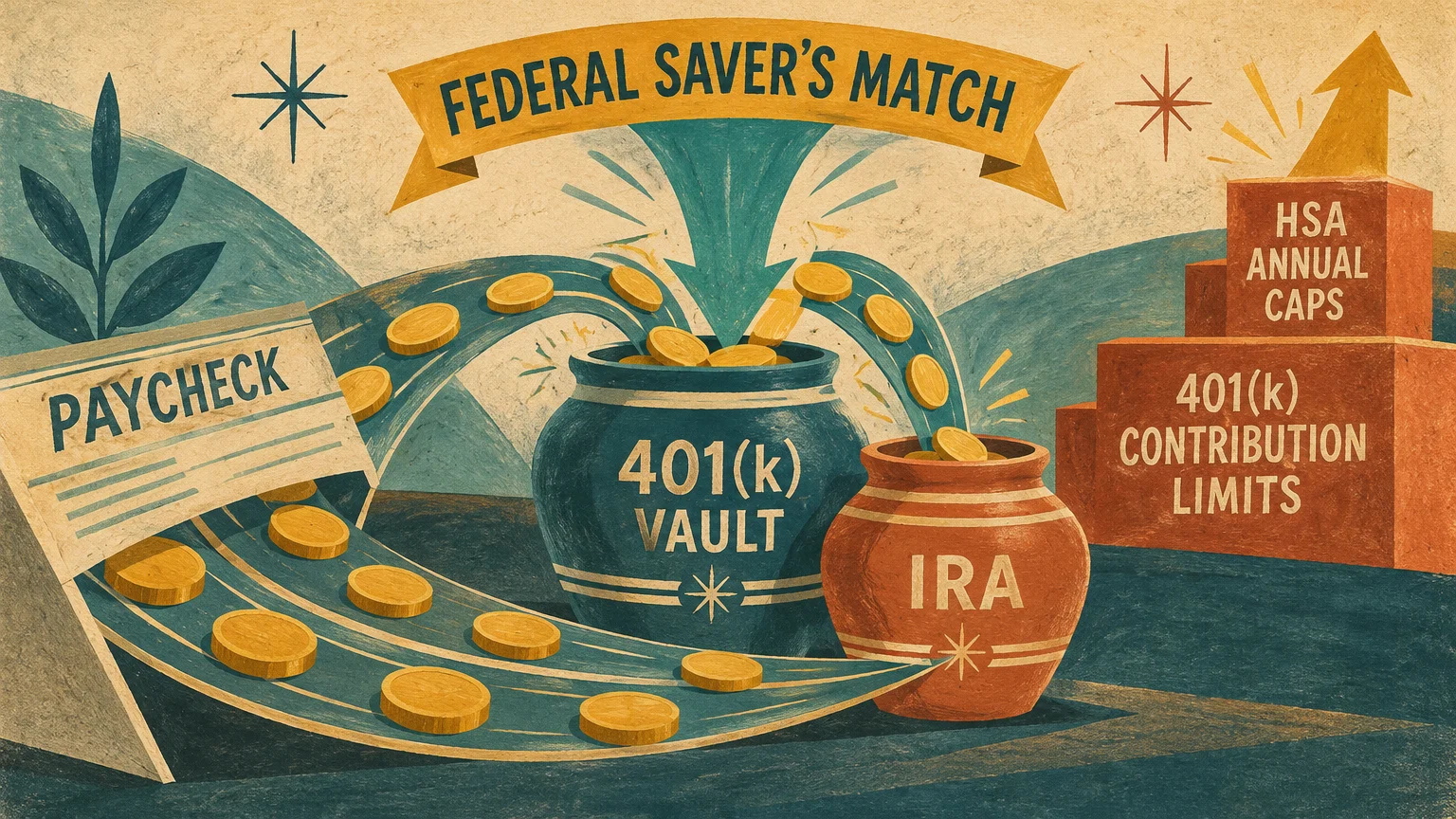
One of the biggest tax changes affecting millions arrives on January 1, 2027, for low- and moderate-income workers. Under the SECURE 2.0 Act (IRC Section 6433) and IRS Notice 2026-48, the old nonrefundable Saver’s Credit turns into the federal Saver’s Match.
Instead of shrinking a tax bill you might not owe, the government sends a direct matching deposit into your retirement plan or traditional IRA. The match covers up to 50% of the first $2,000 you contribute in 2027—up to $1,000 per person.
Married couples can qualify separately, meaning each spouse could earn up to $1,000 when filing 2027 returns in 2028. Preliminary estimates from The Pew Charitable Trusts project nearly 22 million Americans could benefit from this direct match.
Income limits still control who receives the full 50% match before a gradual phaseout begins:
- Single or married filing separately: Partial matching phases out between $20,500 and $35,500 MAGI.
- Head of household: Partial matching phases out up to $53,250 MAGI.
- Married filing jointly: Partial matching phases out between $41,000 and $71,000 MAGI.
Higher-earning workers and diligent savers also get more room to shelter paychecks in 2027. IRS Notice 2026-66 (IR-2026-136), issued November 12, 2026, raises workplace retirement savings caps across the board.
| Account or Benefit Type | 2026 Limit | 2027 Limit |
|---|---|---|
| 401(k), 403(b), 457, and TSP elective deferral | $24,500 | $25,500 |
| Age 50+ catch-up (401(k)/403(b)/457/TSP) | $8,000 | $8,500 ($34,000 combined) |
| Ages 60–63 super catch-up | $11,250 | $11,750 |
| Total defined contribution limit (excl. catch-ups) | $72,000 | $75,000 |
| SIMPLE retirement plan deferral | $17,000 | $17,500 |
| Traditional and Roth IRA contribution | $7,500 ($1,100 catch-up) | $7,500 ($1,100 catch-up) |
| HSA self-only / family contribution | $4,400 / $8,750 | $4,500 / $9,000 (+$1,000 at age 55+) |
| Health Care FSA contribution / carryover | $3,400 / $680 | $3,500 / $700 |
| Commuter transit and parking benefit | $340/month | $350/month |
Watch one major catch-up rule if you are age 50 or older and earn a strong salary. Workers whose 2026 FICA wages from the same employer top $155,000—up from $150,000—must make 2027 catch-up contributions as after-tax Roth dollars.
Your health and family payroll accounts also adjust for 2027. Under IRS Rev. Proc. 2026-24, minimum high-deductible health plan deductibles for HSAs rise to $1,750 for self-only coverage and $3,500 for family plans.
Meanwhile, the Dependent Care FSA remains $7,500 per household—or $3,750 if married filing separately—in 2027, per Kiplinger. You can verify your retirement and benefit limits on Investor.gov as you set 2027 payroll elections.
One payroll tax climbs alongside those higher savings caps. The Social Security Administration announced October 14, 2026, that maximum wages subject to Social Security tax jump 4.2% in 2027 to $192,300, up from $184,500.
High earners passing $184,500 will feel Social Security withholding longer into 2027, so raising 401(k) or HSA contributions early can help offset the extra payroll tax bite.
Tipped Workers, Overtime Earners, Seniors, and Car Buyers
Four temporary OBBBA deductions running from tax years 2025 through 2028 take center stage during the 2027 filing season. Both itemizers and non-itemizers can claim them, subject to income phaseouts, per IRS Tax Tip 2026-12 and IR-2026-140.
Service and hourly workers get two headline breaks on qualified pay:
- No Tax on Tips: Deduct up to $25,000 per return in qualified tip income.
- No Tax on Overtime: Deduct up to $12,500 ($25,000 on joint returns) in qualified overtime pay.
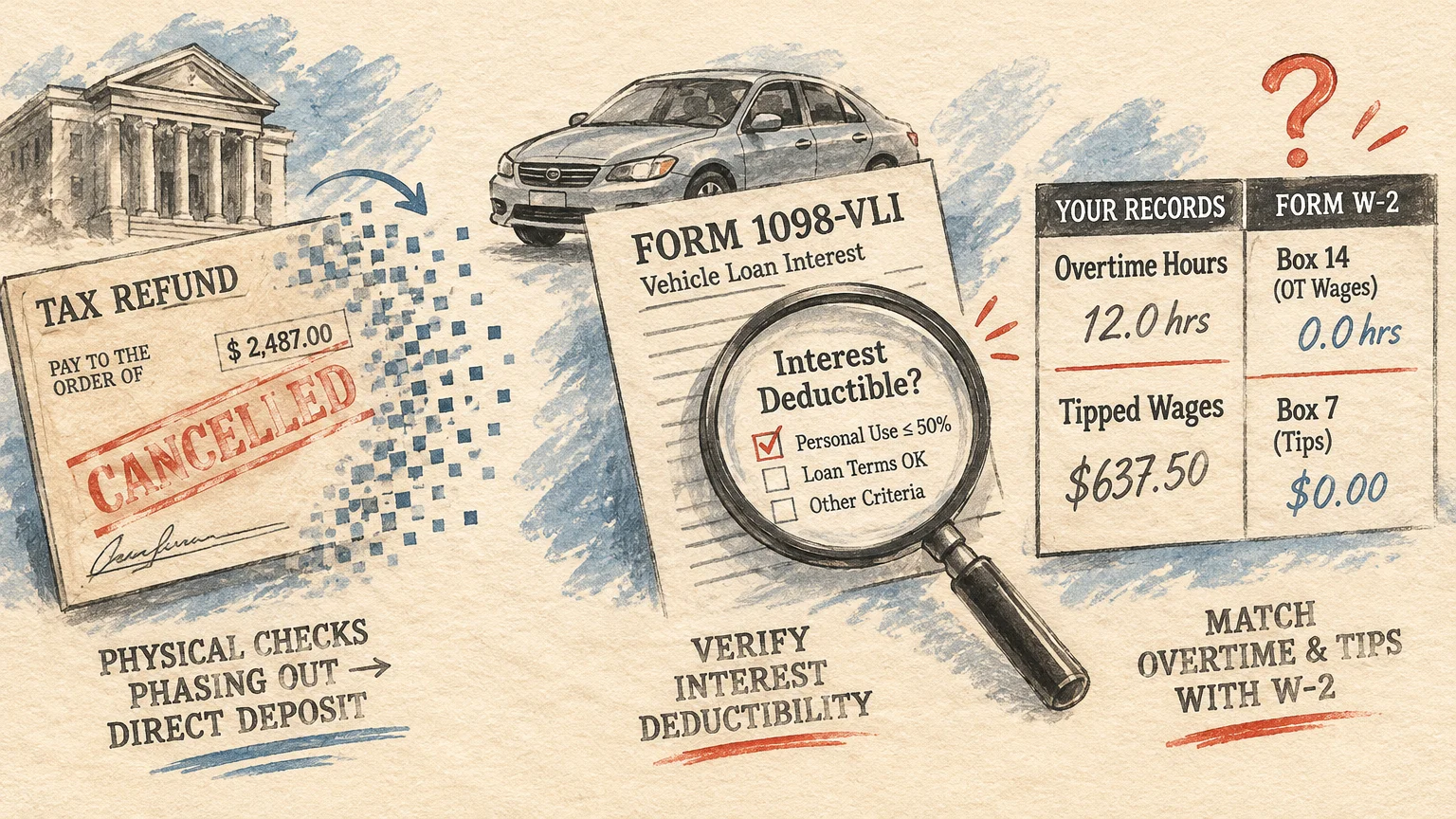
Here is the catch for your early 2027 tax return. Unlike the 2025 transition grace period, employers must separately report qualified tips and overtime on 2026 Forms W-2, due February 1, 2027, because January 31 falls on a Sunday.
Per IRS 2026 Publication 1099 and Fingercheck, you generally can only deduct the qualified overtime actually reported on your W-2. Check your 2026 W-2 boxes carefully as soon as it arrives.
Retirees age 65 and older get an enhanced senior deduction of $6,000 per qualifying person, or $12,000 when both spouses are 65 or older. It phases out at a 6% rate once modified adjusted gross income tops $75,000 for singles or $150,000 for joint filers.
Keep expectations realistic about what this deduction covers. Boldin notes that the enhanced senior deduction does not eliminate taxes on Social Security benefits, which remain taxable up to 85% above $25,000 single or $32,000 joint combined income.
Recent vehicle buyers can also deduct up to $10,000 in qualified passenger car loan interest. Lenders collecting $600 or more in qualifying interest must send you a new Form 1098-VLI for the 2027 filing season, per IRS 2026 Publication 1099.

Freelancers, Side Hustlers, and Online Sellers
If you sell items online or pick up side gigs, two major reporting changes simplify your 2027 paperwork. OBBBA permanently repealed the planned $600 Form 1099-K rule for payment apps like PayPal, Venmo, and Etsy.
Per the IRS Form 1099-K page updated November 16, 2026, platforms only issue Form 1099-K for 2026 payments and beyond if you exceed $20,000 in gross payments and complete more than 200 transactions. Casual sellers offloading household items will rarely trigger a form.
Independent contractors and freelance clients also see higher Form 1099-NEC and 1099-MISC thresholds. The reporting floor jumped from $600 to $2,000 for 2026 payments filed in early 2027, and indexes to $2,100 for 2027 payments, per H&R Block and TIN Compliance.
Remember a critical rule before celebrating fewer forms. All taxable net profit from freelancing or reselling for a gain remains reportable income, even if no client sends you a 1099.
Small businesses that issue 1099s themselves face a technical switch in early 2027. Per IRS 2026 Publication 1099, the IRS retired its legacy FIRE e-filing system, making the Information Returns Intake System (IRIS) the sole electronic intake portal.
Itemizers, Charitable Donors, Gamblers, and High Earners
If you live in a high-tax state, donate generously, or earn top-bracket income, OBBBA reshaped itemizing rules starting in 2026 and continuing into 2027. First, the state and local tax (SALT) deduction cap jumped from $10,000 to $40,400 in 2026.
In 2027, that SALT cap rises 1% to $40,804—half for married couples filing separately—per Kiplinger, Nolo, and Maddin Hauser. It phases down by 30% of MAGI above $505,000 in 2026 and $510,050 in 2027, never dropping below $10,000, before reverting to $10,000 in 2030.
Charitable giving rules also split sharply depending on whether you take the standard deduction or itemize:
- Non-itemizers (2026 and beyond): Deduct up to $1,000 ($2,000 joint) in qualifying cash donations on top of your standard deduction.
- Itemizers (2026 and beyond): Face a new 0.5%-of-AGI floor, meaning only donations exceeding 0.5% of your adjusted gross income count, with excess carrying forward five years.
Top earners face an added trim on every itemized write-off. Starting in 2026, taxpayers in the 37% bracket have the tax benefit of itemized deductions capped at 35 cents per dollar, per Kiplinger and H&R Block.
Recreational and serious bettors face tougher math too. Beginning in 2026, itemizers can deduct only 90% of eligible wagering losses up to their winnings—down from 100%—meaning a break-even year at the sportsbook or casino can still generate federal tax, per H&R Block.
Finally, wealthy families doing long-term estate planning get higher thresholds in 2027. The federal estate and gift tax exemption rises to $15,480,000 per person—up from $15,000,000 in 2026—while the annual gift exclusion increases to $20,000 per recipient, up from $19,000.
How You Will File and Receive Your Refund in 2027
Changes to IRS operations will alter how millions submit returns and collect money in early 2027. Most notably, the IRS closed its government-run Direct File portal ahead of the 2026 filing season.
During tax year 2024, only 296,531 taxpayers across 25 states used Direct File—under 0.5% of roughly 146 million returns—at a reported cost of at least $41 million. Now the agency steers eligible filers toward IRS Free File partners, VITA, and MilTax.
Per The College Investor on November 19, 2026, IRS Free File serves taxpayers with an AGI of $95,000 or less. Check partner age, state, and military rules before starting your return so you do not get hit with surprise upgrade fees.
How your refund arrives is changing fast too. Pursuant to Executive Order 14247, the IRS began phasing out paper tax refund checks.
In IR-2026-140 on November 16, 2026, the IRS urged taxpayers preparing for the 2027 filing season to have bank routing and account numbers ready for direct deposit. If you lack a checking account, guidance from the Consumer Financial Protection Bureau can help you compare low-fee accounts before filing.
Avoiding Common Errors
Big rule transitions invite costly filing mistakes. Watch out for these six traps as you file in early 2027 and plan through the rest of the year.
- Mixing up 2026 and 2027 limits: Applying 2027’s $25,500 401(k) cap or $33,200 joint standard deduction to 2026 tax software or projections creates balance-due surprises.
- Guessing overtime pay without a W-2 breakdown: For 2026 returns filed in 2027, you generally need qualified overtime separately reported on Form W-2 to claim the deduction.
- Assuming the senior bonus makes Social Security tax-free: Even with the $6,000 or $12,000 enhanced senior deduction, up to 85% of Social Security benefits can stay taxable above combined-income thresholds.
- Treating missing 1099-K or 1099-NEC forms as tax-free cash: Higher $20,000/200-transaction and $2,000 reporting thresholds reduce paperwork, not your legal duty to report net business profits.
- Ignoring the $155,000 Roth catch-up rule: Age 50+ earners crossing $155,000 in 2026 FICA wages from their employer must verify their payroll system routes 2027 catch-ups into Roth accounts.
- Skipping Form 4547 for newborn Trump Accounts: Automatic Treasury enrollment does not finish the process; parents must claim the account and elect the $1,000 seed deposit.
When DIY Isn’t Enough
Software handles straightforward W-2 returns well, even with new deductions. Still, several 2027 scenarios make hiring a CPA or Enrolled Agent worth the fee.
- High earners near deduction phaseouts: Navigating the 35% cap on itemized deductions alongside the $510,050 SALT phaseout and 0.5%-of-AGI charitable floor requires careful modeling.
- Workers with multiple tipped or overtime jobs: Resolving missing or inconsistent W-2 reporting across employers—while staying under phaseout limits—can trip up standard tax software.
- Frequent gamblers or side-business owners: Calculating taxable net income under the 90% wagering loss cap or transitioning vendor payments onto the IRIS portal carries real audit risk.
- Families doing multi-generational estate planning: Coordinating the $15,480,000 estate exemption, $20,000 annual gifts, and state-level scholarship credits takes tailored legal and tax advice.
Frequently Asked Questions
Do the 2027 tax brackets affect the return I file in early 2027?
No, the 2027 tax brackets and $33,200 joint standard deduction apply to income earned in 2027, which you file in 2028. Your early 2027 return covers 2026 income under 2026 brackets and deductions.
Will I still get a paper check for my 2027 tax refund?
Probably not, because the IRS began phasing out paper refund checks under Executive Order 14247. IRS guidance in IR-2026-140 advises taxpayers to enter bank routing and account numbers for direct deposit.
Who qualifies for the new 2027 Saver’s Match?
Workers contributing to a retirement plan or traditional IRA in 2027 can earn up to a 50% federal match on their first $2,000, or $1,000 per person. Partial matching phases out up to $35,500 MAGI for singles, $53,250 for heads of household, and $71,000 for joint filers.
Do I owe taxes on Venmo or PayPal sales if I do not get a 1099-K?
Yes, if you sell goods or services at a profit, that income remains taxable regardless of paperwork. Platforms only issue Form 1099-K once you exceed $20,000 in gross payments and 200 transactions.
Is the $6,000 enhanced senior deduction permanent?
No, the enhanced senior deduction of $6,000 per person—or $12,000 for qualifying couples—runs temporarily from tax years 2025 through 2028. It also phases out above $75,000 MAGI for singles and $150,000 for joint filers.
Your Next Steps Before Tax Season Hits
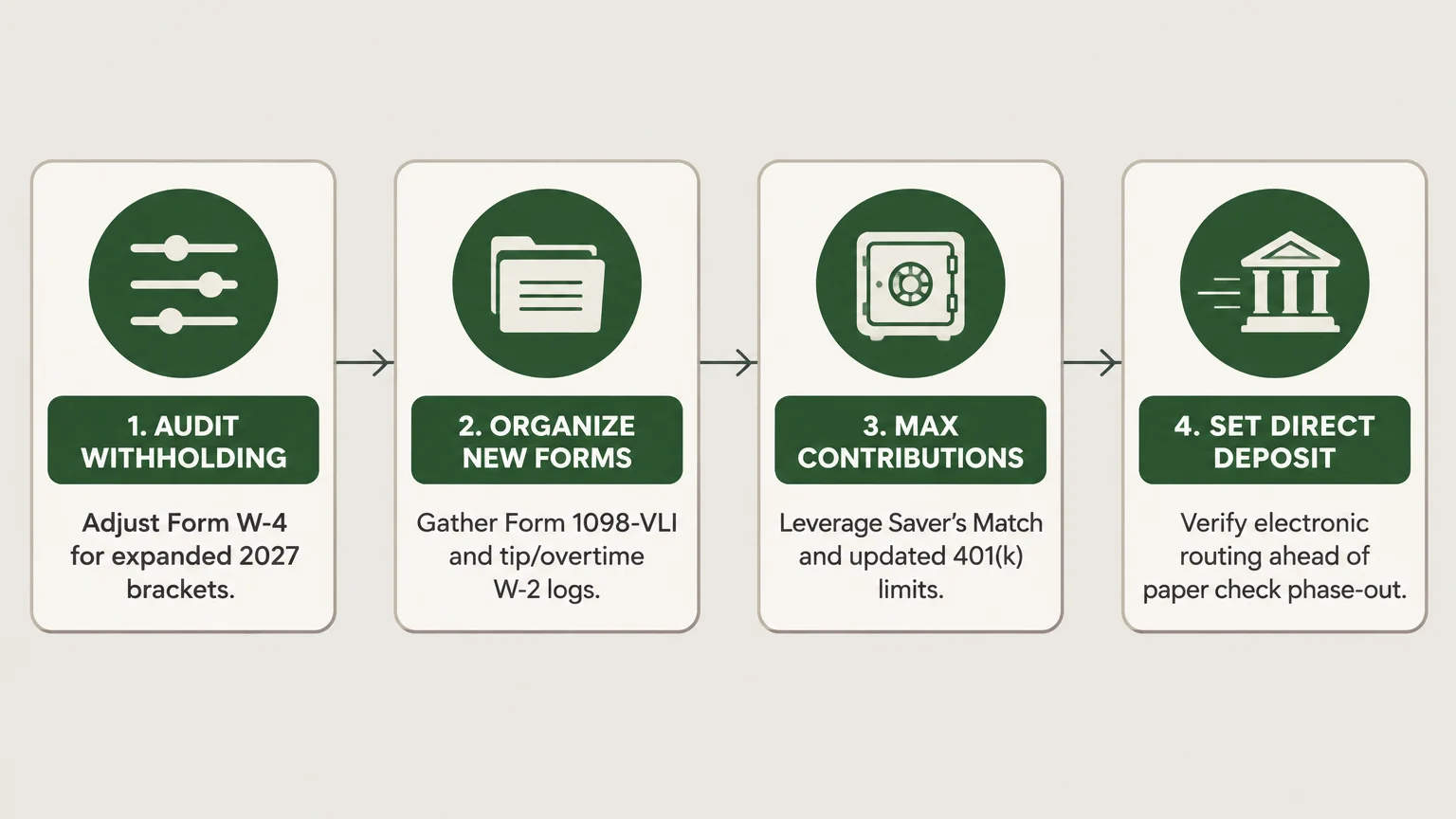
Start by setting up direct deposit details and gathering your 2026 Forms W-2, 1098-VLI, and charitable receipts before filing opens in early 2027. Next, update your 2027 payroll elections for the higher $25,500 401(k) cap, $4,500/$9,000 HSA limits, or Saver’s Match contributions so your money works harder all year.
This is educational content based on general financial principles. Individual results vary based on your situation. Always verify current tax laws, investment rules, and benefit eligibility with official sources.
Last updated: November 2026. Financial regulations and rates change frequently—verify current details with official sources.