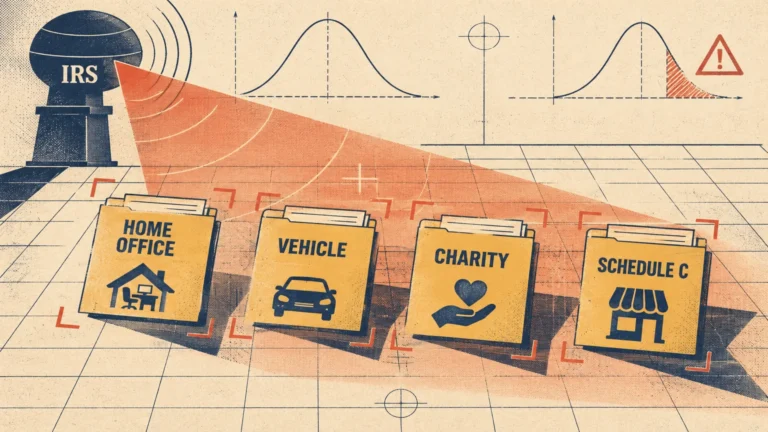
If you own mutual funds in a taxable account, you could face an unwelcome surprise on your tax return this spring. Fund managers must pass through realized trading profits to shareholders every December, generating taxable income even if your portfolio lost value.
These automatic December capital gains can push you into a higher tax bracket and quietly trigger costly surcharges on your retirement benefits. Reinvesting your payout back into the fund does not shield you from the IRS either.
Fortunately, taking defensive action before December 31 lets you reduce or completely offset the damage. Using these six proven strategies will help you shrink your mutual fund tax bill before the year ends.

Why December Capital Gains Trigger Surprise Taxes
Under federal tax law, mutual funds must distribute substantially all net realized capital gains to investors each calendar year. These payouts typically land between mid-December and late December.
This rule applies exclusively to a regular taxable account. If you hold these investments inside an IRA or 401(k), payouts pass through without creating immediate taxable income.
Market conditions in 2026 have amplified this issue. According to research from Morningstar, heavy shareholder redemptions forced fund managers to sell appreciated holdings, pushing some fund payouts above 30% of their net asset value.
Brokerages report these numbers on Form 1099-DIV early next year. Long-term capital gain distributions appear in Box 2a, while short-term capital gains arrive classified as ordinary dividends in Box 1a.
The Hidden Ripple Effects on Retiree Taxes
A surprise December distribution can create an expensive chain reaction for retiree taxes. Extra taxable income directly increases your modified adjusted gross income (MAGI), which can erode targeted tax perks.
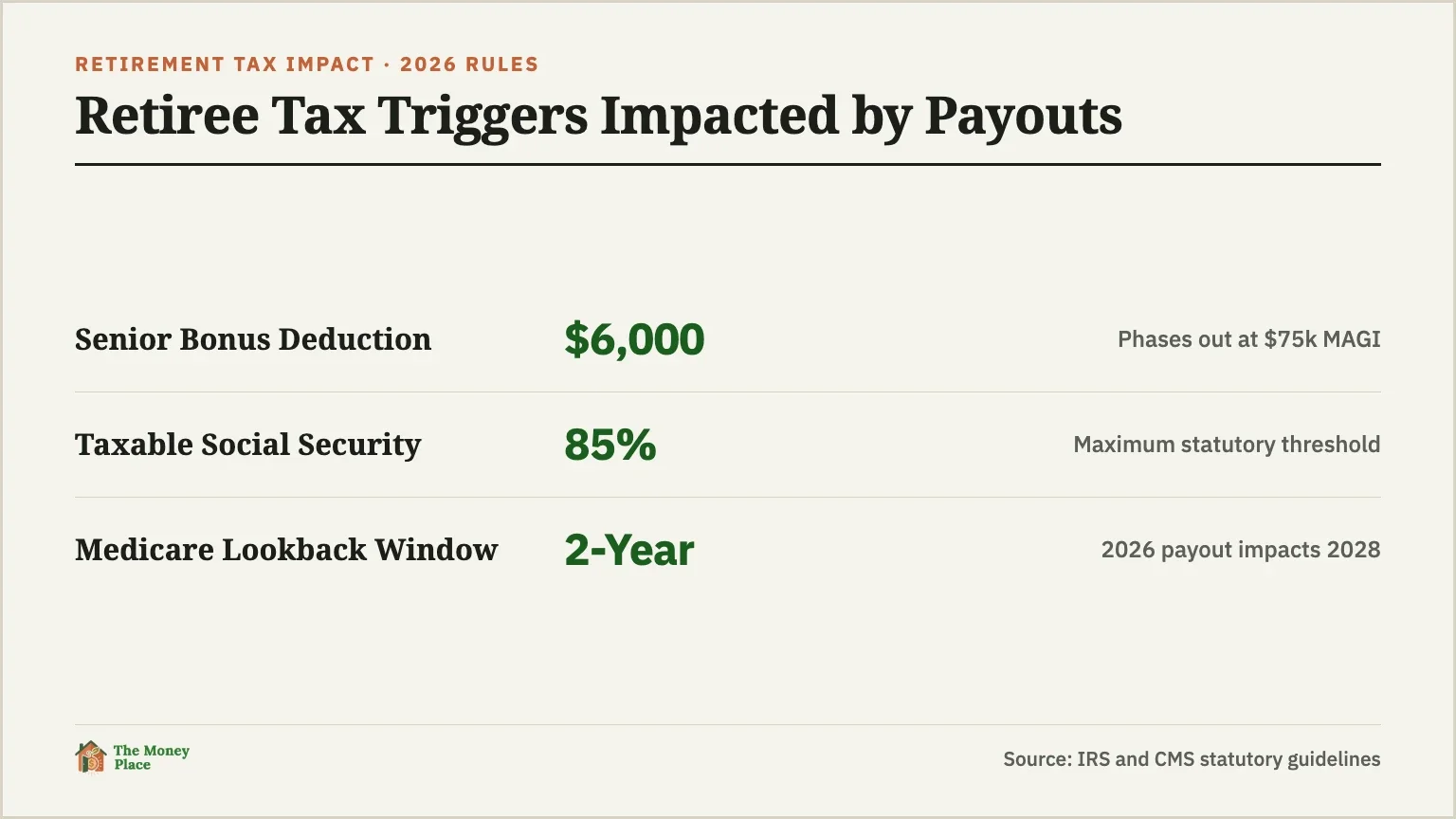
Under current tax law, the $6,000 senior bonus deduction phases out once MAGI exceeds $75,000 for singles or $150,000 for joint filers. An unexpected year-end payout can shrink this deduction rapidly.
Higher distributions can also cause up to 85% of your Social Security benefits to become taxable under statutory provisional income formulas.
Furthermore, Medicare Part B and Part D premiums use a two-year lookback window. A spike in your 2026 income can push you over an income-related monthly adjustment amount (IRMAA) surcharge bracket for 2028.

6 Ways to Shrink Your Mutual Fund Tax Bill
You do not have to accept these distributions passively. Implement these six proactive moves to preserve your returns and minimize your liability.
1. Harvest Capital Losses Before Year-End
You can sell underperforming investments in your taxable account to generate realized capital losses before December 31. These losses directly offset mutual fund capital gain distributions dollar for dollar.
If your realized losses exceed your total capital gains, you can deduct up to $3,000 of ordinary income against federal taxes ($1,500 if married filing separately). Any excess loss carries forward indefinitely.
2. Switch Reinvested Distributions to Cash
Many investors automatically reinvest their dividends and capital gains into new fund shares. While reinvesting does not avoid current-year taxes, switching distributions to cash gives you flexibility.
Collecting payouts in cash provides immediate liquidity to pay your upcoming tax liability. It also stops you from buying new shares right before you execute a tax-loss sale.
3. Sell the Fund Before the Record Date
Fund families publish preliminary distribution estimates and record dates in late autumn. If your fund projects a massive payout, you can sell your shares before the record date.
This move works best if you hold the fund at a loss or have minimal unrealized gains. Selling eliminates the incoming distribution and lets you redirect capital into a more tax-efficient vehicle.
4. Donate Appreciated Fund Shares Directly
If you itemize deductions and support public charities, consider donating appreciated fund shares directly from your taxable account. You bypass all embedded capital gains while claiming a charitable deduction.
Keep in mind that itemized charitable contributions face a 0.5% adjusted gross income floor. Make sure to complete the transfer well before December 31 to qualify.
5. Transition to Tax-Efficient Index ETFs
Exchange-traded funds (ETFs) rarely pay out capital gains because their authorized participants utilize an in-kind creation and redemption mechanism. This process shields remaining shareholders from capital gains distributions.
As you reallocate your taxable portfolio, consider replacing actively managed mutual funds with broad-market index ETFs to prevent future December tax shocks.
6. Adjust Your Fourth-Quarter Estimated Taxes
If a large capital gain distribution occurs, your regular tax withholdings may leave you short. You must ensure you meet IRS safe harbor rules to avoid underpayment penalties.
Submit a Form 1040-ES estimated tax payment by January 15, 2027 to cover the gap. You generally avoid penalties if you pay 100% of your prior year tax liability (110% for high earners).
Comparing Your Year-End Tax Relief Options
Review this comparison to determine which tax-reduction strategy best matches your portfolio profile before the calendar year closes.
| Strategy | Best Scenario | Deadline | Key Consideration |
|---|---|---|---|
| Tax-Loss Harvesting | You own losing positions in your taxable brokerage | Dec. 31, 2026 | Watch out for the 30-day wash-sale rule |
| Selling Before Record Date | The fund has small unrealized gains or a net loss | Before Fund Record Date | Avoid if selling triggers a massive capital gain |
| Donating Appreciated Shares | You itemize deductions and donate to charity | Dec. 31, 2026 | Subject to the 0.5% of AGI deduction floor |
| Adjusting Estimated Taxes | You anticipate a large, unavoidable distribution | Jan. 15, 2027 | Protects you from IRS underpayment penalties |
“In investing, you get what you don’t pay for. Costs matter, and taxes are often the single largest cost of all.” — John C. Bogle, Founder of Vanguard

Pitfalls to Watch For
Watch out for the IRS wash-sale rule when harvesting losses. If you purchase substantially identical fund shares within 30 days before or after the sale, the IRS disallows your tax loss.
Remember that automatic dividend reinvestment inside any taxable account or IRA can accidentally trigger a wash sale. Review your automated settings before executing any loss harvest.
Never “buy the dividend” in a taxable account in December. Purchasing shares right before the record date forces you to pay taxes on profits earned before you even owned the fund.

Getting Expert Help
Navigating taxable investment distributions requires balancing immediate tax relief against long-term estate and income plans. Consider hiring a professional from the Certified Financial Planner Board or a CPA in these situations:
- You hold mutual funds with large unrealized gains where selling triggers higher taxes than the distribution itself.
- Your estimated distributions threaten to push you over a Medicare IRMAA bracket threshold.
- You need assistance calculating safe-harbor estimated tax payments before the January 15 deadline.
- You want to build a comprehensive tax-loss harvesting strategy across multiple brokerage accounts.
Frequently Asked Questions
Do December capital gains distributions affect retirement accounts?
No. Mutual fund distributions inside traditional IRAs, Roth IRAs, or 401(k) plans carry no immediate tax consequences. Taxes only apply when you withdraw funds from pre-tax retirement accounts.
If I reinvest my distribution, do I still owe tax?
Yes. The IRS treats reinvested dividends and capital gains as cash received. The reinvested amount is taxable for the current year, but it increases your cost basis on those new shares.
When will I actually pay tax on these December payouts?
Funds distribute gains in December, but you report them on your annual tax return filed the following spring. However, you may need to submit an estimated tax payment by January 15 to avoid penalties.
Taking time to review your taxable accounts before December 31 prevents unpleasant tax surprises next spring. Check your fund family’s distribution calendar today and execute your offsetting moves early.
This article provides general financial education and information only. Everyone’s financial situation is unique—what works for others may not work for you. For personalized advice, consider consulting a qualified financial professional such as a CFP or CPA.
Last updated: November 2026. Financial regulations and rates change frequently—verify current details with official sources.