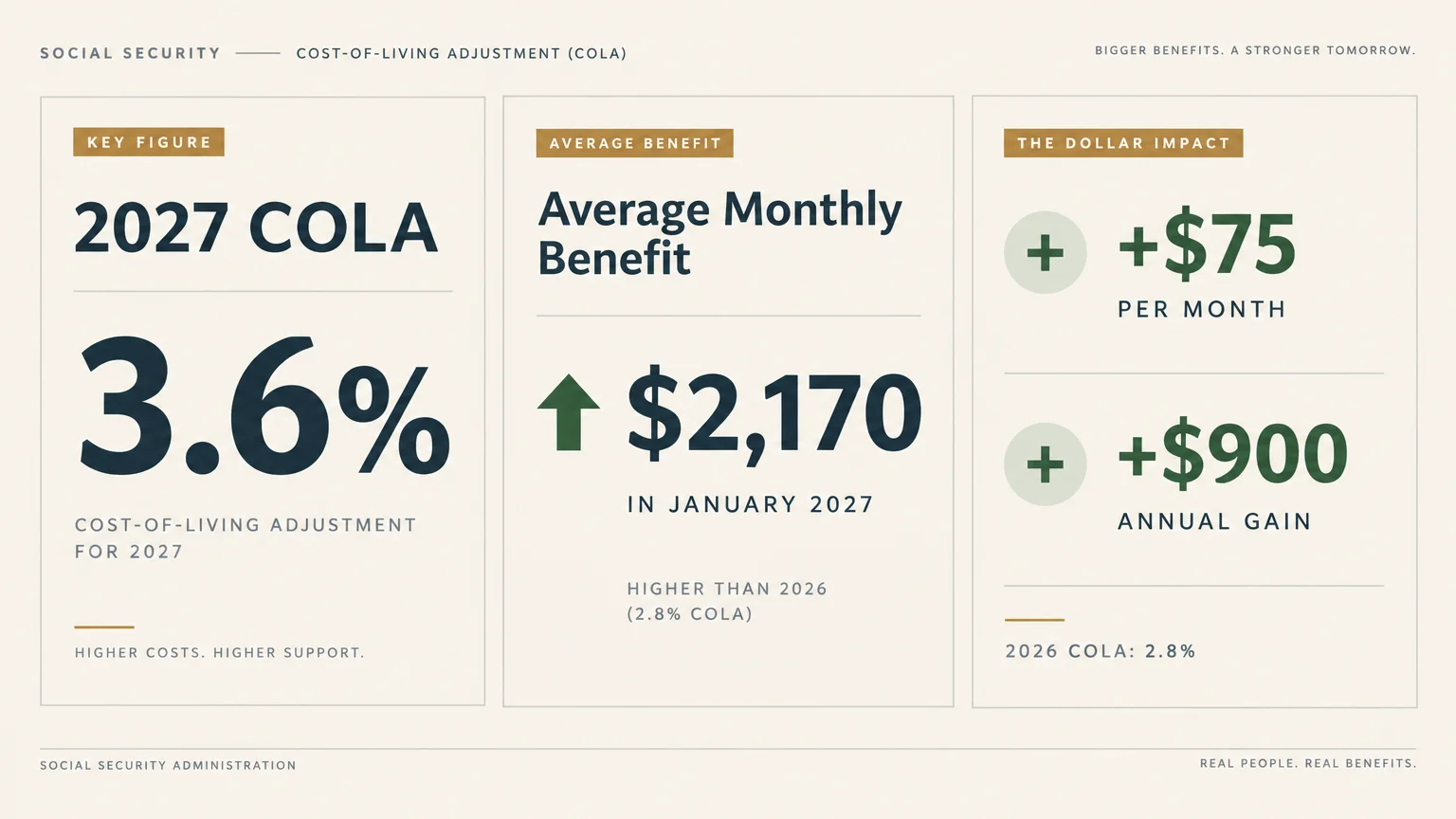
What the 3.6% COLA means for the typical retiree
The COLA exists for one reason: to protect the purchasing power of Social Security benefits as prices rise. The Social Security Administration takes the CPI-W (the Consumer Price Index for Urban Wage Earners and Clerical Workers), averages the values for the third quarter of the year (July, August, and September), and compares them with the same period of the previous year. The percentage change becomes the next year’s raise.
cronista
For 2027, that formula produced a meaningful bump. After the 3.6% COLA, the Social Security Administration expects the average monthly benefit for retired workers to rise to $2,170 in January 2027. That works out to an increase of roughly $75 per month for the average retired worker, or about $900 over the course of the year.
For context, this is a clear step up from last year. The previous COLA, announced on October 24, 2025, was a 2.8% increase for 2026.
Higher earners will see even more. In 2027, the maximum benefit for a worker claiming at full retirement age is $4,188 a month. To qualify for that amount, you generally need 35 years of earnings at or above the Social Security taxable maximum.